

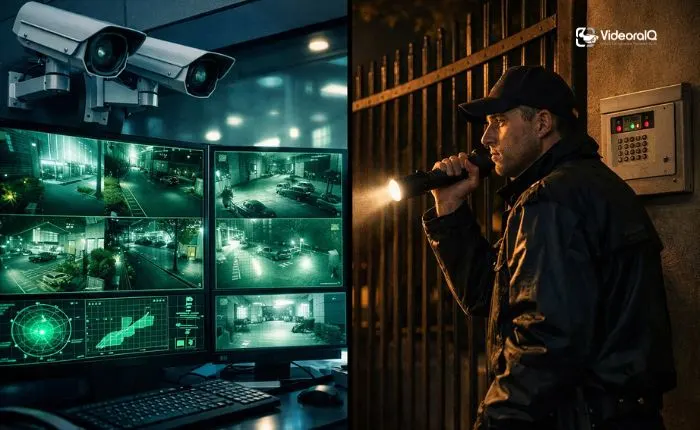
If you’re thinking about security for your property, you’ve probably wondered whether to go with modern CCTV monitoring or stick with traditional security methods like guards and alarms. It’s a decision that affects not just your safety, but your budget too.
While traditional security has been around for decades, technology has changed the game completely. Today’s surveillance systems can do things that seemed impossible just a few years ago.
Here’s the thing: there’s no one-size-fits-all answer. What works perfectly for your neighbor might not be right for you. That’s why we’re going to break down both options so you can make a choice that actually makes sense for your situation.
Listen To The Podcast Now!
Understanding Traditional Security Methods:

The Evolution of CCTV Monitoring:

Now let’s talk about what modern CCTV monitoring brings to the table. We’re not talking about those grainy videos from old convenience stores. Today’s systems are completely different.
Modern CCTV monitoring works 24/7 without getting tired. Cameras don’t take coffee breaks, and they capture everything that happens. That footage becomes a permanent record you can review anytime, whether that’s for catching a thief or backing up an insurance claim.
A good CCTV monitoring system today includes high-definition cameras that can see in the dark, detect motion, weather any storm, and even zoom in on details. You can place cameras strategically to cover your entire property with no blind spots.
What really sets modern systems apart is the smart technology. We’re talking about CCTV monitoring system software that can recognize faces, spot unusual behavior, read license plates, and send you alerts the moment something suspicious happens. It’s not just recording anymore; it’s actively watching for problems.
And you can check in from anywhere. Stuck in traffic but want to see what’s happening at your store? Pull out your phone. On vacation, but heard your alarm go off? Log in and see what’s actually going on. That kind of access changes everything.
Comparing Costs: What You’ll Actually Spend:
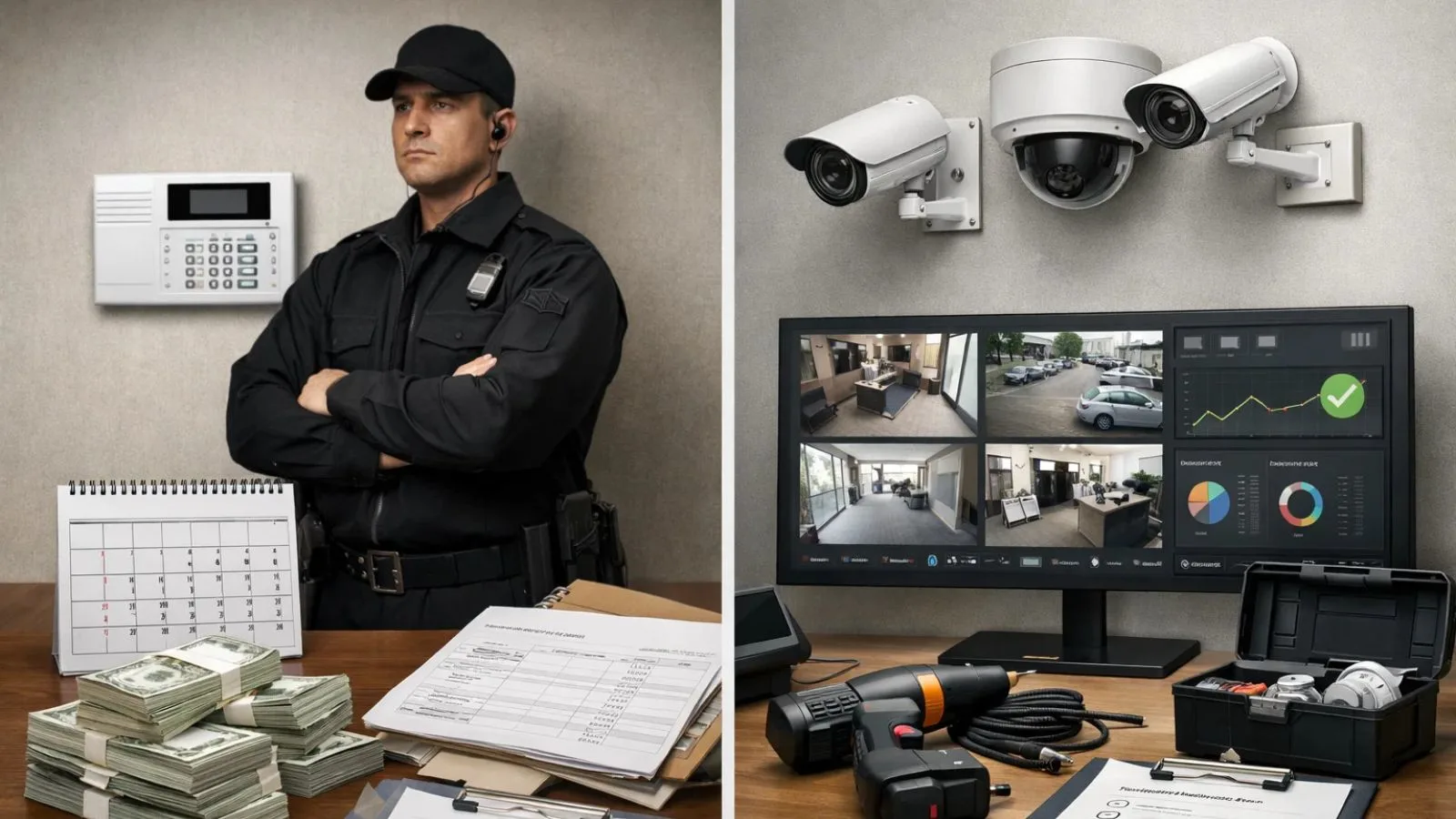
Traditional security looks cheaper at first. A basic alarm system doesn’t cost much, and good locks are affordable. But if you want security guards, costs add up fast. Having guards around the clock can run you thousands every month.
CCTV monitoring systems do cost more upfront. You’re buying cameras, recording equipment, and paying for installation. A decent system can run from a few thousand dollars to more, depending on your property size.
But here’s the thing: once your cameras are installed, they just keep working. Your monthly expenses are minimal: electricity, internet, and maybe some maintenance. Compare that to paying security guards month after month.
Most businesses find that their surveillance system pays for itself within a year. You’re not paying ongoing wages, and many insurance companies will lower your premiums if you have a professional CCTV monitoring security system installed. Those insurance savings alone can make a real dent in your costs.
Effectiveness in Crime Prevention:
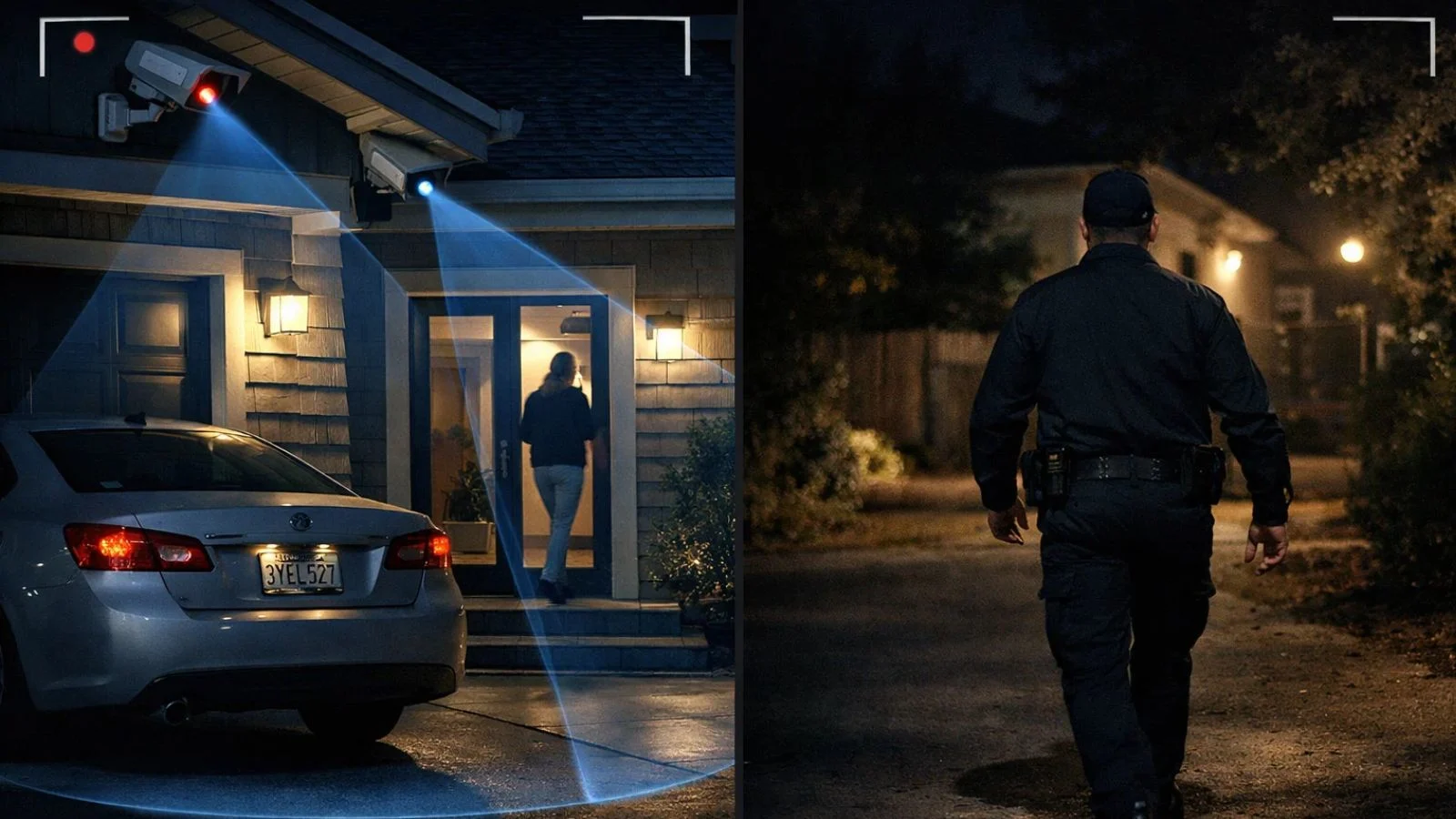
Traditional security creates visible deterrence. When criminals see a security guard, they usually move on. That human presence sends a strong message. The downside? Smart criminals simply wait for the guard to patrol elsewhere or time their move to coincide with shift changes.
CCTV monitoring never stops watching. Cameras cover the same spots consistently, hour after hour. There are no patrol routes to memorize or shift changes to exploit. Research shows that properties with visible cameras get hit with break-ins way less often than places without them.
When it comes to catching people after the fact, cameras win hands down. High-definition footage shows faces clearly, captures license plates, and records every detail. That time-stamped video evidence is gold in court and for insurance claims. You’re not relying on someone’s memory; you’ve got the actual event recorded.
Security guards can respond immediately to what they see, which is valuable. But unless they’re looking right at something when it happens, there’s no record.
Coverage and Scalability:
For a small shop, maybe one or two security guards work fine. But what about a warehouse or campus with multiple buildings? Hiring enough guards to cover all that would cost a fortune.
That’s where CCTV monitoring really shines. Adding more cameras doesn’t multiply your costs the way adding more guards does. With networked systems, you can watch multiple locations from one central spot. Got three stores across town? You can keep an eye on all of them from your phone.
And as your needs grow, cameras grow with you. Adding coverage to new areas is straightforward; just add more cameras to your existing setup.
Also Read:
How VideoraIQ Enhances Modern Surveillance:
This is where things get really interesting. VideoraIQ takes regular camera systems and makes them actually intelligent. Instead of just recording everything and hoping you catch it later, this platform actively watches for problems and alerts you right away.
Think about the biggest headache with traditional cameras: someone has to watch all that footage. VideoraIQ solves this by using artificial intelligence to do the watching for you. It learns what normal looks like at your property, then flags anything unusual.
Someone hanging around a locked door at 2 AM? You get an alert. Someone removes expensive equipment? You know immediately. The facial recognition and object detection features are game-changers.
VideoraIQ can recognize people who should be there, catch people who shouldn’t, and even notice when items go missing. This is huge for businesses dealing with theft or access control.
What really sets VideoraIQ apart is how it connects with everything else. It works with your existing cameras, door locks, and access systems. Everything works together. Unauthorized person detected? Doors can lock automatically. Security event at one location? The right people get notified instantly.
Making the Right Choice for Your Needs:
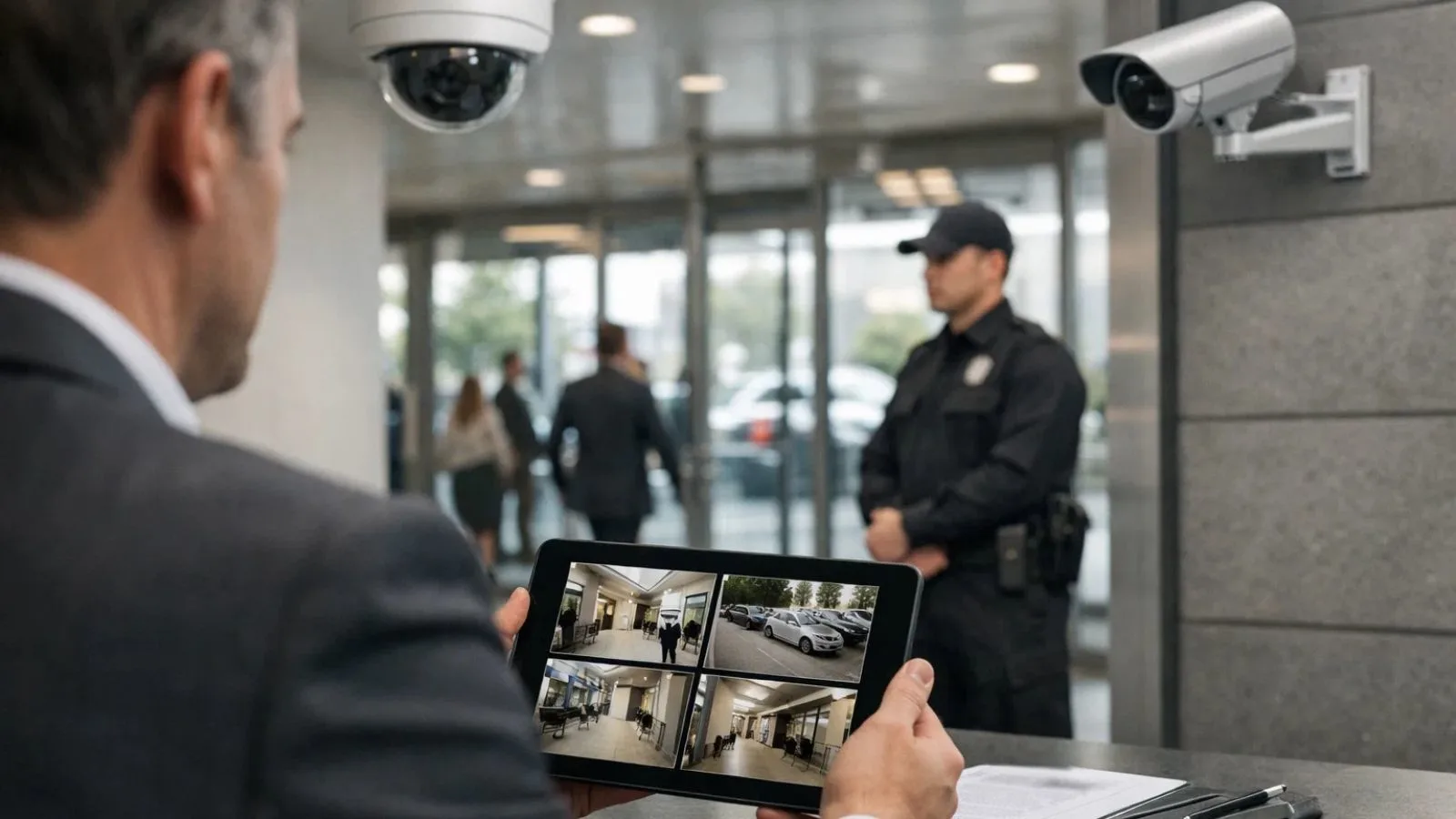
Go with CCTV monitoring if you want eyes on your property all day and every day without the ongoing cost of security staff. Choose cameras if you need clear evidence for insurance or legal issues, want to check in remotely from your phone, or need to cover multiple properties without breaking the bank.
Traditional security might be better if you need someone who can physically step in right away, if security duties overlap with customer service, or if you just need temporary protection for a special event.
Many smart businesses combine both. Cameras cover the whole property and create that permanent record, while security guards handle the high-traffic times and provide that visible presence when it matters most.
Don’t just look at what things cost today; think about what you’ll spend over the next few years. Factor in equipment, installation, monthly costs, and maintenance, and balance that against what you save from preventing theft, lower insurance, and avoiding legal headaches.
Conclusion:
Choosing between CCTV monitoring and traditional security isn’t about picking the “better” option; it’s about picking what fits your situation. Modern cameras offer serious advantages: better coverage, solid evidence, easy expansion, and lower long-term costs that make them the go-to choice for most homes and businesses today. Traditional security still has its place, especially when you need someone who can physically respond right away. Many of the most effective security setups use both, combining technology’s constant vigilance with human judgment when it counts. Take time to really think about what you need, and you’ll land on a security solution that actually protects what matters to you.
FAQ’s:
Q1: Can CCTV monitoring completely replace security guards?
Ans: It depends on what you need. Cameras excel at watching and recording, but if you need someone to physically intervene or interact with people, guards still matter. The best approach for many is combining both.
Q2: How much does a professional system typically cost?
Ans: Expect to spend between $1,500 and $10,000 for installation, depending on your property size. If you add professional monitoring services, that’s usually $50 to $200 monthly.
Q3: Do I need professional monitoring with my CCTV system?
Ans: Not necessarily. Most modern systems let you monitor everything yourself through apps. Professional monitoring adds trained operators who watch 24/7 and can call the police immediately when needed.
Q4: How long should I keep footage?
Ans: Most businesses keep recordings for 30 to 90 days. Some industries require longer storage. Cloud storage has made it easier and more affordable to keep footage for extended periods.