

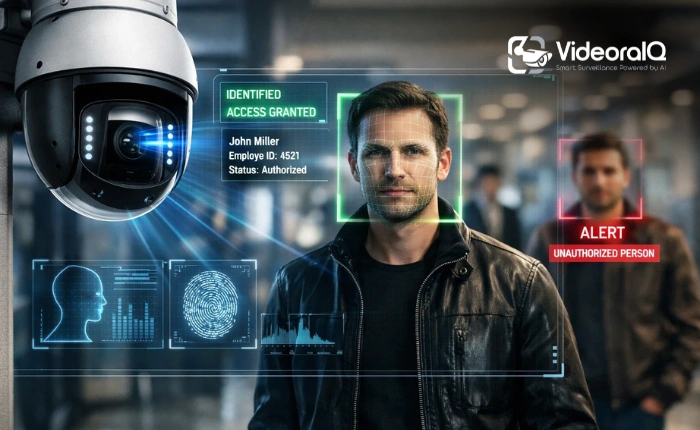
Security threats are becoming more complicated nowadays, and traditional surveillance systems are no longer sufficient to meet modern safety demands. While traditional CCTV cameras can record incidents, they often fail to provide real-time intelligence or proactive protection.
A facial recognition camera represents a major change in how security systems operate. Advanced artificial intelligence with real-time facial analysis, these cameras can identify individuals, distinguish between authorized and unauthorized access, and respond to potential threats instantly.
As organizations and businesses want more reliable and intelligent security, facial recognition cameras are quickly emerging as the future of security.
In a hurry? Listen to the blog instead!
What Is A Facial Recognition Camera?
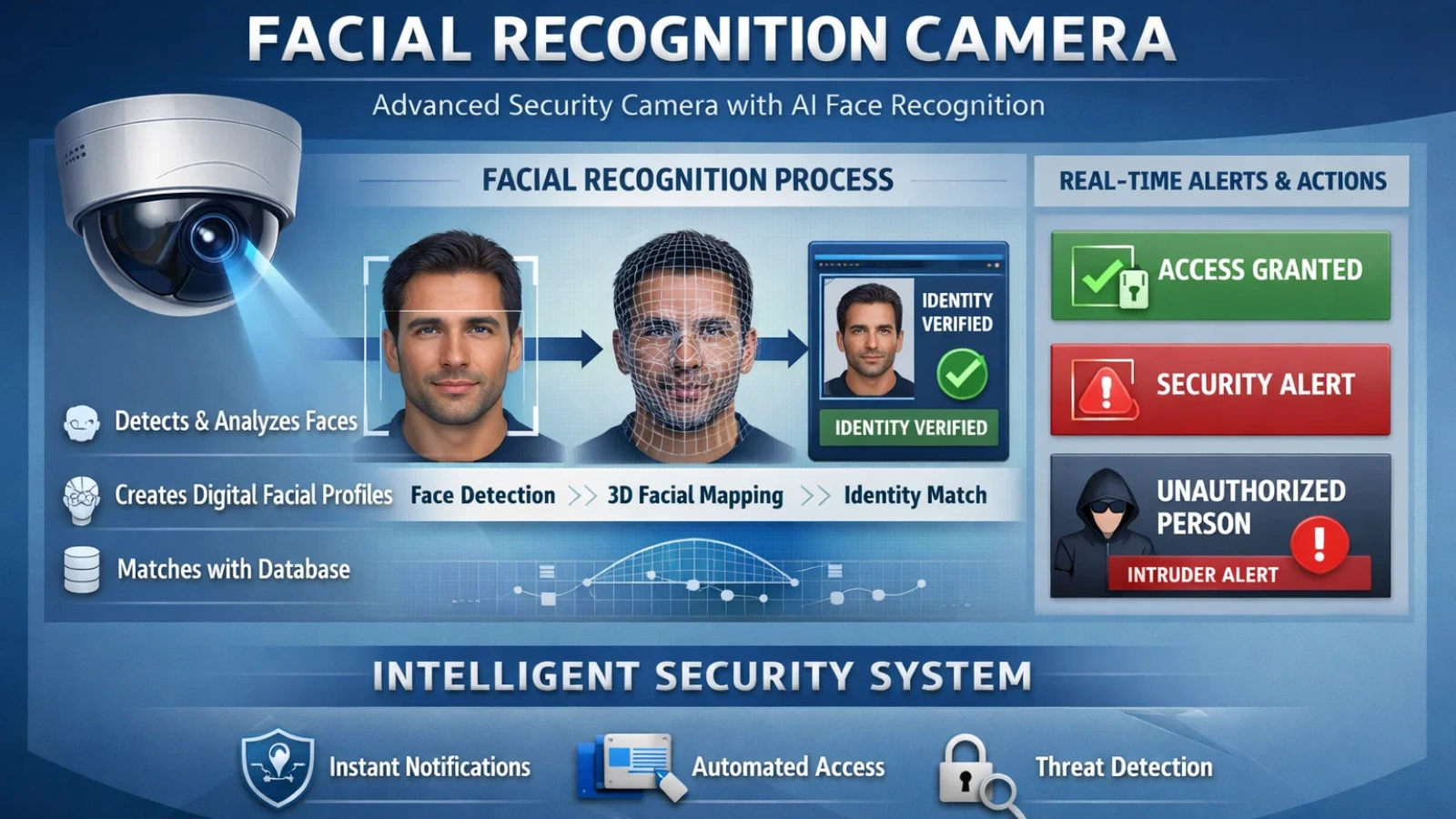
A facial recognition camera is an advanced security device that uses artificial intelligence to identify and verify individuals based on their facial features. Unlike traditional security cameras that only capture and store video analytics, a facial recognition camera actively analyzes faces in real time and compares them against stored data to determine identity.
This type of camera for facial recognition works by detecting a face, mapping unique facial characteristics such as the distance between the eyes or the shape of the jaw, and converting these details into a digital facial profile. That profile is then matched with a database to confirm whether the person is known, authorized, or unfamiliar.
What makes a facial recognition security camera significantly more effective than conventional systems is its ability to move beyond passive monitoring. Instead of relying on manual review of footage, it delivers actionable insights such as instant alerts, access approvals, or security warnings. As part of a broader facial recognition camera system, these cameras play a critical role in modern, intelligent security infrastructures.
Facial Recognition Camera vs Traditional Security Cameras
Traditional security cameras specialize in recording video footage for later review. While they can be useful for evidence collection after an incident happens, they offer limited support for real-time threat detection or proactive security. In most cases, identification requires manual monitoring or time-consuming playback of recorded footage.
A facial recognition camera changes this approach by actively analyzing video feeds as events happen. Instead of simply capturing images, it identifies faces, compares them with stored data, and determines whether a person is authorized, familiar, or potentially suspicious. This allows security teams to respond immediately rather than after the incident happens.
Another key difference lies in accuracy and efficiency. Traditional cameras often rely on motion detection, which can result in frequent false alarms or environmental changes. A facial recognition security camera focuses specifically on human faces, greatly reducing unnecessary alerts and improving response quality.
When integrated into a full facial recognition camera system, these cameras also automate tasks such as access control, visitor tracking, and incident logging.
This level of intelligence and automation makes facial recognition cameras far more effective than conventional security systems, positioning them as the future of modern video surveillance.
Key Features Of The Facial Recognition Camera System
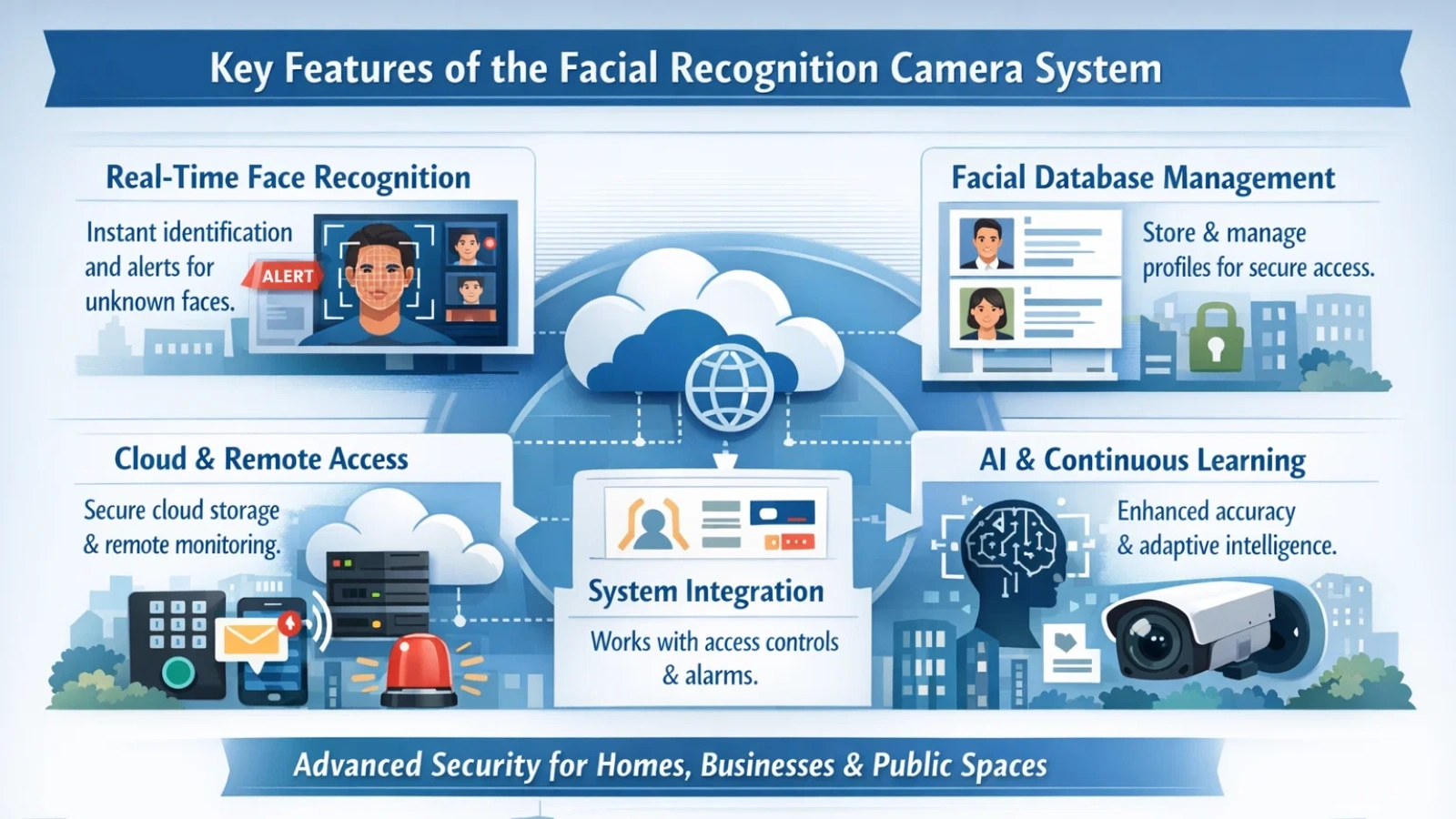
A facial recognition camera system is built to deliver intelligent, real-time security by combining advanced hardware with AI-driven software. These systems offer a range of features that go far above basic video recording, making them suitable for modern security requirements across homes, businesses, and public spaces.
One of the core features is real-time face detection and identification. As soon as a person enters the camera’s field of view, the system analyzes facial data and matches it against an existing database. This allows for instant recognition of authorized and immediate alerts when unknown faces are detected.
Another important feature is the ability to create and manage facial databases. Users can store profiles of employees or frequent visitors, enabling controlled access and detailed activity. Many facial recognition camera systems also support cloud-based storage, allowing secure remote access, system updates, and centralized monitoring.
Although not necessary, facial recognition cameras should have integration capabilities with other systems to further enhance security. A facial recognition security camera can work seamlessly with access control systems, alarms, and mobile notifications to trigger automated actions.
Combined with continuous learning and accuracy improvements, these features make a facial recognition camera system a powerful and future-ready security solution.
Benefits Of Using A Facial Recognition Security Camera
Real-time identification: Facial recognition cameras can recognize faces instantly and differentiate between authorized individuals and potential threats, enabling immediate action.
Stronger access control: They remove the need for physical keys, access cards, or PINs, which can be lost, stolen, or shared. Access is granted only after identity verification.
Better accountability: Since entry is identity-based, it improves tracking and accountability across facilities.
Reduced false alarms: Unlike motion-based systems triggered by lighting or moving objects, facial recognition focuses on human faces, making alerts more accurate and meaningful.
Improved response efficiency: Security teams can respond faster because alerts are relevant and verified.
Automation of security tasks: Monitoring, logging, and access management are automated, reducing manual effort.
Cost-effective in the long run: Lower reliance on manual surveillance helps organizations save operational costs over time.
Future-ready security investment: The combination of intelligence, accuracy, and automation makes facial recognition cameras a modern, scalable security solution.
Also Read:
How Is Ai Used In Surveillance? 7 Ways It’s Transforming Security
How To Make Surveillance Cameras Smarter For Stronger Security?
Convenience And Flexibility
Wireless security cameras offer a level of convenience and flexibility that traditional wired systems cannot. They do not require extensive cabling, installation, or cleaning, and are less disruptive. This makes wireless cameras an ideal choice for both new installations and locations where running wires is impractical or costly.
One of the biggest advantages is flexibility in placement. Wireless security cameras can be installed in a wide range of indoor and outdoor locations and easily repositioned as security needs change. This allows users to adapt their surveillance setup without major modifications to existing infrastructure.
Wireless cameras also support remote access and management. Through mobile apps or cloud-based platforms, users can view live footage, receive alerts, and manage settings from anywhere. This level of control improves responsiveness and ensures continuous monitoring even when users are off-site.
When combined with advanced features such as facial recognition, wireless security cameras deliver both convenience and intelligent protection. They provide a scalable and adaptable security solution that meets modern demands while maintaining ease of use and operational efficiency.
Privacy And Ethical Considerations Of Facial Recognition Cameras
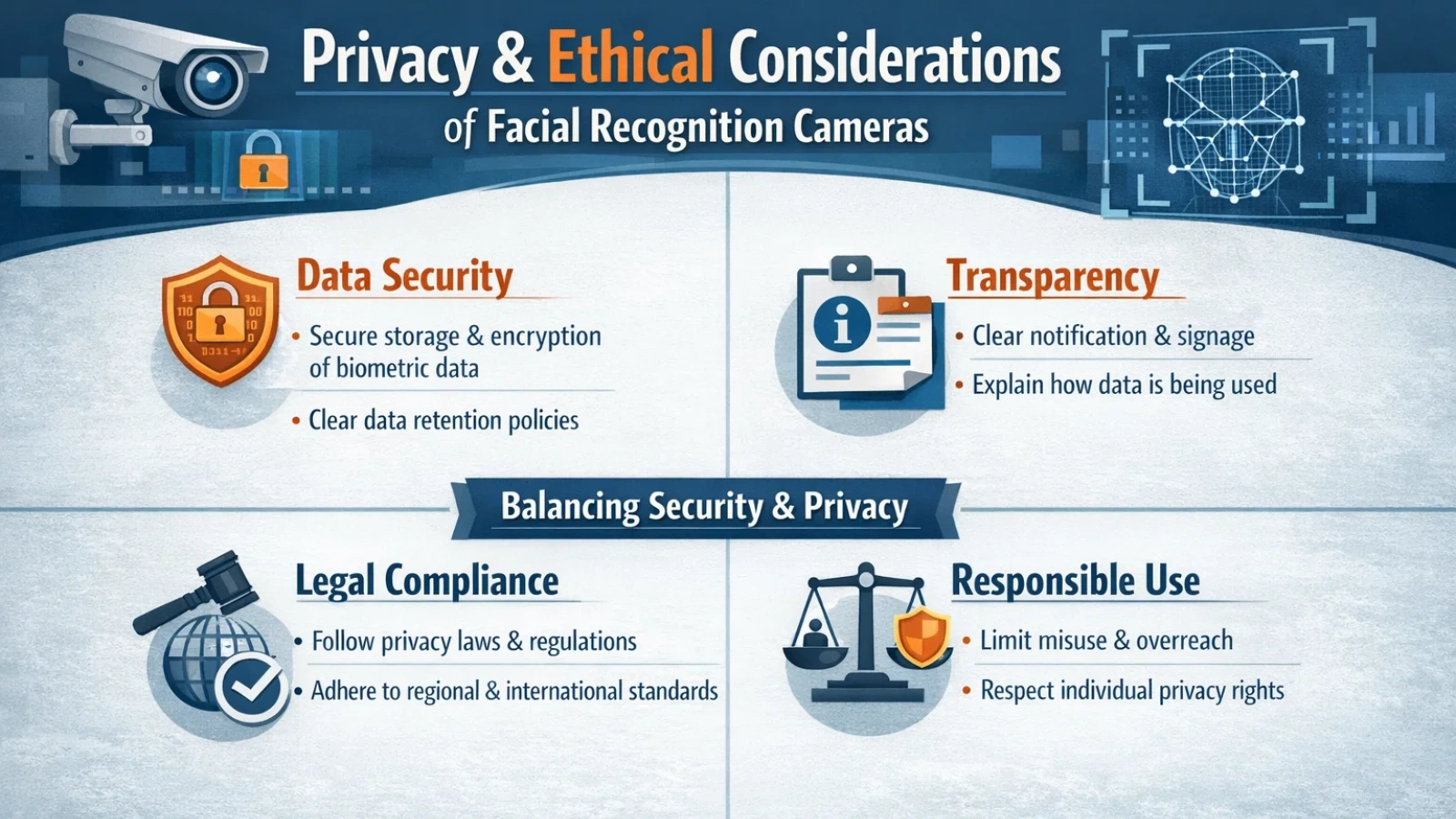
While facial recognition cameras offer advanced security benefits, their use also raises important privacy and ethical considerations. Because these systems collect and analyze biometric data, responsible implementation is essential to maintain trust and comply with legal requirements.
One of the primary concerns involves data security. Facial recognition camera systems must store facial data securely using encryption and controlled access to prevent misuse or unauthorized breaches. Clear data retention policies are also important, ensuring that facial information is stored only for as long as necessary.
Transparency is another critical factor. Organizations using facial recognition security cameras should inform individuals about where and how the technology is being used. This includes clear signage, documented policies, and defined purposes for data collection. Responsible usage helps balance security needs with individual privacy rights.
Compliance with local and international regulations is equally important. Laws governing biometric data vary by region, and facial recognition cameras must be deployed in accordance with applicable privacy and data protection standards. When implemented ethically and responsibly, facial recognition cameras can enhance security while respecting personal privacy.
Why Facial Recognition Cameras Are The Future Of Security
Facial recognition cameras have become the preferred choice for modern security because they offer more than just surveillance.
By combining real-time intelligence and advanced AI capabilities, they address the limitations of traditional security systems. Below are some key reasons why facial recognition cameras are considered the future of security:
- Facial recognition cameras provide security from reactive monitoring to proactive threat prevention through real-time identification.
- Instant detection and response help prevent incidents instead of only recording them.
- Continuous advancements in artificial intelligence improve accuracy and reliability over time.
- Machine learning enables consistent performance across varying lighting conditions, angles, and environments.
- Integration with access control systems and IoT devices creates fully automated security workflows.
- Unified security ecosystems support modern buildings, enterprises, and smart city infrastructure.
- Increasing demand for scalable and intelligent security solutions is driving widespread adoption.
- The combination of precision, efficiency, and predictive capabilities positions facial recognition cameras as the future of security technology.
Best AI Video Intelligence Tool
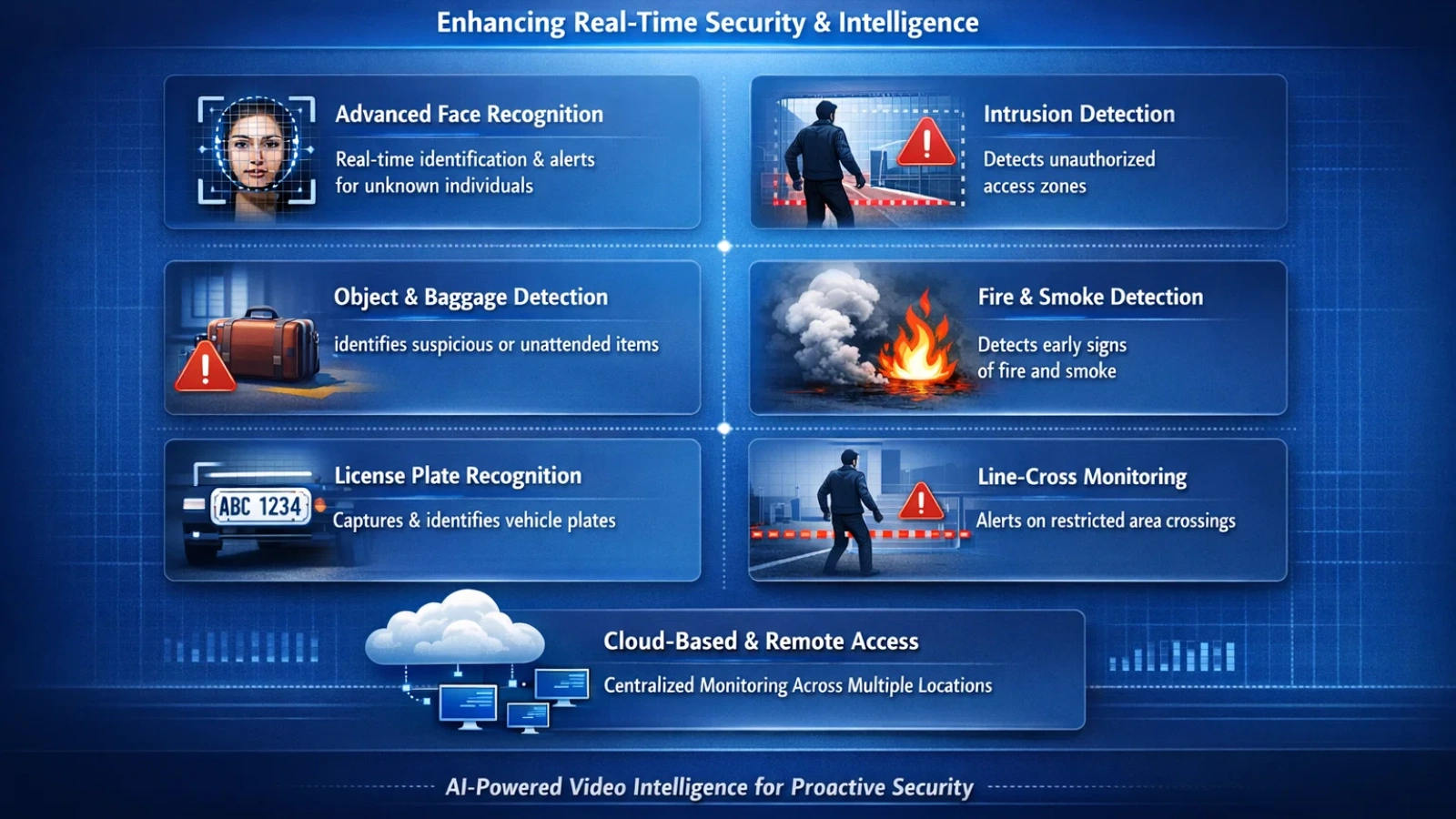
Modern security systems are increasingly supported by AI-powered video intelligence platforms that extend the capabilities of facial recognition cameras. One such tool is VideoraIQ, which is the best surveillance infrastructure for an intelligent, real-time monitoring system.
VideoraIQ works alongside facial recognition camera systems by analyzing live video feeds and converting them into actionable security insights. This makes it a valuable addition to environments where proactive monitoring and quick decision-making are critical.
Key Features of VideoraIQ
VideoraIQ offers a range of AI-driven features that complement facial recognition security cameras and strengthen overall surveillance operations:
Advanced Face Recognition: Identifies and tracks individuals in real time, even in challenging conditions such as low lighting, crowded spaces, or varying camera angles. It supports alerts for unknown or unauthorized individuals.
Intrusion Detection: Detects unauthorized movement within defined areas and triggers instant alerts, helping prevent incidents before they escalate.
Object and Unattended Baggage Detection: Monitors live video feeds for suspicious or left-behind objects, improving situational awareness in public and high-risk locations.
Fire and Smoke Detection: Uses AI models to identify early signs of fire or smoke through video analysis, enabling faster response compared to traditional detection methods.
Line-Cross and Access Monitoring: Allows virtual boundaries to be set within camera views, generating alerts when people or vehicles cross restricted zones.
License Plate Recognition: Automatically detects and records vehicle number plates, supporting access control and vehicle tracking.
Cloud-Based Scalability and Remote Access: Enables centralized monitoring across multiple locations, remote access to alerts and dashboards, and easy scaling without major hardware changes.
By integrating VideoraIQ with facial recognition cameras, security systems become more intelligent and predictive. This combination enhances real-time threat detection, reduces reliance on manual monitoring, and supports the future-ready security environments that organizations increasingly require.
Conclusion
Security threats are becoming more advanced, and traditional surveillance systems are no longer enough to provide effective protection. A facial recognition camera handles these challenges by introducing real-time intelligence and proactive threat response. Instead of simply recording events, it enables security systems to recognize individuals, assess situations instantly, and take action when it matters most.
As part of a complete facial recognition camera system, this technology delivers clear advantages such as stronger access control, fewer false alerts, improved monitoring efficiency, and long-term cost benefits. The integration of AI video intelligence tools further enhances performance by converting live video feeds into meaningful security insights rather than passive recordings.
Although privacy and compliance must be carefully considered, responsible implementation allows facial recognition security cameras to enhance safety without compromising trust. As the demand for intelligent, scalable, and future-ready security solutions continues to grow, facial recognition cameras are set to become a standard component of modern security strategies, offering reliable protection and lasting value.
Frequently Asked Questions
1. How accurate are facial recognition cameras under real-world conditions?
Facial recognition cameras are perfectly reliable under real-world conditions, including varying lighting conditions and camera angles. Advanced AI and machine learning models continuously improve accuracy over time, allowing the system to recognize faces even when the appearance changes due to aging, facial hair, or accessories.
2. Can a facial recognition camera work at night or in low-light areas?
Most modern facial recognition cameras are equipped with infrared or low-light imaging capabilities. These features allow the camera to detect and analyze facial features in low-light or nighttime conditions without compromising the recognition performance.
3. Is Internet connectivity required for facial recognition camera systems?
Internet connectivity is not always required. Some facial recognition camera systems can operate on local servers for on-site processing. However, cloud-based systems require Internet access to enable remote monitoring, data synchronization, software updates, and centralized management.
4. How secure is the facial data stored by facial-recognition cameras?
Facial data are typically protected using encryption, access controls, and secure storage protocols. Well-designed systems also include configurable data retention policies to ensure that biometric information is stored only when necessary and in compliance with privacy regulations.