

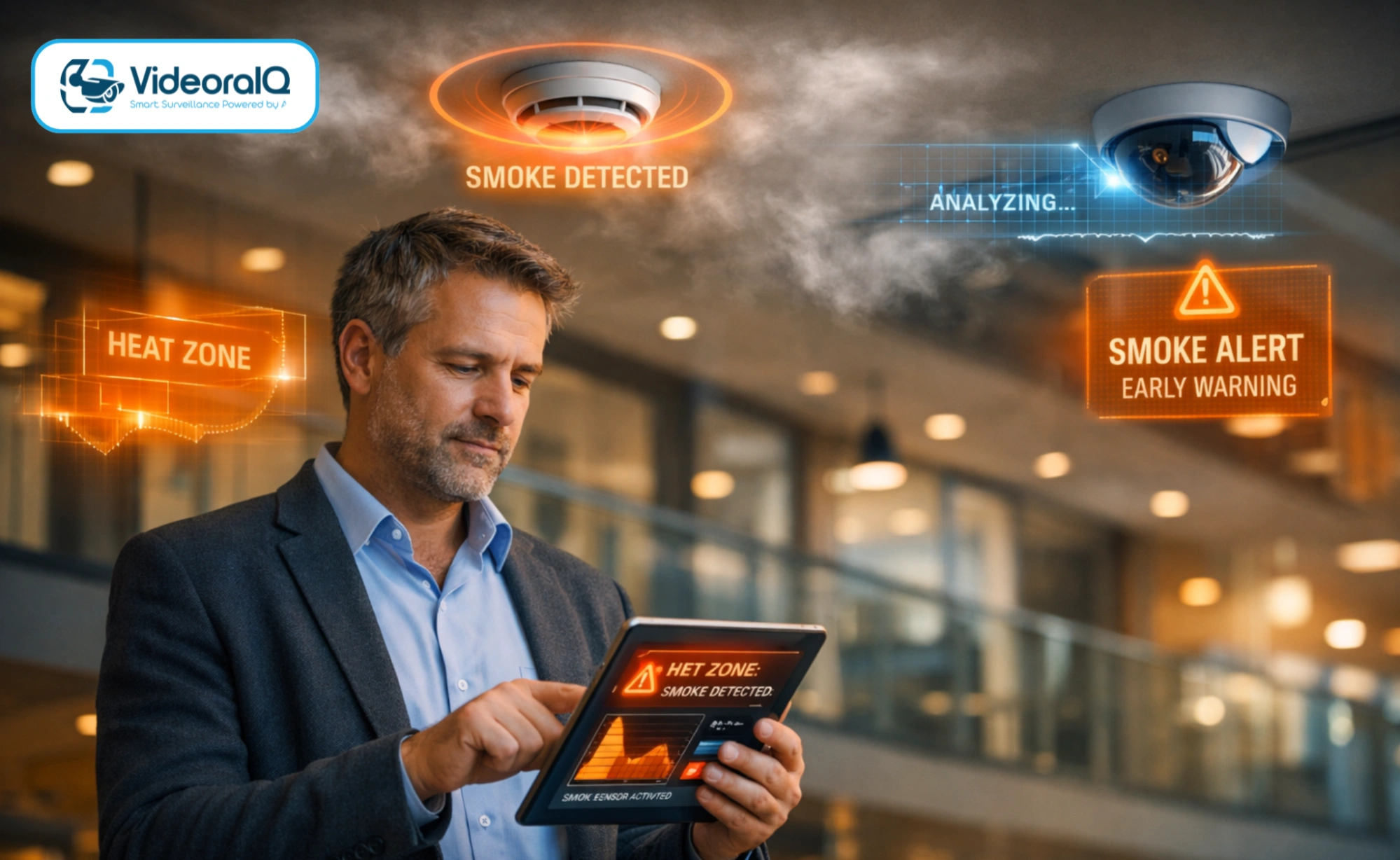
Fire detection is one of the most important methods for ensuring the safety of people and facilities. Early fire observation provides more time to react and reduce damage. Early warnings can make a real difference in protecting lives, property, and business operations. A fire alarm system detects signs of fire, such as smoke, heat, or flames, and alerts people to take action. Although many safety systems exist in buildings, fire alarm systems focus specifically on identifying fire-related threats and triggering reliable alerts.
In this article, we explain what a fire alarm system is and how a fire recognition system works in simple terms. You will learn about the main components and types of fire alarm systems and how early fire observation works. Modern technologies, including AI-based fire detection systems, are changing the way fires are detected.
By the end of this article, you will have a clear understanding of how fire detection systems help keep people and buildings safe.
What Is Fire Detection?
Fire identification is the process of identifying a fire and alerting people before the situation becomes dangerous. It looks for common signs of fire, such as smoke detection, heat, or flames. The purpose of fire identification is to detect a fire before it breaks out and take quick action.
In simple words, fire recognition serves as an early warning system. Helps prevent small fires from becoming serious emergencies. Whether in a home, office, factory, or public building, early fire recognition provides people with more time to evacuate safely and allows emergency teams to respond more quickly.
Fire detection system sensors, such as smoke, heat, and flame detectors, are constantly monitoring the environment. In some cases, human observation can trigger an alarm. When these sensors detect signs of a fire, the system automatically processes the signal and activates audible and visual alarms to warn the occupants.
This automatic detection and alert process makes fire recognition the first line of defense in protecting lives and property from fire hazards. By detecting fires early and responding, these systems play a role in reducing damage and ensuring overall safety.
What Is A Fire Detection System?
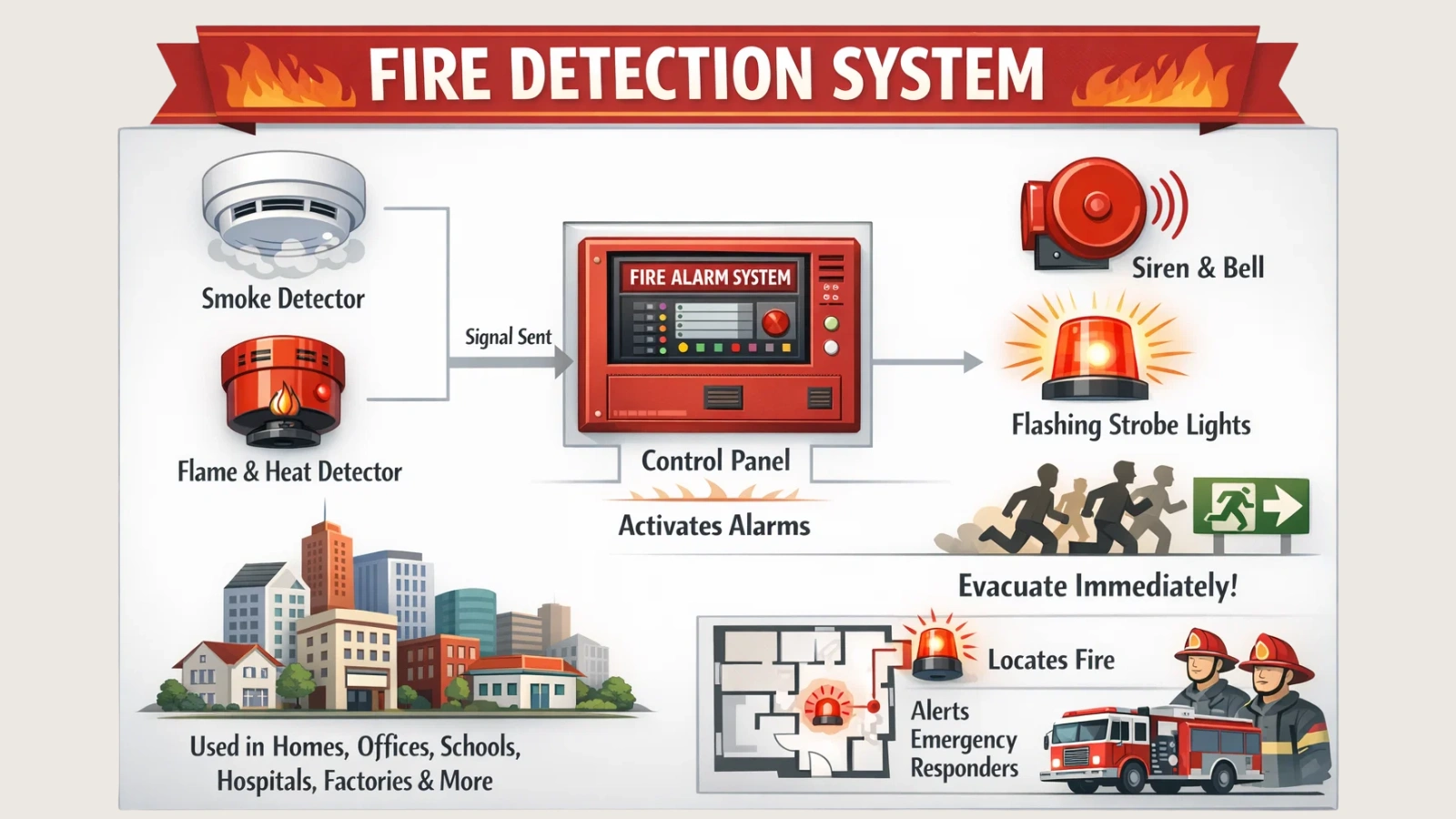
A fire detection system is a group of devices that work together to detect fires and alert authorities. Its main function is to identify signs of fire, such as smoke, heat, or flames, and trigger an alarm so that occupants can take immediate action.
A single smoke detector and fire recognition system are usually connected to a central control panel. When a detector senses a potential fire, it sends a signal to the control panel. The panel then activates alarms throughout the building, such as sirens, bells, and flashing lights, to warn everyone.
Fire detection systems are used in many types of buildings, including homes, offices, hospitals, schools, factories, and shopping centers. In larger or more complex spaces, these systems help pinpoint the exact location of a fire, making it more manageable for people to evacuate and for emergency responders to act quickly.
How Does a Fire Alarm System Work?
A fire alarm system constantly monitors a building for signs of fire. It uses detectors to detect smoke, heat, or flames in different areas. As long as everything is normal, the system remains on standby and continues to monitor the environment.
When a detector senses something unusual, such as smoke in the air or a sudden temperature rise, it sends a signal to the fire-alarm control panel. The control panel is the heart of the system. It receives the signal and confirms the alert.
Once the control panel processes the signal, it activates the alarm devices throughout the building. These include loud sirens, bells, or flashing lights that warn people to evacuate immediately. In some systems, alarms may also trigger automatic actions, such as notifying emergency services or controlling other building systems.
In simple terms, the process follows three steps: detection, processing, and alerting. This quick and automatic response helps ensure that everyone is informed as early as possible, providing them with time to react and move to safety.
Key Components Of A Fire Detection System
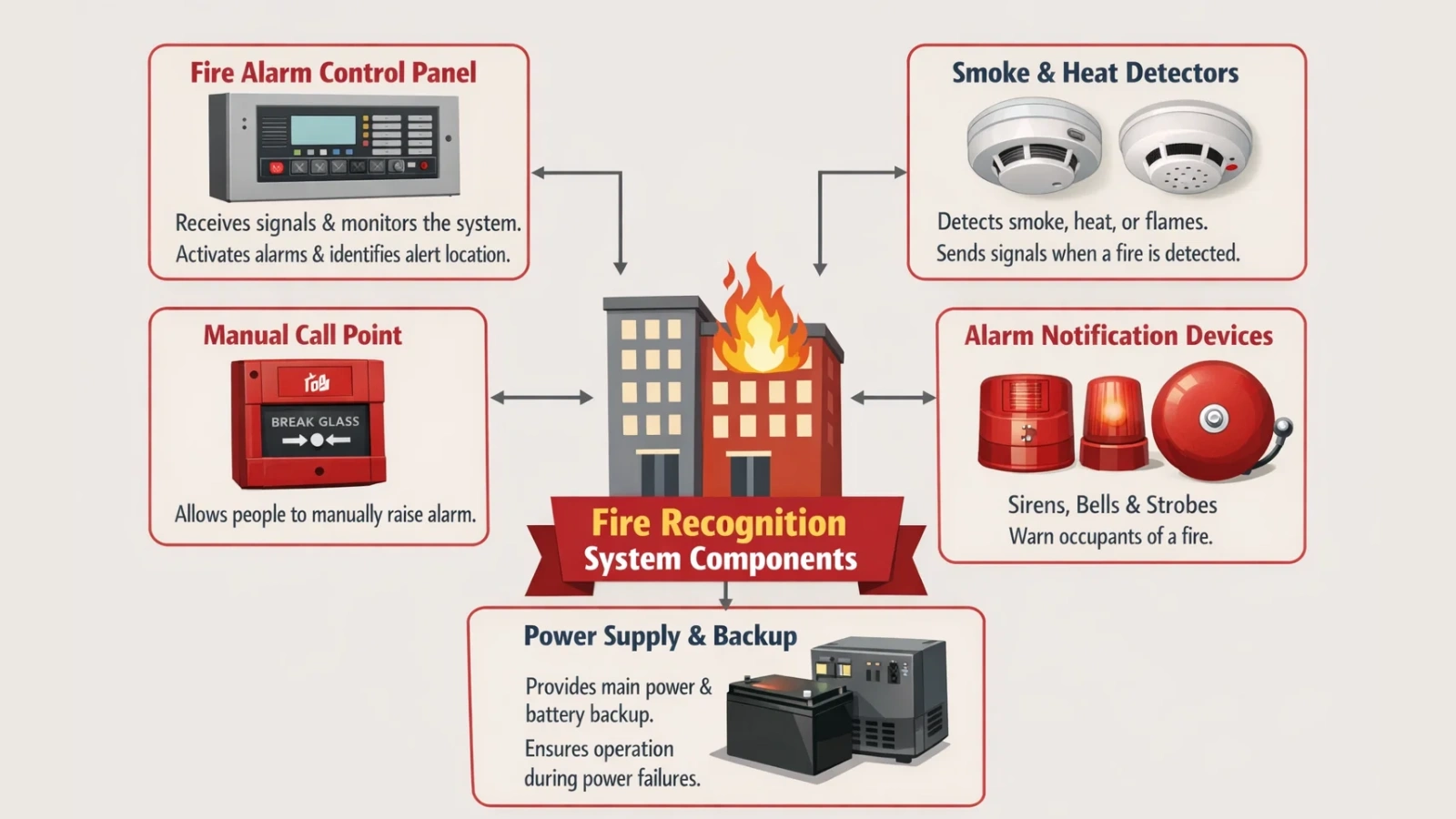
A fire recognition system comprises several key components that work together to detect fires. Each part plays a role in ensuring that the system responds accurately and
The fire-alarm control panel is the central unit of the system. It receives signals from detectors, monitors the system status, and activates alarms when a fire is detected. It also helps identify the source of the alert, which is especially important in large buildings.
Fire and smoke detectors sense the early signs of a fire. These detectors look for smoke, heat, or flames and send a signal when an unusual event is detected. Different types of detectors are used depending on the environment and risk assessment level.
Manual call points are used to raise alarms before the system. These are near exits or along escape routes that can quickly sound alarms.
Alarm notification devices, such as sirens, bells, and flashing lights, are used to warn occupants when a fire is detected. Their purpose is to ensure that everyone in the building is aware of the danger and can evacuate safely.
Finally, the system includes a power supply, often with a battery backup. It ensures that the fire detection system operates even during power failures, providing reliable protection at all times.
Also Read:
How To Choose The Right Digital Video Recorder For Security?
How Video Analytics Solutions Improve Security And Efficiency?
Types Of Fire and Smoke Detectors Used In Fire Detection
Different conditions require different types of detectors to ensure accurate and early detection of fires. Each type is designed to respond to specific signs of fire, thereby reducing false alarms while improving safety.
Smoke detectors are the most common type of fire detection system. There are two main types of radiation detectors: ionization and photoelectric. Ionization smoke detectors are more sensitive to fast-flaming fires, whereas photoelectric smoke detectors are better at detecting slow-smoldering fires. Many modern systems use a combination of both methods for improved coverage.
Heat detectors respond to changes in temperature rather than smoke. They are activated when the temperature reaches a certain level or rises rapidly within a short period. Heat detectors are often used in areas where smoke detectors may trigger false alarms, such as kitchens and industrial spaces.
Flame detectors are designed to detect visible and invisible flames by sensing specific light wavelengths. These detectors are commonly used in high-risk environments, such as factories, fuel storage areas, and chemical plants, where fires can spread rapidly.
Carbon monoxide detectors monitor the presence of carbon monoxide, which is often produced during incomplete combustion. Although they are not always classified as fire detectors, they add an extra layer of safety by alerting occupants to dangerous gas levels that may be linked to fire-related incidents in the future.
The use of the appropriate combination of detectors helps ensure early fire identification and reliable system performance across different types of buildings and risks.
What Is An AI based Fire Detection System?
An AI-based fire detection system uses artificial intelligence to identify signs of fire more quickly and accurately. Instead of relying on traditional sensors, these systems analyze data from cameras and other inputs to detect smoke, flames, or unusual behavior in real time.
AI-based systems to recognize fire patterns by analyzing thousands of images and scenarios. Allows them to detect fires even in challenging conditions, such as large open areas or outdoor environments, where traditional fire detection systems may struggle.
One of the advantages of an AI-based fire recognition system is its ability to reduce false alarms. By understanding the difference between actual fire indicators and harmless activities, the system can provide more reliable alerts and faster decision-making.
These systems are in industrial sites, warehouses, smart buildings, and public spaces where early fire recognition and response are required. By combining intelligent analysis with real-time monitoring, AI-based fire recognition systems add a powerful layer of protection to modern fire safety solutions.
The Best AI Surveillance Tool
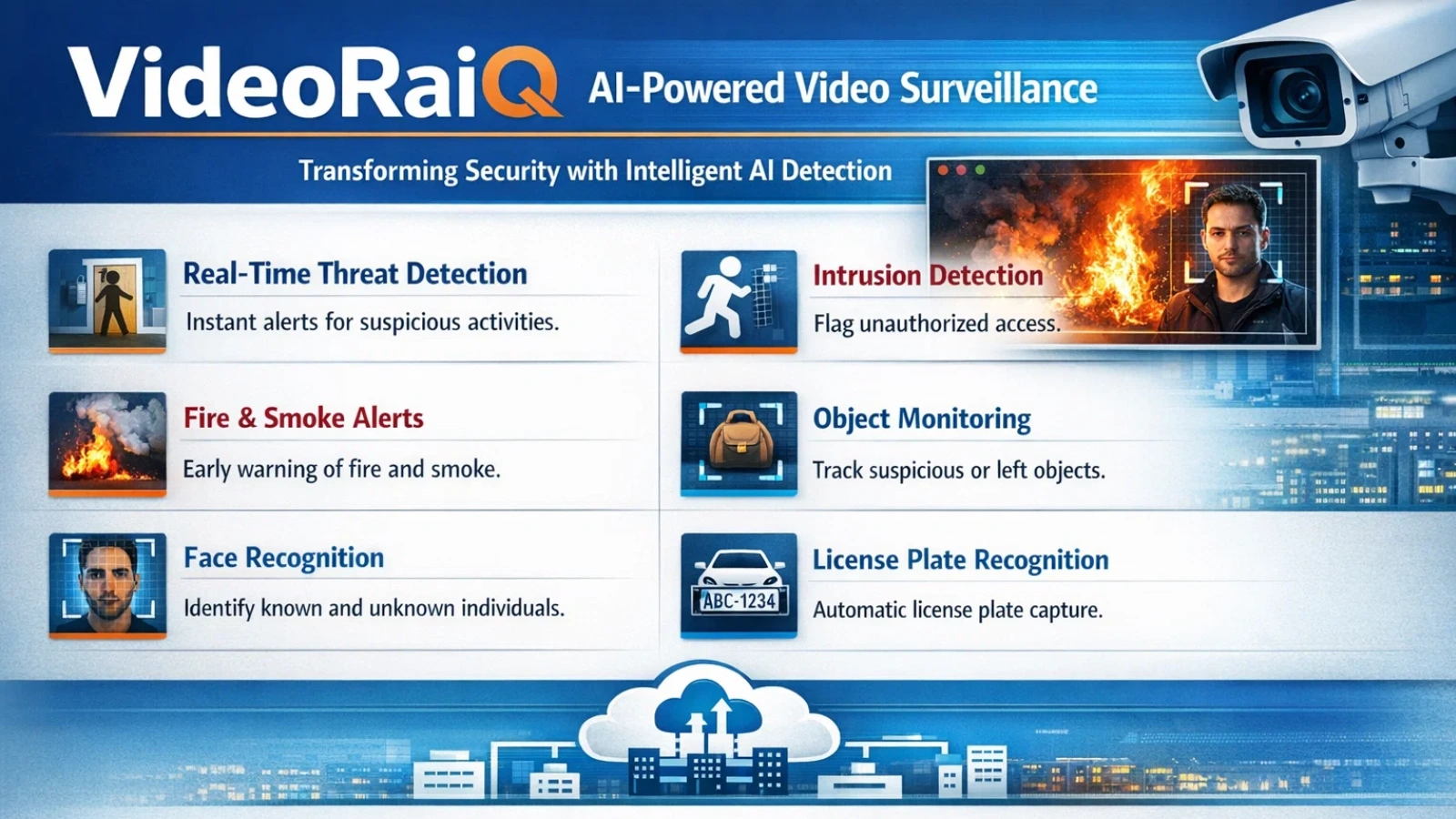
In modern video surveillance, VideoraIQ is one of the most advanced AI powered smoke and fire detectiontools. Rather than just recording footage like traditional CCTV systems, VideoraIQ turns every camera into a proactive detection system that analyzes live video and alerts users to potential issues as they occur.
VideoraIQ is a cloud-based AI video surveillance platform designed to upgrade standard security systems. It uses artificial intelligence to interpret video feeds, detect threats instantly, and send alerts to security teams or building managers to act quickly and confidently.
Key Features of VideoraIQ
The following features make VideoraIQ a powerful choice for smart surveillance:
Real-Time Threat Detection
VideoraIQ continuously analyzes video footage using AI to detect activities, such as a person entering a restricted area, an object left unattended, or signs of smoke or fire. Alerts instantly, so you can respond.
Fire and Smoke Alerts
Beyond typical security threats, VideoraIQ can detect early signs of fire and smoke in the Ip camera feeds. It adds another layer of safety by combining security surveillance with fire detection and alerting.
Face Recognition
The platform’s advanced facial recognition system identifies individuals. It can differentiate between known and unknown faces, assist with access control, and support safety workflows across locations.
Intrusion and Unauthorized Access Detection
VideoraIQ flags unauthorized entries or movements in secure zones, helping to prevent breaches before they escalate. Custom detection zones and real-time alerts improved monitoring accuracy.
Object Detection and Monitoring
The system can recognize suspicious or unattended objects and track them across different camera perspectives. It helps with security in public areas, transport hubs, and large venues.
License Plate Recognition
For facilities with vehicle entry, VideoraIQ can automatically detect and log license plates, thereby streamlining access control and record-keeping.
Cloud-Based Access and Scalability
As a cloud platform, VideoraIQ can be accessed from anywhere and scaled across multiple locations without heavy local infrastructure. This makes it easier to manage security at scale.
AI-Based Fire Detection System vs Traditional Fire Alarm Systems
AI-based fire detection systems and traditional fire alarm systems are both designed to detect fires, but they work in different ways. Understanding these differences helps in the solution for a specific environment.
Traditional systems rely on physical sensors such as smoke, heat, and flame detectors. These systems are reliable and widely used, particularly in homes and standard commercial buildings. However, they usually require smoke or heat to reach the detector before an alarm is triggered, which can cause slight delays in large spaces or open areas.
AI-based fire identification systems use cameras and intelligent software. Allows them to identify a fire at a much earlier stage, sometimes even before the smoke reaches a sensor. Consequently, response times are often.
Another key difference is the accuracy. Traditional systems can sometimes trigger false alarms due to dust, steam, or environmental changes, to recognize fire patterns and unnecessary alerts.
Fire Detection System Standards and Compliance
Fire detection systems must comply with safety standards and regulations to ensure they can detect a fire if it occurs. These standards provide reliable protection.
Compliance with fire-detection standards helps ensure that alarms are on time, alerts are clear, and systems remain dependable during emergencies. It also helps building owners meet legal and insurance requirements while reducing safety risks.
Different regions and building types follow specific fire-safety codes and guidelines. These standards often cover detector placement, system performance, power backup, and regular testing. Following these steps ensures that the fire recognition system performs as expected under real-world conditions.
In simple terms, standards and compliance exist to ensure that fire recognition systems perform their functions when it matters most. A compliant system not only improves safety but also provides occupants with confidence that the building is well-protected.
Maintenance And Testing of Fire Detection Systems
Regular maintenance and testing are essential for ensuring the proper functioning of fire-detection systems. Even the best systems can fail if they are not inspected and maintained on time. Routine checks ensure that detectors, alarms, and control panels respond correctly during emergencies.
Maintenance usually includes inspecting detectors for dust or damage, checking alarm devices, and ensuring that the control panel functions as expected. Backup power sources, such as batteries, were also tested to confirm that the system continued to work during a power outage.
Regular testing of fire detection systems helps identify issues before they become serious problems. It also ensures that the system meets safety standards and compliance requirements. For AI-based fire recognition systems, testing may include checking camera performance and software accuracy.
Proper maintenance and testing ensure the reliability of fire identification systems. They help ensure early fire recognition, reduce the risk of false alarms, and provide confidence that the system will protect people and property when it is most needed.
Conclusion
Fire detection plays a role in the lives, properties, and operations of all types of buildings. From basic smoke detectors to advanced fire recognition systems, the goal remains the same: to detect fires early and alert people in time to take action.
Traditional fire-alarm systems continue to provide reliable protection, especially in residential and standard commercial environments. Simultaneously, modern technologies such as smoke and fire detection are changing how fires are detected, offering response times and fewer false alarms in complex or large spaces.
The selection of an appropriate fire recognition system depends on the building type, risk level, and safety requirements. When combined with proper standards, regular maintenance, and timely testing, fire recognition systems become a strong first line of defense against fire hazards.
By understanding how fire recognition systems work and how new AI-based solutions enhance safety, organizations and individuals can make better decisions to protect people, assets, and operations from fire hazards.
Frequently Asked Questions (FAQ)
Can a fire detection system function without Internet connectivity?
Most traditional fire identification systems operate independently without Internet access. Fire recognition systems may use the Internet for cloud processing and alerts; however, many still support local alerts, even if connectivity is limited.
How quickly can an AI-based fire detection system detect a fire?
AI-based systems can detect smoke or flames within seconds by analyzing live video feeds. In many cases, they identify fire risks earlier than traditional detectors, particularly in large or open areas.
Are AI-powered fire detection systems suitable for outdoor use?
Smoke and fire recognition systems are well-suited for outdoor environments, such as parking areas, industrial yards, and open warehouses, where traditional sensors may not perform effectively.
Can fire detection systems be integrated with other safety and security systems?
Yes, with access control, CCTV, building management systems, and emergency notification systems, overall safety and response coordination are ensured.
How often should fire detection systems be upgraded?
There is no fixed timeline, but upgrades are necessary when systems become outdated, no longer meet compliance standards, or when newer fire recognition technologies can significantly improve safety and performance.