

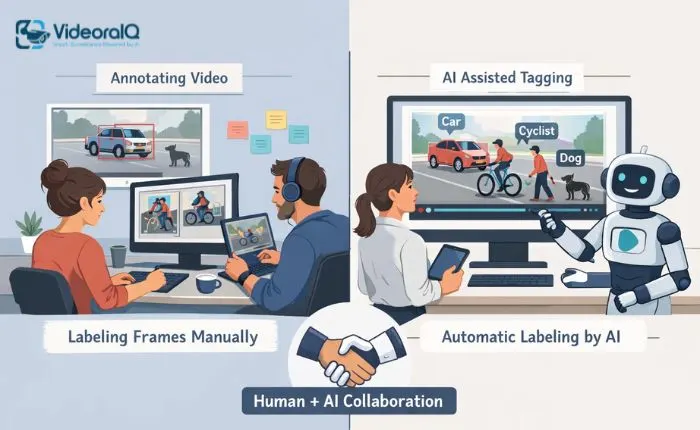
Data annotation is essential for training AI models to recognise, interpret, and act on information accurately. For video AI, which deals with large volumes of dynamic content, precise annotation ensures that algorithms can detect objects, track motion, and analyse complex scenes effectively.
High-quality annotated datasets are crucial for video analytics, powering applications such as security monitoring, traffic management, retail behaviour analysis, and sports performance tracking. Without accurate labelling, AI models may produce unreliable insights, reducing the effectiveness of automated systems.
Advanced platforms like VideoraIQ streamline the annotation process, offering tools for both manual and automated labelling. By combining human expertise with AI-assisted automation,
This blog covers what data annotation is, key methods and techniques, popular tools, and real-world use cases, showing how it drives precision and reliability in AI-powered video analytics.
You can listen to this Blog here.
What Is Data Annotation?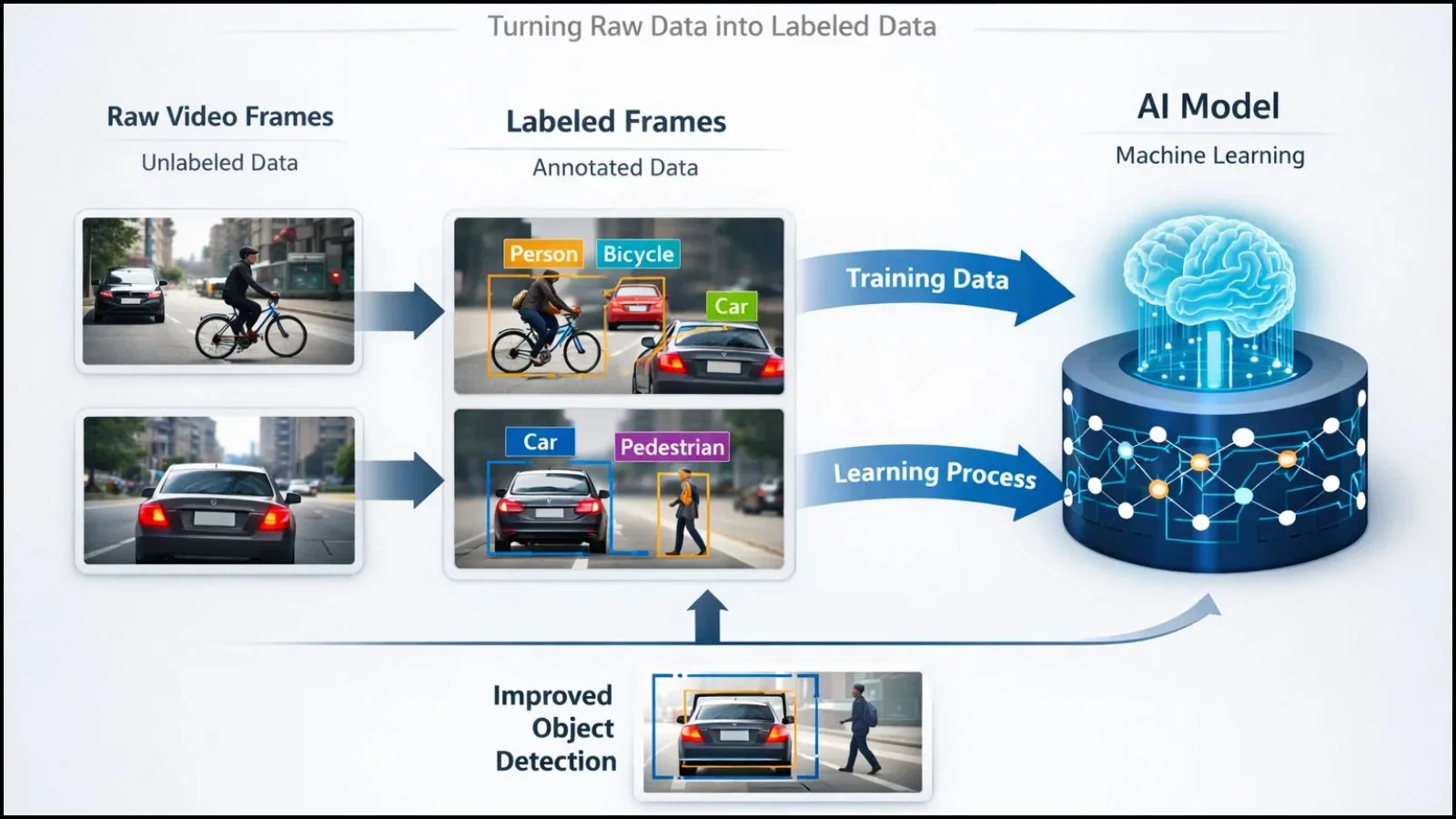
Data annotation refers to the process of labeling raw data so that AI models can understand and interpret it. In the context of video AI, this means tagging objects, actions, or events in video frames, enabling machines to recognize patterns and make predictions.
Video annotation differs from text or image annotation because it involves time-based sequences. Each frame may need individual labels, and objects may move or change appearance across frames, requiring precise tracking and consistency. Accurate annotation ensures that AI models learn correctly and can perform tasks such as detecting objects, recognizing gestures, or analyzing behaviors.
Quality is crucial in data labelling. Mislabeling or inconsistent labeling can result in faulty AI predictions, which directly impacts the reliability of video analytics. By maintaining accuracy and consistency, annotated datasets become a foundation for robust AI systems..
Why Data Annotation Matters for Video AI
Data annotation is the backbone of effective video AI. AI models cannot learn or make accurate predictions without clearly labeled training data. In video analytics, annotated datasets allow algorithms to identify objects, track movement, and detect patterns over time.
For example, in surveillance systems, annotated video frames help AI detect suspicious behavior or recognize specific individuals. In retail analytics, labeled footage enables tracking of customer movements and product interactions. Without precise annotation, these AI systems would be prone to errors, producing unreliable insights.
Annotation also improves the performance of machine learning models by reducing ambiguity and providing context. Properly labeled data helps AI distinguish between similar-looking objects, understand interactions, and respond correctly to complex scenarios. This accuracy directly impacts the effectiveness of video analytics, enabling actionable insights and better decision-making.
Methods of Data Annotation in Video AI
Data labelling in video AI can be performed using three main approaches: manual, semi-automated, and automated. Each method has its advantages, depending on the project’s scale, complexity, and accuracy requirements.
- Manual Annotation:
This involves human annotators labeling video frames by hand. It is highly accurate but time-consuming and labor-intensive, especially for long or high-resolution videos. Manual annotation is ideal for small datasets or when extreme precision is required. - Semi-Automated Annotation:
In this method, AI assists humans by suggesting labels or tracking objects across frames. Annotators then verify and correct these suggestions. This approach significantly speeds up the annotation process while maintaining accuracy. - Automated Annotation:
Fully automated annotation uses AI algorithms to label videos without human intervention. While faster and scalable, this method may require quality checks to ensure accuracy, especially for complex or dynamic scenes.
Techniques such as frame-by-frame labeling, bounding boxes, segmentation, and keypoint tracking are commonly applied in all three methods.
Types of Video Annotation Techniques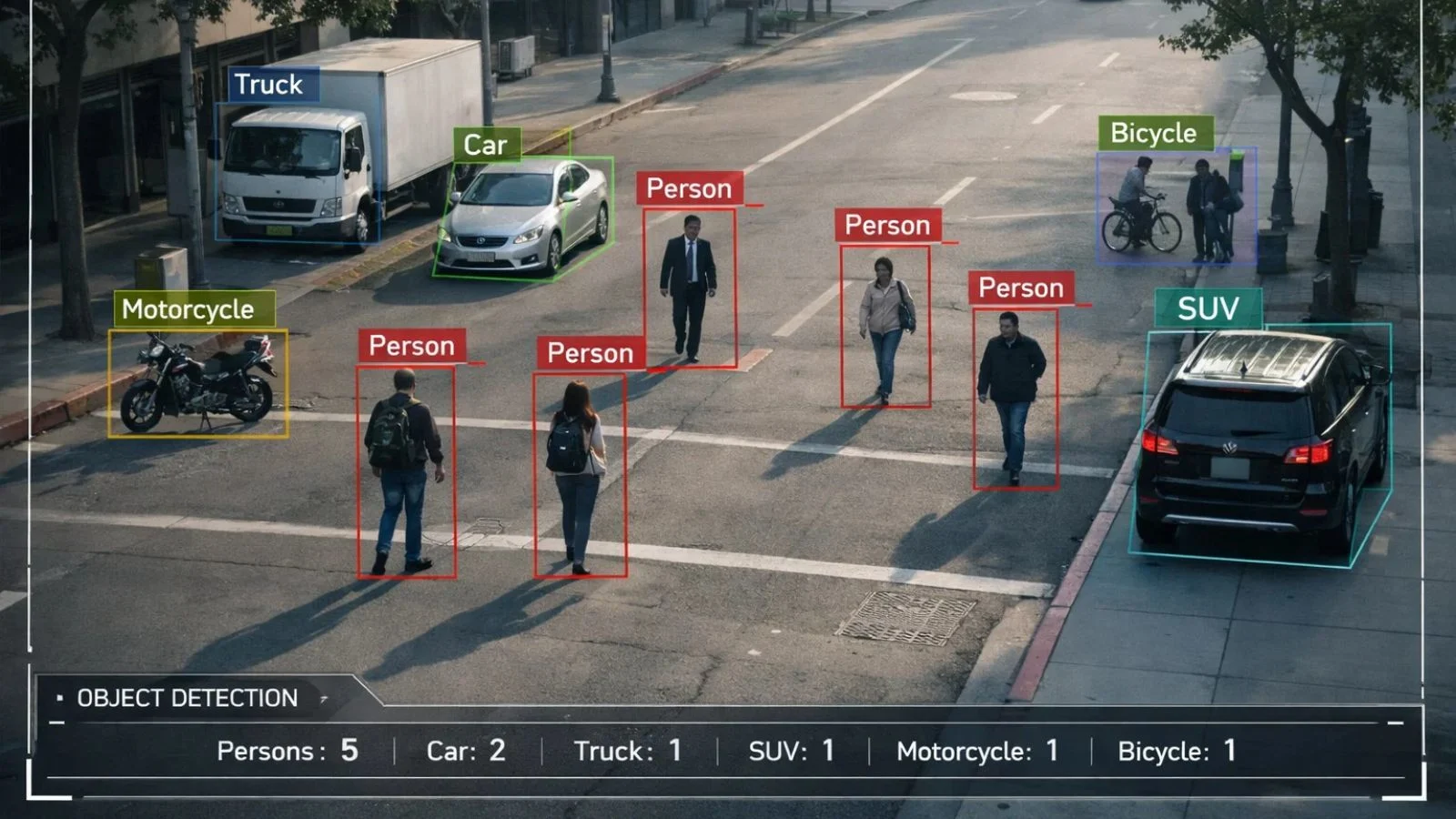
Video annotation involves several techniques, each suited to specific AI tasks and video analytics applications:
- Bounding Boxes:
Rectangular boxes are drawn around objects in each frame. Common for object detection and tracking, such as vehicles or people in surveillance videos. - Object Tracking:
Tracks the movement of objects across multiple frames. Essential for behavior analysis, sports analytics, and traffic monitoring. - Semantic Segmentation:
Assigns a class label to every pixel in a frame, helping AI understand object boundaries and interactions. Useful in autonomous driving or medical video analysis. - Keypoint/Pose Estimation:
Marks important points on humans or objects, such as joints in a person for action recognition or gestures. - Scene Classification:
Labels the overall scene or context of a video clip, such as “parking lot” or “stadium,” aiding AI in contextual understanding.
Each technique enhances AI’s ability to analyze video content accurately.
Tools for Data Annotation
Choosing the right tools is essential for efficient and accurate data annotation in video AI. Traditional manual methods are time-consuming, while modern platforms combine automation with human oversight to improve speed and quality.
Popular annotation tools offer features like frame-by-frame labeling, bounding boxes, segmentation, object tracking, and quality checks. Many also allow collaboration among multiple annotators, making large datasets manageable.
VideoraIQ stands out as a comprehensive solution for data annotation. 
Key features include:
- Automated Labeling Assistance: Speeds up annotation while maintaining accuracy.
- Multi-Technique Support: Bounding boxes, tracking, segmentation, keypoints, and more.
- Scalable Workflows: Handles large video datasets efficiently.
- Quality Assurance: Built-in checks to ensure consistent and precise annotations.
- User-Friendly Interface: Simplifies the process for both technical and non-technical users.
By leveraging VideoraIQ organizations can reduce manual effort, minimize errors, and accelerate AI model training. The platform ensures that video datasets are well-structured, reliable, and ready for advanced video analytics applications.
Use Cases of Data Annotation in Video AI
Data annotation powers a wide range of video AI applications, making it essential for accurate insights and decision-making. Key use cases include:
- Security and Surveillance:
Annotated videos help AI detect suspicious behavior, recognize faces, and track individuals or objects in real-time, improving safety in public spaces. - Retail Analytics:
Stores use labeled video data to monitor customer movements, analyze shopping patterns, and optimize store layouts for better engagement and sales. - Autonomous Vehicles:
Traffic, pedestrians, and obstacles are annotated to train self-driving car AI systems, ensuring safe navigation and accurate decision-making. - Sports Analytics:
Player movements, ball trajectories, and key actions are annotated to provide performance insights, strategy planning, and enhanced broadcast experiences. - Healthcare Video Analytics:
In surgical monitoring or patient activity tracking, annotated videos help AI detect anomalies, assist in diagnostics, and improve care quality.
Best Practices for Efficient Video Data Annotation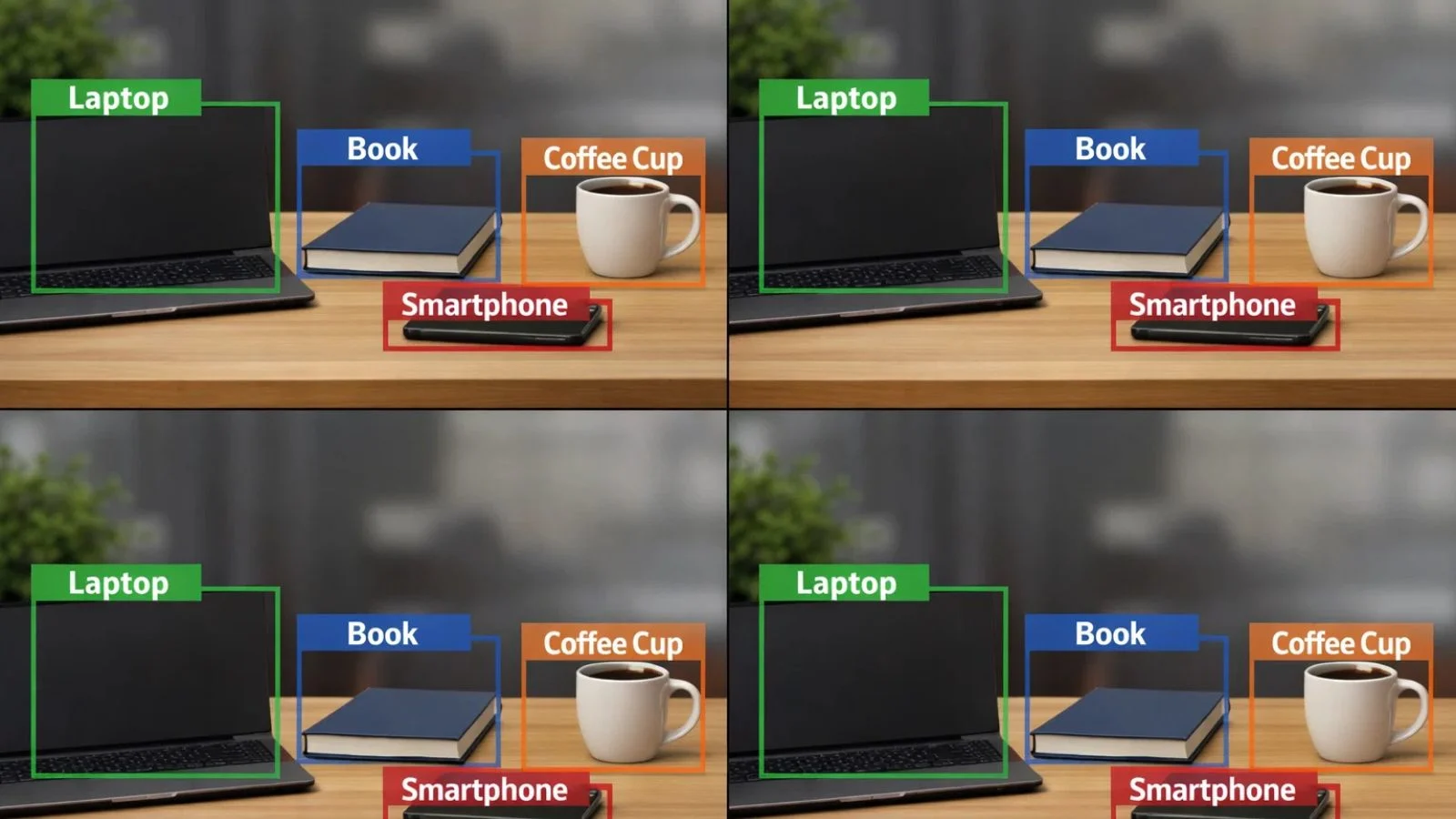
Effective data annotation requires accuracy, consistency, and efficiency. Following best practices ensures that AI models trained on video data deliver reliable results:
- Maintain Consistency: Use standardized labeling conventions across all frames and videos to reduce errors and improve model performance.
- Combine Methods: Use a mix of manual and automated annotation to balance accuracy and speed. Manual oversight ensures quality, while automation accelerates large projects.
- Quality Checks: Regularly review annotated data for errors or inconsistencies. Small mistakes can significantly impact AI predictions.
- Prioritize Clear Labeling: Ensure objects, actions, and events are labeled clearly and accurately, particularly in crowded or complex scenes.
- Leverage Annotation Tools: Use platforms or software that support multiple annotation techniques, batch processing, and frame tracking to streamline workflows.
Following these practices allows organizations to create high-quality datasets that train robust AI models and improve video analytics outcomes.
Future of Data Annotation in Video AI
The future of data annotation in video AI is moving toward automation and AI-assisted workflows. As video datasets grow in size and complexity, fully manual annotation becomes impractical. Combining AI-powered suggestions with human verification allows faster, scalable, and more accurate labeling.
Emerging trends include:
- Self-learning AI annotation tools that improve over time.
- Real-time video annotation for live analytics applications like security and autonomous driving.
- Integration with cloud platforms to handle massive datasets efficiently.
These advancements will make video analytics more precise, cost-effective, and accessible, enabling industries to leverage AI insights with higher confidence.
Data annotation is the foundation of effective video AI, enabling accurate object detection, behavior analysis, and actionable insights. High-quality annotated datasets ensure that AI models perform reliably across applications like surveillance, retail analytics, autonomous vehicles, and healthcare.
Following best practices—such as consistent labeling, combining manual and automated approaches, and performing quality checks—helps organizations create robust datasets that power accurate video analytics.
By investing in proper data labelling workflows, businesses can unlock the full potential of video AI, driving smarter insights, improved operational efficiency, and more informed decision-making.
Also read,
Retail Store Security Cameras: What You Need To Know Before Buying
How Video Analytics Solutions Improve Security And Efficiency?
FAQ’s
- Why is data labelling important for AI?
AI models require accurately labeled data to learn patterns and make predictions. - What are common video annotation techniques?
Bounding boxes, object tracking, segmentation, keypoint/pose estimation, and scene classification. - Can AI fully automate video annotation?
AI-assisted tools can automate much of the process, but human verification is often needed for accuracy.