

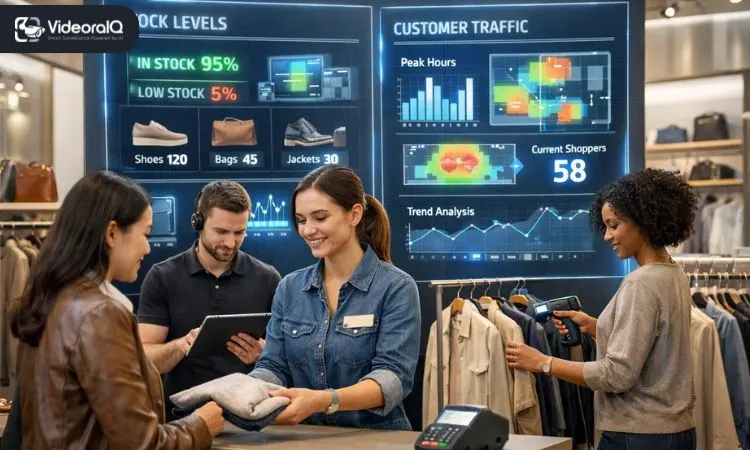
Walk into a modern retail store today, and you’ll notice something different. It’s not just about neatly arranged shelves or digital price tags anymore. Behind the scenes, artificial intelligence is quietly transforming how retailers understand what’s happening on the shop floor. From customer movement to product availability, data has become the new backbone of in-store decision-making.
One of the most impactful technologies driving this shift is object detection. Instead of relying on manual audits or guesswork, retailers can now automatically identify and track products, people, and activities using video feeds. This allows stores to move from reactive problem-solving to proactive, real-time intelligence.
As competition tightens and customer expectations rise, retailers need faster insights and better visibility across operations. AI-powered systems analyze visual data at scale, turning everyday camera footage into meaningful business information. This evolution isn’t about replacing human staff; it’s about giving them sharper tools to work smarter.
You can listen to this Blog here.
What Is Object Detection and How Does It Work?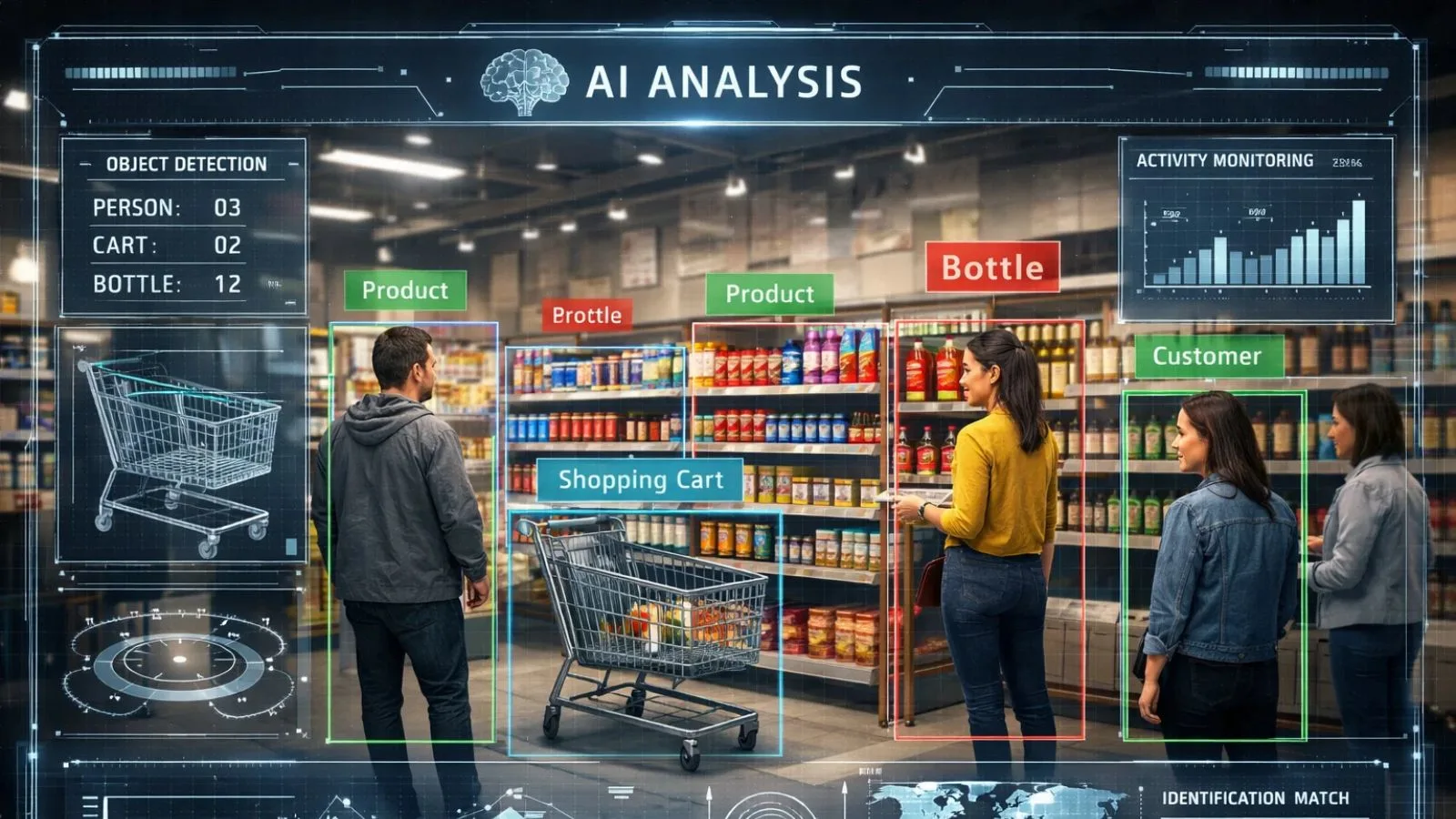
At its core, object detection is a computer vision technique that allows machines to identify and locate specific items within an image or video. Instead of just “seeing” a scene, the system understands what is present and where it appears whether that’s a product on a shelf, a person in an aisle, or a shopping cart near checkout.
Unlike basic image classification, which only labels an entire image, object detection goes a step further. It draws bounding boxes around individual objects and assigns each one a category. This added layer of detail is what makes it so valuable in retail environments, where context and location matter just as much as identification.
Behind the scenes, AI models are trained on thousands sometimes millions of labeled images. These models learn patterns such as shape, size, and movement. Once trained, they can analyze live or recorded video feeds in real time, detecting objects with impressive accuracy even in busy store settings.
For retailers, this means cameras are no longer just passive recording devices. They become intelligent sensors capable of continuously monitoring store activity. When implemented correctly, object detection enables faster insights, fewer blind spots, and more consistent data than manual observation ever could.
Why Object Detection Is a Game-Changer for Retail
Retail operations are complex. From managing inventory to ensuring smooth customer flow, even small inefficiencies can add up quickly. This is where object detection changes the game. By automating visual monitoring, retailers gain continuous visibility into what’s happening across their stores without relying on manual checks.
Traditionally, store teams had to walk aisles to check shelf availability, monitor queues, or identify potential issues. These methods are time-consuming and often inconsistent. With AI-powered detection, insights are generated automatically and in real time, allowing managers to act immediately rather than after the fact.
Another major advantage is scalability. Whether a retailer operates a single store or hundreds of locations, object detection systems can be deployed uniformly across all sites. This creates standardized data and performance benchmarks, something that’s extremely difficult to achieve through human observation alone.
Most importantly, this technology shifts retail from reactive to proactive decision-making. Instead of discovering problems during audits or customer complaints, retailers can address them as they happen. The result is better operational efficiency, improved customer experience, and data-driven strategies that actually reflect in-store reality.
Key Retail Use Cases of Object Detection
The real value of object detection becomes clear when you look at how it’s applied on the retail floor. By analyzing video data in real time, retailers can uncover insights that were previously difficult or impossible to capture consistently.
One of the most common applications is shelf monitoring. AI models can identify products on shelves, detect empty spaces, and alert staff when items are running low. This form of retail object detection helps reduce out-of-stock situations, ensuring customers find what they’re looking for without frustration.
Customer behavior analysis is another powerful use case. By tracking people as they move through the store, object detection retail systems reveal popular aisles, dwell times, and traffic patterns. These insights help retailers optimize store layouts, product placement, and promotional strategies based on actual customer behavior rather than assumptions.
Queue management also benefits significantly from this technology. AI can monitor checkout lines, count the number of people waiting, and trigger alerts when queues become too long. This allows managers to open additional counters proactively, improving customer satisfaction and reducing abandonment.
Loss prevention is another area where object detection proves valuable. By detecting suspicious activities or unusual movement patterns, retailers can enhance security without intrusive monitoring. Combined with intelligent alerts, this approach supports safer stores while respecting operational efficiency.
Role of Image Recognition in Retail Intelligence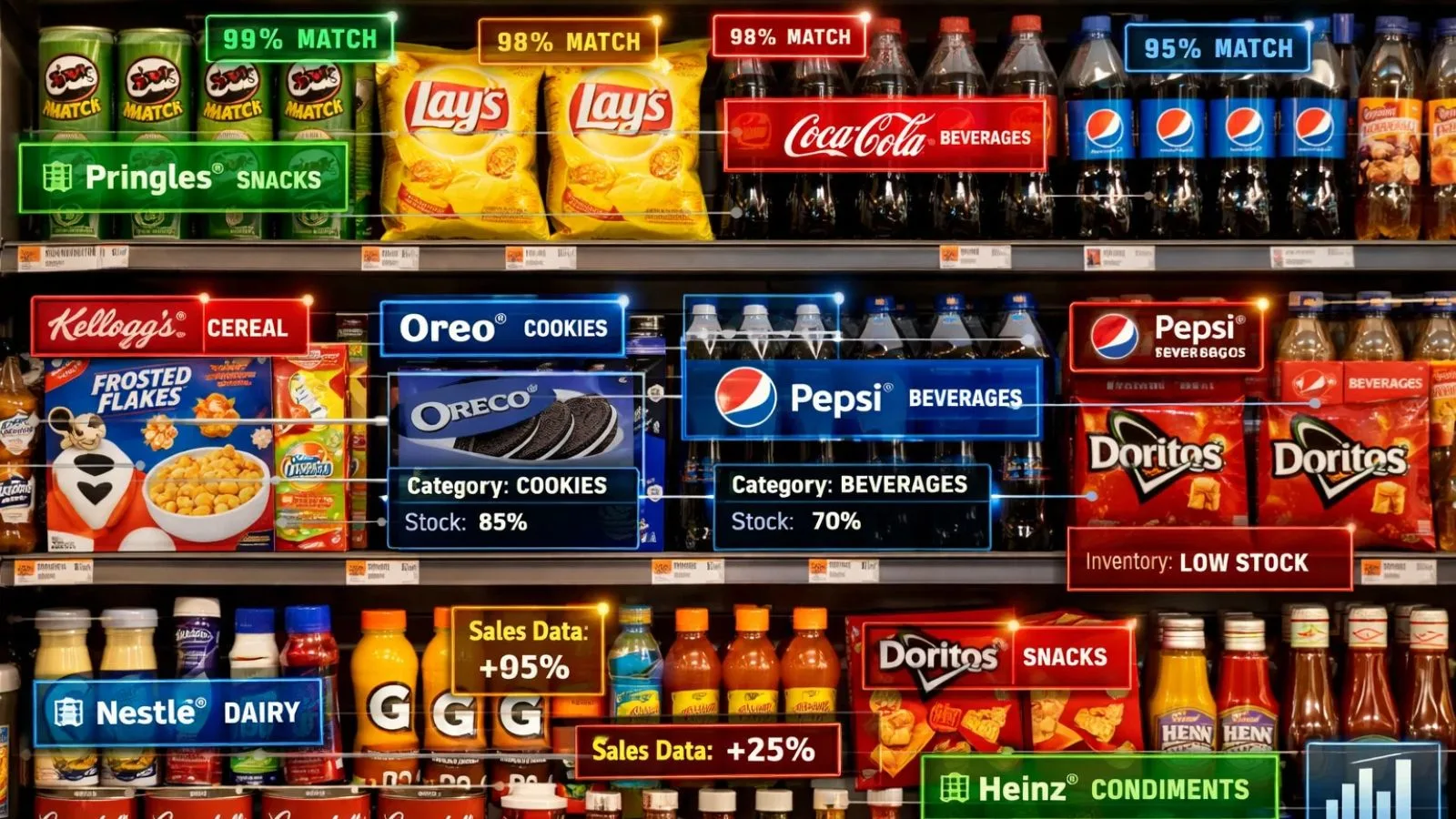
To fully understand the impact of object detection, it helps to look at how it works alongside image recognition. While the two technologies are closely related, they serve different purposes in retail intelligence and are most powerful when used together.
Image recognition focuses on identifying what appears in an image or video frame. It answers questions like: Is this a product, a person, or a shopping cart? Object detection builds on this by adding location and movement, enabling systems to track where those items are and how they interact with the environment.
In retail, the Role of Image Recognition in Retail goes beyond simple identification. It supports brand recognition, product categorization, and pattern analysis across large volumes of visual data. When paired with detection models, it allows retailers to understand not just what is present in a store, but how it’s being used or engaged with.
For example, image recognition can identify specific product categories, while object detection tracks how often customers interact with them. Together, these insights help retailers fine-tune merchandising strategies, evaluate promotional effectiveness, and improve overall store performance.
This layered approach to visual intelligence is what enables smarter, data-driven retail operations. Instead of isolated data points, retailers gain a connected view of in-store activity that directly informs better decision-making.
Importance of Data Labeling for Accurate Object Detection
Behind every reliable object detection system is one critical foundation: high-quality training data. This is where data labeling plays a crucial role. Without properly labeled images and videos, even the most advanced AI models struggle to deliver accurate results in real-world retail environments.
Data labeling involves tagging objects within visual data so AI systems can learn what to recognize. In retail scenarios, this might include labeling products, shelves, people, shopping carts, or checkout counters. The more precise and consistent these labels are, the better the model becomes at identifying objects across different stores, lighting conditions, and layouts.
Retail environments are especially challenging because no two stores look exactly alike. Product packaging changes, shelves are rearranged, and customer behavior varies throughout the day. Proper data labeling helps AI models adapt to these variations, ensuring object detection remains accurate and reliable over time.
Another important aspect is relevance. Models trained on generic datasets may work in controlled environments but often fall short in retail settings. Custom-labeled data that reflects real store conditions significantly improves detection performance and reduces false alerts.
In short, data labeling isn’t just a technical step it’s a strategic investment. For retailers looking to scale AI-driven insights, well-labeled data is what turns raw video footage into dependable, actionable intelligence.
Challenges of Implementing Object Detection in Retail
While object detection offers powerful insights, implementing it in retail isn’t without challenges. Variations in lighting, crowded aisles, and frequent layout changes can affect detection accuracy. Camera placement and angles also play a big role in how well the system performs.
Privacy and compliance are other considerations. Retailers must ensure AI systems follow local data protection regulations and avoid intrusive monitoring. Finally, scaling detection across multiple stores requires reliable infrastructure and well-optimized models to maintain consistent performance.
How AI Video Analytics Enhances Object Detection Results
Object detection becomes far more effective when combined with AI video analytics. Instead of just identifying objects, video analytics systems interpret patterns, trigger alerts, and generate dashboards in real time.
This approach helps retailers move from raw detection data to actionable insights, such as identifying recurring bottlenecks or tracking long-term performance trends without manual analysis.
How VideoraIQ Enables Smarter Retail Object Detection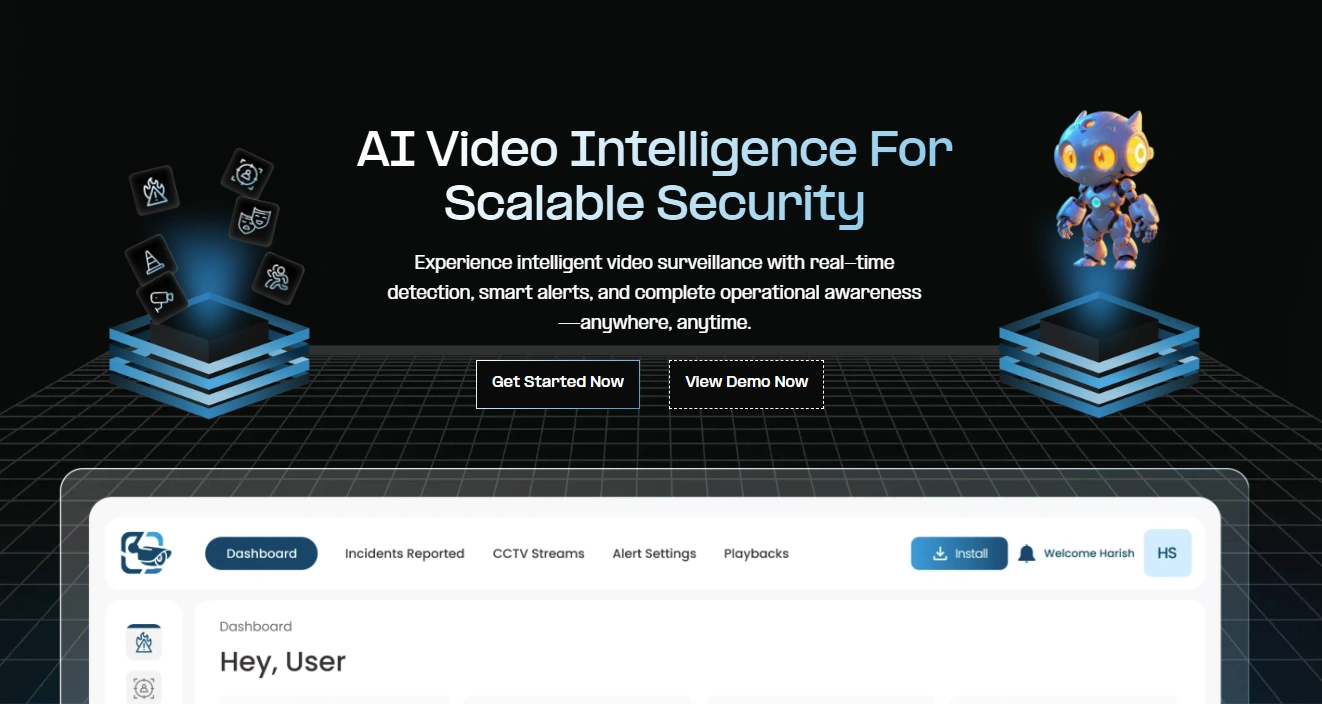
VideoraIQ.com helps retailers unlock the full potential of object detection through advanced AI-powered video analytics. The platform transforms existing camera feeds into real-time, actionable intelligence tailored for retail environments.
Key features include:
- Real-time object detection and tracking
Accurately identifies and tracks people, products, and movements within the store in real time, enabling retailers to monitor customer behavior, foot traffic patterns, and in-store interactions without manual effort. - Retail-focused analytics dashboards
Provides intuitive dashboards with visual insights such as heatmaps, dwell time, customer flow, and zone performance, helping businesses make data-driven decisions to improve store layout and sales strategies. - Easy integration with existing CCTV infrastructure
Seamlessly connects with current camera systems, eliminating the need for costly hardware upgrades while ensuring quick deployment and minimal disruption to ongoing operations. - Intelligent alerts for operational issues
Sends automated notifications for events like overcrowding, long checkout queues, restricted area access, or unusual activity, allowing teams to respond proactively and maintain smooth store operations. - Scalable deployment across multiple locations
Designed to support single stores as well as large retail chains, enabling centralized monitoring and consistent analytics across multiple outlets with flexible scaling as the business grows.
By turning video data into insights, VideoraIQ enables faster decisions, better store efficiency, and improved customer experiences.
Future of Object Detection in Retail
The future of object detection retail solutions lies in predictive and autonomous systems. Retailers will increasingly use AI to anticipate customer needs, optimize layouts automatically, and integrate visual data with POS and inventory systems.
As models become more accurate and adaptive, object detection will shift from a support tool to a core component of retail strategy.
Conclusion
Object detection is transforming how retailers understand and manage their stores. By automating visual insights, retailers gain real-time visibility, improved efficiency, and data-driven control over in-store operations.
With the right technology and platforms like VideoraIQ, retailers can move beyond observation and into intelligent action.
Also Read,
FAQs
What is object detection in retail?
It’s an AI technology that identifies and tracks products, people, and activities in retail spaces using video data.
How accurate is object detection?
Accuracy depends on data quality, labeling, and camera setup, but modern systems deliver highly reliable results.
Is object detection expensive to implement?
Costs vary, but using existing cameras significantly reduces implementation effort.
How does VideoraIQ support retail analytics?
VideoraIQ provides AI-driven video analytics that convert camera feeds into actionable retail insights.