

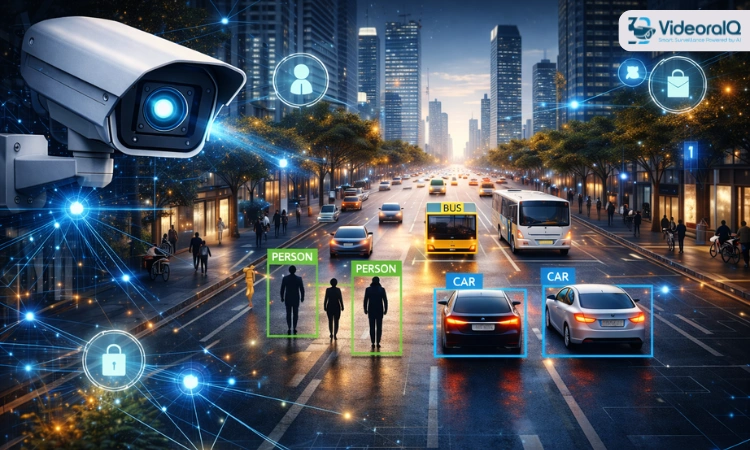
Take a look around any modern building, and you’ll notice how common AI video analytics is becoming alongside traditional security cameras. Retail stores, warehouses, airports, and office buildings rely on cameras that quietly record activity throughout the day.
The problem is that most of that footage is never actually watched.
In many organizations, recordings are only reviewed after something goes wrong. A security incident happens, an accident occurs, or a complaint needs investigation. Until then, the cameras simply keep recording.
That raises an important question. What if those cameras could do more than just store video?
This is where AI video analytics begins to make a real difference. Instead of people watching screens for hours, artificial intelligence can analyze footage automatically, detect unusual behavior, and highlight important moments almost instantly.
As a result, cameras stop being passive recorders and start becoming a source of useful insight. But many people still wonder how this technology works and who actually benefits from it.
Let’s take a closer look.
Read Aloud!
What Is AI Video Analytics?
At its simplest, AI video analytics allows computers to understand what is happening inside video footage.
It uses artificial intelligence to automatically analyze video footage. Instead of humans watching camera feeds constantly, software identifies objects, movement, and behavior patterns. Businesses, city authorities, and security teams use it to improve safety, monitor operations, and uncover insights hidden in video data.
Traditional surveillance systems are fairly straightforward. Cameras record everything, and humans review the footage when needed. The problem is scale. When dozens or even hundreds of cameras are involved, manually searching through recordings becomes time-consuming and inefficient.
AI approaches the problem differently.
Instead of waiting for someone to review footage later, intelligent systems analyze video frames as they are captured. They recognize objects, follow movement, and identify patterns that match certain rules.
Imagine a camera monitoring a warehouse floor. A standard system would simply record activity. An AI system, on the other hand, could detect situations like:
- Someone entering a restricted zone
- A forklift is moving into a dangerous area.
- unusual crowding near the equipment
- a vehicle driving where it shouldn’t
The key difference is awareness. The system notices what is happening rather than just recording it.
How AI Analyzes Video Footage
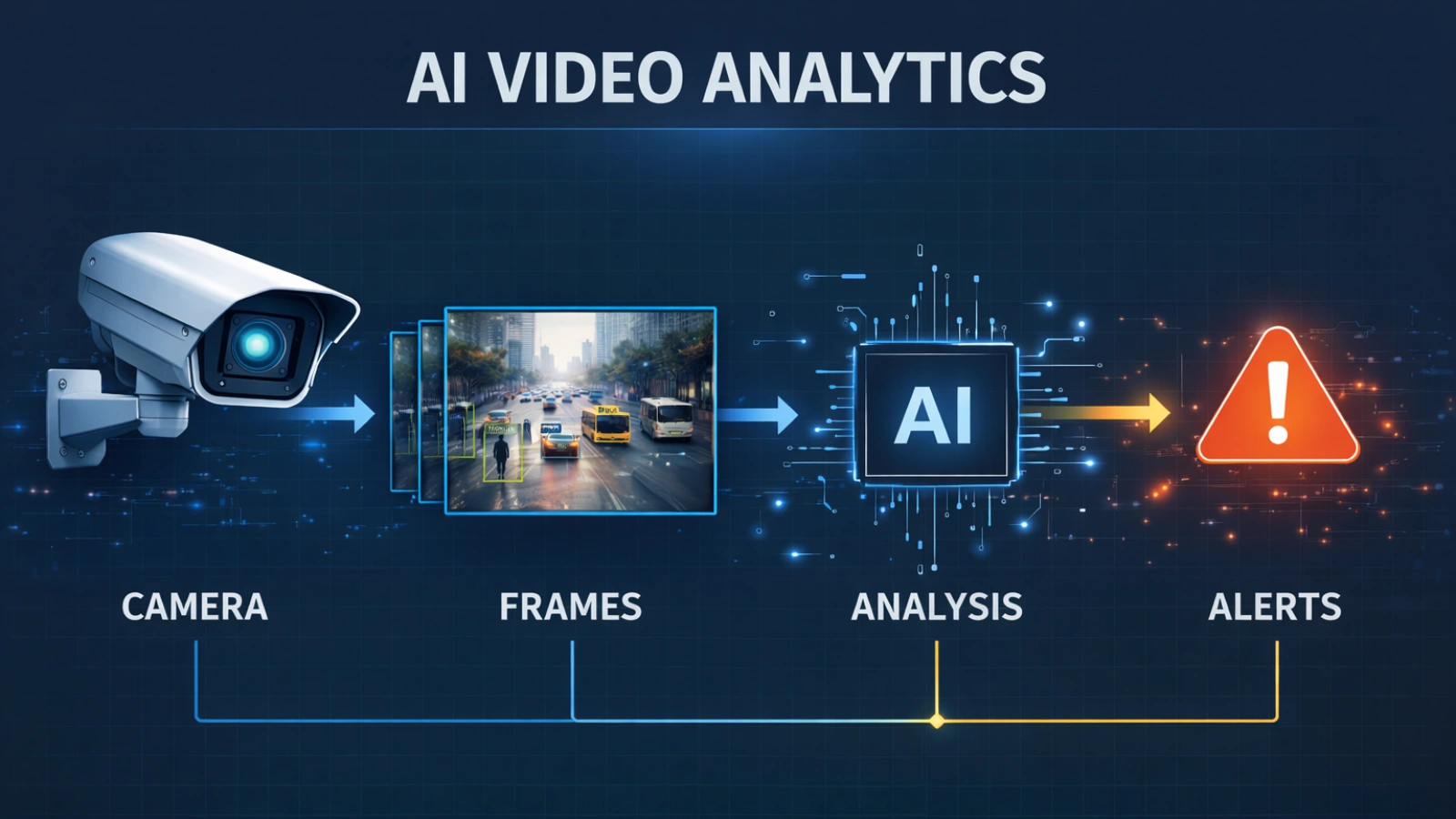
Most video analytics AI systems follow a fairly logical process.
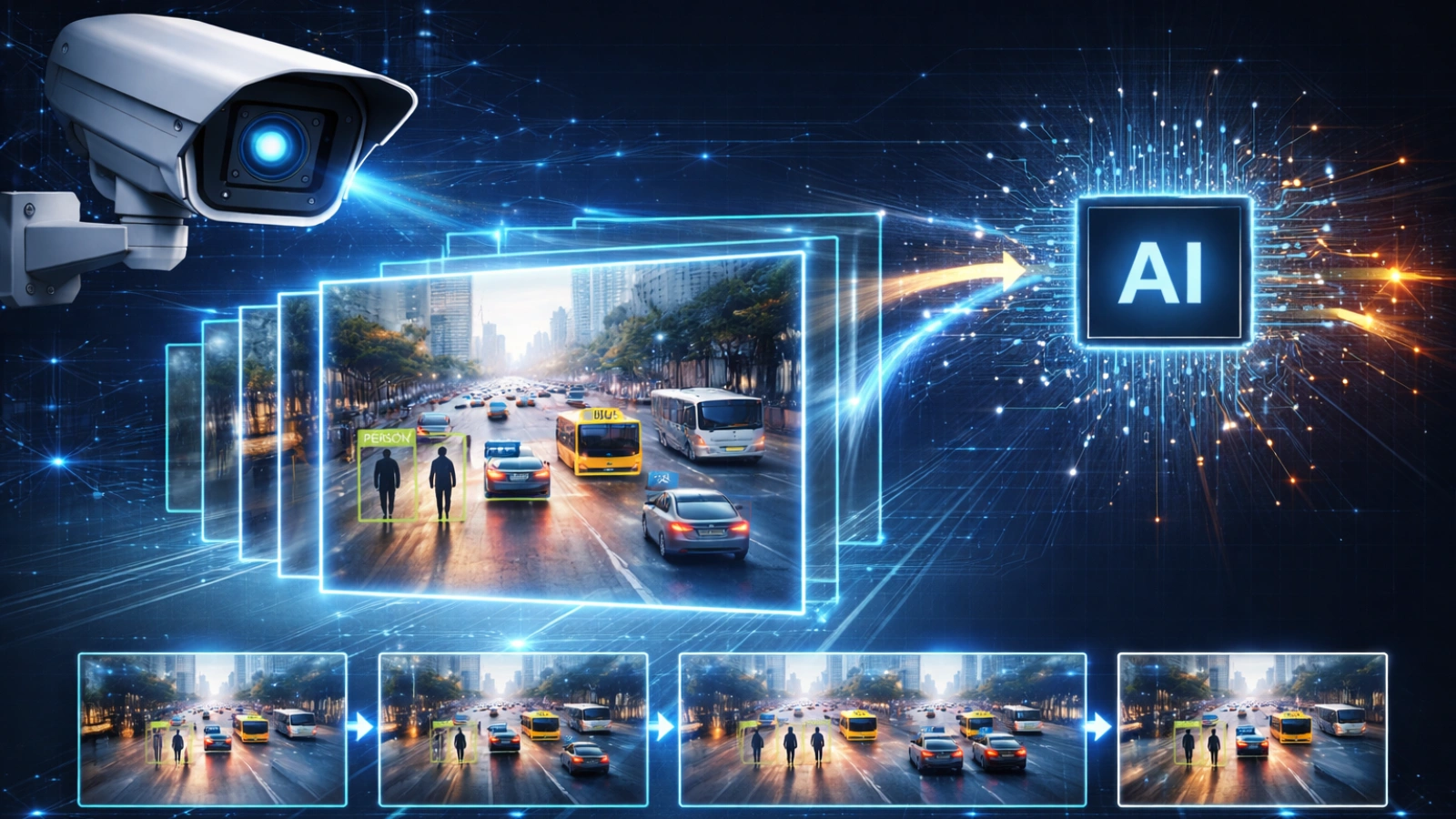
First, cameras capture video streams. That footage is then divided into individual frames. Each frame becomes an image that an AI model can examine.
Using computer vision technology, the system scans the footage for recognizable elements such as people, vehicles, equipment, and different types of movement patterns.
Once objects are identified, the system evaluates what those objects are doing. Is a person walking normally through a hallway? Or are they entering an area that should be restricted?
If something unusual occurs, the system can immediately trigger an alert or log the event. Over time, these systems also learn from patterns. They begin to recognize trends that may help organizations improve how they operate.
Key Capabilities of AI Video Analytics
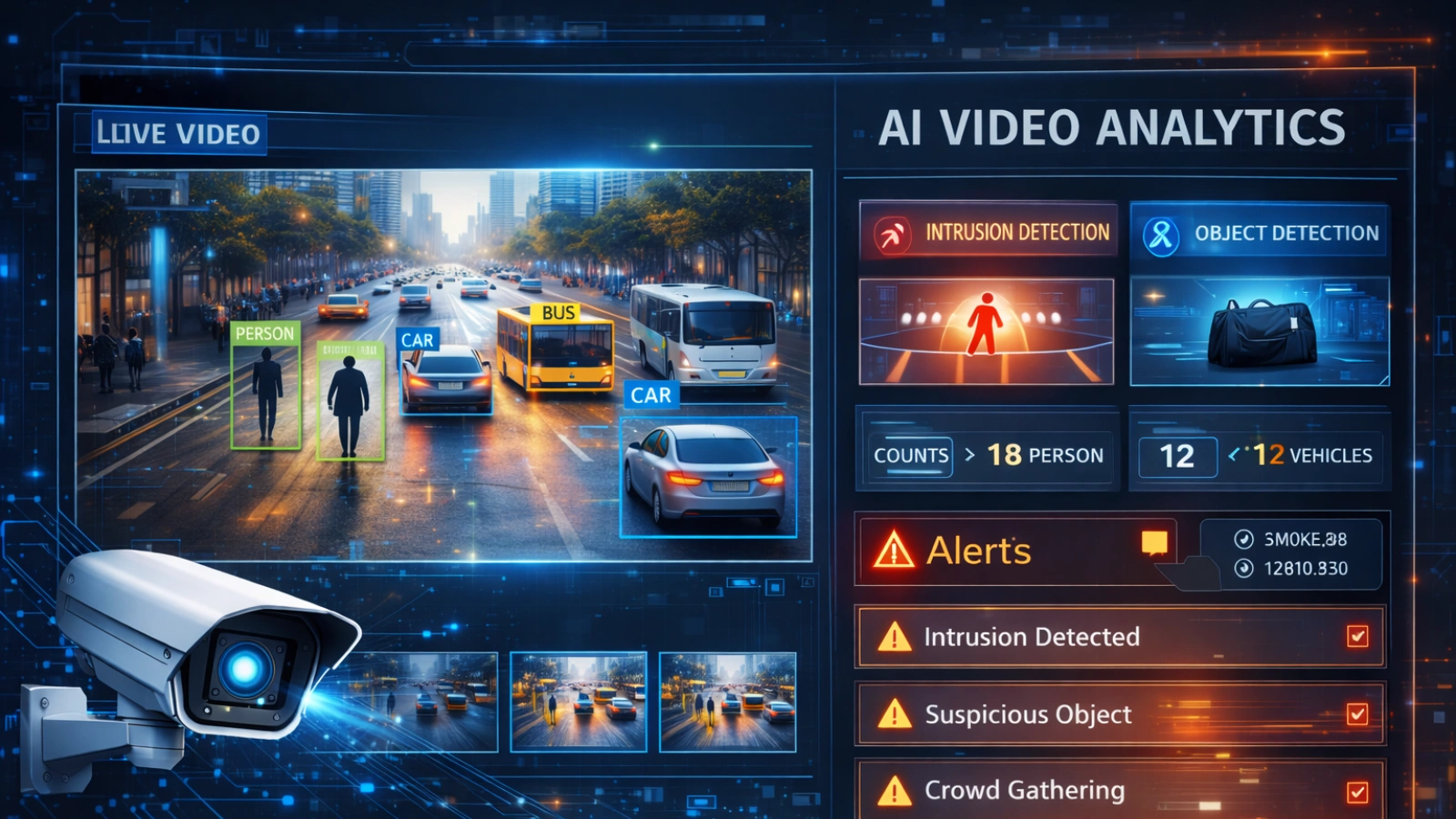
Although systems vary from vendor to vendor, most AI-based video analytics platforms offer a similar set of capabilities.
Understanding these features helps explain why the technology is spreading across different industries.
Object Detection and Recognition
One of the most useful abilities of AI systems is recognizing objects inside video footage. The software can identify objects within video footage, including people, vehicles, packages, equipment, and even animals.
Once the system detects an object, it can track its movement across frames. This makes it possible to understand how objects move through a space.
For example, a warehouse system might detect forklifts traveling through loading zones or identify when equipment enters restricted areas.
Motion and Behavior Detection
Motion detection has existed for years, but older systems had a major limitation: they flagged almost every movement.
AI improves this by adding context. Instead of reacting to all movement, the system tries to understand what that movement actually means. A person walking through a corridor, for example, is normal. Someone climbing over a fence is not.
Situations that may trigger alerts include a person running through a normally quiet area, a vehicle stopping where it should not, or someone lingering near sensitive equipment.
By focusing on behavior rather than simple motion, AI systems become far more useful.
Real Time Alerts
Speed is critical in many situations.
With AI-powered video analytics, alerts can appear the moment something unusual happens, so security teams do not have to wait until later to review footage.
This quicker response can make a significant difference when dealing with issues like unauthorized access, safety violations, suspicious behavior, or even traffic disruptions.
In some cases, even a few minutes can matter.
Pattern Recognition Over Time
Another advantage of AI systems is their ability to spot patterns.
Take a retail store as an example. By analyzing video over several weeks, the system may notice that customers gather in certain areas during specific times of day.
Those insights can help store managers rethink product placement or adjust staffing levels.
Transportation departments might do something similar with traffic patterns. Video data can reveal congestion trends that were not obvious before.
Little by little, video becomes more than surveillance. It becomes a tool for understanding how spaces are used.
Who Can Benefit from AI Video Analytics?
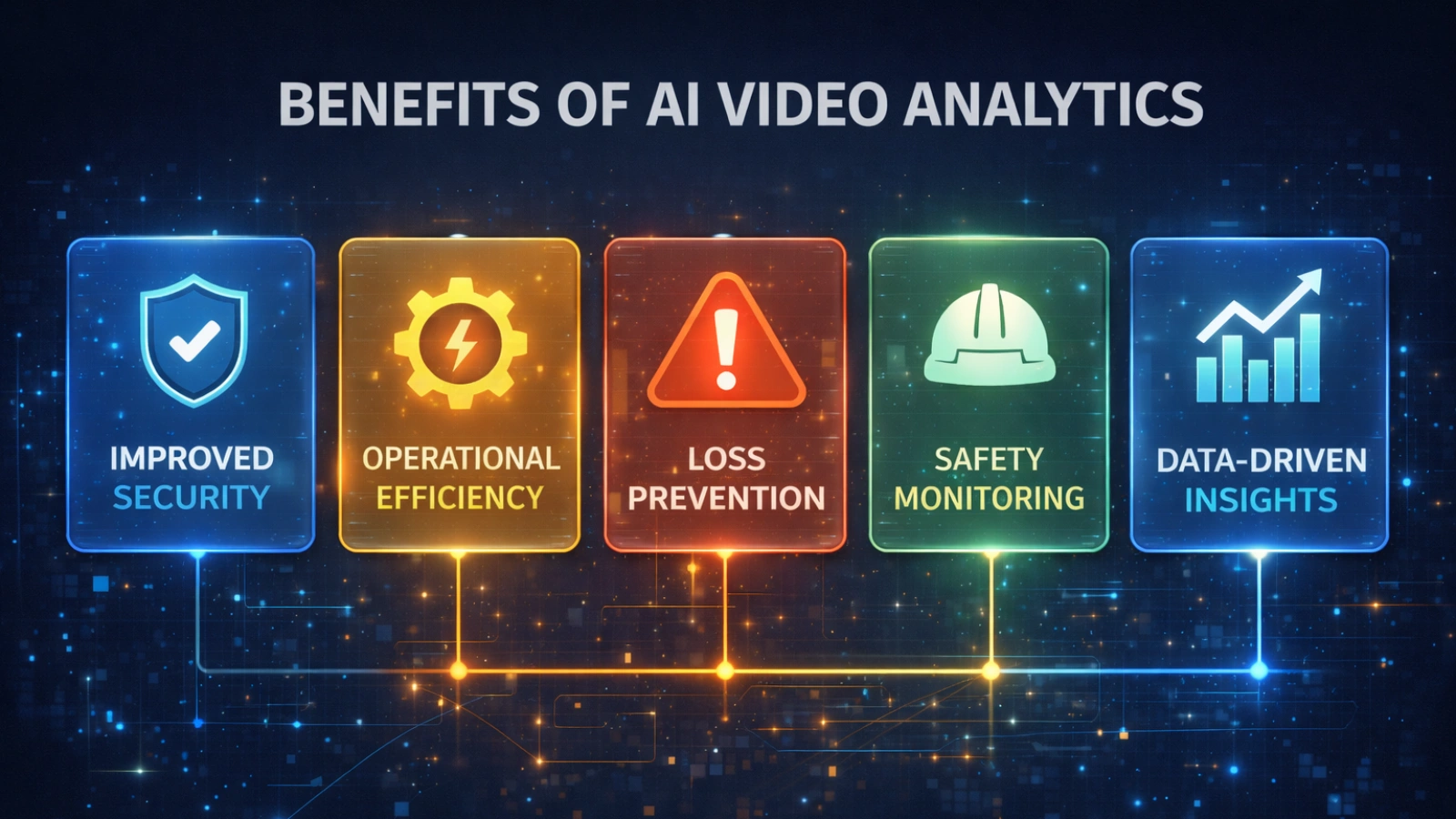
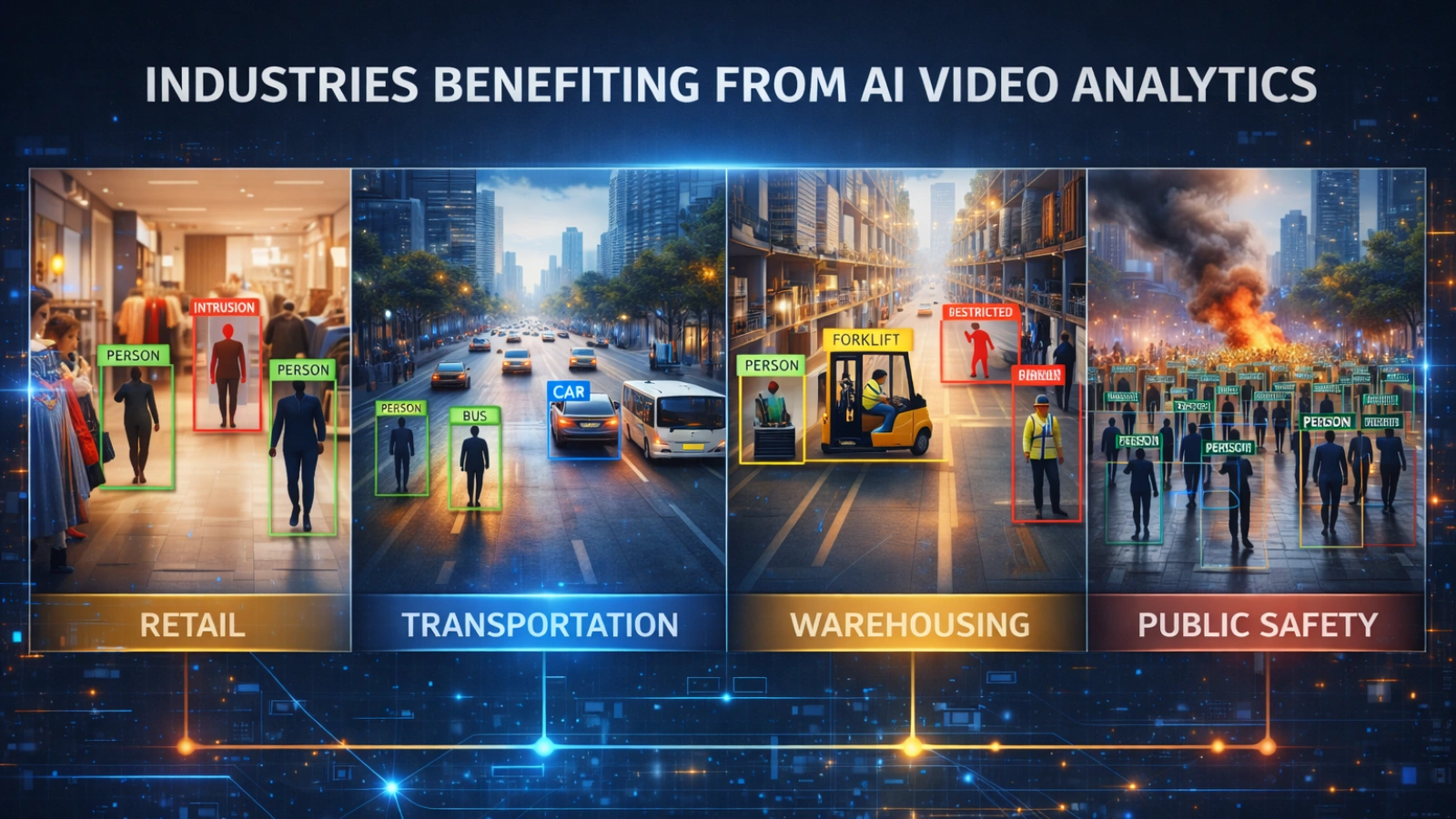
Although security is often the first use case people think of, AI video analytics supports far more than surveillance. Any environment that generates large amounts of video footage can benefit from intelligent analysis.
Retail Businesses
Retail stores produce a large amount of visual data. Cameras monitor entrances, aisles, checkout counters, and storage areas, yet much of that footage is rarely analyzed.
AI video analytics helps retailers understand how customers move through a store, which displays attract attention, and where congestion occurs. For example, if shoppers frequently gather near a promotional display, managers may adjust product placement or expand that section.
Retailers also use video analytics to reduce theft by detecting suspicious behavior around high-value items and alerting staff quickly.
Smart Cities and Public Infrastructure
Cities manage environments with constant movement, including traffic, public transportation, and crowded public spaces. While many cities already use cameras, analyzing the footage quickly enough to respond can be difficult.
AI video analytics helps by detecting events such as traffic accidents, congestion at busy intersections, overcrowded areas, or unusual activity in sensitive locations. Real-time alerts allow city teams to respond faster and coordinate more effectively.
Manufacturing and Industrial Facilities
Factories operate under strict safety standards, and even small mistakes near heavy machinery can lead to serious incidents.
AI video analytics can continuously monitor production floors, flagging issues such as workers entering restricted zones or missing safety equipment. Manufacturers also use video analysis to identify workflow inefficiencies, such as repeated bottlenecks around specific workstations.
Transportation and Logistics
Transportation systems rely heavily on visual monitoring. From highway cameras to warehouse surveillance, enormous amounts of footage are generated daily.
AI tools help organizations interpret this data by monitoring traffic flow, identifying accidents quickly, analyzing loading dock activity, and tracking movement inside warehouses. These insights help logistics companies improve efficiency while reducing safety risks.
Corporate Security Teams
Large organizations often operate across multiple buildings and campuses. Universities, hospitals, corporate offices, and data centers may rely on hundreds of cameras to monitor their facilities.
Reviewing every feed manually is unrealistic. AI video analytics software helps security teams focus on events that truly require attention, such as restricted area access, unusual late-night activity, or unattended objects in public spaces. This allows staff to respond quickly instead of constantly watching screens.
How VideoraIQ Enhances AI Video Analytics Workflows
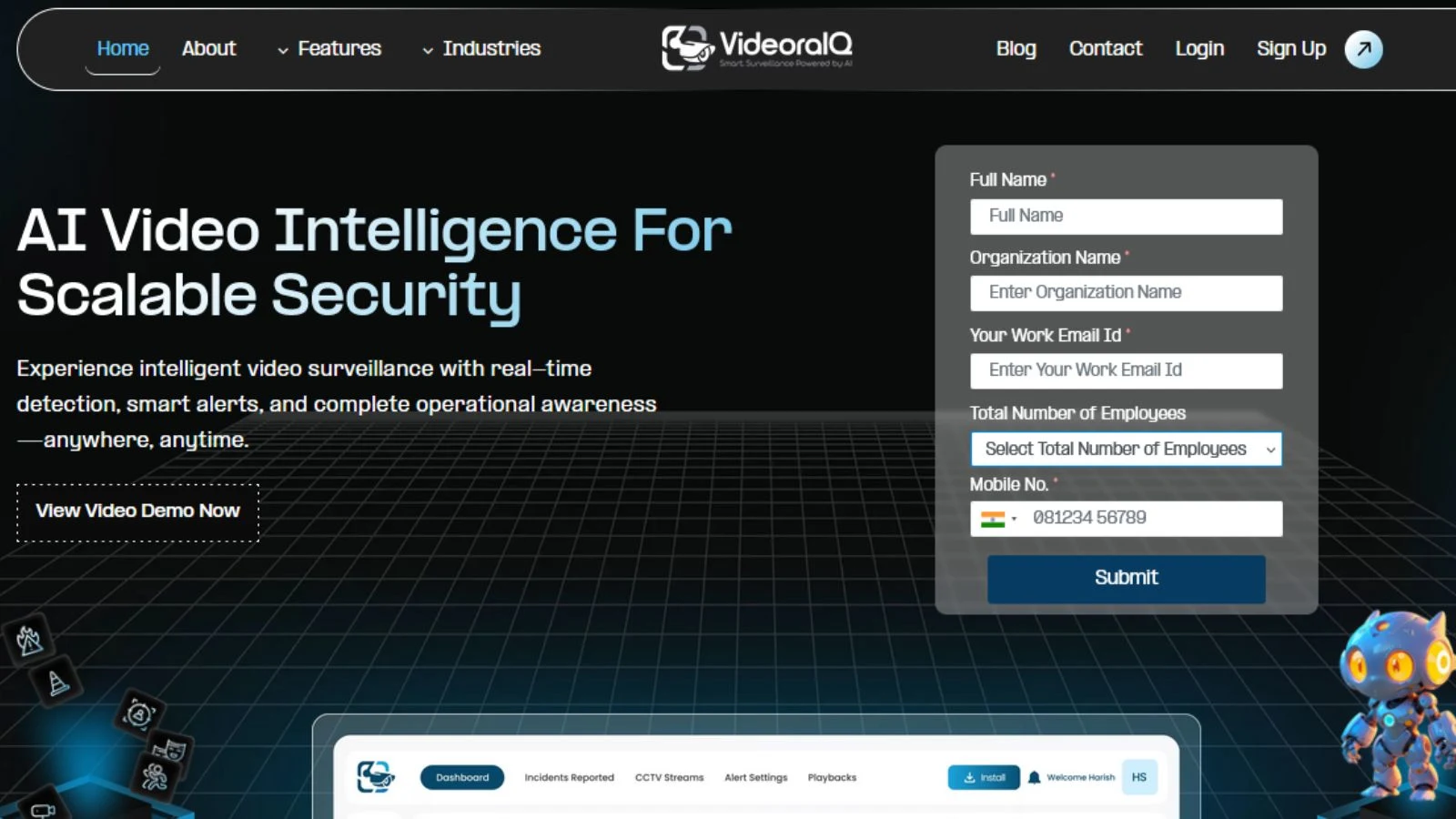
Analyzing video with artificial intelligence is only useful if organizations can detect important events quickly and respond to them in real time. This is where Videoraiq plays an important role.
VideoraIQ is an AI-powered video surveillance platform designed to turn traditional CCTV systems into intelligent monitoring tools. Instead of simply recording footage, the system analyzes video streams and detects security risks or unusual activity as they happen.
Key capabilities include:
- Face recognition that identifies and tracks individuals for access control and security monitoring.
- Intrusion detection that alerts teams when unauthorized movement occurs in restricted areas.
- Object detection that automatically identifies suspicious or unattended items in monitored spaces.
- Line-cross detection that triggers alerts when someone crosses predefined security boundaries.
- Fire and smoke detection that identifies early visual signs of fire hazards to support faster emergency response.
- Unattended baggage detection that flags abandoned items in public or high-risk areas.
By transforming standard camera systems into intelligent monitoring networks, Videoraiq helps organizations detect threats faster, reduce manual surveillance work, and maintain better visibility across their environments.
Common Mistakes When Using AI Video Analytics
Like any technology, AI video analytics works best when used thoughtfully.
Organizations sometimes run into challenges when expectations or implementation strategies are unclear.
Overlooking Privacy Concerns
Video monitoring involves real people, so privacy must be handled carefully.
Organizations need clear policies for how footage is collected, stored, and analyzed.
Adopting Technology Without Clear Goals
Some companies adopt analytics tools simply because the technology is trending.
Without clear objectives, teams may collect large amounts of data that no one uses.
Successful deployments always start with a problem that needs solving.
Ignoring Infrastructure Requirements
Video analysis requires computing power, storage capacity, and reliable networks.
Organizations should evaluate these factors early to avoid performance issues later.
Advanced Insights: The Future of AI Video Analytics
AI video analytics continues to evolve quickly.
What started as a surveillance tool is gradually becoming a broader operational intelligence system.
One area gaining attention is predictive analytics. Instead of reacting after incidents occur, future systems may detect early warning signs.
For example, traffic monitoring platforms could identify congestion patterns before major delays begin.
Another trend involves edge AI. Cameras themselves are beginning to run AI models locally rather than sending all footage to the cloud. This reduces delays and improves privacy.
Video analytics is also starting to connect with other smart systems. Building management platforms, traffic control systems, and safety monitoring tools may eventually work together.
As these technologies develop, video will become one of the most valuable sources of real-time information.
Read More!
10 Ways Video Analytics AI Is Transforming Security
Video Analytics Services: How Smart Surveillance Is Transforming Security
Conclusion
Cameras have been part of security systems for decades. What has changed is the ability to understand what those cameras capture.
AI video analytics turns ordinary recordings into useful intelligence. It highlights unusual activity, detects patterns, and helps organizations focus on the moments that matter most.
For retailers, that might mean understanding how customers move through a store. Manufacturers may use it to improve safety practices. Cities can monitor traffic and public spaces more effectively.
Ultimately, the value of this technology lies in visibility.
When organizations can clearly see what is happening across their environments, they are in a much stronger position to make informed decisions.
Frequently Asked Questions
What industries use AI video analytics the most?
Retail, transportation, manufacturing, logistics, and public infrastructure are among the biggest users of AI video analytics. These industries operate in environments with extensive camera networks, making automated video analysis especially valuable.
How does AI video analytics actually work?
AI systems examine video frames using computer vision algorithms. The software detects objects, tracks movement, and analyzes behavior patterns. When predefined conditions occur, such as someone entering a restricted area, the system generates alerts or records the event.
Is AI video analytics only used for surveillance?
Not at all. Many organizations use it to improve operations. Retailers analyze customer movement, manufacturers monitor safety procedures, and cities study traffic patterns using video analytics technology.
Can AI video analytics work with existing cameras?
Yes. Many modern systems integrate with standard IP cameras and CCTV networks. This allows organizations to add AI capabilities without replacing their entire camera infrastructure.
What are the main benefits of AI video analytics?
The biggest advantages include faster incident detection, automated monitoring, improved safety oversight, and deeper operational insights. Continuous video analysis helps organizations notice issues earlier and respond more effectively.