


Security issues rarely come with a warning. A warehouse may lose inventory overnight, a retail store can face unnoticed repeated losses, and on large campuses, hundreds of cameras run without anyone able to monitor every feed in real time.
This is why video analytics companies have become essential. Instead of relying on manual surveillance, businesses now use intelligent systems that automatically interpret footage and flag risks as they happen.
Choosing the right provider depends on technical infrastructure, compliance needs, and operational goals. Some organizations prioritize integrated security platforms, while others focus on reliability, edge processing, or AI-driven insights.
With a growing number of vendors in the market, selecting the right solution can be complex. This blog highlights the leading video analytics providers in 2025 and helps enterprises identify the platform best suited to building smarter, more secure operations.
Listen To The Podcast Now!
What Does Video Analytics Mean?

For many years, surveillance cameras had a simple role: recording events. If something happened, security teams would go back through the footage to understand what happened.
That approach worked when organizations operated a small number of cameras. Today, however, large facilities may run hundreds or even thousands of feeds simultaneously. Even the best-staffed security team cannot realistically watch them all.
This limitation is why video analytics companies have shifted the focus from recording to interpretation. Modern systems analyze video streams in real time and highlight activity that matters.
Instead of manually reviewing hours of footage, teams receive alerts when the system identifies unusual movement, suspicious behavior, or operational disruptions. Many video analytics companies design their platforms to function like digital observers that monitor every feed continuously.
Businesses across retail, logistics, healthcare, and corporate operations now rely on video analytics to strengthen security while improving operational visibility.
How Video Analytics Works?
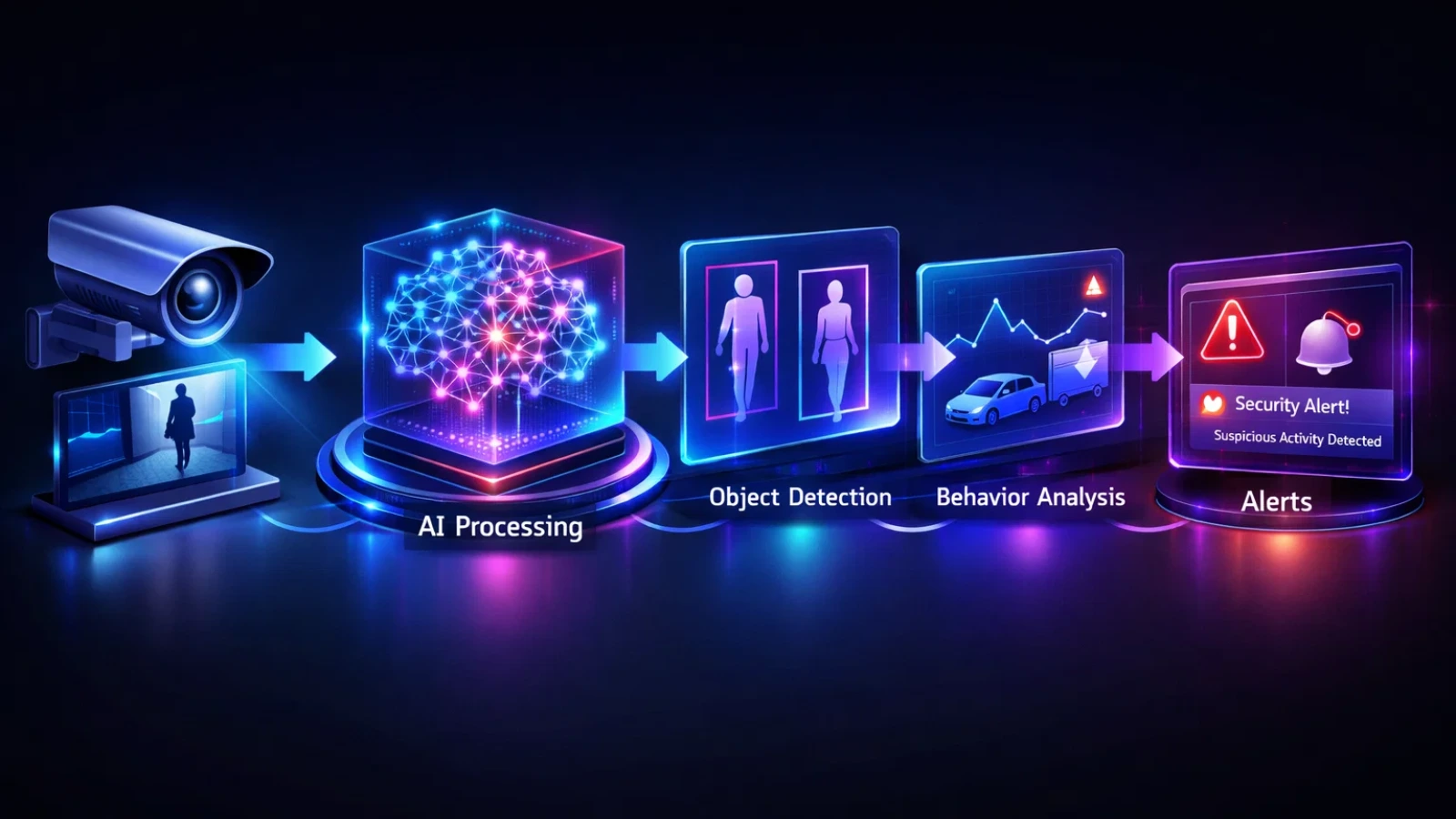
A modern platform processes camera footage frame by frame using computer vision algorithms. These algorithms recognize objects such as people, vehicles, and equipment.
Machine learning models then analyze how those objects behave over time. As the system observes patterns in a particular location, it begins to understand what normal activity looks like.
For example, a camera monitoring a busy railway station quickly learns the expected flow of people. If an unusual crowd buildup occurs or someone remains in the same area for an extended period, the system flags the event.
This continuous learning is one of the reasons video analytics companies are attracting attention across industries. The video management software does more than detect motion. It identifies context.
AI-Driven Analytics Versus Rule-Based Monitoring
Early surveillance analytics relied on simple rules. A camera might trigger an alert whenever motion occurs within a defined zone.
The problem with that approach was accuracy. Changes in lighting conditions, weather, or background movement could trigger frequent alerts. Operators often became overwhelmed by notifications that did not require action.
Modern media rely on artificial intelligence to provide context. Instead of reacting to basic movement, the system evaluates behavior patterns.
For instance, the software can differentiate between someone walking past a door and someone waiting near it for several minutes. This ability dramatically reduces false alarms.
Because of these improvements, many organizations now prefer platforms developed by specialized analytics companies that focus specifically on AI-based monitoring.
Deployment Options
Organizations implementing solutions typically choose between three deployment models.
Cloud deployment processes video streams through remote infrastructure managed by the vendor. This option reduces hardware requirements and allows organizations to scale across multiple locations.
Edge deployment performs analysis directly on cameras or nearby devices. Many companies offer edge processing for environments that require faster response times or strict data privacy.
On-premises deployment keeps the entire system within the organization’s own infrastructure. This approach offers maximum control but requires greater upfront investment.
Why the Video Analytics Market Is Expanding?
Across industries, organizations are discovering new ways to use intelligent monitoring.
Retailers analyze customer traffic patterns. Warehouses monitor safety conditions and equipment movement. Corporate campuses track perimeter security and operational activity.
These applications explain why video analytics companies are experiencing rapid market growth. Global revenue for video analytics technology reached approximately 12.7 billion dollars in 2024 and continues to grow as businesses invest in automation.
As technology improves, video analytics companies are also expanding beyond traditional security use cases into operational analytics and workplace safety.
How to Choose Among Video Analytics Companies?
Before comparing vendors, enterprise buyers should understand the different categories of video analytics companies in the market.
Enterprise Security Platforms
Large technology providers develop integrated security ecosystems designed for complex enterprise environments. These systems often combine surveillance, access control, and facility monitoring.
Specialized AI Providers
Some video analytics companies focus entirely on artificial intelligence and behavioral analysis. Their platforms are often easier to deploy and more intuitive for non-technical users.
Hardware-Based Providers
Camera manufacturers sometimes embed analytics directly into their hardware. Organizations that standardize on a specific camera brand may prefer these video analytics companies.
Developer Infrastructure Providers
Some platforms provide tools for engineering teams to build custom analytics systems. These solutions are typically used by organizations with internal development capabilities.
Understanding these categories helps buyers narrow the list of video analytics companies that match their needs.
Key Criteria for Evaluating Video Analytics Companies
When comparing video analytics companies, enterprise leaders should evaluate several practical factors.
Scalability
The system must support the number of cameras across all facilities without performance problems.
Compliance support
Organizations should verify how vendors handle biometric data and regional privacy regulations.
Integration capability
The platform should connect with existing cameras and security infrastructure.
Implementation support
Some video analytics companies provide direct deployment assistance, while others rely on external partners.
Pricing model
Costs may depend on camera count, facility size, or analytics usage.
Deployment timeline
Enterprise implementations involving video analytics companies can take several months before full functionality becomes operational.
The 5 Best Video Analytics Companies in 2025
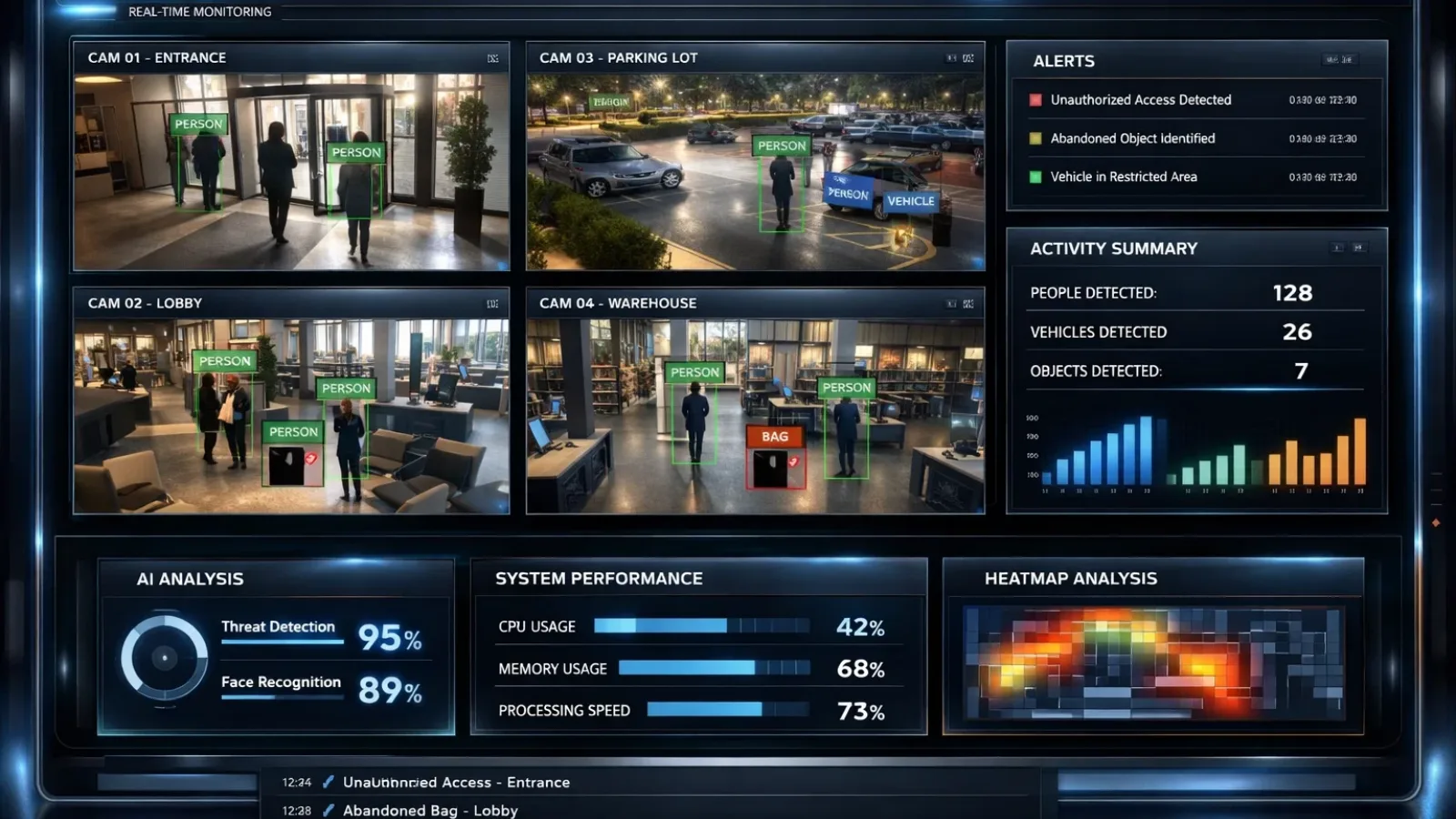
The following section highlights some of the most widely recognized video analytics companies operating today. These organizations were evaluated based on AI capabilities, deployment flexibility, and enterprise usability.
1. VideoraIQ
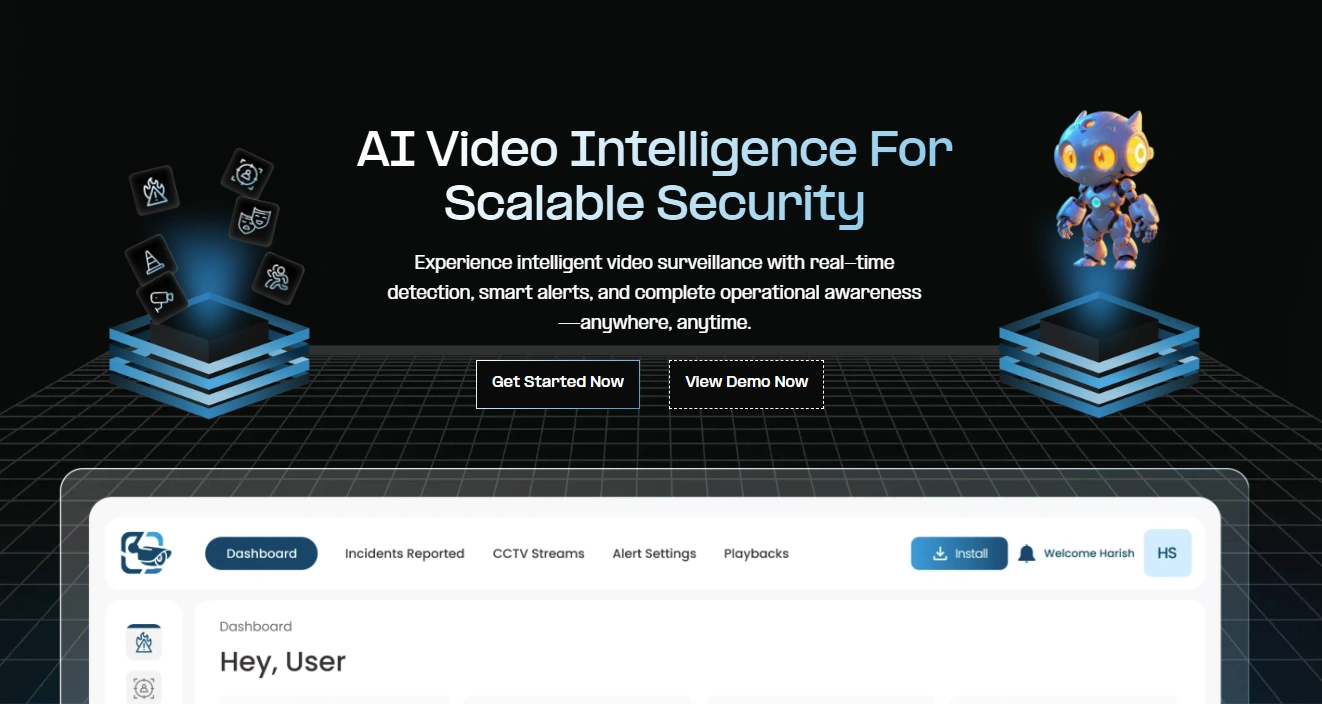
VideoraIQ is an AI-driven platform designed to convert traditional surveillance systems into intelligent monitoring networks. The company focuses on real-time analysis, helping organizations detect unusual behavior across large camera networks.
The platform supports capabilities such as object tracking, facial recognition, license plate identification, and anomaly detection. These features allow security teams to identify potential incidents quickly while minimizing unnecessary alerts.
One reason VideoraIQ stands out among video analytics companies is its ability to integrate with existing camera infrastructure. Organizations can enhance analytics capabilities without replacing their current surveillance systems.
Industries such as retail, healthcare, logistics, and corporate operations commonly rely on the platform. Many organizations also appreciate the privacy controls that allow companies to manage monitoring responsibly.
Another advantage is its reporting functionality. Executives can review dashboards that translate surveillance data into operational insights, making it easier to evaluate the effectiveness of security investments.
2. Genetec Security Center
Genetec offers one of the most comprehensive physical security platforms available. Its Security Center system integrates surveillance, access control, and analytics into a single environment.
Large institutions, including airports, universities, and government agencies, often select Genetec when evaluating top video analytics companies because the platform supports complex infrastructure across multiple locations.
One notable feature is the platform’s privacy protection capability, which can automatically anonymize individuals in recorded footage until authorized personnel review the data during an investigation.
Genetec also integrates with thousands of hardware devices and camera models, giving organizations flexibility when building large security networks.
Because of its scale and complexity, however, deployments often involve certified partners and extended configuration periods.
3. Avigilon
Avigilon, now part of Motorola Solutions, is widely recognized among video analytics companies for its advanced AI-powered search capabilities.
Its appearance search technology allows security teams to locate a person or vehicle across multiple camera feeds by identifying visual characteristics rather than relying solely on timestamps.
This reduces investigation time when reviewing incidents.
Avigilon also includes motion learning features that continuously observe activity patterns. Instead of relying on predefined rules, the system highlights behavior that deviates from normal patterns.
Many large retail networks, corporate campuses, and public safety organizations rely on the platform for these capabilities.
However, the system works best when paired with Avigilon cameras, which can create additional costs for organizations running mixed hardware environments.
4. Bosch Building Technologies
Bosch brings decades of engineering experience to the surveillance industry. Its analytics systems are designed for environments where durability and reliability are essential.
Manufacturing plants, logistics centers, and transportation hubs frequently evaluate Bosch when researching video analytics companies because the systems perform well under demanding conditions.
Bosch emphasizes edge processing, allowing cameras to analyze footage locally without depending heavily on cloud connectivity.
This architecture improves response times while keeping sensitive data within the facility.
Although Bosch may not release new software features as frequently as some AI-focused providers, its strong reputation for hardware reliability makes it a popular option in industrial environments.
5. Milestone Systems
Milestone Systems built its reputation on flexibility. Its XProtect platform connects with thousands of camera models from hundreds of manufacturers.
This compatibility makes it attractive for organizations that already have existing surveillance infrastructure and want to add analytics capabilities.
Milestone also maintains an extensive partner ecosystem, allowing businesses to integrate specialized analytics tools depending on operational requirements.
For organizations that prioritize hardware flexibility, Milestone remains one of the most practical video analytics companies available today.
6. Spot AI
Spot AI offers video AI software that works with the cameras a site already owns. Rather than pairing its software with its own camera line, the company built the platform to connect to any IP camera. Named AI agents handle detection work instead of one general engine. Manufacturing, retail, construction, and logistics teams make up the core of its customer base.
The lineup includes an AI Security Guard for perimeter and interior coverage, an AI Safety Manager for hazard events, and an AI Operations Assistant for process work. A feature called AI Talkdown opens a spoken warning during an event, and Iris lets teams write new detections in plain language.
Because the software carries no camera requirement, sites can add it to a mixed fleet without replacing hardware. Most deployments go live within days, and Spot AI reports more than 1,100 customers across the United States.
Also Read:
The ROI of Video Analytics
One of the strongest arguments for adopting solutions from video analytics is operational efficiency.
Manual monitoring requires multiple operators working around the clock. Intelligent analytics automate much of that observation process.
Consider a facility operating five hundred cameras. If three security operators monitor those feeds continuously at an average cost of thirty dollars per hour, annual monitoring expenses approach eight hundred thousand dollars.
An advanced system can reduce the need for continuous manual observation. Even a moderate reduction in monitoring labor can save hundreds of thousands of dollars annually.
Organizations also benefit from faster incident detection and shorter investigation times.
Conclusion
Selecting the right provider requires evaluating technical infrastructure, compliance requirements, and operational goals.
Large enterprises may prioritize integrated security platforms, while industrial organizations often focus on reliability and edge processing capabilities. Businesses seeking rapid deployment and strong AI insights frequently choose specialized providers.
What remains clear is that intelligent monitoring is rapidly replacing passive surveillance. As organizations adopt advanced systems from video analytics companies, they gain stronger visibility, faster incident response, and more efficient security operations.
For enterprises planning to modernize their surveillance infrastructure, evaluating the capabilities of leading video analytics companies is an essential step toward building smarter, safer facilities.
FAQ
What is video analytics software used for
Video analytics software analyzes camera footage in real time to identify events, patterns, and behaviors. Organizations use it for security monitoring, operational insights, and facility safety.
Which provider offers the best video analytics platform
Different video analytics companies serve different needs depending on infrastructure size, industry requirements, and deployment preferences.
How much does enterprise video analytics cost
Pricing varies depending on deployment type and camera count. Many platforms charge monthly fees per camera, while others require larger upfront investments.
Is workplace video monitoring legal?
In many regions, it is legal when organizations follow privacy regulations and provide clear notice to employees. However, collecting biometric identifiers may require additional consent.
How does video analytics differ from surveillance?
Traditional surveillance records footage for later review. Platforms built by video analytics companies evaluate video streams instantly and provide alerts as events occur.