

Listen To The Podcast Now!
Understanding the Core Functionality of a PTZ Camera System:
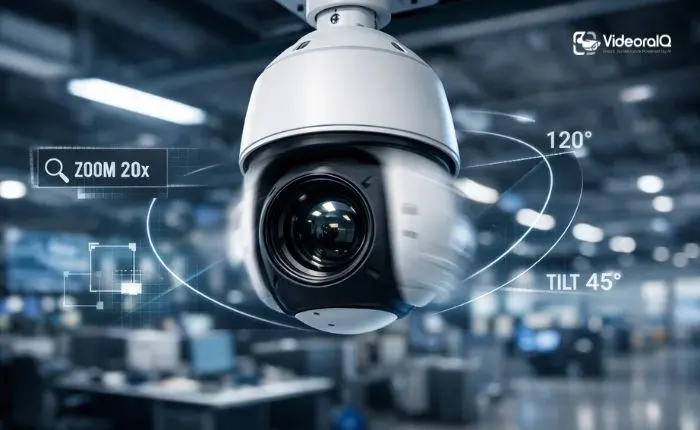
At a fundamental level, a PTZ camera system enables three key movements: horizontal panning, vertical tilting, and optical zooming. These capabilities allow a single camera to monitor areas that would otherwise require multiple fixed units.
What sets a PTZ camera apart is control. Cameras can be manually operated by security personnel or programmed to follow automated patrol routes. These patrols can sweep predefined zones, pause at critical points, or respond to alerts generated by motion or system triggers.
In practical deployments, a PTZ camera is often used to complement static cameras rather than replace them entirely. Static cameras provide constant coverage, while PTZ units focus on incidents, anomalies, or high-risk zones that demand closer inspection.
How a PTZ Camera System Performs in Real-World Scenarios?
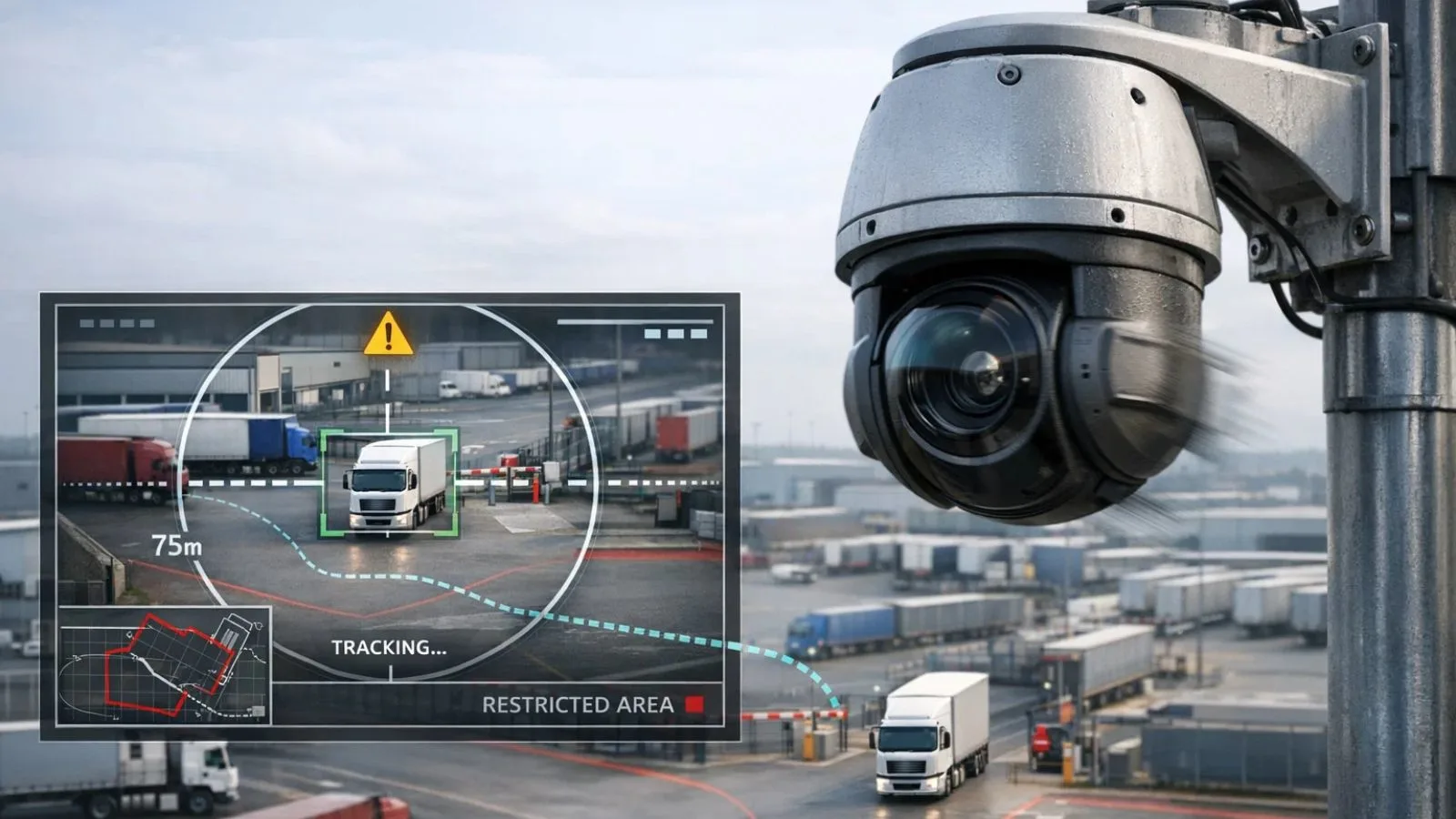
The effectiveness of a PTZ camera becomes most evident in large or dynamic environments. Warehouses, industrial plants, campuses, transportation hubs, and public spaces all benefit from cameras that can actively track movement.
For example, in logistics yards, a PTZ camera can follow vehicle movement, zoom into loading docks, or inspect restricted areas without requiring multiple camera installations. In public infrastructure, operators can focus on crowd behavior, access points, or perimeter breaches as they happen.
An outdoor PTZ camera system is particularly valuable in open environments where weather resistance, long-range zoom, and stable movement are essential. These systems are built to withstand environmental stress while maintaining smooth and precise control.
Key Features to Evaluate Before Deployment:
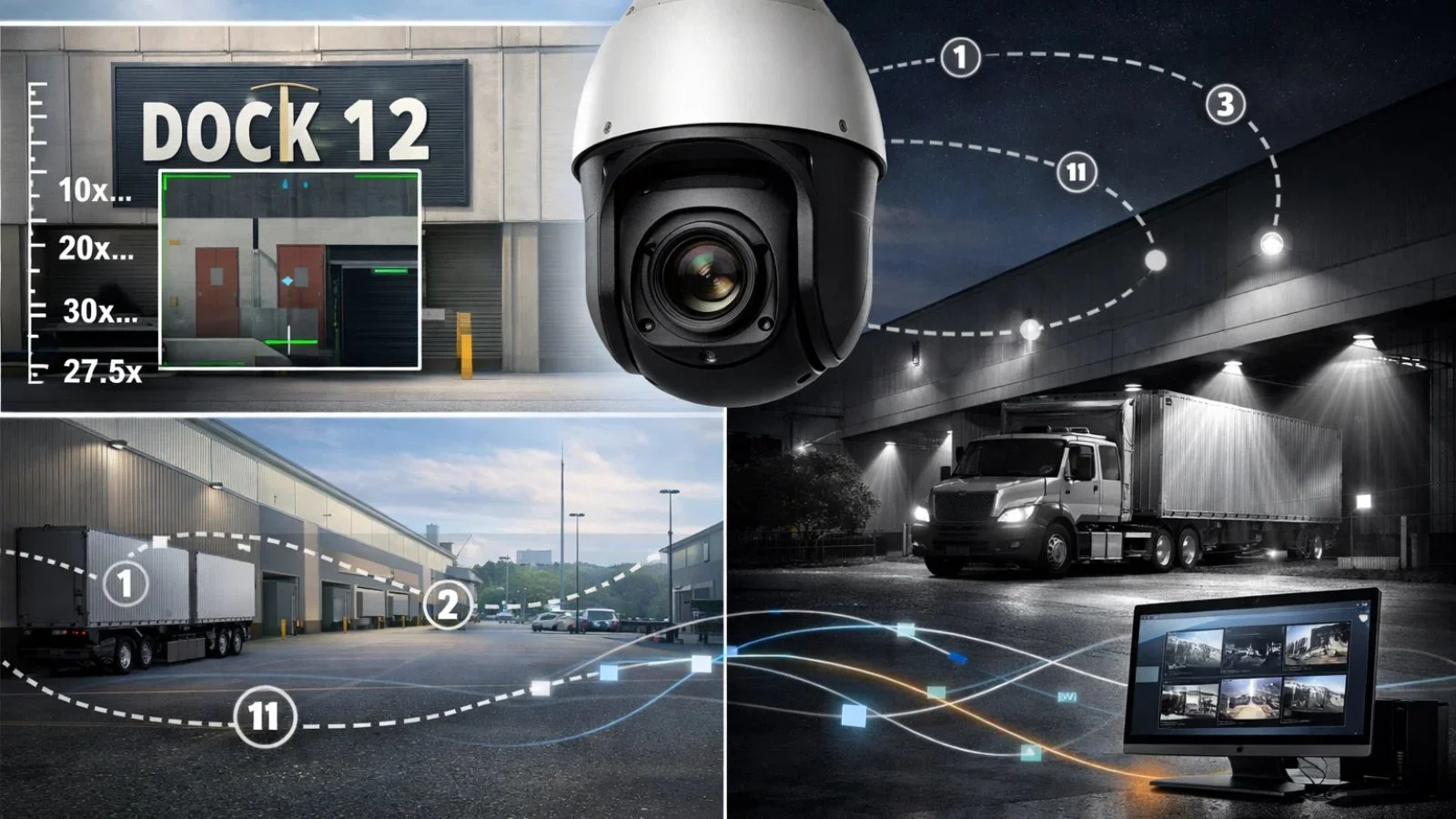
Before deploying a PTZ camera, several technical and operational factors should be carefully evaluated.
1. Optical Zoom Capability:
A professional PTZ camera system relies on optical zoom rather than digital zoom. Optical zoom preserves image clarity at long distances, which is crucial for identification and evidence collection.
2. Preset Tours and Automation:
Preset routes allow a PTZ camera to patrol areas automatically. This ensures consistent monitoring even when operators are not actively controlling the camera.
3. Low-Light and Night Performance:
Many incidents occur in low-light conditions. A reliable PTZ camera system should include infrared illumination or advanced low-light sensors to maintain visibility without sacrificing control accuracy.
4. Network Stability and Latency:
Control lag can reduce the effectiveness of a PTZ camera. Adequate bandwidth and stable network infrastructure are critical to ensure real-time responsiveness.
Integration with Broader Surveillance Infrastructure:
A PTZ camera is most effective when integrated into a unified surveillance ecosystem. Many organizations deploy a CCTV camera system with PTZ alongside fixed cameras, access control systems, and monitoring software.
This hybrid approach allows static cameras to handle constant recording while PTZ units are used for active investigation and tracking. Centralized dashboards make it easier for operators to manage multiple camera feeds, review incidents, and coordinate responses.
Proper integration ensures the PTZ camera system enhances overall security rather than operating in isolation.
Specialized Use Cases Across Different Environments:
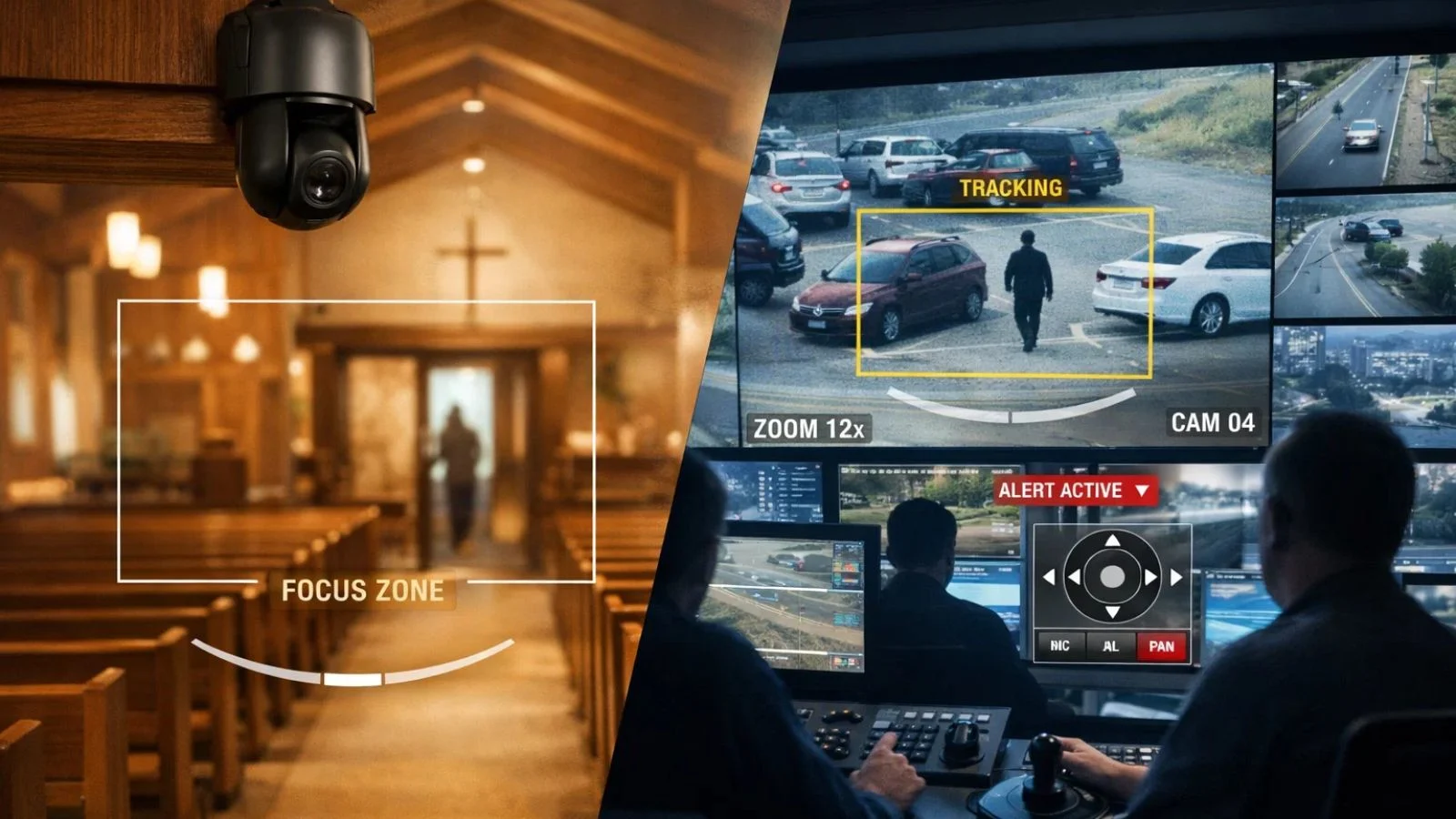
Certain environments benefit uniquely from controlled camera movement. A PTZ camera for church settings, for example, provides discreet monitoring of entrances, congregation areas, and surrounding premises without creating a sense of constant surveillance.
Operators can focus on specific areas only when necessary, preserving privacy while maintaining safety. In command centers and security operation rooms, camera system PTZ control allows trained personnel to react instantly to alerts, zoom into developing situations, and track individuals or vehicles across wide areas.
This real-time capability is critical in preventing incidents rather than merely documenting them. These specialized use cases highlight why deployment planning should always consider how and where a PTZ camera will be actively used.
Common Deployment Mistakes That Reduce Effectiveness:
Despite its advanced capabilities, a PTZ camera can underperform if deployed incorrectly. Some common mistakes include:
- Installing cameras at heights that limit effective zoom angles
- Overlapping patrol routes that leave gaps elsewhere
- Treating PTZ cameras as a replacement for fixed coverage
- Ignoring operator training and control protocols
Another frequent issue is assuming that a PTZ camera alone can handle security without intelligent software support. While the hardware provides movement, intelligence comes from how data is interpreted and acted upon.
Also Read:
Enhancing a PTZ Camera System with AI Intelligence:
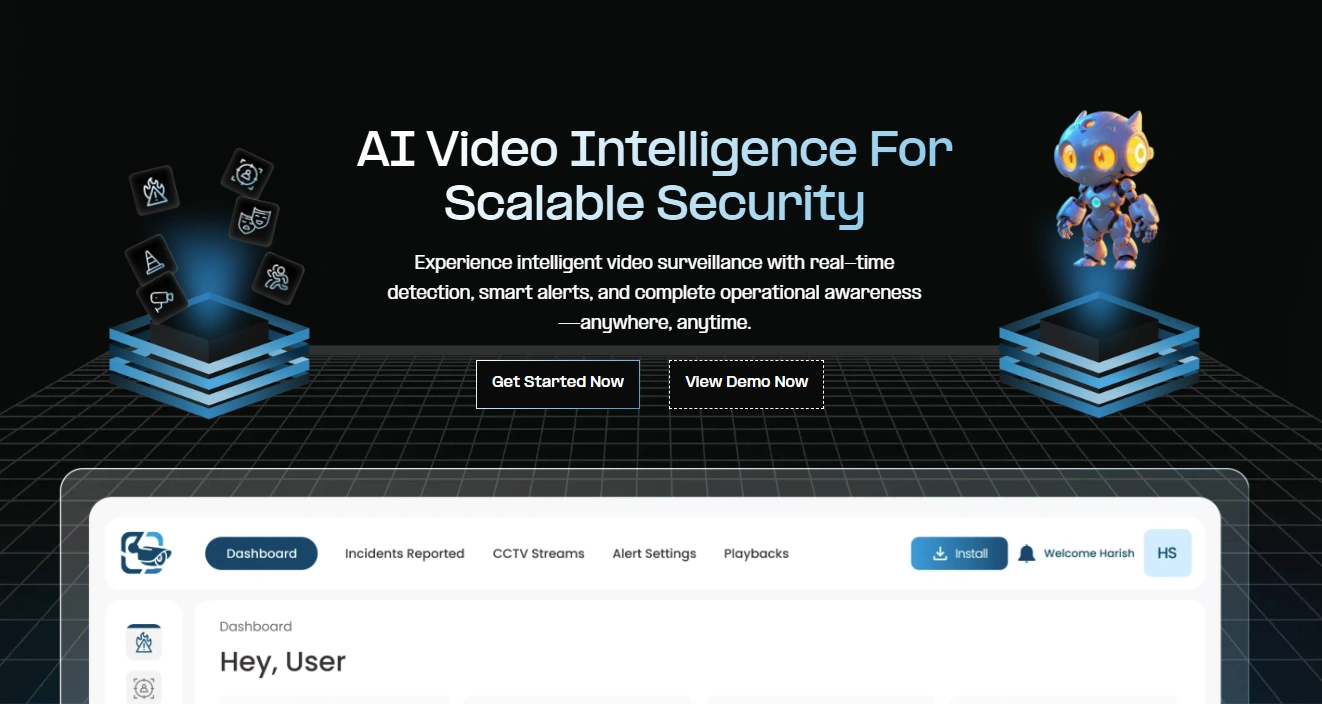
A PTZ camera system reaches its full potential when paired with advanced video intelligence. This is where VideoraIQ becomes especially relevant.
VideoraIQ applies AI-driven analytics to live camera feeds, transforming traditional surveillance into proactive monitoring. Instead of relying solely on human observation, the platform detects objects, analyzes behavior patterns, and triggers alerts based on predefined rules.
When integrated with a PTZ camera, VideoraIQ can automatically guide camera movement. For instance, if suspicious activity is detected, the system can instruct the camera to zoom in, follow the subject, and capture detailed footage in real time. This reduces response time and minimizes the risk of missed incidents.
For organizations managing large-scale surveillance operations, VideoraIQ adds a layer of intelligence that turns a PTZ camera system into a smart, event-driven security solution rather than a passive recording tool.
Planning for Scalability and Long-Term Use:
A PTZ camera system should be selected with future expansion in mind. Surveillance needs evolve, and systems that lack flexibility often require costly upgrades.
Consider whether the PTZ camera supports centralized management, firmware updates, and integration with future analytics modules. Scalability ensures that as operations grow, the surveillance infrastructure can grow alongside them without disruption.
Long-term planning also includes maintenance, operator training, and clear protocols for manual and automated control.
Conclusion:
A PTZ camera system offers flexibility, precision, and real-time control that static cameras cannot match. When deployed strategically and supported by intelligent analytics, it becomes a powerful security asset capable of adapting to complex environments.
However, success depends on proper planning, correct placement, and integration with modern monitoring platforms. Combining a PTZ camera with AI-driven solutions like VideoraIQ ensures surveillance is proactive, responsive, and scalable, designed not just to record events but to prevent them.
FAQ’s:
Q1. How is a PTZ camera system different from fixed cameras?
Ans: A PTZ camera system allows live movement, zoom, and tracking, while fixed cameras capture a single static view. PTZ cameras are better for large or dynamic areas where real-time focus is required, whereas fixed cameras handle continuous coverage.
Q2. Does a PTZ camera system need constant monitoring?
Ans: No. A PTZ camera system can run on preset patrols and automated triggers. Manual control is only needed during incidents or detailed inspections.
Q3. Is a PTZ camera system suitable for outdoor environments?
Ans: Yes. An outdoor PTZ camera is built to withstand weather, dust, and temperature changes while maintaining smooth movement and clear visuals.
Q4. Can a PTZ camera system be used in churches or public spaces?
Ans: Yes. A PTZ camera system for church settings enables discreet monitoring, allowing cameras to remain inactive unless attention is required.
Q5. Can a PTZ camera system work with AI analytics?
Ans: Yes. When integrated with AI platforms, a PTZ camera can automatically detect, track, and respond to activity without constant human control.