


For decades, security cameras simply recorded footage. The videos sat idle on servers until something went wrong, at which point someone had to scroll through hours of footage to find a clue. Cameras were passive, and any intelligence came solely from humans monitoring the screens.
That’s changing quickly.
Today, video surveillance analytics software is transforming cameras into active detection systems. Instead of waiting for someone to notice a problem, the software constantly observes, analyzes, and responds, flagging anomalies, triggering alerts, and even taking action. What once required a team of operators is now handled by algorithms running in real time.
The same technology powering facial recognition on smartphones and object detection in self-driving cars is now embedded in video surveillance systems. These changes aren’t just improvements; they represent a complete overhaul in how we approach physical security, with systems learning from their surroundings rather than simply documenting them.
This guide will help you understand video surveillance analytics software, how it works, what features to look for, and how to choose the best solution for your needs.
In a hurry? Listen to the blog instead!
What Is Video Surveillance Analytics Software?
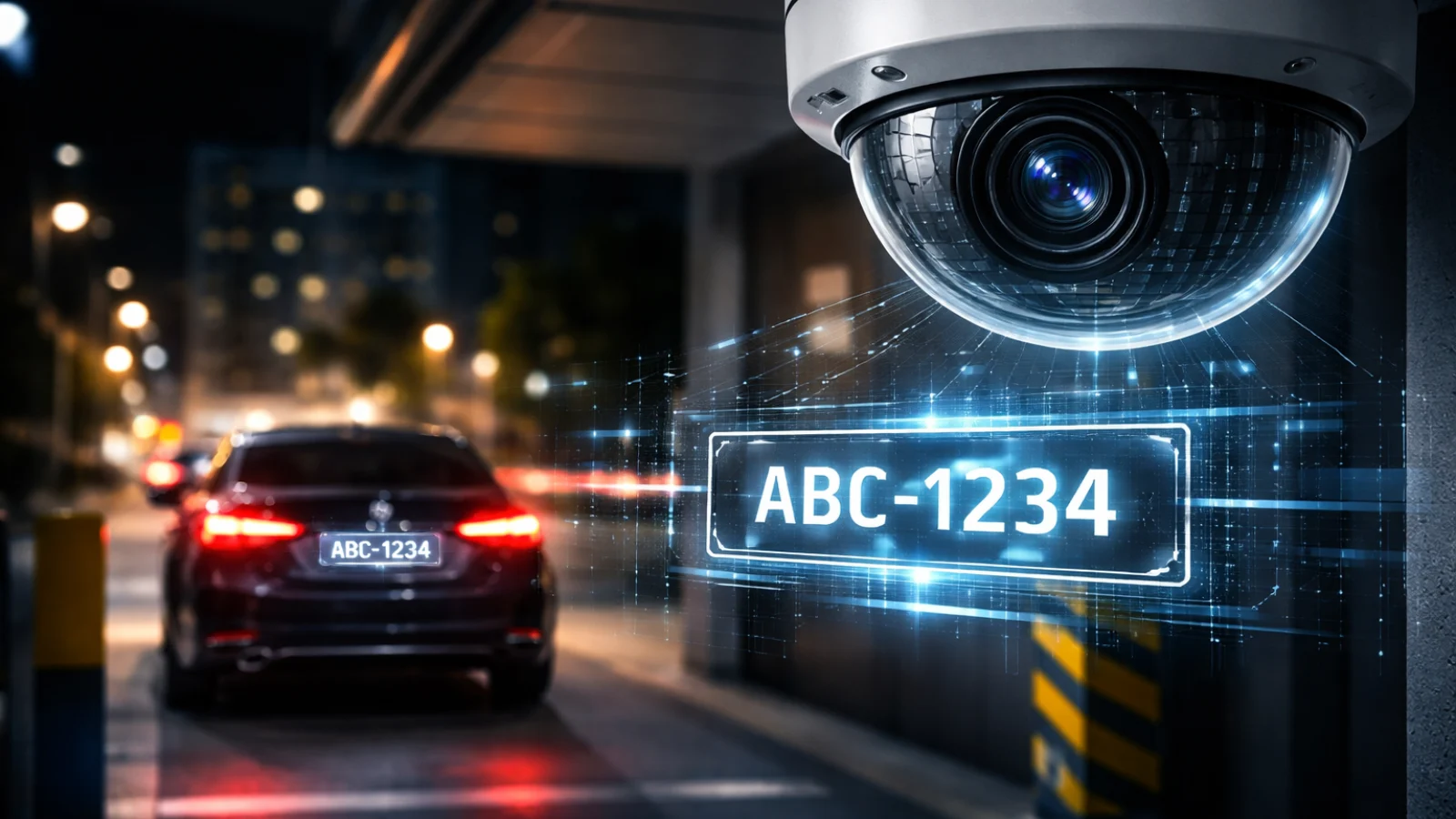
Video surveillance analytics software is a smart layer applied to camera feeds. Instead of merely capturing and storing video, these systems analyze the footage in real time, identifying objects, tracking movements, and detecting patterns. They then generate actionable insights, reducing the need for manual review.
Unlike traditional CCTV systems, which only record footage, analytics-powered systems interpret what’s happening. They can distinguish between a delivery driver and someone loitering near a restricted area. They can spot a car parked in a no-parking zone for too long, or even detect a crowd gathering near a building exit. All of this happens automatically, without human intervention.
There are two primary types of video surveillance analytics software: rule-based and AI-driven.
Rule-based systems rely on predefined rules. For example, if an object enters a designated area or motion exceeds a certain threshold, the system triggers an alert. These systems are simple, fast, and reliable in controlled environments.
AI-driven systems, on the other hand, use deep learning and computer vision. They learn from vast datasets, adapting to real-world environments. Instead of relying on explicit rules, AI systems recognize deviations from what they’ve learned is “normal.” This makes them more effective in unpredictable environments, handling variables like changing light, crowded spaces, and partially obstructed objects.
AI-powered systems are better suited for complex, real-world situations. While rule-based systems are effective in stable, controlled environments, AI systems shine when it comes to handling the unpredictability of everyday security challenges.
Key Features of Video Surveillance Analytics Software
Not all video surveillance analytics platforms are created equal. “Video analytics” is a broad term, and vendors often use it to describe various features. Here’s a look at the core capabilities of video surveillance analytics software:
Real-Time Monitoring and Alerts
The ability to detect and flag events in real time is the foundation of any video surveillance system. Real-time alerts allow security teams to respond immediately to incidents, instead of reviewing footage after the fact.
Precision is key here. A system that sends an alert every time a leaf blows across the screen is ineffective. The best systems minimize false alarms while ensuring that genuine threats are still flagged. Achieving this balance is challenging but essential for effective security operations.
Automatic Object Recognition
Modern surveillance analytics systems can distinguish between different types of objects, such as people, vehicles, animals, and inanimate objects. This capability is vital for tasks like tracking movement across multiple cameras, counting vehicles, or identifying unauthorized personnel.
Accurate object recognition can be difficult to implement due to varied lighting, angles, and environments. However, once perfected, it opens up a wide range of applications, from counting customers in a store to detecting unattended bags in public spaces.
Behavioral Analytics
Behavioral analytics takes object detection a step further by interpreting the actions of people and objects. For example, it can identify loitering, track crowd density, or flag tailgating at secured doors.
This is particularly useful because many security incidents have behavioral patterns that precede escalation. For example, someone casing a location often exhibits different behaviors compared to a legitimate customer. Early detection of these behavioral signals can prevent problems before they become serious threats.
Facial Recognition
Facial recognition is one of the most powerful features in modern surveillance systems. It can identify people by comparing their faces to a database, authenticate access at entry points, or trigger alerts when a flagged individual is detected.
Its performance depends on factors like lighting, camera angles, and the diversity of the training data. There are also legal and ethical concerns, as some jurisdictions have imposed restrictions on the use of facial recognition. It’s essential to carefully assess the legal landscape when deploying facial recognition in any environment.
Edge Analytics
Traditionally, video footage was sent to a central server or the cloud for processing. However, edge analytics shifts this processing closer to the camera, often on the camera itself or a local device nearby.
This approach reduces bandwidth usage, lowers cloud storage costs, and cuts latency, enabling faster response times. Edge processing also makes video surveillance systems viable in remote areas or locations with limited internet connectivity.
With advancements in edge AI, cameras now come with built-in processors capable of running sophisticated analytics, significantly reducing the need for external servers and improving overall system efficiency.
Data Security and Compliance
Surveillance systems often handle sensitive data, including biometric information. As privacy laws and regulations become more stringent, it’s critical to ensure that video surveillance analytics software complies with frameworks like GDPR, HIPAA, and CCPA.
A robust platform should include features like encrypted data storage, role-based access controls, configurable retention policies, and audit logging. These are essential for both security and compliance, especially in industries that handle sensitive information.
Benefits of Video Surveillance Analytics Software
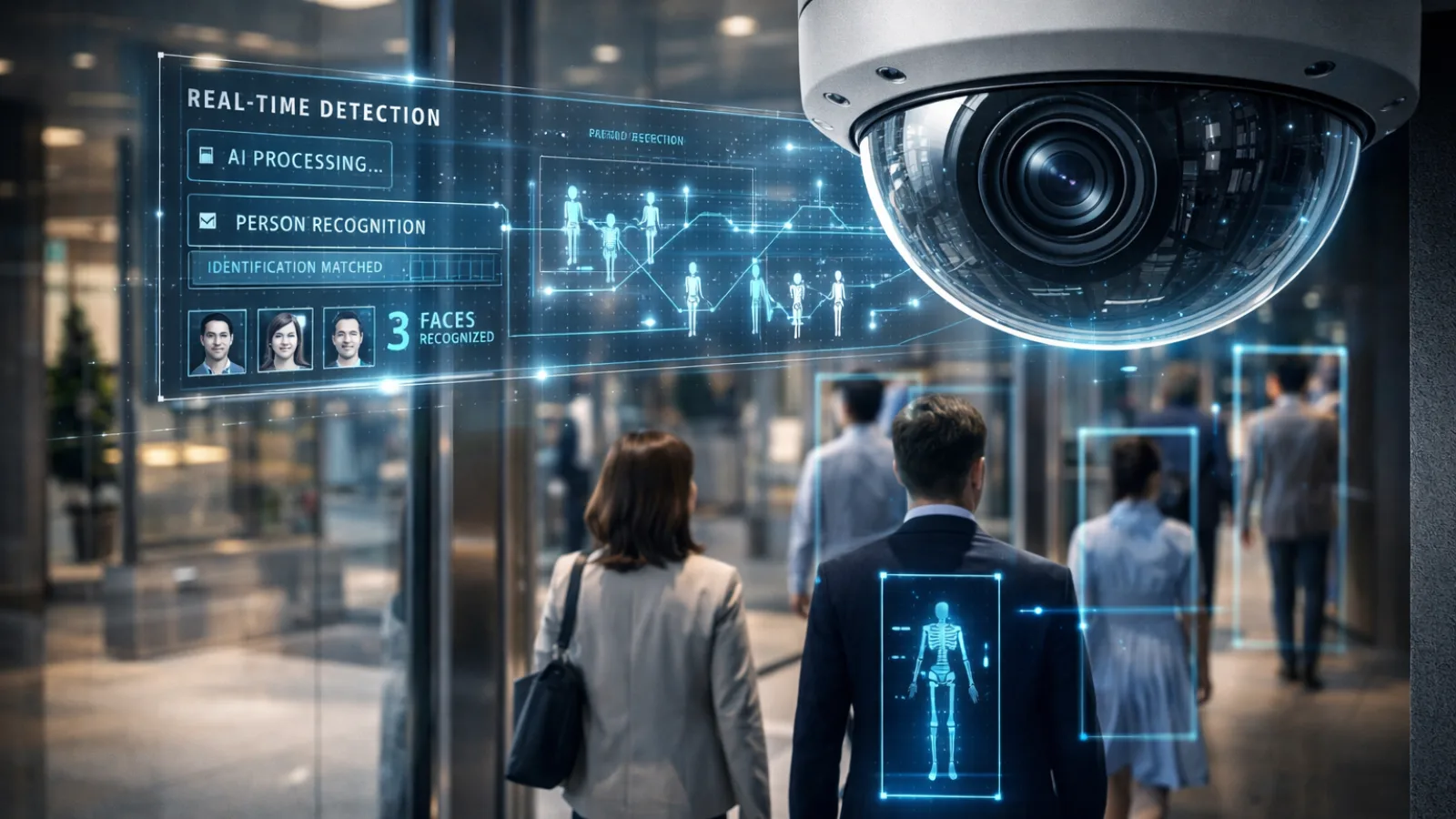
Reduced False Alarms
False alarms can drain resources. Traditional systems often generate alerts due to irrelevant events like lighting changes or animals moving across the camera. This leads to “alarm fatigue,” where operators begin ignoring alerts.
AI-driven analytics minimize false positives by distinguishing between everyday occurrences and genuine threats. For instance, a system might ignore a car driving through a parking lot at night but flag the same car circling repeatedly at an odd hour.
Improved Operational Insights
Beyond security, video surveillance analytics can provide valuable business intelligence. Retailers use people-counting data to optimize store layouts and staffing. Facility managers use occupancy data to improve energy efficiency. Logistics operators track the movement of goods to identify bottlenecks.
This shift in perspective turns surveillance from a purely security tool into an operational asset.
Cost-Effective Surveillance
Monitoring a large facility with human staff is expensive. Video surveillance analytics software automates much of the monitoring, allowing smaller teams to cover larger areas more efficiently.
While the initial costs of deploying such a system can be significant, the long-term savings are often substantial, particularly in multi-site operations where staffing costs can add up quickly.
Enhanced Decision Making
AI-powered surveillance systems provide security teams with more precise data, allowing them to respond more effectively to incidents. These systems can pinpoint the exact location of an event, classify the object involved, and provide all relevant information in seconds.
Additionally, analytics data can help improve long-term decisions, such as where to place additional cameras or how to redesign spaces for better security coverage.
Different Types of Video Surveillance Analytics Software
Rule-Based Analytics
Rule-based systems rely on predefined logic. For example, they might trigger an alert when motion is detected in a specific area. These systems are simple, cost-effective, and work well in controlled environments.
However, they lack the flexibility to adapt to real-world complexities like changes in lighting or unexpected objects in the scene.
AI-Driven Analytics
AI-powered systems learn from data, adapting to new environments and scenarios. They’re more robust in real-world situations, handling unpredictable conditions like crowded spaces or varying lighting. However, these systems can be more complex and require careful training to perform well in specific contexts.
Hybrid Systems
Many enterprise deployments use a hybrid approach, combining rule-based and AI-driven analytics. Rule-based systems handle predictable tasks, while AI manages more complex situations. This balance allows organizations to optimize both precision and flexibility based on their needs.
Best Video Surveillance Analytics Software
When it comes to real-time monitoring, analyzing, and responding to security events, VideoraIQ sets the standard. Designed for high-risk and large-scale environments, VideoraIQ’s AI-powered surveillance system ensures that your security infrastructure is proactive, not reactive.
AI Surveillance Capabilities: Always Accurate, Always On
VideoraIQ brings intelligence to every corner of your environment, monitoring and analyzing footage as it happens. Powered by advanced AI, it makes surveillance smarter, faster, and more effective:
Face Recognition
Track and identify individuals with precision, perfect for access control and ensuring security compliance in sensitive areas.
Intrusion Detection
Detect unauthorized movement or breaches within restricted zones in real time. VideoraIQ immediately triggers alerts to keep your premises secure.
Object Detection
Automatically identify suspicious or unattended objects in live footage, allowing for swift action before any potential threat escalates.
Unauthorized Access Alerts
Get notified instantly whenever unauthorized personnel attempt to access restricted areas, ensuring that any breach is immediately detected.
Line-Cross Detection
Monitor virtual boundaries and receive alerts when someone crosses defined perimeters, making sure no one enters sensitive zones undetected.
Fire and Smoke Detection
AI-powered sensors detect early signs of fire or smoke, ensuring a quick emergency response that can prevent larger disasters.
Cashier Absence Detection
Ensure staff presence at retail counters and maintain customer service standards by detecting cashier absences and promoting operational efficiency.
Unattended Baggage Detection
Identifying abandoned bags in public spaces is a key feature for preventing potential security threats in airports, malls, and other public areas.
Number Plate Recognition
Automate vehicle access management with number plate recognition, improving security at entrances, parking areas, and restricted zones.
Industries VideoraIQ Serve: Smart Detection for Every Environment
VideoraIQ is built for every environment, from corporate offices to public venues. Here’s how our video surveillance software helps protect your most critical assets:
Corporate
Monitor offices, assets, and employees with intelligent access control and behavioral analysis, ensuring your corporate space is secure.
Manufacturing
Protect plants and warehouses by monitoring restricted zones, fire hazards, and operational safety in real-time, keeping your facility secure and efficient.
Healthcare
Safeguard sensitive areas, track staff movement, and enhance patient safety with AI-driven surveillance designed for healthcare compliance.
Public Safety
Enhance city surveillance, monitor public transit hubs, and ensure real-time protection in government zones, making public spaces safer.
Event Venues
Secure large-scale events by monitoring crowds, securing perimeters, and detecting unattended items, ensuring safety during high-traffic events.
Education
Protect campuses with AI-powered surveillance, identifying threats, intrusions, and unauthorized access across educational facilities.
Also Read,
Why A Facial Recognition Camera Is The Future Of Security?
How Do Retail Video Analytics Solutions Improve Store Performance?
Trends and Future Outlook in Video Surveillance Analytics Software
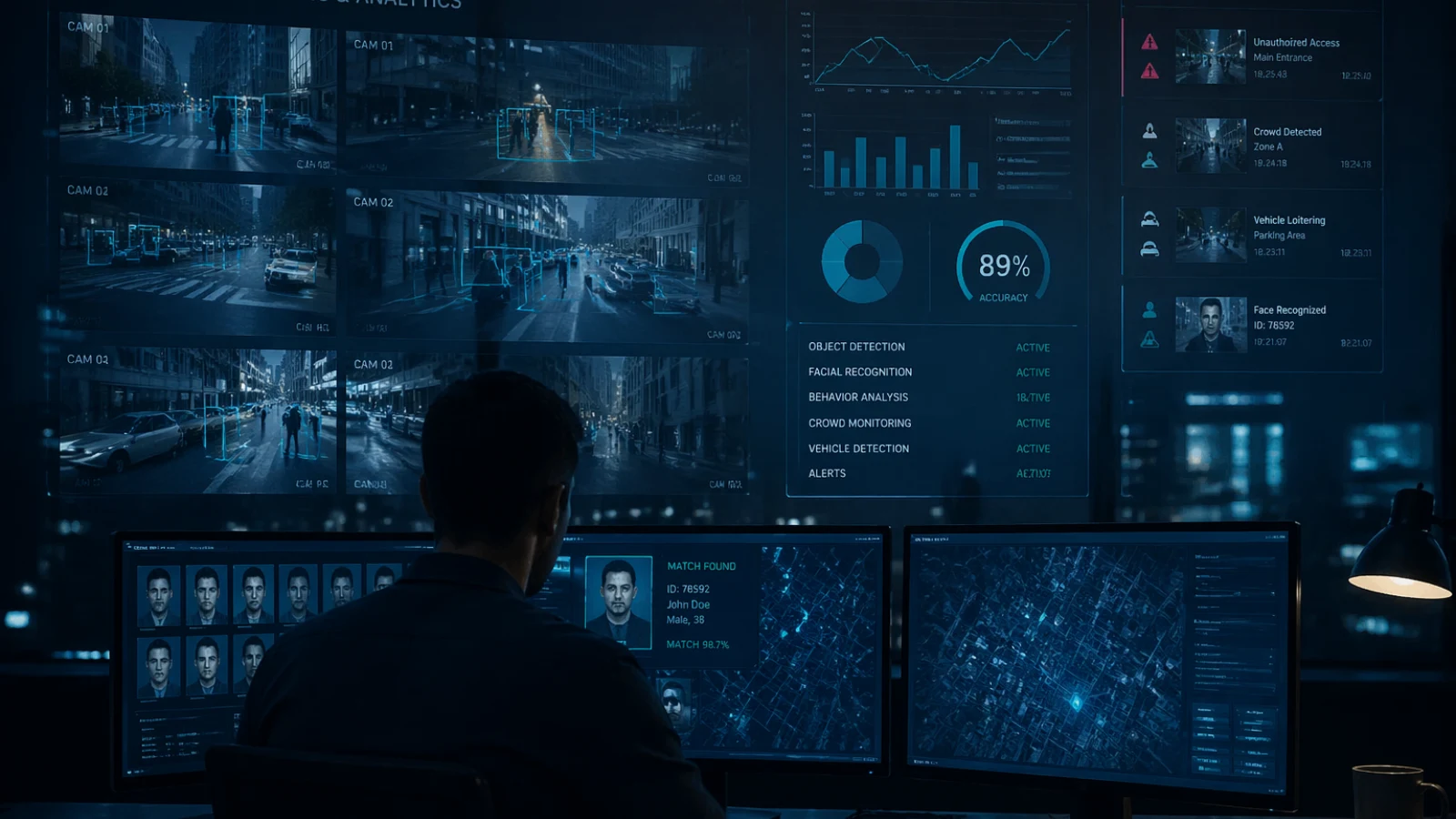
Advancements in AI Capabilities
AI-powered video surveillance analytics software is evolving rapidly. Accuracy in object detection, facial recognition, and behavioral analysis continues to improve. Multi-modal AI, which integrates video data with audio, access control logs, and other sensors, is moving from research to commercial applications. Additionally, LLM-powered natural language search is revolutionizing video analysis, allowing users to describe incidents in plain language instead of manually scrubbing through hours of footage.
The Shift Toward Edge Processing
While cloud-based solutions dominated early video surveillance analytics software, the focus is shifting towards edge processing. By processing data locally on cameras or nearby devices, edge AI reduces bandwidth costs, cuts latency, and meets data sovereignty requirements. This shift enables more efficient deployments, particularly in areas with unreliable connectivity.
Ethics, Privacy, and Regulation
As AI surveillance technologies become more ubiquitous, regulatory requirements are tightening. The EU AI Act and various data protection laws demand that organizations prioritize compliance. Privacy-by-design, which involves minimizing data collection and ensuring secure consent frameworks, has become essential for AI surveillance systems to ensure ethical use of technology.
Market Growth
The AI video surveillance analytics market is expected to grow rapidly, from approximately $5 billion in 2025 to over $17 billion by 2031. The increasing demand for AI video surveillance analytics software is driven by enterprise adoption, investments in smart cities, and the decreasing cost of AI processing hardware, making these solutions accessible for businesses of all sizes.
Conclusion
The future of video surveillance analytics software is bright, with significant advancements driving the shift from passive monitoring to intelligent, real-time responses. Solutions like VideoraIQ offer businesses and organizations the ability to detect, analyze, and respond to threats as they happen. As the technology evolves, it will become a standard component of security programs, enabling businesses to not only react to incidents but to prevent them altogether.
FAQs
What is video surveillance analytics software, and how does it work?
Video surveillance analytics software enhances traditional security camera systems by using AI and machine learning to process and analyze footage in real time. It can detect objects, identify individuals, track movements, and provide alerts based on unusual activity without requiring human intervention.
How secure is the data processed by video surveillance analytics software?
Data security is a critical component of video surveillance analytics software. Many platforms offer encrypted storage, secure transmission, and compliance with privacy regulations like GDPR and HIPAA, ensuring that sensitive footage and personal data are protected.
Can video surveillance analytics software be used in small businesses, or is it only for large enterprises?
While video surveillance analytics software was once primarily used by large enterprises, the technology is now accessible to businesses of all sizes. With cost-effective solutions and scalable options, even small businesses can leverage AI-powered surveillance for improved security and operational efficiency.
What are the differences between edge processing and cloud-based video surveillance?
Edge processing involves analyzing video data locally on the camera or a nearby device, reducing latency and bandwidth usage. In contrast, cloud-based solutions store and process footage remotely. Edge processing is ideal for environments with limited connectivity or strict data sovereignty requirements.
Can VideoraIQ be deployed in multiple locations?
Yes, VideoraIQ offers cloud-based deployment with the flexibility to scale across multiple sites, ensuring consistent and unified security management.