

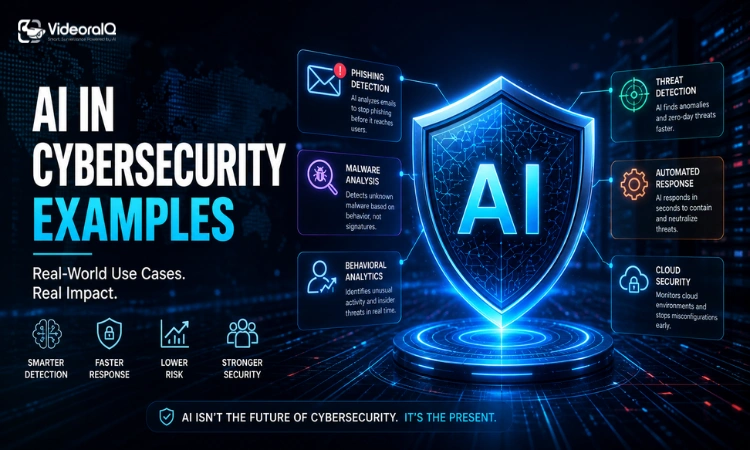
The phrase AI in cybersecurity examples often sounds abstract until you see how it works in real systems. Security teams are not experimenting anymore. They are relying on AI every day to detect threats, stop fraud, and respond faster than any human team could manage alone.
What most readers want is simple. Not theory. Not buzzwords. They want to know what AI actually does inside a security stack and whether it makes a measurable difference. That is exactly what this breakdown delivers.
Read Aloud!
Why AI in Cybersecurity Is No Longer a Future Conversation
Security teams are overwhelmed. Alerts pile up faster than analysts can review them. Meanwhile, attackers automate their work using AI, which widens the gap even further.
This is where AI in cybersecurity examples becomes practical, not optional. AI handles the scale problem. It processes patterns across millions of events and surfaces what truly matters.
Attackers are not waiting. They already use AI to generate phishing emails, scan vulnerabilities, and adapt malware behavior. Defenders either match that speed or fall behind.
The result is clear. AI is no longer a competitive advantage. It is becoming the baseline for modern security.
Quick Answer: What Are the Main Examples of AI in Cybersecurity?
Here are the most common examples of AI in cybersecurity used today:
- Threat detection using behavioral anomaly analysis
- Phishing prevention through natural language processing
- Malware detection based on behavior instead of signatures
- Automated incident response to contain threats instantly
- Fraud and identity protection using real-time risk scoring
- Vulnerability prioritization with AI-driven risk ranking
- Cloud misconfiguration monitoring in dynamic environments
- Insider threat detection using behavioral analytics
- Agentic AI assisting SOC teams with autonomous actions
Each of these reflects real AI applications in cybersecurity examples, not theoretical use cases.
The Real-World AI in Cybersecurity Examples You Need to Know
1. Detecting Threats Before They Become Breaches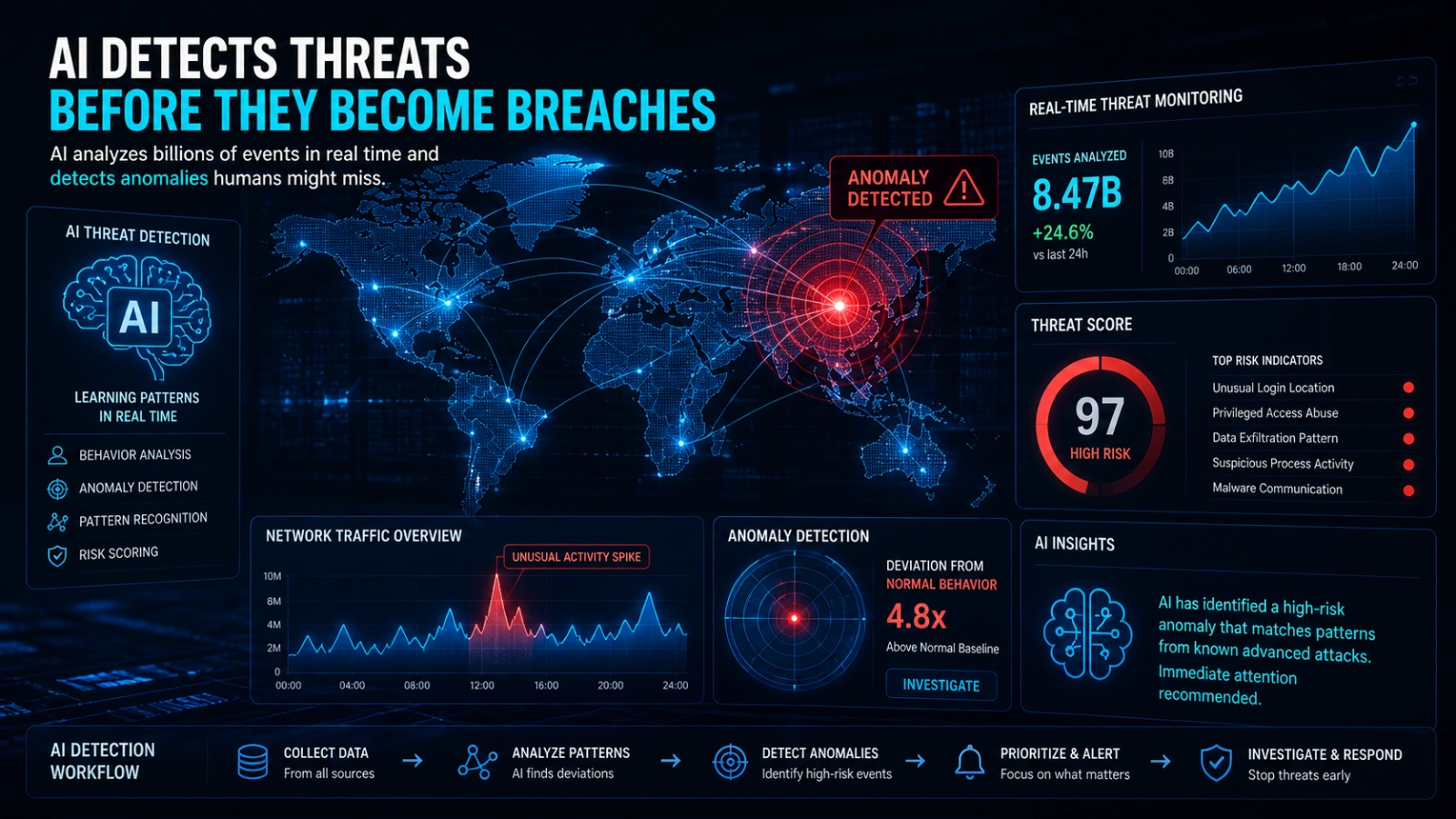
One of the most powerful AI in cybersecurity examples is behavioral anomaly detection.
Instead of looking for known threats, AI builds a baseline of normal activity. It learns how users log in, how systems communicate, and how data moves.
When something unusual happens, like a login at 3 AM from a new country or a sudden spike in data transfer, AI flags it instantly.
This approach matters because it catches threats that have never been seen before. Traditional tools miss those entirely.
2. Stopping Phishing Before Anyone Clicks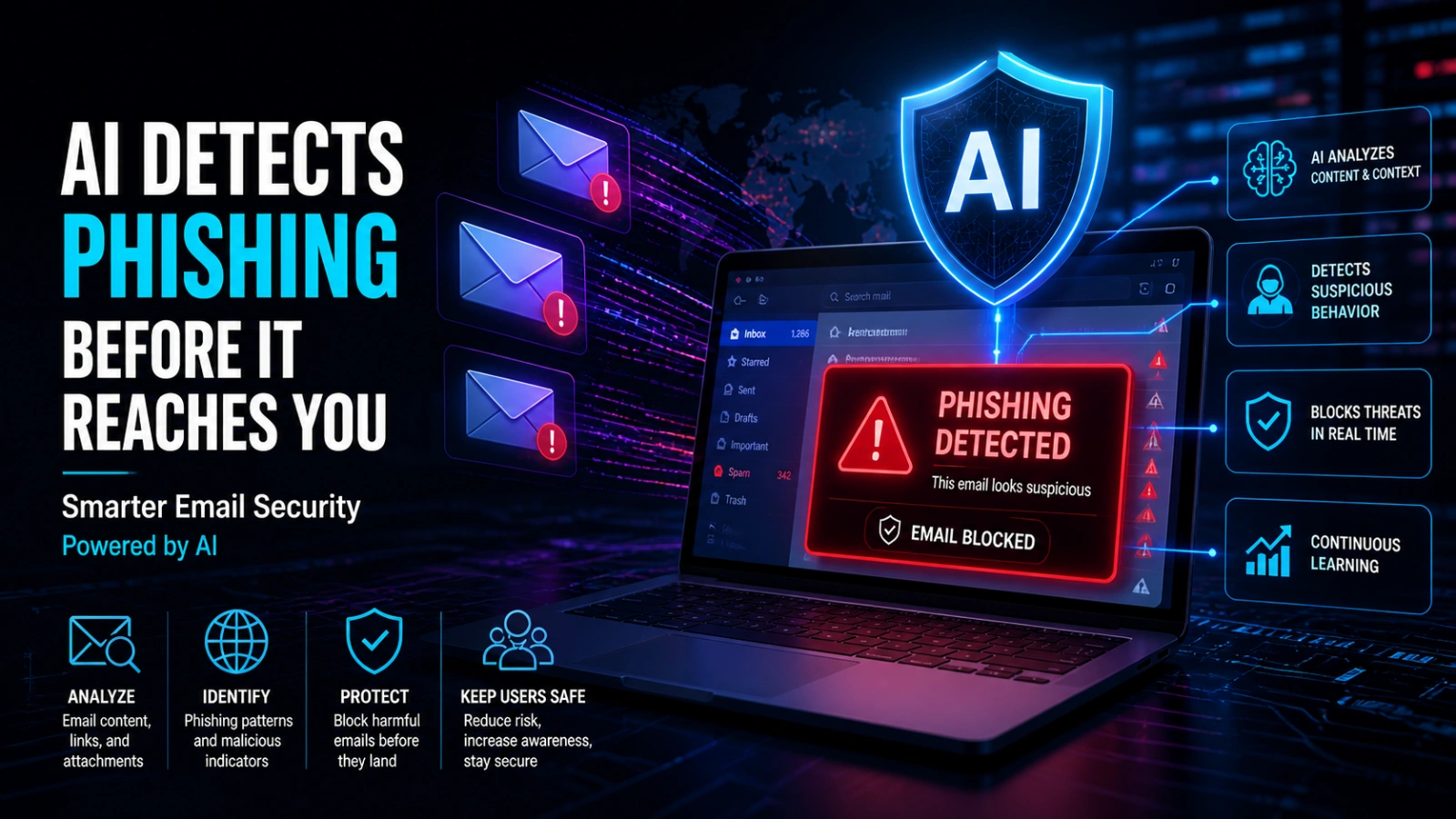
Phishing attacks have become more convincing, and simple filters are no longer enough.
Modern examples of AI applications in cybersecurity use natural language processing to analyze email content, tone, and context. AI also checks sender behavior and domain patterns.
It can detect subtle signs of impersonation that humans often miss. For instance, a message that looks normal but slightly shifts urgency or wording.
The result is fewer successful attacks and less reliance on employee vigilance alone.
3. Malware That’s Never Been Seen Before
Traditional antivirus tools rely on signatures. If the threat is new, they fail.
AI changes that. It monitors how files behave rather than what they look like.
One of the more practical AI in cybersecurity examples involves detecting ransomware based on behavior. If a process starts encrypting files rapidly, AI flags it immediately.
This shift from reactive to behavioral detection reduces response time and limits damage.
4. When Seconds Cost Millions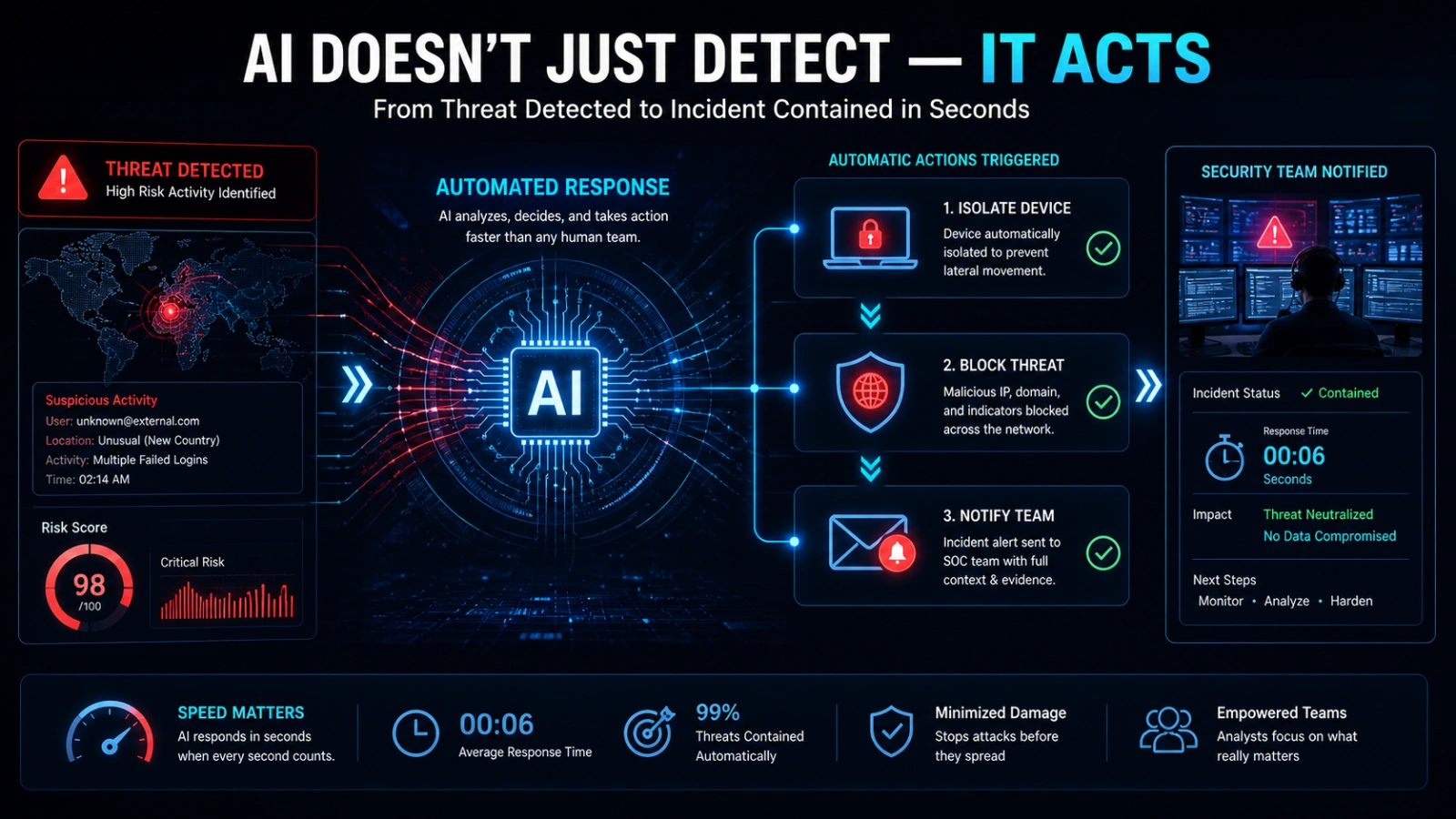
Incident response used to be slow. Analysts had to investigate, confirm, and act step by step.
AI compresses that timeline. It can isolate infected devices, collect evidence, and trigger response workflows within seconds.
These AI applications in cybersecurity examples show how automation reduces damage during active attacks.
Still, human oversight matters. AI handles speed, but analysts make final decisions in complex situations.
5. Credential Theft and Account Takeover
Account takeover attacks are rising, and static rules cannot keep up.
AI tracks behavior continuously. It looks at login locations, device fingerprints, and user activity patterns.
If something feels off, like a login from a new device combined with unusual behavior, AI flags the session.
These examples of AI in cybersecurity help prevent fraud while keeping the user experience smooth.
6. Patching the Right Things First
Security teams often face thousands of vulnerabilities. Not all of them matter equally.
AI helps prioritize. It considers exploit likelihood, system exposure, and business impact.
For example, a public-facing server with an active exploit risk gets higher priority than an internal low-risk system.
This is one of the most practical AI in cybersecurity examples because it improves efficiency without increasing workload.
7. Cloud Environments Don’t Sit Still
Cloud systems change constantly. Permissions shift. New services appear. Misconfigurations happen quietly.
AI tracks these changes in real time. It detects unusual access patterns, exposed storage, and unexpected API activity.
Among modern AI applications in cybersecurity examples, this is critical for preventing data leaks.
Without AI, these issues often go unnoticed until damage is done.
8. The New Frontier: Agentic AI in Security Operations
A newer category of AI in cybersecurity examples involves agentic AI.
This type of AI does more than analyze. It acts. It can investigate alerts, correlate data across systems, and initiate responses without waiting for human input.
For example, it might detect a threat, gather context, generate a report, and isolate the affected system automatically.
Security teams are shifting from managing alerts to overseeing decisions. That is a major change in how operations work.
The Side of AI in Cybersecurity Nobody Talks About Enough
AI is not only helping defenders. Attackers are using it too.
Some AI applications in cybersecurity examples from the attacker side include:
- AI-generated phishing emails that sound natural and personalized
- Malware that adapts its behavior to avoid detection
- Deepfake audio used to impersonate executives
Understanding this side matters. It changes how you think about defense.
Security is no longer static. It is an evolving system where both sides use AI to gain an edge.
How to Know Which AI Cybersecurity Use Case Applies to You
Not every organization needs every solution. The key is matching risk to the right use case.
If your biggest concern is phishing, focus on AI email security.
If ransomware is the threat, prioritize behavioral detection tools.
If cloud exposure worries you, invest in AI cloud monitoring.
These AI in cybersecurity examples are most effective when applied to specific problems, not used blindly.
Start with areas where data volume is high and manual work is repetitive. That is where AI delivers the fastest value.
Common Misconceptions About AI in Cybersecurity
Some expectations around AI are unrealistic.
One common belief is that AI replaces security teams. It does not. It supports them by handling scale and speed.
Another misconception is that AI eliminates false positives. It reduces them, but tuning is still required.
Many assume AI is only for large companies. In reality, cloud-based tools make these examples of AI in cybersecurity accessible to smaller businesses, too.
Finally, having AI tools does not guarantee protection. Configuration, data quality, and oversight still matter.
How VideoraIQ Brings AI-Driven Security Intelligence Together

Many organizations adopt multiple tools but struggle to connect them. That is where VideoraIQ fits in by focusing on practical integration and visibility.
Here are the core features:
- Aggregates security data from endpoints, cloud services, email systems, and identity providers into a single dashboard
- Correlates alerts across different sources to highlight related incidents instead of isolated signals
- Uses behavioral analysis to flag deviations in user, device, and network activity
- Prioritizes alerts based on risk factors such as exposure level, activity type, and asset sensitivity
- Supports automated response actions like isolating endpoints or disabling suspicious sessions
- Maintains audit trails and logs for investigation, compliance, and reporting needs
The goal is straightforward. Give security teams a clearer context, reduce alert fatigue, and enable faster, more informed decisions.
Read More!
What Is Video Intelligence Software? Epic Benefits, Features & Uses
What’s Coming Next in AI Cybersecurity
AI in security is still evolving.
Agentic systems will become more common. They will handle multi-step investigations with minimal input.
Attackers will also refine their AI models, making detection harder.
Privacy-focused AI will grow, allowing organizations to share threat data without exposing sensitive information.
These trends show that AI in cybersecurity examples will only become more advanced and more necessary.
The Bottom Line
AI is not a magic fix. It does not replace strategy or skilled professionals.
What it does is shift the odds. It helps teams move faster, see more clearly, and respond before damage spreads.
The real takeaway from these AI in cybersecurity examples is simple. Start where your risk is highest. Apply AI where it reduces the most friction.
Because the question is no longer whether to use AI in security. It is how soon you can use it effectively.
Frequently Asked Questions About AI in Cybersecurity
What are the most common examples of AI in cybersecurity?
Threat detection, phishing prevention, malware analysis, fraud detection, and automated response are the most widely used AI in cybersecurity examples today.
How does AI detect threats that traditional tools miss?
It analyzes behavior instead of relying on known signatures, which helps identify new and unknown threats.
Can AI prevent zero-day attacks?
It cannot guarantee prevention, but behavioral analysis makes it far more effective at catching them early.
Is AI suitable for small businesses?
Yes. Many modern tools offer scalable solutions that bring examples of AI applications in cybersecurity to smaller teams.
What are the risks of using AI in cybersecurity?
False positives, poor data quality, and over-reliance can reduce effectiveness if not managed properly.