
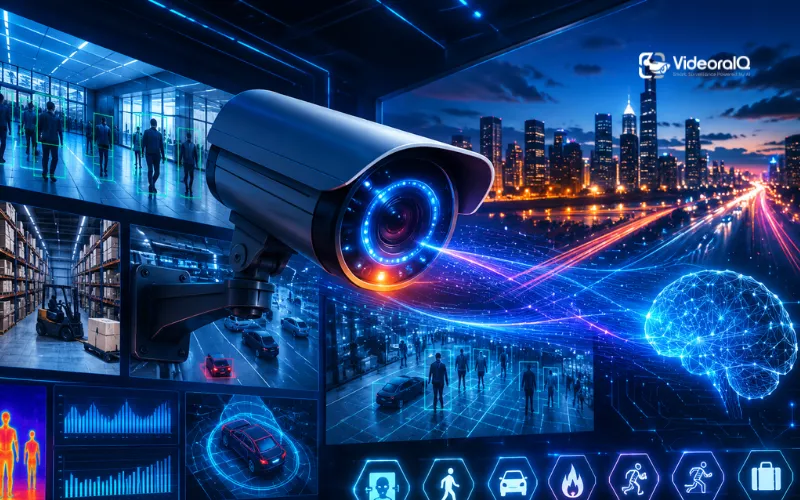
If your current security strategy relies on a human being sitting in a dark room watching a wall of monitors, you have already lost the battle against time. The human eye is remarkable, but it is also easily fatigued and susceptible to office distractions. In a world that moves at the speed of data, the passive CCTV model is no longer an asset; it is a liability. It is a “black box” that only provides answers after the damage has been done. The modern enterprise doesn’t need more footage; it needs more focus.
This is where the AI camera changes the game. We are moving away from the era of “recording what happened” and into the era of “understanding what is happening.” By integrating an AI camera system, businesses are transforming their security from a sunk cost into a strategic engine of intelligence. Through the advanced vision platform at VideoraIQ, we are redefining what it means to protect a perimeter, manage a workforce, and optimize a retail floor.
In this guide, we will break down the mechanics of AI surveillance, identify the features that separate the best AI security camera from the pack, and explore how visual intelligence eliminates the risks associated with office distractions.
Listen To The Podcast Now!
The Science of Vision: How AI Surveillance Works
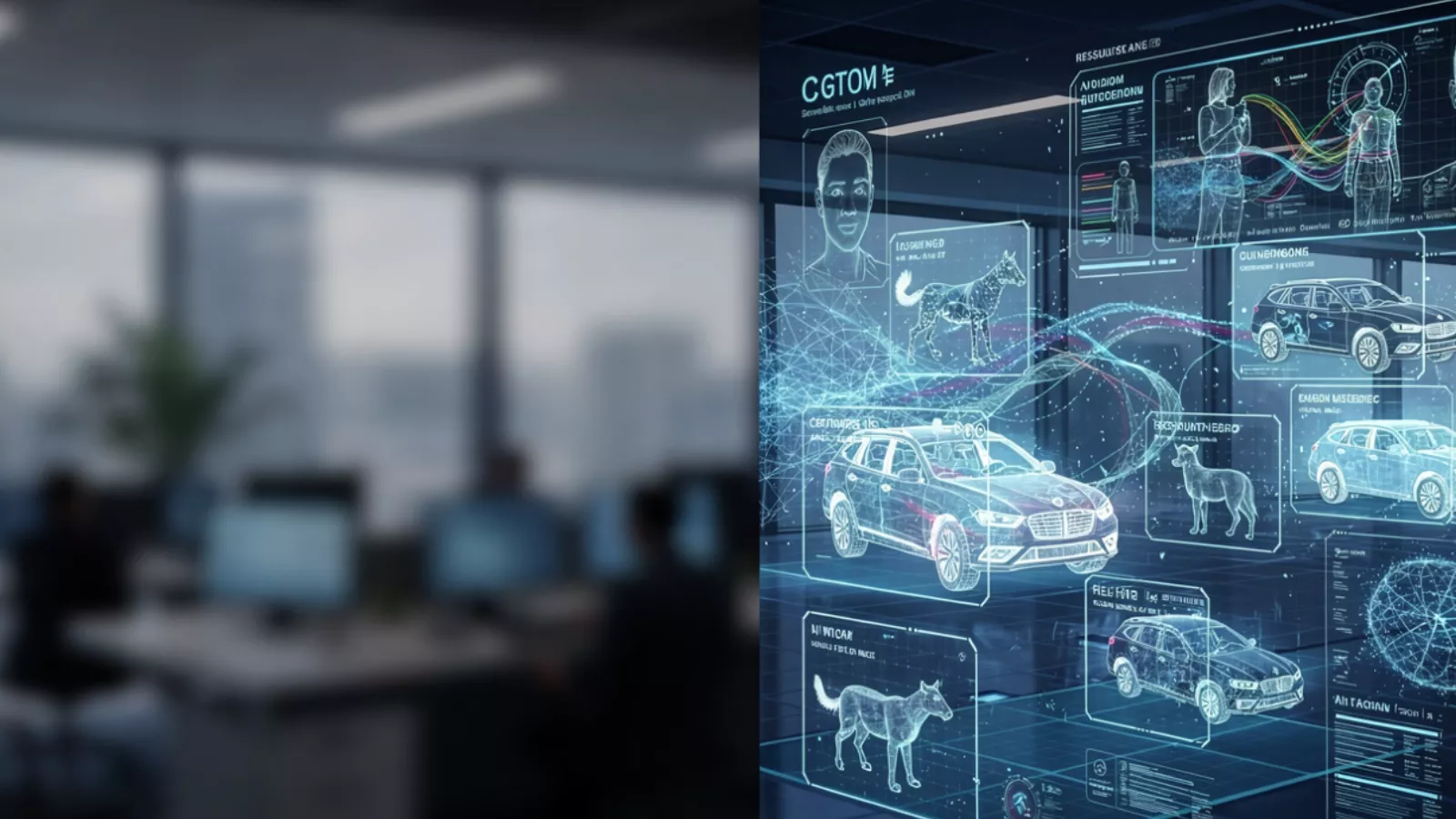 To understand the power of an AI camera, one must first understand what happens behind the lens. A standard security camera captures video as a stream of pixels. To a traditional system, a person walking through a door is the same as a shadow moving across the wall; both are simply “motion.”
An AI security camera, however, uses a Neural Network to process that video. It has been trained on millions of images to recognize specific shapes and behaviors. It can distinguish between a human, a vehicle, an animal, and a static object. This level of granular detail is essential in a modern workplace where office distractions can easily pull a security guard’s attention away from the screen. With AI, the system itself does the “watching,” only alerting human staff when a predefined event occurs.
This intelligence eliminates the “white noise” of traditional surveillance. Instead of thousands of false alarms triggered by wind or lighting changes, an AI camera system provides high-fidelity data that can be used for everything from loss prevention to operational optimization.
Tackling Office Distractions with Visual Intelligence
In a busy corporate or industrial setting, office distractions are a silent killer of productivity. Whether it is unauthorized loitering in break rooms, bottlenecks in the lobby, or employees being pulled away from their primary tasks, these office distractions can be difficult to quantify without objective data.
By utilizing AI surveillance camera, managers can gain a birds-eye view of how their physical space is actually used. Are office distractions occurring because the office layout is inefficient? Is there a specific area where office distractions are most prevalent? An AI camera can provide heat maps and dwell-time analytics, allowing leadership to restructure the workplace to minimize office distractions and maximize flow. When the environment is optimized, the number of office distractions drops, and the overall efficiency of the workforce rises.
Inside VideoraIQ.com: Next-Gen Vision Features
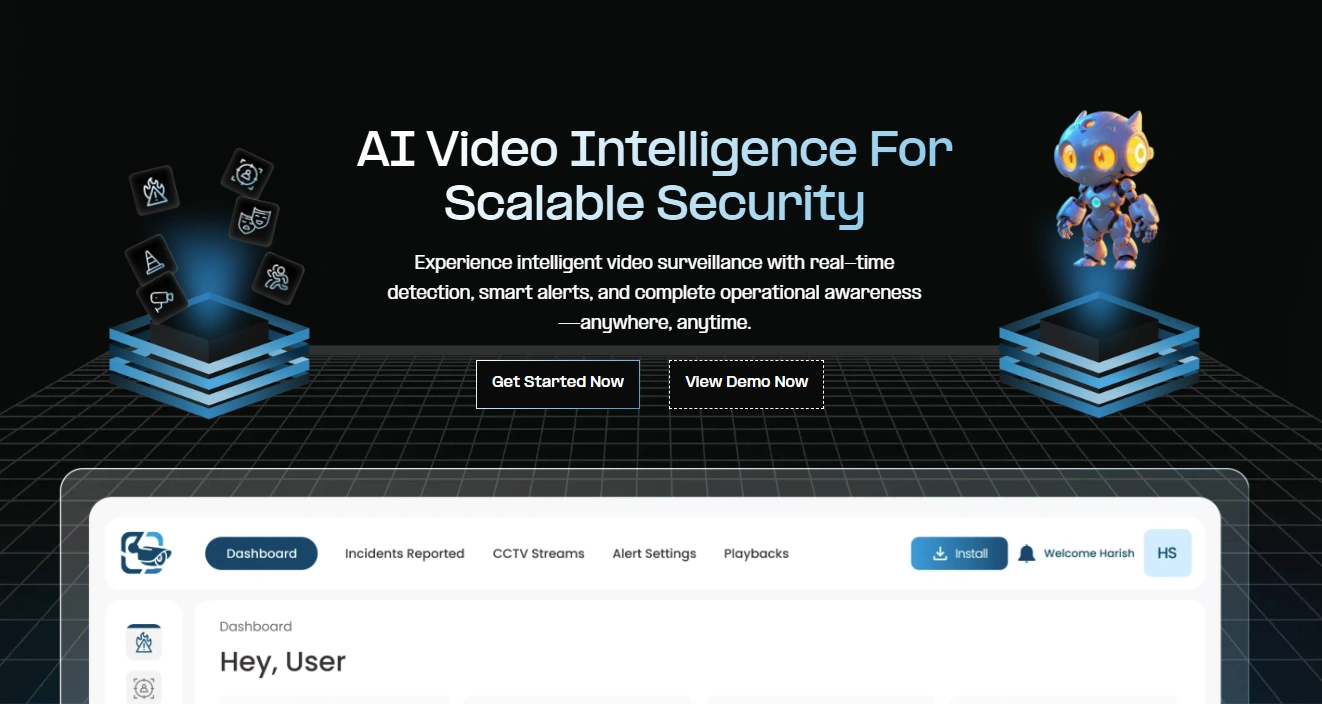 The software driving the hardware is what defines the best AI security camera. VideoraIQ.com has developed a suite of features designed to address the most complex security and operational challenges facing businesses today. By automating the “observation” phase of security, VideoraIQ helps teams overcome the impact of office distractions and stay focused on high-level decision-making.
Here are the core features of the VideoraIQ system, explained:
- Face Recognition: This feature instantly identifies individuals in real-time to automate secure access and recognize authorized personnel.
- Line cross Detection: It monitors virtual boundaries and alerts security the moment any person or vehicle crosses a forbidden line.
- Intrusion Detection: The system identifies and flags unauthorized movement within a defined 3D space during restricted hours.
- Unattended Baggage: It spots luggage or packages left behind in public areas to prevent security hazards and manage clutter.
- Object Detection: This classifies motion into categories like people or vehicles to focus solely on relevant security events.
- Cashier absence detection: It notifies supervisors the moment a retail station is left unmanned to maintain service standards.
- Unauthorized Access Alerts: The camera sends immediate warnings whenever an individual enters a high-security room without clearance.
- Number Plate Detection: This scans and logs vehicle license plates to automate gate entry and track site traffic.
- Fire and Smoke Detection: It acts as an early-visual-warning system to detect fire signs before standard sensors might trigger.
Also Read
AI Security Camera: Everything You Need To Know
How AI-Powered Surveillance Cameras Are Revolutionizing Modern Security
Moving from Security to Strategy: Business Applications
While an ai security camera is primarily a safety tool, its secondary applications are what truly drive a Return on Investment (ROI). When video becomes data, it becomes a strategic asset for every department in the company.
1. Retail Analytics and Customer Flow
In the retail world, an AI camera acts like a physical version of Google Analytics. It tracks how customers move through the store, where they stop, and what they ignore. If a particular display is causing office distractions for the sales staff by being poorly placed, the AI can help identify that bottleneck. Understanding customer flow allows retailers to place high-value items in “hot zones” and ensure that staff are positioned where they are needed most.
2. Operational Excellence
In warehouses and manufacturing plants, AI surveillance is used to monitor safety compliance. The system can detect if workers are wearing appropriate safety gear or if heavy machinery is being operated in pedestrian zones. By reducing the number of manual safety checks, managers can spend less time on routine monitoring—which is often prone to office distractions—and more time on process improvement.
3. Loss Prevention
Loss prevention is no longer just about catching a shoplifter. It is about identifying patterns. By integrating AI camera system data with Point-of-Sale (POS) systems, VideoraIQ can flag “sweethearting” at the register or identify unauthorized returns. This level of “messaging vigilance” over the retail floor ensures that the bottom line is protected by a system that never blinks.
How to Choose the Best AI Security Camera
With so many options on the market, selecting the right hardware can be overwhelming. To ensure you are investing in a system that won’t succumb to the same office distractions as traditional CCTV, look for these three criteria:
Edge Processing Capability
The best AI security camera units process data “on the edge,” meaning the AI chip is located inside the camera itself. This is superior to systems that send every frame of video to a central server. Edge processing is faster, requires less bandwidth, and ensures that the system can trigger an alert in milliseconds—crucial when trying to catch a security breach as it happens.
Low-Light Accuracy
Security incidents rarely happen in broad daylight. A high-quality AI camera must have a superior image sensor that can maintain object detection accuracy in low-light or infrared conditions. If a camera can’t distinguish a human from a shadow at 2:00 AM, the AI is effectively useless.
Searchability and Metadata
The power of AI surveillance lies in its searchability. The system should convert hours of video into a searchable database of metadata. You should be able to search for “Red Truck” or “Person with Blue Shirt” and find every instance of that object across all your cameras in seconds. This eliminates the office distractions of manual scrubbing and makes investigations 90% faster.
The ROI of Focused Security
When a business invests in VideoraIQ.com, they are investing in the elimination of waste. Manual monitoring is a waste of human potential. When security personnel are forced to watch monitors for eight hours, they inevitably fall prey to office distractions, missing the very events they are paid to see.
By automating this process, VideoraIQ allows your team to be more effective. The AI camera system handles the “eyes-on-glass” work, while your human team handles the “boots-on-the-ground” response. This synergy reduces the overall impact of office distractions on your security posture and ensures that your facility is protected by a tireless, digital sentinel.
Frequently Asked Questions (FAQs)
How does an AI camera differ from standard motion detection?
Standard motion detection triggers an alert for any pixel change, such as a moving shadow or a bird. An AI camera understands what it sees, only alerting you if the motion is caused by a person, a car, or another specific object of interest.
Can an AI camera system help with productivity?
Absolutely. By identifying areas where office distractions occur—such as unauthorized gathering spots or inefficient workflows—managers can use the data from AI surveillance to optimize the work environment and improve employee output.
Is it difficult to upgrade my current CCTV to AI?
Not necessarily. VideoraIQ.com is designed to integrate with many existing infrastructures. In many cases, you can add an AI-enabled NVR (Network Video Recorder) to your current cameras to give them the “brain” they need to perform AI surveillance.
How accurate is the fire and smoke detection?
Very. While it does not replace a traditional smoke alarm, a visual AI security camera can often spot smoke in a large, high-ceiling warehouse or an outdoor loading dock much faster than a physical sensor can, providing crucial extra minutes for evacuation.
What about privacy?
Modern AI camera system platforms include privacy masking features. You can set the system to pixelate faces in common areas while still tracking “object behavior,” ensuring you get the data you need without violating employee or customer privacy.
Conclusion: Lead with Vision
The era of passive recording is over. In a world where office distractions and security threats are constant, businesses cannot afford to look back at what happened; they must look at what is happening.
An AI camera is more than a security tool—it is a window into the reality of your operations. By choosing the best AI security camera through a platform like VideoraIQ.com, you are empowering your organization with a system that reduces office distractions, enhances safety, and provides the actionable data needed to lead with confidence.
Don’t let your business stay in the dark. Embrace the intelligence of VideoraIQ and transform your vision into your greatest competitive advantage.