

85% of CCTV footage is never reviewed (Source: VideoraIQ Stats). If you want the best ai add-on existing, choose a cloud platform that layers AI on your current IP cameras instead of replacing them. For 2026 buyers with 10–50+ stores, that choice means faster rollouts, lower cost, and alerts that lead to action while an incident is still live.
Here’s the short answer: the right add-on should plug into what you already own, detect retail-specific risks in real time, and cut false alarms so your team acts on the few alerts that matter. It should centralize every store feed, deliver alerts in under three seconds, and package video evidence for clean handoffs to LP, HR, and law enforcement.
This guide explains what to ask vendors, how the recommended platform (VideoraIQ) works, how it compares to common alternatives, and how to roll it out with no downtime. You’ll see real quotes, hard numbers, and a pricing breakdown that matches how chains buy.
Why Retail Chains Struggle to Get Value From Their Existing Camera Systems
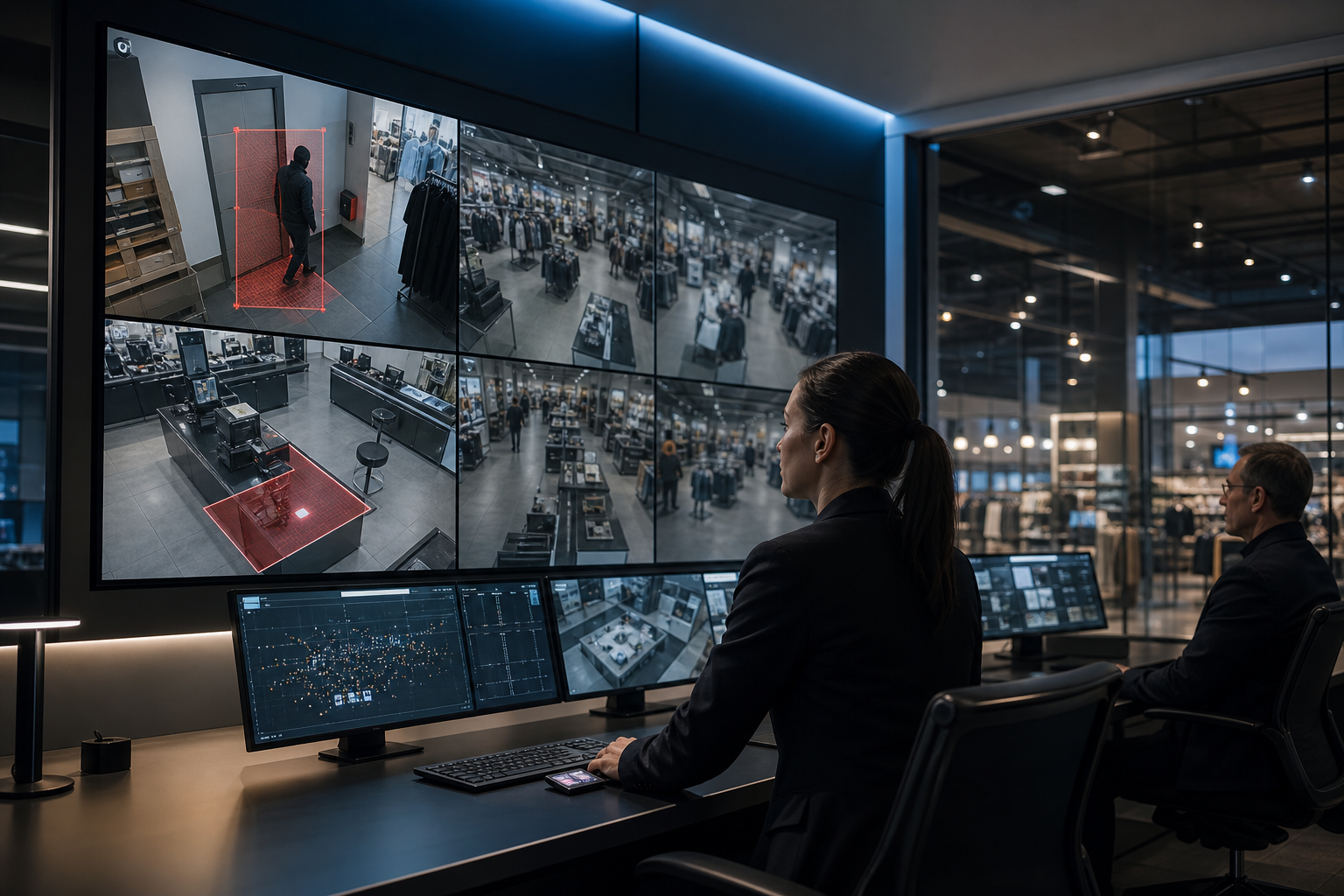
Most chains installed cameras for compliance and peace of mind, but not for real-time action. Stores record 24/7, yet 85% of that footage is never reviewed (Source: VideoraIQ Stats). As a result, you learn about theft at the next morning’s huddle, not when it’s in progress at 2 AM.
However, your reality is clear. LP teams are lean. Store managers juggle staffing, ops, and customer issues.
Security staff can’t watch dozens of live feeds without fatigue. After about 20 minutes, attention drops, and key events slip by. Meanwhile, incidents add up: cashier fraud near close, backdoor propped open after hours, and safety hazards in stockrooms.
In addition, replacing every camera across 10–50+ stores is a budget non-starter. A rip-and-replace plan also means downtime, re-cabling, retraining, and a months-long project. You need a smarter layer that uses your existing IP cameras and upgrades them into a real-time monitoring system.
Moreover, the night shift exposes risk. A single guard can’t track 30 feeds. If a register sits unattended or a door opens after lock, no one acts until morning. By then, inventory is gone, logs are stale, and the trail is cold.
The 2026 Operational Reality
- After-hours access: stockroom entries at 1:37 AM go unnoticed.
- Cashier absence: a register stands empty for 6 minutes during refunds.
- Safety: smoke forms in a back aisle, but no one is nearby.
- Oversight: footage exists, yet no alert reaches the person who can act.
As a result, “AI add-on” isn’t a buzzword; it’s the missing layer between cameras and action. The task is to find the best ai add-on existing that turns unattended video into timely, verified alerts your teams will trust and use.
What to Look for in an AI Add-On for Retail Security Cameras
Before you see product logos, set your checklist. The right platform should work with your current mix, scale to every site, and alert fast enough to change outcomes. Ask vendors these seven buyer-grade questions to separate slides from results.
1) Camera Compatibility With Existing IP Gear
- Can you prove it works with my existing IP cameras across brands without hardware swaps?
- Do you support ONVIF/RTSP and mixed fleets from 2018–2025 models in the field today?
2) Retail-Specific AI, Not Just Motion
- Which retail detections do you support beyond “motion”? Examples: shoplifting patterns, cashier absence, after-hours zone access, unattended objects.
- Can you define “zones” around cash wraps, stockrooms, exits, and loading docks?
3) Alert Latency That Enables Action
- What is your real alert latency end to end? Under five seconds is the line between “respond now” and “file later.” Can you demonstrate sub-3-second delivery with proof?
4) Multi-Location, Centralized Management
- Does your dashboard manage 20 to 2,000+ cameras across regions with role-based access?
- Can I filter alerts by store, zone, incident type, and time window in two clicks?
5) Cloud vs. Edge Deployment for Chains
- Do I need on-prem servers at each store? Cloud-first models remove per-site hardware, reduce IT maintenance, and speed upgrades.
- If bandwidth drops, how do you handle buffering and reconnection?
6) Compliance: GDPR/HIPAA and Data Handling
- Are you GDPR and HIPAA compliant? How do you mask faces when required?
- What retention options (7/30/90 days) match LP investigations and audits?
7) Evidence Capture That Stands Up
- Do alerts auto-attach video clips with timestamps, camera ID, and location tags?
- Can I export a clean evidence packet for HR or law enforcement in one step?
For added context on AI in video, see the retail-adjacent primer on [vision ai](https://videoraiq.com/blog/applications-of-vision- As you compare, restate your goal: find the best ai add-on existing for your stores, one that works with your current cameras, hits a sub-5-second alert window, and ships evidence you can use.
Also Read!
How to Add AI to Existing Security Cameras in Manufacturing Plants and Warehouses
Best Unattended Baggage Detection for Airports and Transit Stations in 2026
How VideoraIQ Adds AI to Your Existing Retail Camera Infrastructure
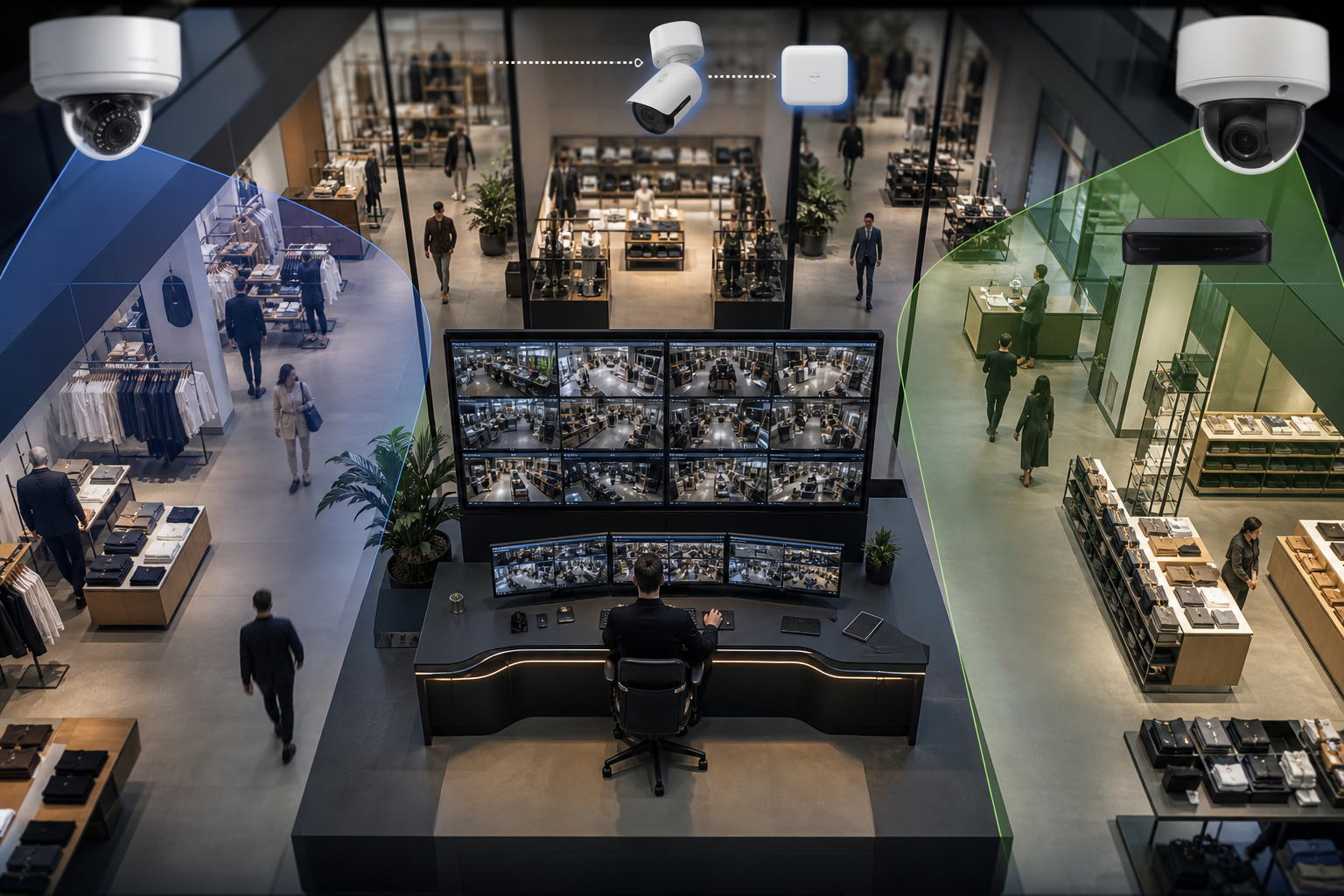
VideoraIQ layers onto your current IP-based CCTV, no hardware swaps. It works with existing cameras across 200+ brands and connects via your standard streams. That means you keep your NVRs and your recording workflows while you add AI that acts in real time.
Furthermore, the platform runs nine detection engines tuned for retail: face recognition, intrusion detection, fire and smoke detection, object detection, ANPR (number plates), line-cross detection, unauthorized access, unattended baggage, and cashier absence detection. In practice, chains start with cashier absence at POS, after-hours intrusion/unauthorized access, unattended objects in aisles, and fire/smoke in back-of-house.
In addition, alert speed matters. VideoraIQ delivers alerts in under three seconds with video proof, a location tag, and a timestamp. That speed turns a late-night door alert into a live call, not a 9 AM recap. Accuracy also matters. VideoraIQ reports 99.4% detection accuracy across its engines, which cuts false alarms and builds trust with LP and ops.
"Within 3 weeks VideoraIQ identified a recurring pattern of after-hours cashier zone access. We discovered internal theft we had no idea was happening. It paid for 6 months of subscription in the first incident." — Sujata Rao, Regional Operations Manager, 14-Location Retail Chain
AI Zones, Heatmaps, and Retail-Specific Add-Ons
VideoraIQ’s Zone-Based Monitoring lets you draw virtual perimeters around cash wraps, stockrooms, exits, and loading docks. You can apply different rules per zone, like stricter alerts after close around POS and stockroom doors. Heatmaps & Analytics then reveal foot traffic and hot spots so you can adjust staff placement, endcaps, and sightlines.
Moreover, the system is cloud-based, no on-prem servers per store. That design matters if you manage dozens of locations. You avoid per-site hardware, routine updates, and truck rolls. Instead, you push settings from a central dashboard and scale from 20 to 2,000+ cameras without changing your field gear.
"Installation was quick, and it worked with our current CCTV—no downtime, no extra investment." — Sana Ibrahim, Hotel Security Lead
Finally, VideoraIQ auto-captures evidence clips for each alert with clear metadata. Your LP team can search by store, zone, or time, and export a clean case file in one step. For a broader AI camera overview, see this explainer on ai camera. If your aim is the best ai add-on existing with <3-second alerting and no hardware swap, this approach fits how retail buys in 2026.
VideoraIQ vs. Other AI Camera Add-Ons: What Retail Chains Should Compare
Retail buyers usually weigh three paths: a camera-agnostic cloud platform, AI bundled into a VMS/NVR, or an edge AI appliance per store. Here’s a fair, side-by-side view. The right choice depends on your fleet mix and your goal to scale across locations.
| Criterion | VideoraIQ (Cloud AI Add-On) | NVR/VMS-Bundled AI (Milestone/Genetec/Avigilon) | Edge AI Appliances (Per-Store Boxes) |
|---|---|---|---|
| Camera Support | Works with existing cameras across 200+ brands; IP-based | Strongest with same-vendor ecosystems; may force camera swaps | Works with mixed cameras, but device drivers vary |
| Deployment | Cloud-based; no on-prem servers | Usually hybrid; may require specific hardware/software stack | Hardware per store; IT upkeep required |
| Detection Engines | 9 AI engines including face, intrusion, fire/smoke, object, ANPR, line-cross, unauthorized access, unattended baggage, cashier absence | Varies by vendor; retail-specific engines may be limited | Varies; add-ons may be licensed separately |
| Alert Latency | <3 seconds alert latency | Low to moderate; depends on network and configuration | Can be very low on-LAN, but not centralized |
| Multi-Location Dashboard | Centralized 20–2,000+ cameras | Strong within one vendor ecosystem | Limited centralization; per-site management common |
| Compliance | GDPR and HIPAA compliant | Varies; depends on vendor and setup | Varies; your IT shoulders more controls |
| Pricing Model | Subscription; no per-store servers | Licenses tied to vendor stack; potential lock-in | Appliance cost per site + support + licenses |
Compared to alternatives, VideoraIQ is camera-agnostic and cloud-first. It avoids vendor lock-in and per-store servers, which speeds ROI for multi-brand fleets. On the other hand, edge appliances can win on raw, on-LAN latency in certain setups. Likewise, VMS-bundled AI may be fine for single-vendor shops willing to standardize hardware.
"We went from finding out about incidents in the morning briefing to being notified in real time. VideoraIQ caught an intruder at 2AM that our overnight guard missed. That one event alone justified the entire platform cost." — Ananya Mehta, Head of Facilities, 200-Camera Corporate Campus
As proof of scale, VideoraIQ monitors 10,000+ cameras and is deployed in 7+ countries. Combined with 99.4% detection accuracy and a low false alarm rate through pattern recognition, that reach signals maturity beyond pilot stage. If your goal is the best ai add-on existing for a multi-location chain in 2026, a camera-agnostic cloud platform is more likely to deliver fast, repeatable ROI than a hardware-led path.
For a sector-specific comparison of AI overlays in complex sites, this related guide on How to Add AI to Existing Security Cameras at Airports and Transit Stations shows how large deployments manage scale and alert noise.
Trust, Compliance, and Proven Scale for Retail Environments
Retail chains operate across jurisdictions and must treat video as regulated data. VideoraIQ is GDPR compliant and HIPAA compliant, with controls for retention and access. For a legal overview of GDPR principles, see the General Data Protection Regulation on europa.eu. Your policy can align with cloud retention tiers: 7-day for quick incident review, 30-day for LP investigations, and 90-day for enterprise audits.
Moreover, the platform’s operational track record matters. VideoraIQ monitors 10,000+ cameras and is deployed in 7+ countries. That scale reduces risk for your pilot and rollouts. Alerts arrive in under three seconds and include video proof, location, and timestamps, so your team can act, file, and move on.
"Our fire was detected 52 seconds before our smoke alarm triggered. The VideoraIQ alert came with a live camera link — my team was already on their way before the alarm sounded. That system saved the building." — Nilesh Kapoor, Plant Safety Supervisor, Manufacturing Facility (480 cameras)
Transparent Pricing That Matches How Chains Buy
| Tier | Scope | Included | Retention |
|---|---|---|---|
| Starter | Up to 20 cameras | Real-time alerts | 7-day cloud |
| Professional | Up to 200 cameras | All 9 AI engines | 30-day cloud |
| Enterprise | Unlimited cameras | Custom AI models | 90-day cloud |
Cloud-based deployment also removes the cost of on-prem servers at each store. As a result, chains avoid a hardware tax during scale-up and keep IT overhead down. If your goal is the best ai add-on existing with compliance and scale baked in, these controls and tiers align to real LP timelines.
Also Read!
How to Choose Face Recognition and License Plate Camera Software for Retail Stores and Chains
How to Get Started: Adding AI to Your Retail Camera System
Start small, prove ROI, then scale. You can add VideoraIQ without downtime and without touching your existing recording stack. Here’s a five-step roadmap retail leaders use.
- Audit your current cameras
- Confirm which devices are IP-based. VideoraIQ supports 200+ brands.
- Define priority zones
- Mark cash wraps, stockrooms, exits, and loading docks as “watch first.
- Select detection engines
- Begin with cashier absence, unauthorized access, intrusion, and object detection.
- Pilot at 2–3 stores
- Use Starter or Professional to validate alert speed, accuracy, and evidence flow.
- Scale with centralized monitoring
- Roll out across regions via the cloud dashboard—no on-prem servers needed.
Practical Tips for a Smooth Add-On
- Installation causes no downtime; existing recording keeps working.
- Zone-Based Monitoring reduces noise by focusing on high-risk areas.
- Enterprise tier supports custom AI models (e.g., branded packaging or category-specific rules).
If your North Star is the best ai add-on existing for 2026 rollouts, this phased plan hits speed, cost, and change-management goals.
**Schedule a free compatibility check →

Frequently Asked Questions
How much does it cost to add AI to existing retail security cameras?
VideoraIQ offers three tiers. Starter covers up to 20 cameras with real-time alerts and 7-day cloud retention. Professional scales to 200 cameras with all nine AI engines and 30-day retention. Enterprise supports unlimited cameras and custom AI models with 90-day retention. Cloud deployment eliminates per-store servers, which is a major cost saver for chains.
Will AI analytics work with my existing CCTV cameras without replacing them?
Yes. Platforms like VideoraIQ integrate with existing IP-based CCTV systems across 200+ camera brands without extra hardware. The key requirement is IP-based cameras. Installation does not disrupt your current recording. Your team can keep all NVR workflows while adding live AI alerts.
How accurate is AI-based detection compared to human security monitoring?
VideoraIQ reports 99.4% detection accuracy with a low false alarm rate through pattern recognition. Human operators watching many feeds face attention fatigue in minutes, and 85% of CCTV footage is never reviewed at all (Source: VideoraIQ Stats). The AI monitors 24/7 without fatigue and flags only the events that match your rules.
What types of retail incidents can AI camera add-ons detect?
Retail-ready engines cover cashier absence (abandoned or misused POS), unauthorized after-hours access, and intrusion. Face recognition can flag known offenders where allowed. Fire and smoke detection adds a real safety layer. Unattended object alerts and line-cross/boundary breach detection strengthen aisle and exit control. Zone-based monitoring helps by focusing detection where risk is highest.
How fast do AI alerts arrive when an incident is detected?
VideoraIQ delivers alerts in under three seconds and includes video proof, location, and a timestamp. That speed matters because your team can act during an incident, not hours later. Fast alerts convert a 2:00 AM door open into a real response and a usable case file.
Is AI video surveillance compliant with privacy regulations like GDPR?
VideoraIQ is both GDPR and HIPAA compliant. You can set 7-, 30-, or 90-day cloud retention to match your internal policies. You should also confirm local rules for employee notice and store signage. Compliance is part process, part platform, use both.
Can I pilot AI on a few stores before rolling it out across my entire chain?
Yes, and it’s the best path to a fast ROI decision. Start with Starter or Professional at 2–3 stores that see shrink or after-hours access. Because the platform is cloud-based, scaling from pilot to chain-wide does not require new servers at each site. You can roll out by region from a central dashboard.
What are the alternatives to cloud-based AI add-ons for retail cameras?
Two common paths are NVR/VMS-bundled analytics and edge-based AI appliances. Bundled options can be fine for single-vendor stacks but may require specific cameras or licenses. Edge appliances add hardware and IT maintenance at each store and may limit centralized management. Cloud-based, camera-agnostic platforms like VideoraIQ avoid both by working with your existing cameras and removing per-store servers.
Final Takeaways for 2026 Retail Leaders
- Keep your cameras; add cloud AI that works with 200+ brands and alerts in under three seconds.
- Focus on retail engines and zones—cashier absence, after-hours access, intrusion, and safety—so alerts lead to action, not noise.
- Prove ROI with a 2–3 store pilot, then scale using centralized controls, GDPR/HIPAA compliance, and retention aligned to LP cycles.
If your benchmark is the best ai add-on existing for a chain-wide rollout in 2026, a camera-agnostic cloud platform is the pragmatic path to shrink reduction and simpler operations.