
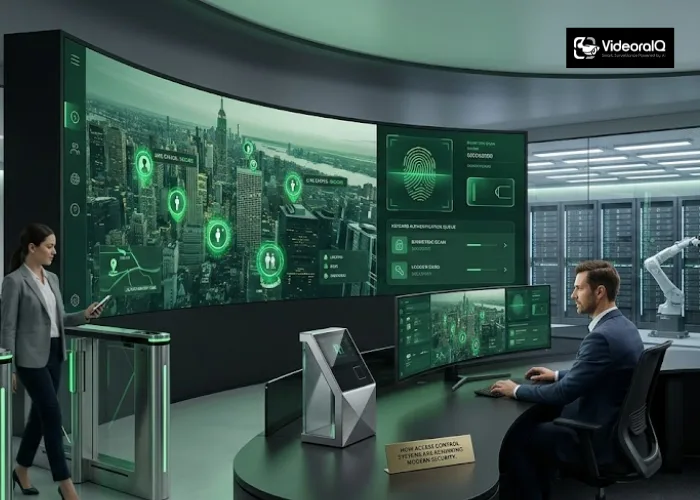
Access control systems are no longer just locked doors and key cards. Today, they sit at the core of how businesses protect their people, assets, and sensitive spaces. Whether you manage a corporate office, a hospital, or a manufacturing facility, the way you control who enters and when defines the strength of your entire security strategy. Modern access control security combines physical hardware with intelligent software to create layered protection that traditional locks simply cannot match. As threats evolve, so does the technology built to stop them. This article breaks down how these systems work, why they matter, and how AI-powered video intelligence is taking access security to a level most organisations have never experienced before.
Listen to the podcast!
What Are Access Control Systems and Why Do They Matter?
So, what is access control systems in the modern security sense? At the most basic level, it is any mechanism that decides who is allowed to enter a space and under what conditions. That could be a PIN pad, a key fob, a biometric scanner, or a sophisticated AI-powered camera network.
The goal is always the same: keep unauthorised people out and create a record of who came and went. However, the tools available today go far beyond what most organisations are currently using. Modern access control systems give security teams granular control over permissions, real-time visibility into entry events, and automated alerts when something goes wrong. All of this comes from a centralised dashboard.
For businesses that store sensitive data, handle valuable inventory, or manage vulnerable populations, this level of control is not optional. It is essential.
How Modern Access Control Security Works
Traditional security relied on physical barriers and human observation. A guard stood at the door, a lock secured the server room, and a sign-in sheet tracked visitors at reception. These methods have obvious weaknesses: they are slow, inconsistent, and easy to circumvent.
Modern access control security replaces guesswork with data. The system logs entry events automatically. It grants or revokes permissions in seconds. Alerts fire the moment someone makes an unauthorised attempt. In short, the system never takes a lunch break, never loses focus, and never forgets to lock a door behind it.
The layers typically include physical credentials like key cards and biometrics, software that manages permissions and logs, and increasingly, AI video analytics that add visual verification to every access event. As a result, the security posture becomes both proactive and auditable.
Types of Access Control Systems Used Today
Not all access control systems are built the same. The right choice depends on the size of your operation, the sensitivity of what you are protecting, and how much automation you need.
- Discretionary Access Control (DAC) gives individual users control over who can access their resources. It is flexible but harder to enforce at scale.
- Mandatory Access Control (MAC) assigns permissions based on classification levels. It is common in government and defence environments where data sensitivity is paramount.
- Role-Based Access Control (RBAC) grants permissions based on job function. For example, an HR manager has access to HR systems, while an engineer has access to the server room. Nobody gets more than their role requires.
- Attribute-Based Access Control (ABAC) goes further by factoring in time of day, location, device, and other variables. It is the most granular and the most powerful model for complex environments.
Why Commercial Access Control Systems Are Evolving Fast
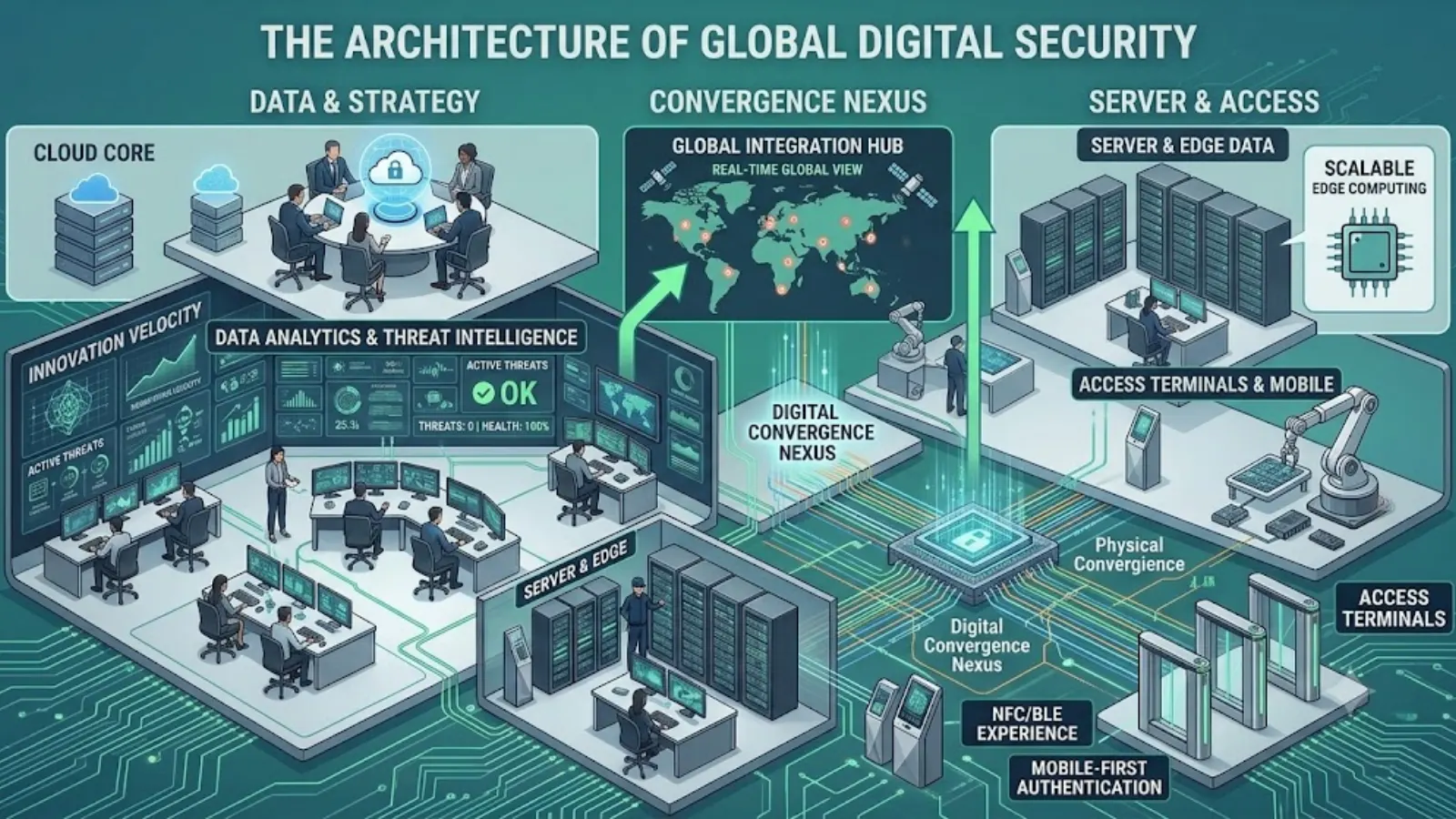
Commercial access control systems have changed dramatically over the past decade. The shift from on-premise hardware to cloud-managed platforms has made enterprise-grade security accessible to mid-sized businesses that could not previously afford it. As a result, monthly subscriptions have replaced six-figure capital expenditure.
Meanwhile, threats have become more sophisticated. Tailgating, or following an authorized person through a secure door, is one of the most common and hardest-to-detect physical security breaches. Traditional commercial security access control systems cannot flag it automatically. A camera system with AI, however, can.
The integration of video intelligence with access management is the most significant development in physical security right now. When someone uses a credential, a camera confirms the identity. When the system denies access, it records a clip and sends an alert. Additionally, when a pattern of unusual activity emerges, the system flags it before a human even notices.
How AI Video Intelligence Strengthens Access Control
Access management tools tell you who was supposed to enter. AI video intelligence tells you who actually did.
This distinction matters enormously. A stolen key card, a shared PIN, or a tailgater behind an authorized employee can all slip through a credential-only system undetected. AI video analytics, however, close that gap by adding a visual layer of verification that a physical token alone cannot fool.
AI-powered cameras can match faces against approved watchlists in real time, flag individuals in zones they should not be in, log every entry and exit automatically, and alert security teams with a timestamped video clip in under three seconds. Ultimately, that is the kind of intelligence that transforms access control systems from reactive logs into proactive security tools.
Read More!
What Features Should Office Security Cameras Have?
AI Add-On for Existing Security Cameras (2026 Guide)
VideoraIQ: AI Video Intelligence Built for Smarter Access Security
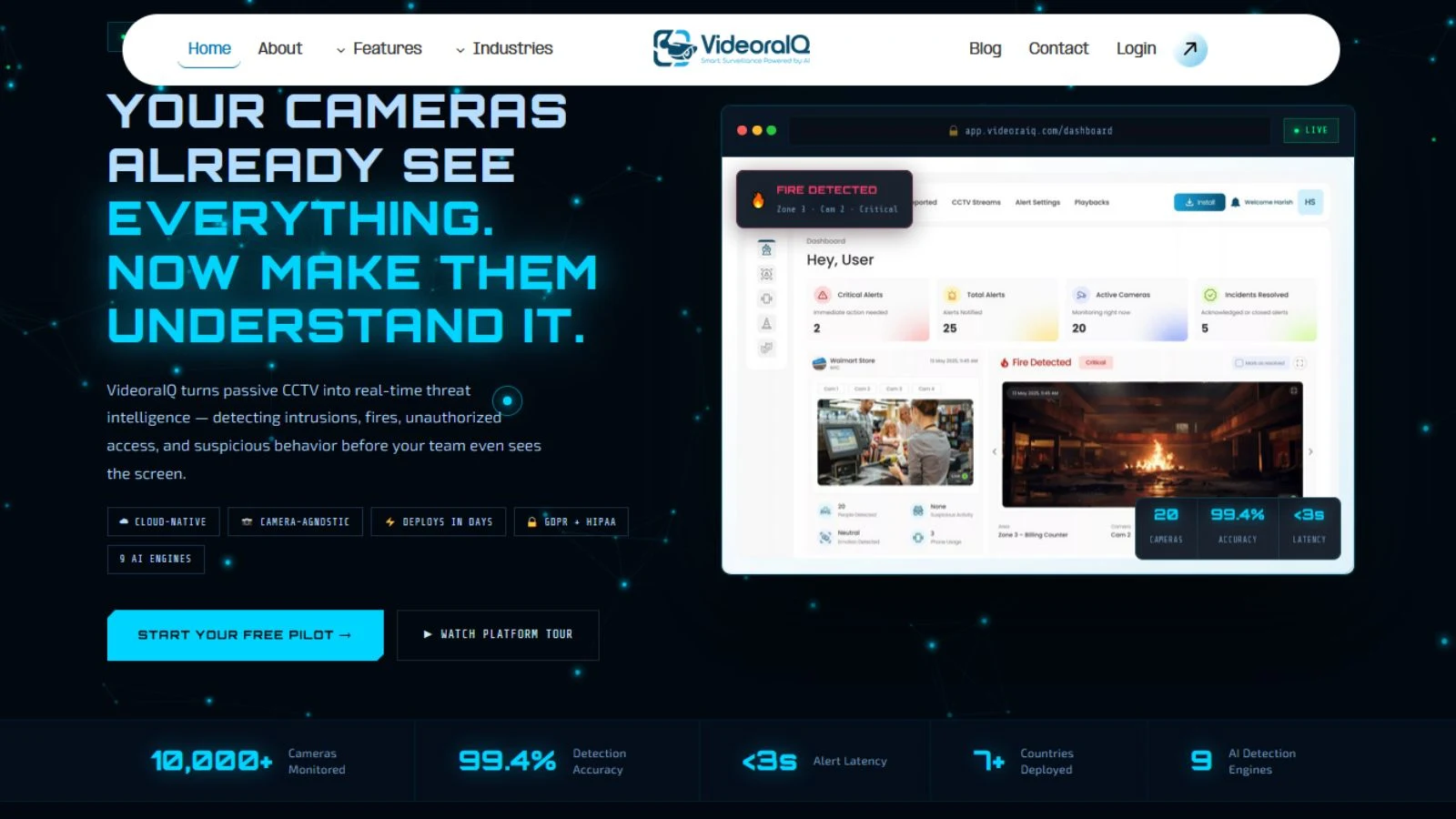
Here is where access control security takes a significant step forward. VideoraIQ is a cloud-native AI video intelligence platform that adds real-time threat detection to your existing CCTV infrastructure without replacing a single camera.
For organizations running access control systems, VideoraIQ fills the gap that credentials alone cannot cover. It adds visual verification, unauthorized access alerts, and automatic face recognition to every entry point, all delivered in under three seconds with a timestamped clip, camera location, and event type.
What VideoraIQ brings to your access security setup:
- Unauthorised Access Alerts — Define sensitive zones (server rooms, pharmacies, executive floors) and receive instant alerts the moment an unauthorized person enters, with a live video link sent directly to your security team.
- Face Recognition — Match faces against approved watchlists in real time, flag unknown visitors at restricted entry points, and generate automatic access logs with name, department, timestamp, and camera. This requires zero manual input.
- Intrusion Detection — The moment someone enters a restricted area, VideoraIQ triggers a real-time alert with a video clip and location tag, so you never discover an incident the morning after.
- Line-Cross Detection — Draw invisible perimeter tripwires on any camera feed and receive instant alerts the moment someone crosses a boundary, wherever you define it.
- Number Plate Recognition (ANPR) — Get automatic vehicle entry and exit logging, blacklist matching, and vehicle search across all sites, with no barriers and no manual checks.
- Camera-Agnostic, Cloud-Native — The platform works with 200+ camera brands, including Hikvision, Dahua, Axis, and Bosch, via RTSP and deploys in under 72 hours with no on-premise servers.
- Multi-Site Unified Dashboard — Monitor every entry point, every camera, and every alert across all locations from one centralized command center.
In short, VideoraIQ does not replace your access control system. Instead, it makes your system significantly smarter by adding a visual intelligence layer that catches what credentials alone never could.
Industries Where Access Control Systems Are Business-Critical
The need for robust access management cuts across nearly every sector, but some industries feel the pressure more acutely than others.
- Healthcare facilities must protect pharmacies, drug storage, and restricted patient areas while meeting HIPAA compliance requirements. For instance, a nurse badge should not open a controlled substances cabinet at 3 AM when they are not on shift.
- Corporate campuses deal with tailgating, after-hours intrusions, and unauthorised access to server rooms and executive floors. Credentials alone provide no visual confirmation of who actually used them.
- Manufacturing plants run 24/7 and face hazardous zone violations that could result in serious injury. Therefore, knowing who entered a restricted area is not just a security issue; it is also a safety and liability issue.
- Educational campuses need to manage visitor screening, perimeter monitoring, and rapid response to unauthorized entry, all without overwhelming a limited security team.
In every one of these environments, access control systems form the foundation, and AI video intelligence is what completes them.
Conclusion
Access control systems have come a long way from deadbolts and sign-in sheets. Today’s commercial access control systems combine credential management, cloud software, and AI video analytics into a security posture that is proactive, auditable, and genuinely difficult to defeat. The organizations that get this right are not just protecting their assets; they are also protecting their people, their data, and their reputation. As AI video intelligence becomes more accessible, the gap between organizations that use it and those that do not will only widen.
FAQs
What is access control systems in security?
It is any technology or process that regulates who can enter a physical space or digital resource. Typically, it uses credentials like key cards, biometrics, or PINs, combined with software that logs and manages permissions.
What is the difference between access control and video surveillance?
Access control manages who is permitted to enter, while video surveillance records what actually happens. When combined with AI, the two create a system that verifies identity visually and alerts teams to unauthorized activity in real time.
Are commercial access control systems suitable for small businesses?
Yes. Cloud-managed platforms have made enterprise-grade access security affordable at any scale, with monthly plans that eliminate large upfront hardware costs.
How does AI improve access control security?
AI adds visual verification, pattern detection, and real-time alerts that credential-only systems cannot provide. As a result, it catches tailgating, unauthorised zone access, and suspicious behaviour before an incident escalates.