

Security has never been a simple checkbox. People want protection that feels reliable, intuitive, and steady in the background without constant supervision. That need has pushed smart surveillance to the forefront, where intelligence matters as much as hardware. Before long, cameras stopped being passive recorders and started becoming active partners. That shift sets the tone for understanding how modern systems work and why many teams are rethinking their approach to monitoring.
As we move into the core of this topic, it helps to see what separates classic setups from newer intelligent options and why those differences matter for everyday safety.
In a hurry? Listen to the podcast now.
What Makes AI Cameras Stand Apart?
The biggest advantage of an AI security camera is its ability to analyze what it captures rather than simply storing hours of footage. Traditional systems rely on someone reviewing video manually, which leaves gaps when people miss details or can’t monitor around the clock. In comparison, AI-driven setups pick up patterns and flag movements that seem out of place, offering a steady stream of insight without human effort.
These systems look at behavior, shapes, and movement trends in real time. They tell apart a visitor from an animal, a routine walk from suspicious loitering, and a delivery from an actual intrusion attempt. This balance of precision and speed is why so many organizations see them as an upgrade rather than a luxury.
To understand these benefits more clearly, we can break down their capabilities and see how each one contributes to sharper awareness.
Key Capabilities That Strengthen Surveillance
An AI security camera relies on multiple layers of intelligence. Object recognition identifies whether a figure is a person, vehicle, or unrelated movement. Facial analysis helps match faces against stored profiles when allowed by policy. Behavioral cues help detect actions such as tailgating, running in restricted zones, or breaching controlled spaces. Even environmental cues like smoke, tampering, or sharp audio spikes get flagged.
These features work together, not in isolation. The combination gives teams a clearer understanding of what is happening instead of drowning them in alerts. This becomes even more powerful when paired with tools like AI security camera software, which processes patterns and organizes detections into easy-to-read dashboards.
With this foundation in place, it becomes easier to explore where these capabilities deliver the most value.
Industries That Gain the Most From AI Surveillance
Almost every sector benefits from intelligent monitoring, but each uses it for different reasons. A retail store may depend on an AI security camera for theft prevention and customer flow analysis. A warehouse might use it for equipment tracking and worker safety. Schools look for real-time alerts that keep students safe. Public venues use it to manage crowds and track unusual behavior. Residential spaces rely on quick notifications for unusual movement around entry points.
Transportation hubs, healthcare facilities, smart buildings, and large campuses all depend on the ability to detect risks faster and with more accuracy. With this variety, the technology becomes less about security alone and more about improving daily operations.
This leads naturally to the idea of benefits—how these capabilities create tangible value beyond simple monitoring.
Practical Advantages That Improve Safety & Operations
The most valued benefit of an AI security camera is its ability to reduce false alarms. When cameras know what they’re looking at, teams aren’t bothered by every shadow or passing animal. Alerts become meaningful, and time is saved immediately.
Another benefit is response speed. When AI analyzes footage in the moment, teams get notified while events are unfolding, not hours later. The combination of accuracy and timing builds trust in the system.
On the operational side, analytics show patterns that help managers run things more smoothly. Busy hours, peak traffic points, and layout efficiency become clearer. These insights help improve planning and productivity over time.
As organizations explore adoption, certain considerations naturally come up, which brings us into the next part of the discussion.
Key Points to Consider Before Adoption
Choosing an AI security camera involves more than buying a device. Every site has its own risks and layout challenges. Placement matters. Lighting matters. Network capacity matters. And with AI involved, privacy becomes an important part of the conversation.
Cost and scalability also play major roles. While AI systems may require higher initial investment, the long-term value often outweighs the cost, especially when false alerts drop and staffing pressure decreases.
Compatibility with existing access control tools and monitoring platforms determines how seamlessly teams can use the system. That’s where many organizations seek software-driven solutions that pull everything together.
Speaking of software, this is the point where VideoraIQ naturally enters the conversation.
Why Choose VideoraIQ?
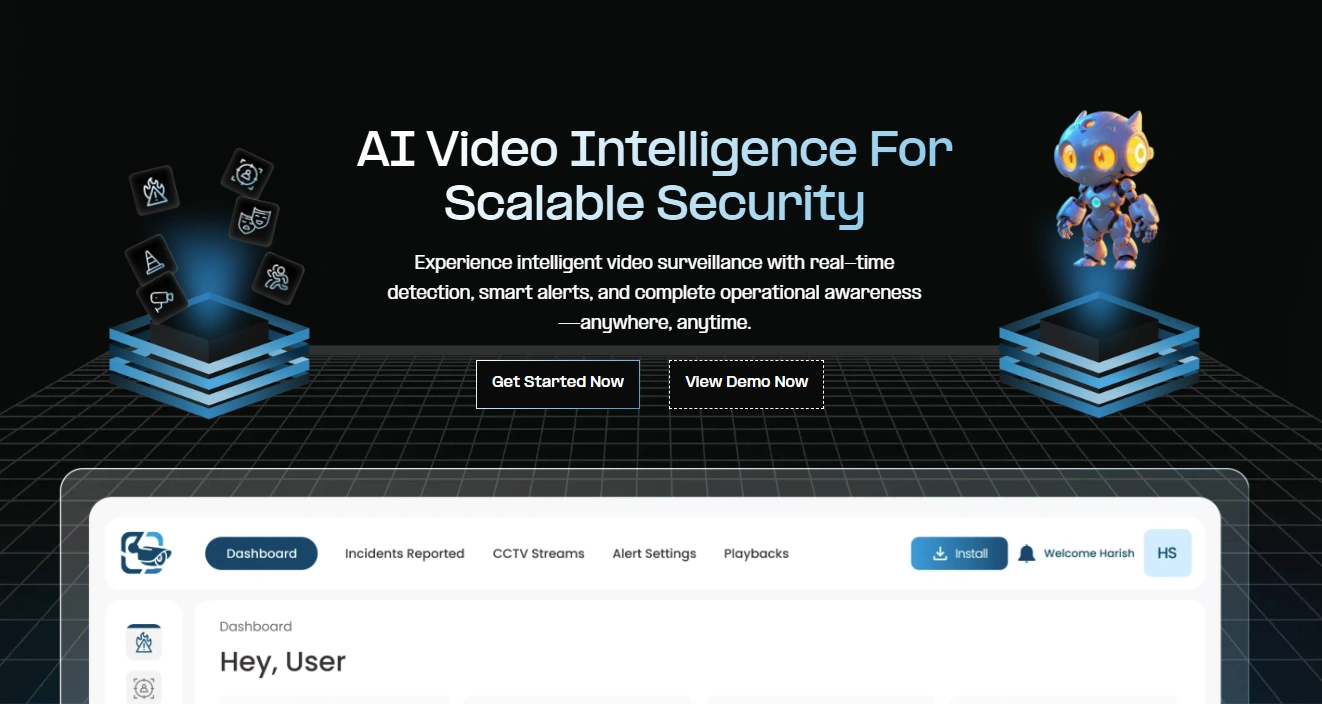
Organizations today want a platform that gives clear insight without adding complexity. VideoraIQ fits that need well. It delivers accurate interpretation, keeps data easy to manage, and cuts through the usual noise that slows teams down. As more businesses rely on intelligent systems for long-term planning, tools that balance speed and clarity are becoming essential, and VideoraIQ lines up with those expectations.
It’s a good moment to take a closer look at what makes VideoraIQ stand out and why many teams prefer it for their everyday work.
How VideoraIQ Makes A Real Difference?
VideoraIQ transforms any existing CCTV setup into an intelligent safety and operations assistant—built to deliver real, actionable value without adding complexity. Instead of just recording what happens, it helps businesses understand, predict, and prevent risks across their facilities.
Instant Interpretation
VideoraIQ analyzes live video streams in real time and highlights only the actions that matter. Your team no longer has to monitor screens endlessly—they get immediate insights, so responses are faster, and productivity stays high.
Advanced Behavior Identification
Most systems detect objects. VideoraIQ detects intent. It reads behavior patterns, unusual movements, and potential risks before they escalate—helping your team prevent accidents, security breaches, or operational delays.
Centralized Control for Multiple Sites
Whether you operate a single facility or a nationwide network, VideoraIQ unifies all cameras, alerts, and events in one dashboard.
This gives management total visibility and ensures every site follows the same safety and compliance standards
Smart Data Handling
Footage is only valuable if it’s easy to navigate. VideoraIQ organizes video, events, logs, and metadata so teams can quickly find incidents, verify details, and generate reports—cutting investigation time from hours to seconds.
Scalable Structure
Expanding operations? Adding new cameras or locations? VideoraIQ’s architecture grows effortlessly without slowing down performance, making it a long-term investment instead of a short-term patch.
More Accuracy, Less Noise
False alarms drain time and attention. VideoraIQ uses refined AI models that prioritize precision—ensuring you receive alerts only when they truly matter, helping teams stay focused on real threats.
Smooth Integration
No need to replace your existing CCTV infrastructure. VideoraIQ seamlessly fits into your current hardware and workflow, delivering cutting-edge analytics without costly overhauls or downtime.
With these capabilities in place, it becomes easier to see how platforms like VideoraIQ are shaping the future of video analytics.
Best Scenarios And Camera Types
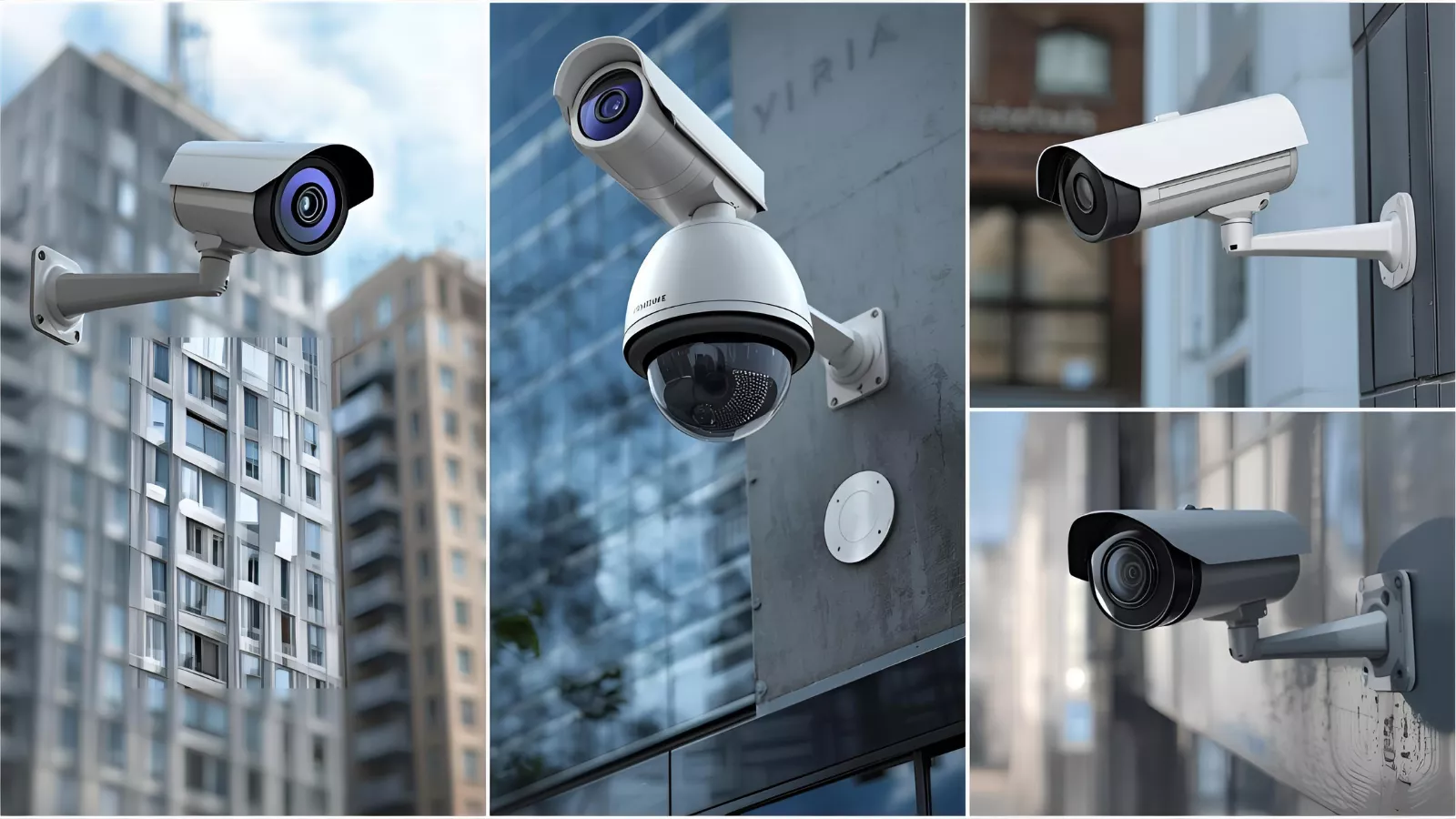
Each site demands something different from an AI security camera.
• Commercial offices often prefer dome-style cameras for broad coverage.
• Outdoor sites benefit from weather-resistant designs with long-range visibility.
• Warehouses rely on devices with strong tracking abilities.
• Residential areas usually choose compact models with mobile alerts.
• Vehicle-heavy zones gain value from license plate recognition.
VideoraIQ enhances each category by taking the output from these devices and adding smart layer analysis, which helps refine decision-making.
This brings us to the closing section, where we tie the discussion together and highlight the future outlook.
Key Takeaways And The Road Ahead
The future of surveillance leans heavily toward intelligence. An AI security camera doesn’t simply record scenes; it interprets them. That shift brings practical benefits—fewer false alarms, stronger awareness, faster responses, and better operational planning.
As environments grow more complex, businesses and communities rely on systems that can adapt quickly. With support from powerful analytics platforms like VideoraIQ, AI-driven security becomes even more scalable and consistent.
To wrap up, the value of these systems lies in how well they combine hardware intelligence with software clarity. When both layers work together, the result is a dependable, future-ready approach to safety.
Before we close, a few common questions help reinforce the understanding built throughout this piece.
FAQs
Do these systems keep learning over time?
Yes. Every AI security camera becomes more accurate as it processes new situations. Over time, it recognizes patterns better, minimizes false alerts, and adapts to real-world behavior.
Is manual monitoring still necessary?
Human review is still needed, but not nearly as often. AI does the heavy lifting by sorting events, flagging only what matters, and reducing the constant need for someone to watch every feed.
Can AI perform reliably at night?
Yes. With infrared support, low-light optimization, and enhanced object detection, an AI security camera maintains strong performance even in dark or low-visibility environments.
How does this help large facilities with many entry points?
AI centralizes detections from all access points, making it easier for teams to track movement, understand patterns, and respond quickly without feeling overwhelmed by multiple locations.
Does AI affect storage requirements?
Yes, in a positive way. An AI security camera often lowers storage needs by recording only relevant activity and filtering out hours of empty or non-essential footage.