

As security threats are increasingly present in all types of workplaces, from warehouses to universities, business as usual can’t keep up with the changing state of the world and the increased number of incidents requiring security responses. Companies are seeking a more dynamic security solution that provides them with visibility and control to respond rapidly, without adding to the complexity of their operations. Cloud-based Video Surveillance is changing the way that companies view, analyze, and respond to security incidents throughout all of their locations. Instead of storing recordings locally and then attempting to review incidents after an event has occurred, modern surveillance methodologies focus on providing businesses with the ability to measure awareness in real time and proactively make decisions.
Cloud video surveillance will help facilitate this shift by allowing companies to implement scalable infrastructures that provide real-time visibility and the ability to call for assistance quickly and efficiently while utilizing intelligent analytics to support faster and more accurate security results at all locations.
Listen To The Podcast Now!
The Growing Need For Smarter Security Monitoring
Security teams manage more responsibilities than ever before. Facilities expand, workforce movement increases, and compliance expectations grow stricter. Manual monitoring methods no longer support these demands effectively. Traditional surveillance setups often rely on isolated systems that limit visibility and slow response times.
Smarter monitoring focuses on awareness rather than observation alone. Cloud-based video surveillance enables centralized oversight across multiple locations, which allows teams to detect threats early and act with confidence. This approach reduces blind spots and supports consistent security standards across offices, warehouses, campuses, and public spaces.
Understanding Cloud-Based Video Surveillance Software
Cloud-based video surveillance software shifts video storage and management from local servers to secure cloud environments. Instead of maintaining physical hardware at each site, organizations manage cameras, footage, and alerts through centralized dashboards.
This model simplifies system expansion and reduces infrastructure maintenance. Cloud-based video surveillance software supports remote access, real-time alerts, and seamless updates without system downtime. Security teams gain flexibility while leadership gains visibility across the organization.
By removing hardware dependency, cloud-based video surveillance becomes easier to deploy, manage, and scale across diverse environments.
How Cloud Architecture Changes Traditional Security Models?
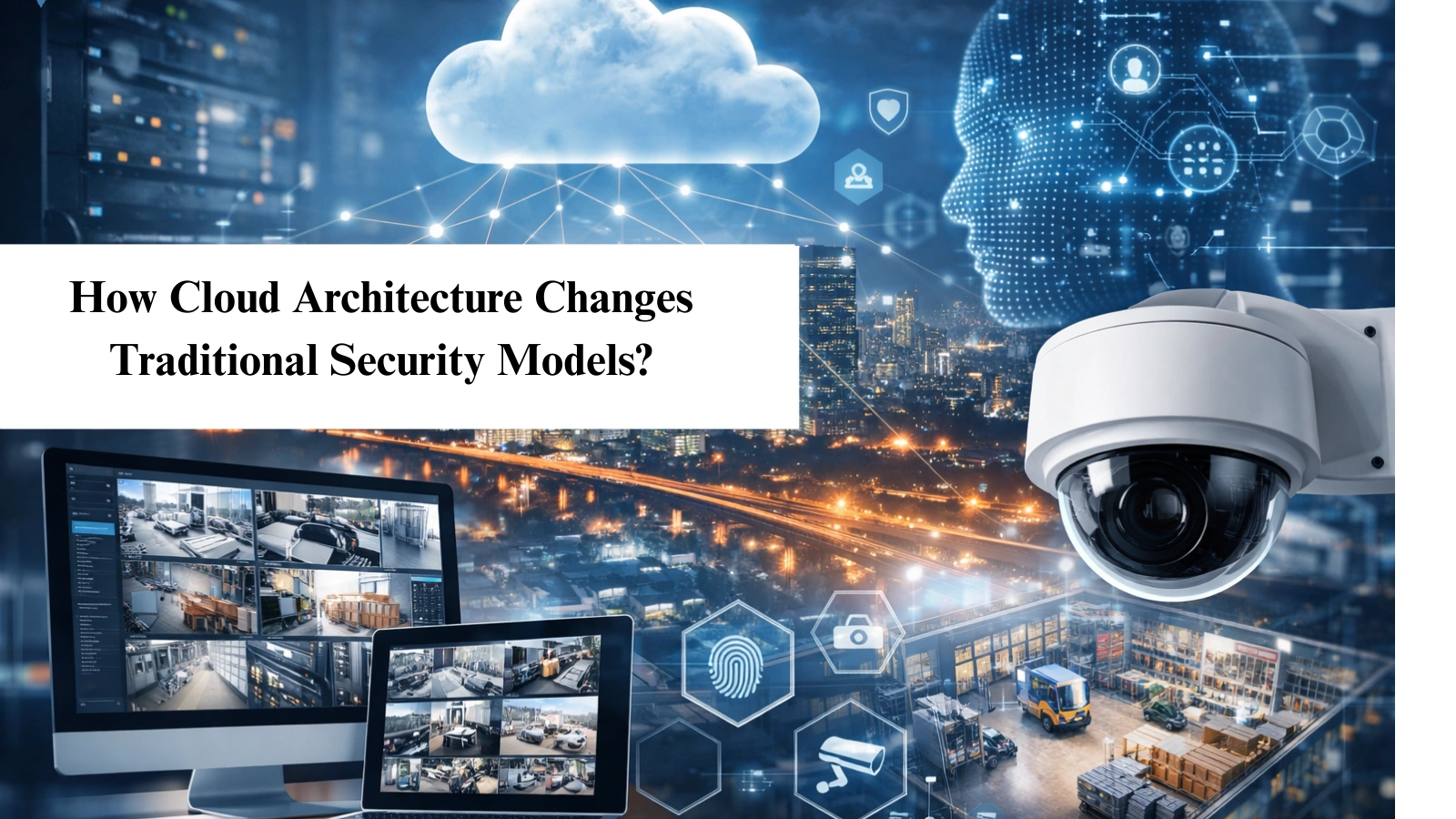
On-premise surveillance systems depend heavily on local storage, manual backups, and fixed infrastructure. These limitations restrict growth and increase operational costs. Cloud architecture removes these barriers by offering elastic storage and centralized control.
Cloud-based video surveillance allows organizations to add cameras or locations without complex reconfiguration. Security teams access footage and analytics from any authorized device, which supports faster decision-making. Cloud infrastructure also ensures consistent performance during peak activity periods.
This architectural shift enables security strategies that adapt to business growth rather than restrict it.
Role Of Video Surveillance Tools In Modern Facilities
Modern facilities rely on more than cameras alone. Video surveillance tools include dashboards, alert systems, search filters, and reporting features that turn footage into actionable intelligence.
These tools help security teams track incidents, verify access events, and analyze patterns over time. Video surveillance tools also support compliance requirements by providing audit trails and documented evidence.
When paired with cloud-based video surveillance, these tools enhance visibility and reduce response delays across complex environments.
Why AI-Powered Video Analytics Matters For Real-Time Decisions?

Human monitoring cannot scale effectively across hundreds of cameras. AI-powered video analytics solves this challenge by analyzing video feeds automatically and identifying relevant events as they occur.
This technology detects anomalies, unauthorized access, and unusual behavior without constant manual review. AI-powered video analytics highlights critical moments and sends alerts immediately, which enables proactive intervention.
By focusing attention on meaningful events, cloud-based video surveillance becomes a decision support system rather than a recording archive.
Limitations Of Legacy CCTV Video Surveillance Systems
Many organizations still rely on a traditional CCTV video surveillance system that records footage for later review. While this approach provides documentation, it rarely prevents incidents in real time.
Legacy systems require manual monitoring, extensive storage maintenance, and physical access for retrieval. These limitations slow investigations and increase operational effort.
Cloud-based video surveillance overcomes these challenges by replacing isolated CCTV video surveillance system setups with intelligent, connected platforms that support proactive security strategies.
Read More!
How To Improve Retail Store Video Surveillance Systems?
Why Intelligent Video Analytics Matter More Than Ever?
How VideoraIQ Enhances Cloud-Based Video Surveillance With AI?
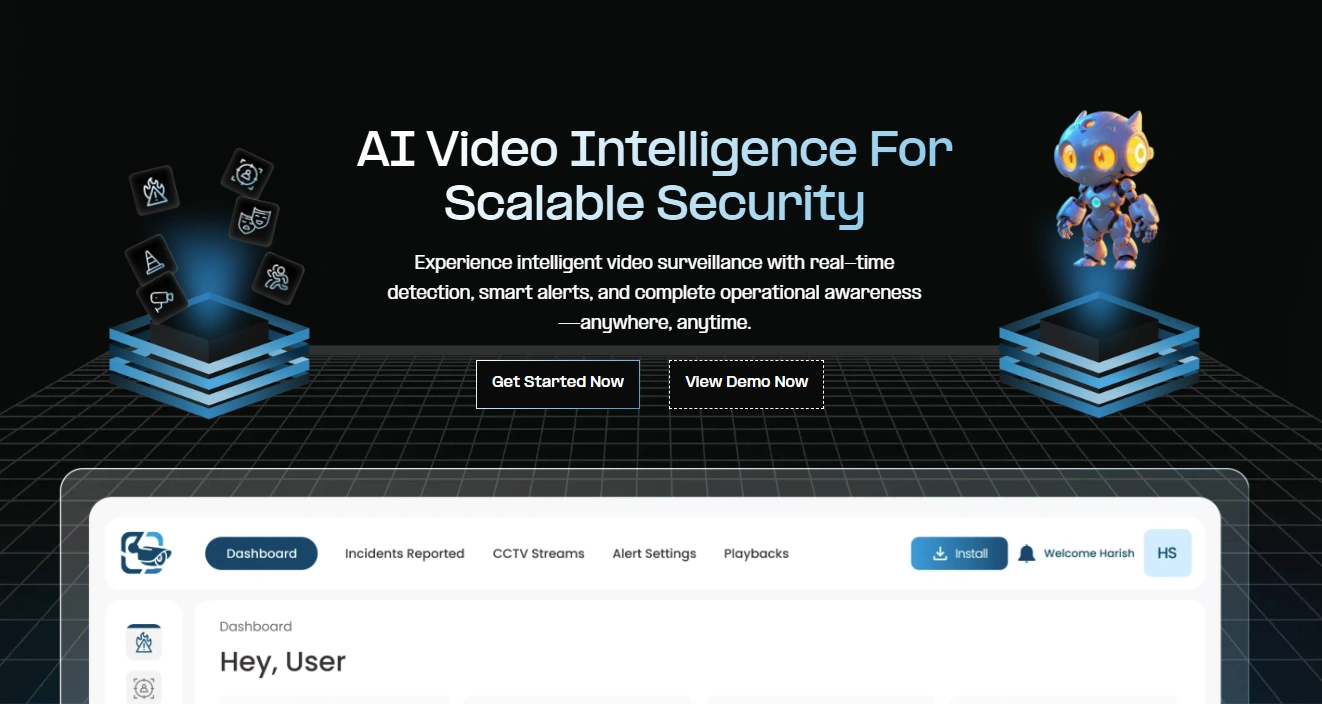
VideoraIQ enhances cloud-based video surveillance by combining advanced AI intelligence with centralized cloud control for faster, smarter, and more reliable security decisions.
Key Features Of VideoraIQ For Cloud-Based Video Surveillance
- AI-powered video analytics: VideoraIQ detects tailgating, intrusion, loitering, and abnormal behavior in real time with precise visual intelligence.
- Real-time intelligent alerts: The system sends instant alerts with visual context, which helps security teams act faster and avoid manual footage checks.
- Behavior pattern recognition: VideoraIQ learns normal movement and access patterns, then flags unusual activity with higher accuracy and fewer false alerts.
- Centralized cloud dashboard: Teams can monitor multiple locations from a single, unified interface, improving visibility and control across facilities.
- Seamless camera integration: VideoraIQ works with existing camera setups, which removes the need for hardware upgrades or system replacement.
- Scalable cloud architecture: Organizations expand coverage across sites without system redesign or performance loss.
- Event-based video search: Security teams locate incidents quickly through smart filters instead of long video scans.
- Compliance-ready audit trails: VideoraIQ stores event data securely and supports investigations, audits, and regulatory requirements.
These features position VideoraIQ as a powerful layer of intelligence within cloud-based video surveillance ecosystems.
Key Benefits Of Using Cloud-Based Video Surveillance Software
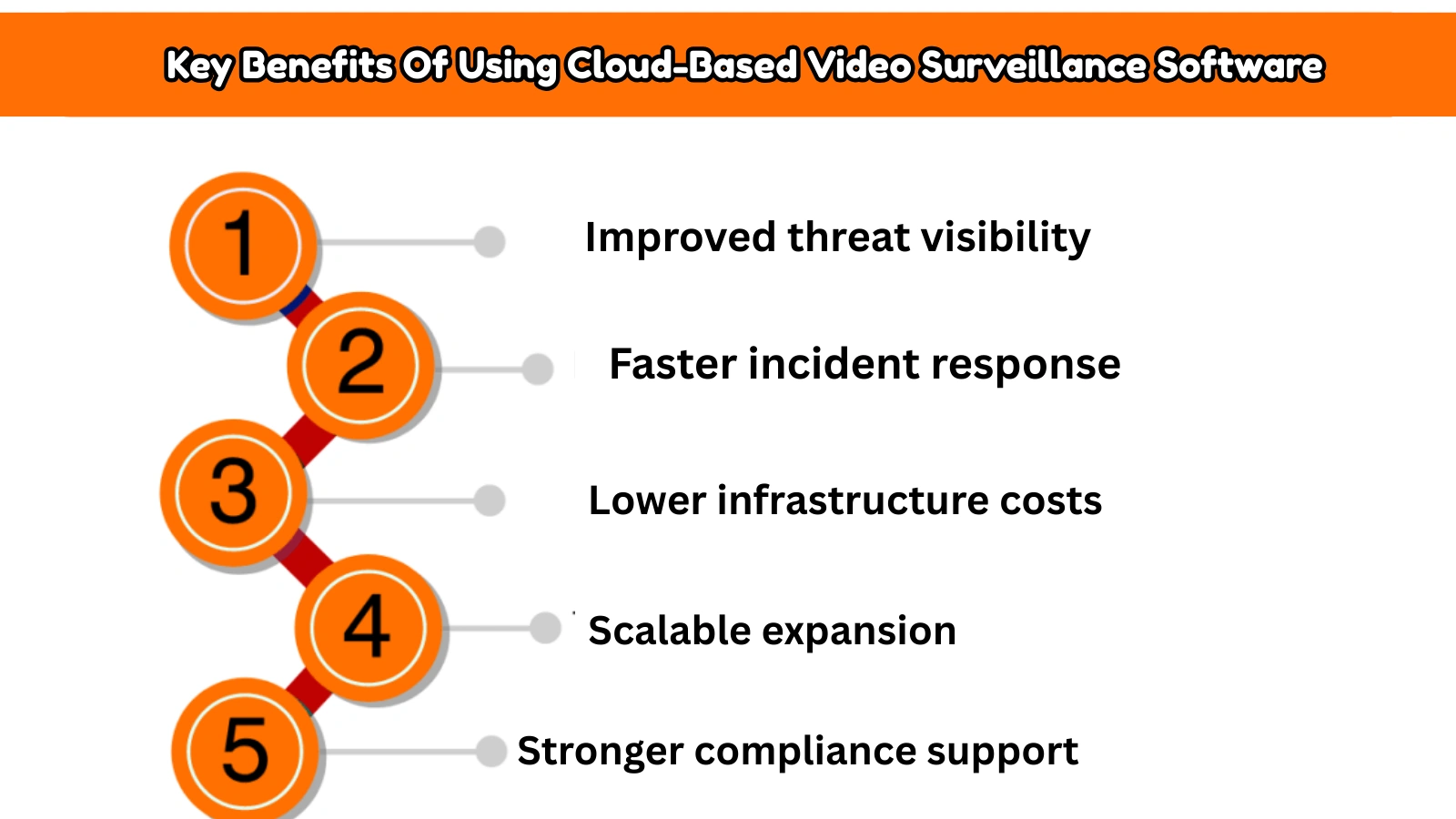
Organizations gain measurable advantages through cloud-based video surveillance software adoption:
Improved threat visibility:
Centralized dashboards deliver a unified, real-time view across all facilities. Security teams track activity, identify suspicious behavior early, reduce blind spots, and maintain consistent oversight without switching between multiple systems or physical locations.
Faster incident response:
Real-time alerts combined with live video context enable immediate action. Security teams verify incidents instantly, coordinate responses faster, reduce escalation time, and minimize potential damage by addressing threats as soon as they appear.
Lower infrastructure costs:
Cloud storage eliminates the need for on-site servers and complex hardware maintenance. Organizations reduce upfront investments, energy consumption, and IT workload while benefiting from predictable costs and automatic system updates.
Scalable expansion:
Organizations add cameras, users, or new locations without system redesign or downtime. Cloud-based video surveillance software supports growth seamlessly, ensuring consistent security coverage as operations expand across regions or facilities.
Stronger compliance support:
Automated audit logs, secure video retention, and controlled access simplify regulatory compliance. Organizations retrieve evidence quickly for audits or investigations while maintaining data integrity, transparency, and adherence to industry standards.
Cloud-based video surveillance software supports stronger security outcomes while improving operational efficiency and enabling sustainable, long-term organizational growth.
Use Cases Across Industries For Smarter Video Surveillance
Different industries benefit uniquely from cloud-based video surveillance:
Corporate offices:
Cloud-based video surveillance strengthens access control by monitoring sensitive zones, entry points, and shared spaces. Centralized visibility helps security teams respond faster to incidents, support workplace safety, and maintain consistent security standards across multiple office locations.
Retail environments:
Retailers rely on cloud-based video surveillance to identify theft patterns, monitor high-risk areas, and reduce shrinkage. Real-time insights support proactive loss prevention, improve staff awareness, and help management make informed decisions based on visual evidence.
Healthcare facilities:
Hospitals and clinics use cloud-based video surveillance to secure restricted areas, protect patient privacy, and ensure staff accountability. The system supports compliance requirements while enabling rapid incident review without disrupting critical healthcare operations.
Logistics hubs:
Warehouses, distribution centers, and yards track vehicle movement, loading zones, and perimeter activity through cloud-based video surveillance. These insights prevent unauthorized access, reduce operational risks, and strengthen security across complex, high-traffic environments.
Educational campuses:
Schools and universities manage entry points, monitor crowd behavior, and enhance student safety using cloud-based video surveillance. Scalable coverage across classrooms, corridors, and outdoor areas helps maintain secure learning environments without added complexity.
Across industries, cloud-based video surveillance adapts seamlessly to diverse operational needs while delivering consistent security, visibility, and control.
Conclusion
Cloud-based video surveillance redefines modern security by combining scalability, intelligence, and centralized control. Organizations gain proactive protection, faster response, and long-term operational clarity. Platforms like VideoraIQ further strengthen this approach by delivering AI-driven insights that transform video data into actionable security intelligence.
FAQs
- What is cloud-based video surveillance?
Cloud-based video surveillance stores, manages, and analyzes video footage through secure cloud servers instead of local hardware. - How does cloud-based video surveillance improve security operations?
It provides real-time monitoring, centralized access, faster alerts, and better visibility across multiple locations. - Is cloud-based video surveillance software secure?
Yes, reputable platforms use encryption, access controls, and secure cloud infrastructure to protect video data. - Can cloud-based video surveillance work with existing cameras?
Most cloud-based video surveillance software integrates with existing CCTV cameras, reducing hardware replacement costs. - What role does AI-powered video analytics play in surveillance?
AI-powered video analytics detects unusual behavior, security threats, and access violations automatically, improving response speed.