
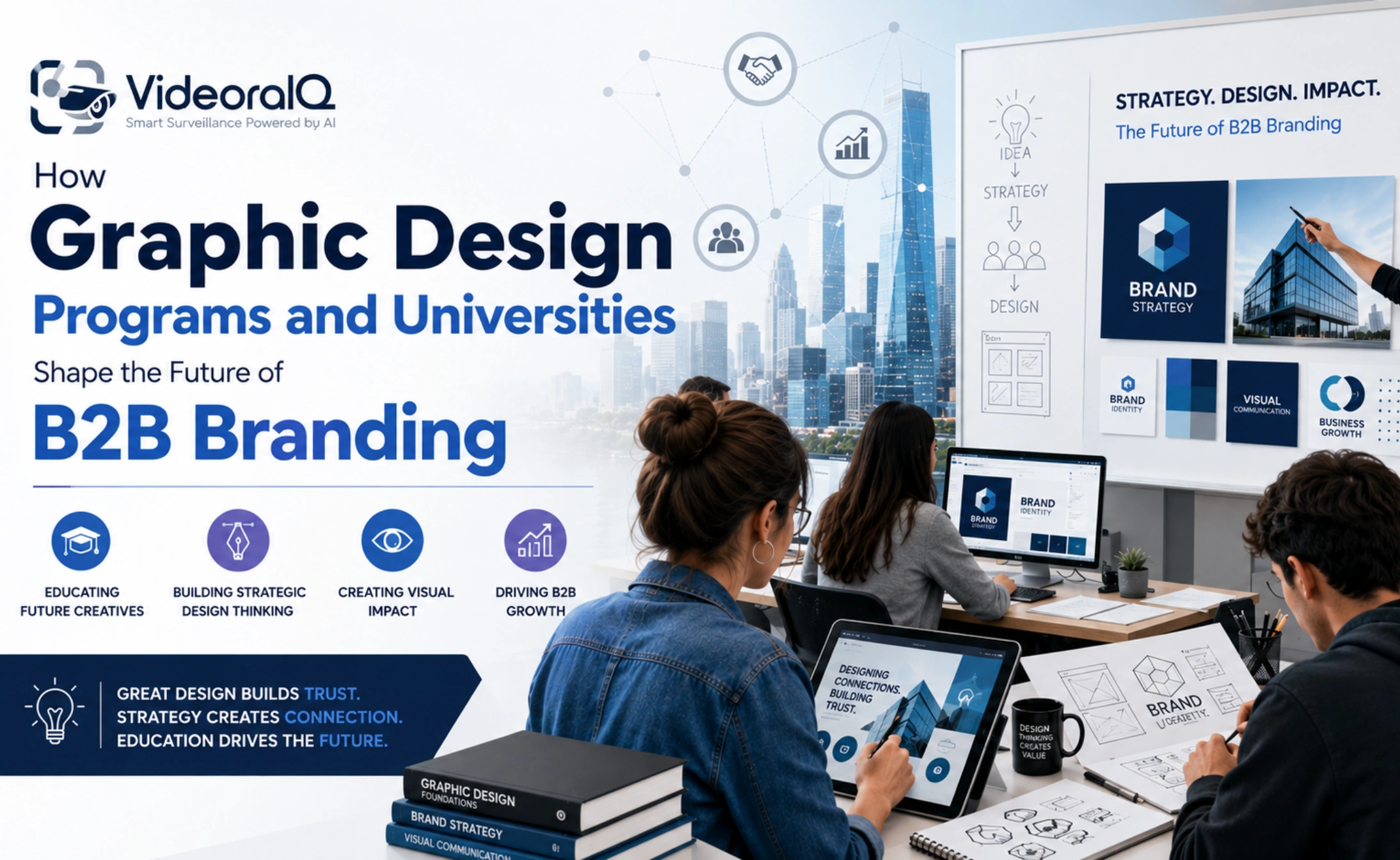
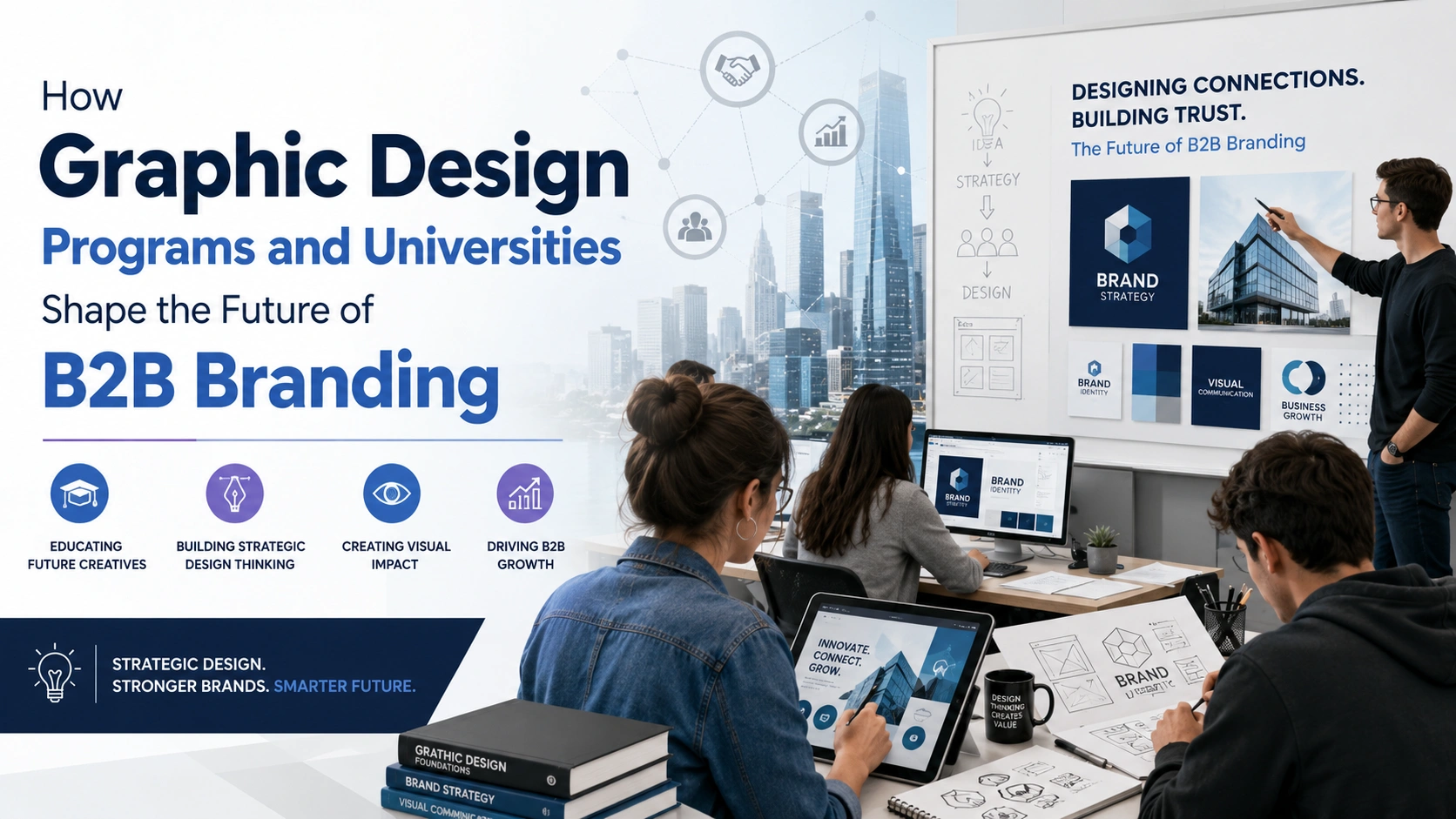
Is design really that important in B2B industries? Absolutely. In fact, visual branding has become one of the top differentiators in how businesses attract, engage, and retain clients. And at the heart of this visual strategy are graphic design programs, shaping the next generation of creatives who influence how brands communicate.
Graphic design programs go far beyond teaching software. They build the foundation for clear, strategic, and visually powerful communication. This article explores how these programs work, what makes them effective, and how they impact B2B branding in a real way.
Understanding Graphic Design Programs
Graphic design programs train students in the art and practice of visual communication. They combine creativity with strategy, giving students the tools to deliver ideas through color, layout, typography, and digital media.
What’s Typically Included?
Most graphic design programs cover:
- Fundamentals of design (color theory, typography, layout)
- Digital tools (Photoshop, Illustrator, InDesign, Figma)
- Branding and identity systems
- UX/UI design
- Motion graphics
- Web design
- Print and packaging design
- Portfolio development
In a structured environment, students learn to solve visual problems and communicate messages that align with business goals—skills that are critical in today’s digital-first B2B landscape.
Below is a link to explore graphic design programs designed to build these real-world skills.
Types of Graphic Design Programs
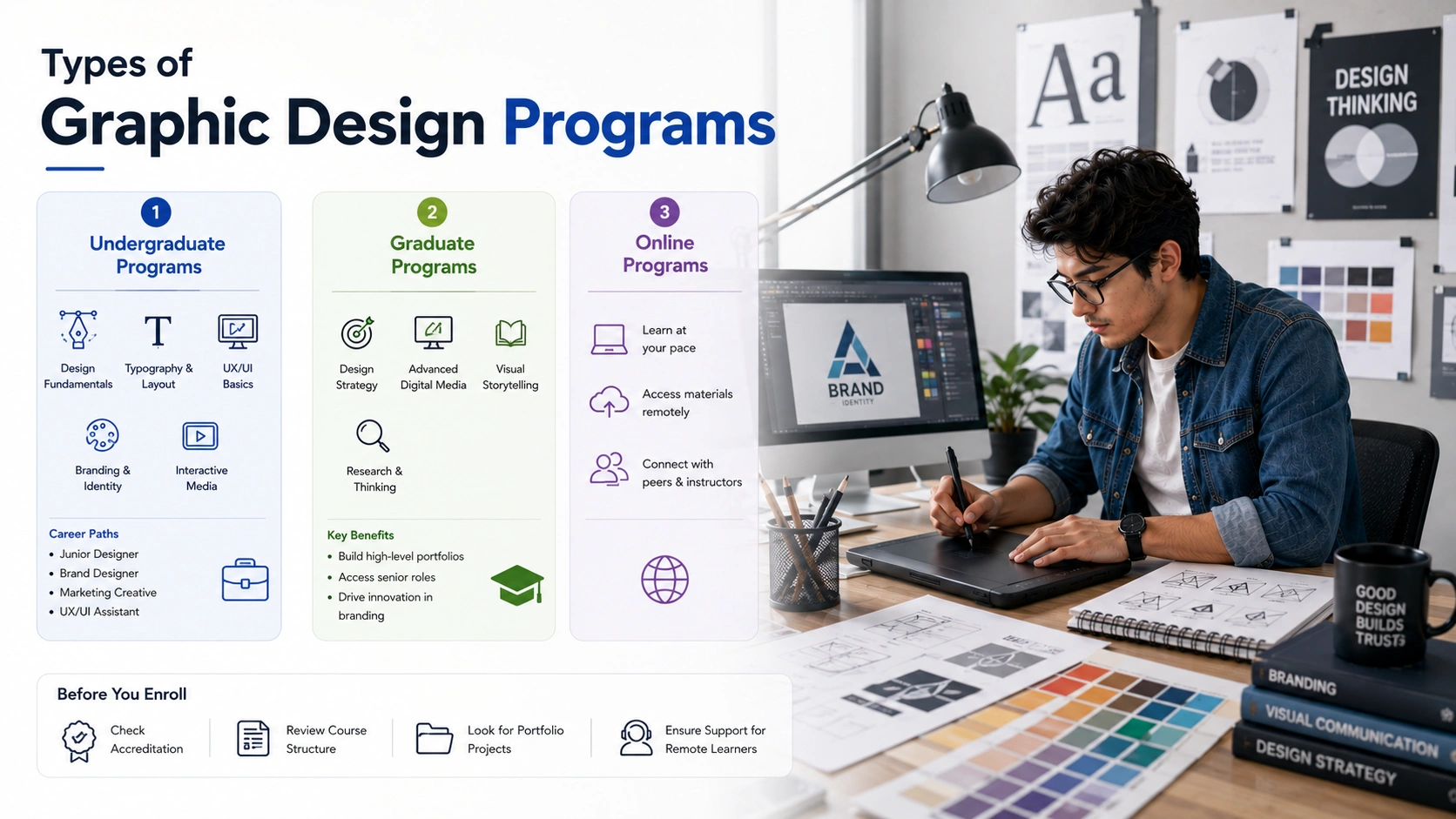
1. Undergraduate Graphic Design Programs
Bachelor’s programs typically last four years and provide a balanced mix of technical and conceptual training.
Courses often include:
- Visual communication courses
- Layout and composition
- User experience basics
- Branding and identity systems
- Interactive media
After graduation, students can work as:
- Junior graphic designers
- Brand designers
- Marketing creatives
- UX/UI assistants
2. Graduate Graphic Design Programs
Master’s degrees help designers dive deeper into theory, research, and leadership.
Program focus areas include:
- Design strategy
- Advanced digital media
- Visual storytelling
- Design research and thinking
Benefits of graduate programs:
- Build high-level portfolios
- Gain access to senior design or leadership roles
- Contribute to innovation in branding and communication
3. Online Graphic Design Programs
Online programs are ideal for learners who need flexibility without compromising education quality.
Key features:
- Learn at your own pace
- Access recordings, assignments, and feedback remotely
- Connect with instructors and peers virtually
Before enrolling, consider:
- Accreditation and course structure
- Availability of portfolio projects
- Support services for remote learners
Key Components of Effective Graphic Design Programs
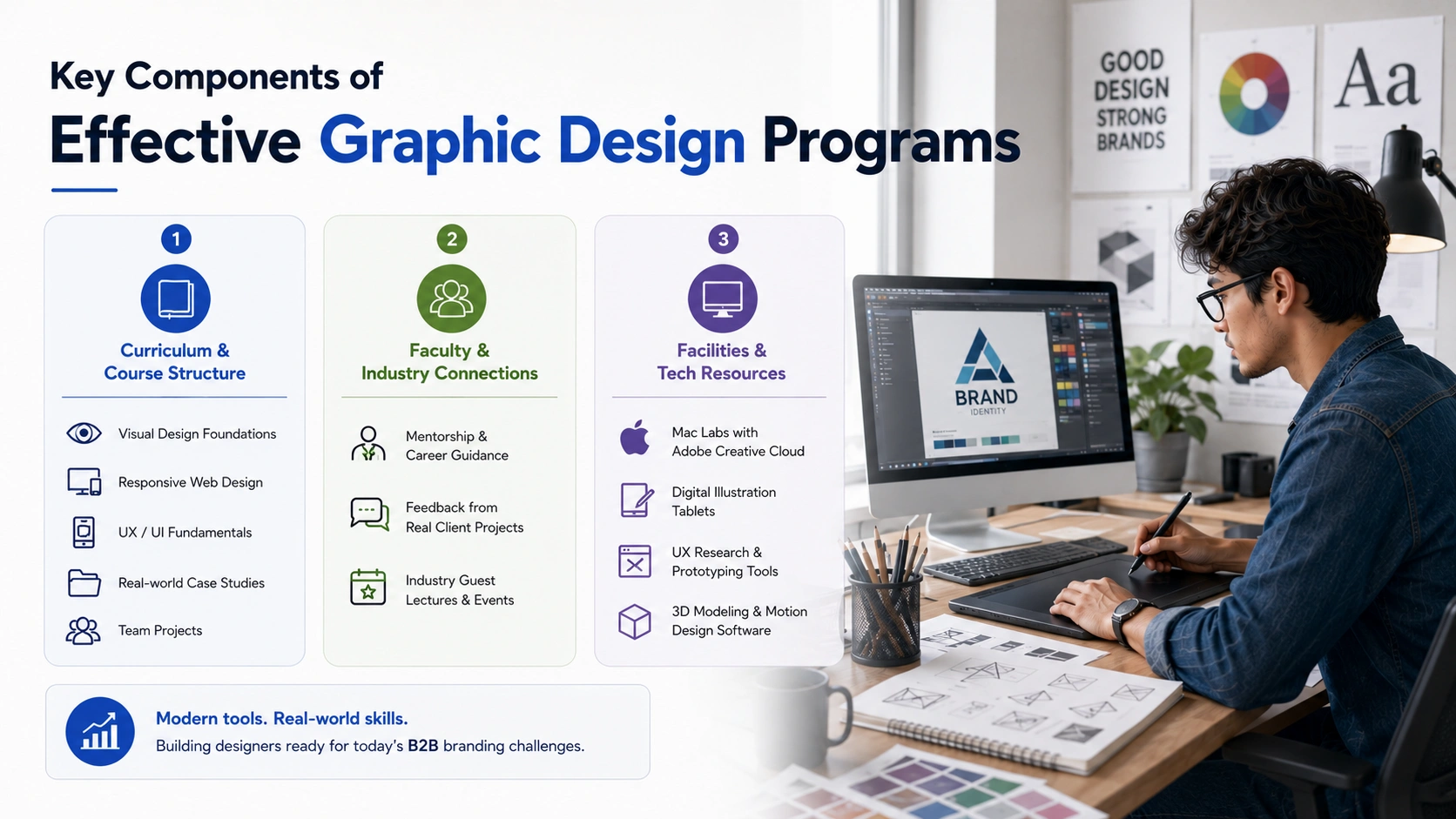
1. Curriculum and Course Structure
A balanced curriculum blends design principles with modern tools.
Must-have elements include:
- Visual design foundations
- Responsive web design
- UX/UI fundamentals
- Real-world case studies
- Team projects
2. Faculty and Industry Connections
Experienced instructors bring insight from real-world design projects.
Benefits:
- Mentorship and career guidance
- Feedback based on actual client work
- Industry guest lectures and events
3. Facilities and Technological Resources
Access to up-to-date tools is critical. The best programs offer:
- Mac labs with Adobe Creative Cloud
- Digital illustration tablets
- UX research and prototyping tools
- 3D modeling and motion design software
Programs that integrate modern tools help students stay competitive and produce work that meets current B2B branding needs.
Evaluating Graphic Design Programs: What to Look For
1. Accreditation and Reputation
Choose programs recognized by national or regional education boards.
Why this matters:
- Accreditation ensures consistent quality
- A reputable school reflects well on your resume
Check alumni reviews and see where past students have landed jobs.
2. Alumni Success and Employment Rates
Look for schools with strong job placement after graduation.
Check for:
- Employer partnerships
- Internships and co-ops
- Job placement services
3. Portfolio Development Opportunities
A strong portfolio is the ticket to landing work after school.
Great programs offer:
- Live projects for real clients
- Portfolio reviews and critiques
- Internships in branding and digital
For more information on what to expect in coursework and job outcomes, see this overview on graphic design programs.
Preparing for Admission into Graphic Design Programs
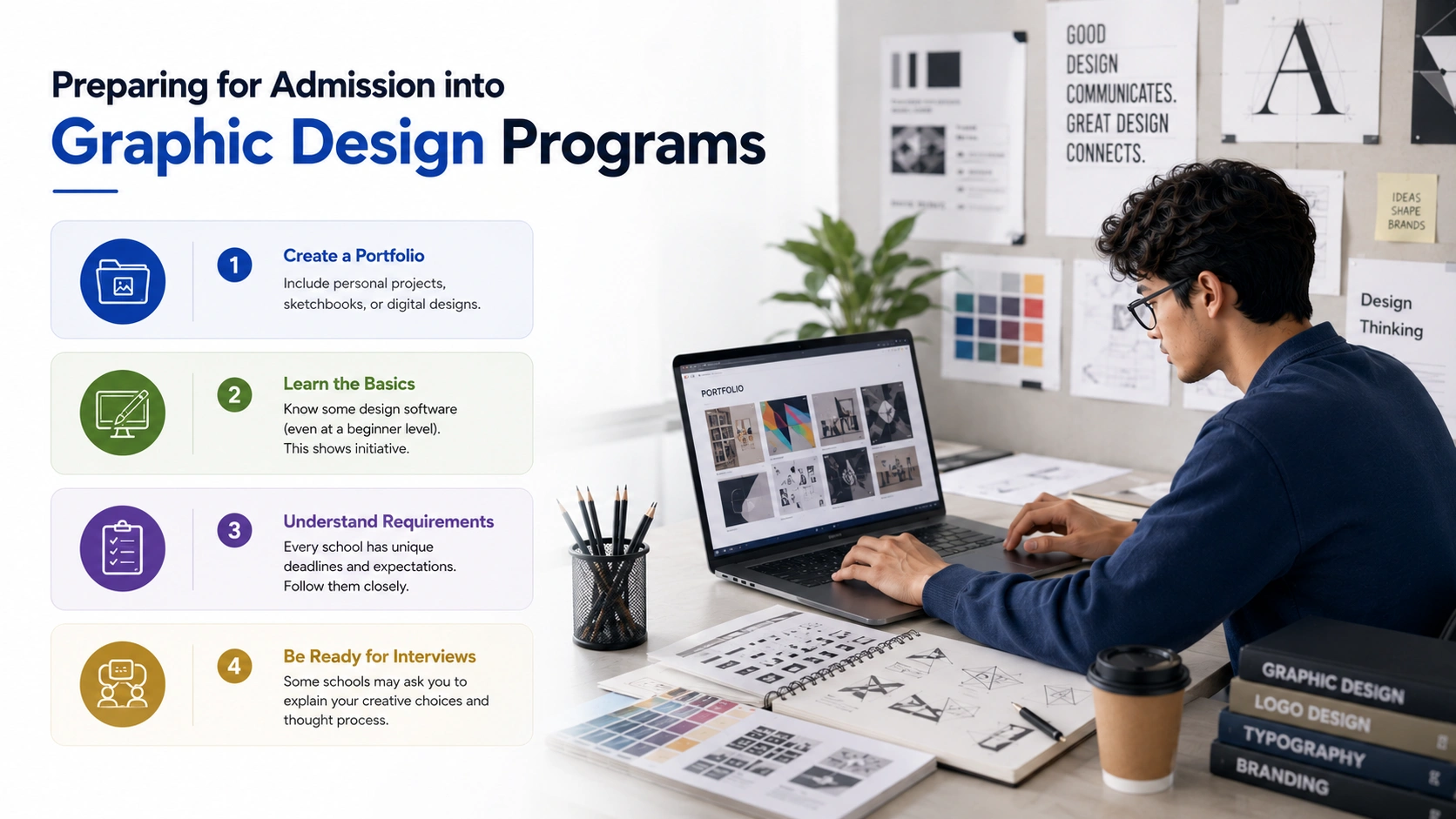
Admission is competitive, but you can increase your chances with preparation.
Key steps:
Create a Portfolio: Include personal projects, sketchbooks, or digital designs.Learn the Basics: Know some design software (even at a beginner level). This shows initiative.
Understand Requirements: Every school has unique deadlines and expectations. Follow them closely.
Be Ready for Interviews: Some schools may ask you to explain your creative choices and thought process.
The Future of Graphic Design Education
Design is changing fast, and schools are keeping pace.
What’s new?
- AI and automation are being integrated into design tools.
- VR and AR offer new media formats to explore.
- UX/UI skills are more valuable than ever in B2B web experiences.
- Lifelong learning through micro-credentials and bootcamps is rising.
Graphic design education will continue to evolve, mixing creativity with tech to meet the needs of digital communication, especially in professional settings like B2B branding.
FAQs: Common Questions About Graphic Design Programs
Q1: What skills are essential for success in graphic design programs?
Creativity, software proficiency, visual communication, and clear thinking.
Q2: Can I start a graphic design program with no prior design experience?
Yes, many programs include introductory courses to build foundational skills.
Q3: How long does a typical program last?
Bachelor’s: Four years. Master’s: One to two years.
Q4: Are online graphic design programs credible?
If accredited and structured well, yes. Many match the quality of on-campus programs.
Q5: What careers follow after graduation?
Graphic designer, art director, UI/UX designer, digital illustrator, branding specialist.
Embarking on Your Graphic Design Journey
Choosing the right program is more than a checklist. It’s your first real step into a creative career. Graphic design programs provide the tools, structure, and support to shape how businesses communicate and succeed.
Start exploring your options today. The right program can launch you into a career where your work speaks louder than words and shapes how businesses look and feel for years to come.