

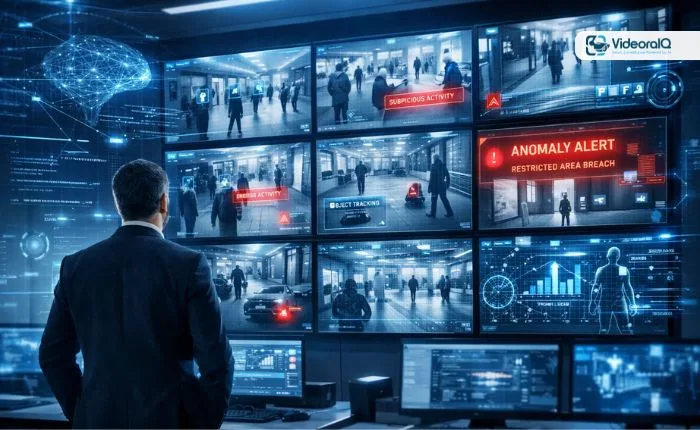
How is AI used in surveillance?
This was a question that has raised more importance due to the advancement in security technology today than before. This insight into the application of AI in the surveillance field demonstrates how artificial intelligence is transforming the manner in which organizations watch, guard, and react to threats in real-time.
Since the ability to detect some suspicious action to process large volumes of video data, AI has turned a passive surveillance mechanism into an active security system capable of predicting and stopping any incidents before they grow out of control.
It is not merely the improved cameras that are a feature of the integration of AI into surveillance, but the development of systems that are smart and learn to perceive and reason and act in ways that are simply impossible to expect of human operators as they observe dozens of video feeds at once.
Listen To The Podcast Now!
Understanding AI-Powered Surveillance Systems:
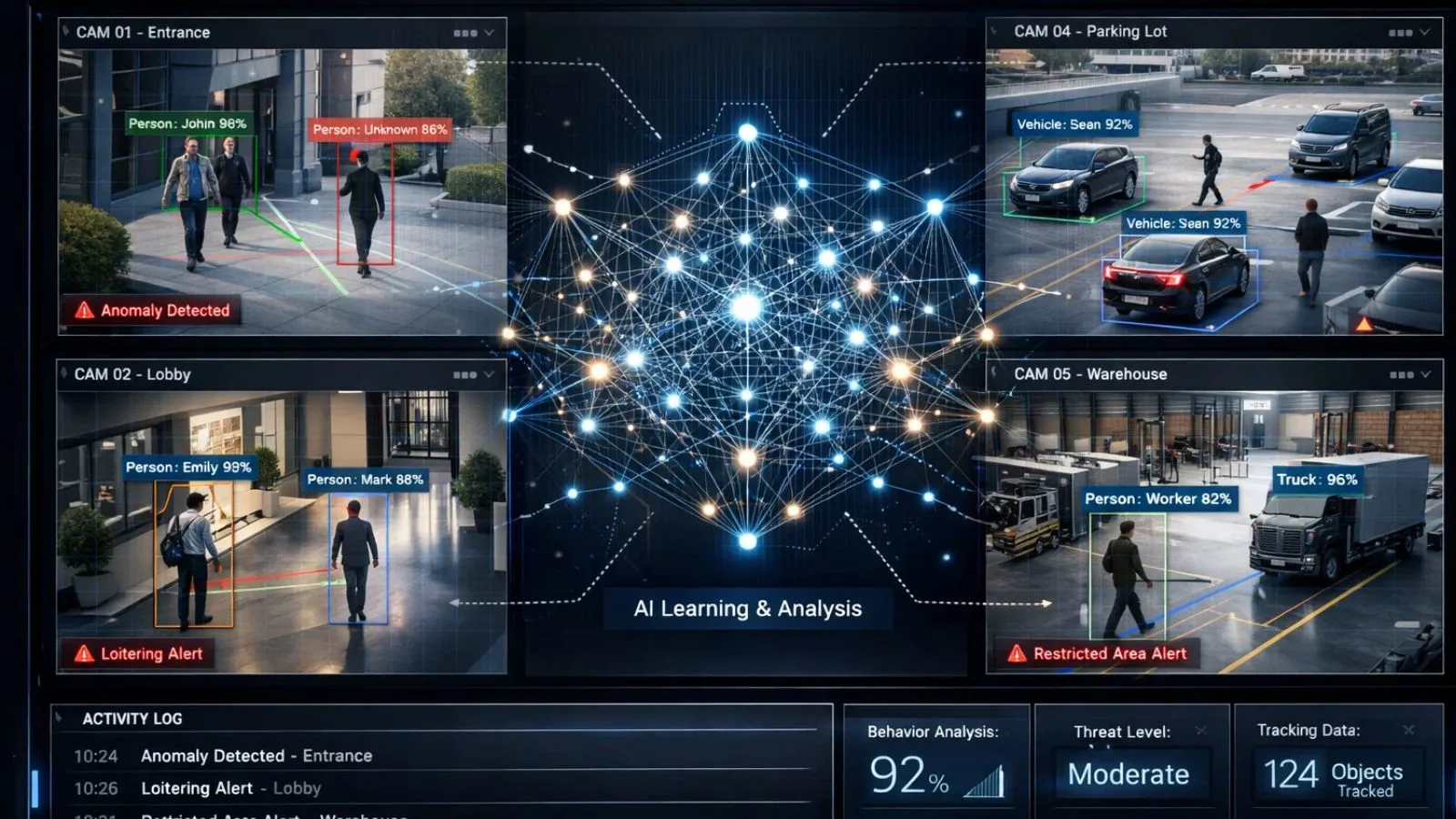
Fundamentally, what is AI surveillance? is a computer algorithm examining video feeds to automatically detect individuals, items, actions, and occurrences. In contrast to the traditional systems, where the footage is recorded to be reviewed in the future, the AI-based surveillance actively monitors, learns, and notifies security personnel about the possible problems as they occur.
These systems apply machine learning and computer vision to process information like humans do to understand their environment. Each video frame is analyzed by the technology, and such things as faces, vehicles, movement patterns, and environmental shifts are distinguished. Knowledge of the way AI is applied to surveillance assists organizations in understanding that the strength of their power lies in the ability to never stop learning and become more effective in differentiating between real and false alarms.
Traditional CCTV vs AI Security Camera:
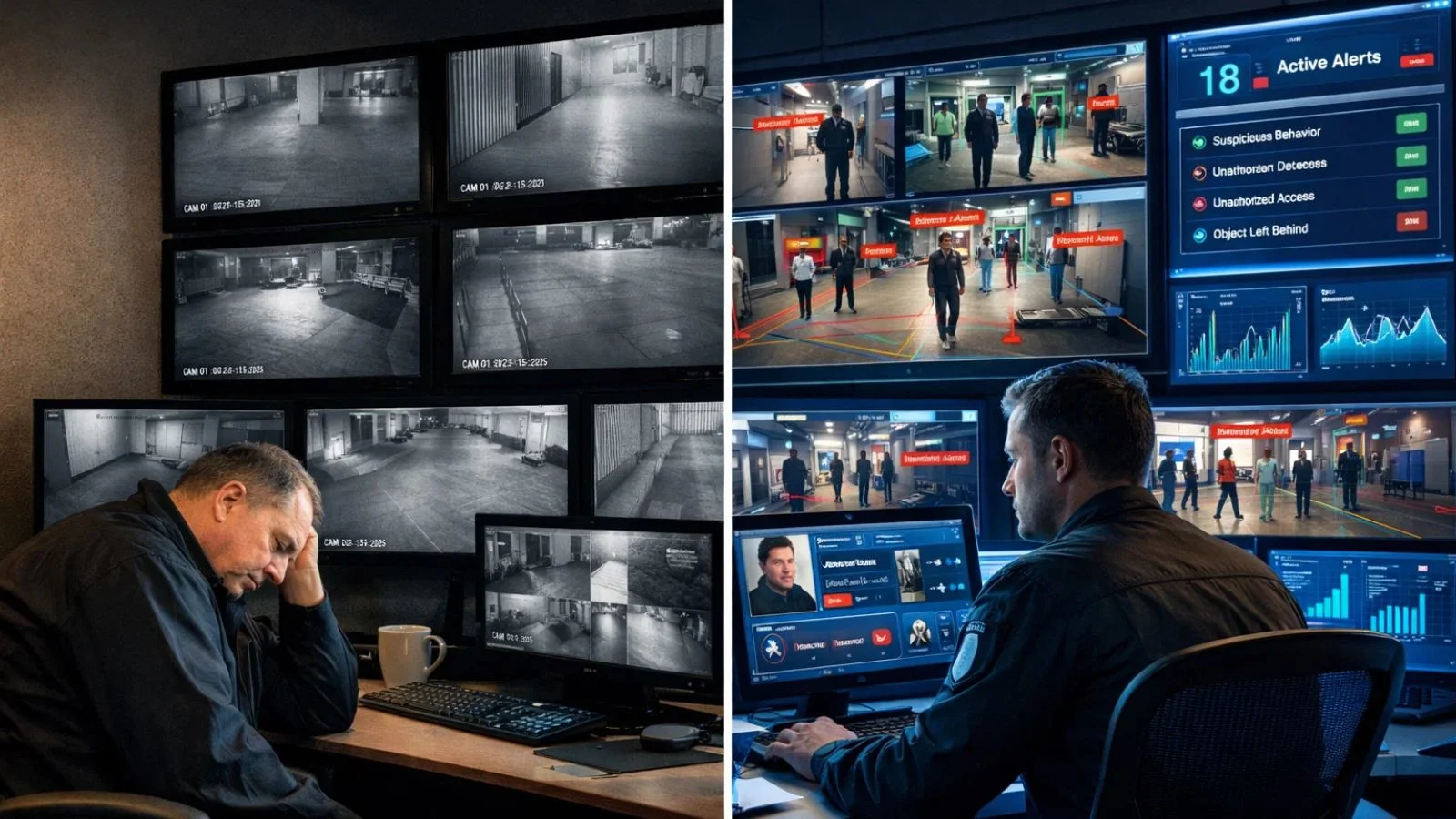
The distinction between old-fashioned CCTV and AI security cameras represents a complete revolution in surveillance technology. Basic CCTV systems are simply video cameras that record footage for later review by humans; they are reactive by nature and usually become useful only after an incident has already occurred.
Traditional CCTV systems rely heavily on human monitoring, where security personnel must continuously watch multiple screens. In reality, this approach breaks down quickly. After just 20 minutes of nonstop viewing, the human eye struggles to detect critical events, especially in environments with repetitive visuals like empty corridors or static areas.
AI-powered surveillance systems remove this limitation entirely. AI Video Surveillance Is Transforming Modern Security Systems by enabling cameras to actively analyze every frame in real time, identifying specific objects, behaviors, and anomalies based on predefined intelligence models, without fatigue or distraction.
To truly understand how AI is applied in surveillance, consider that these smart systems can simultaneously monitor and analyze hundreds of camera feeds, something that is physically impossible for human operators. When combined with advanced AI video analytics, these cameras shift from passive recording devices to proactive participants in real-time security operations.
7 Ways How Is AI Used In Surveillance:
1. Real-Time Threat Detection and Alert Systems:
How is AI used in surveillance? For threat detection? AI systems continuously monitor video feeds, instantly identifying potential dangers like unauthorized intrusions, aggressive behavior, or weapons. When examining how is AI used in surveillance? Across different security scenarios, threat detection stands out as the most critical application.
Unlike human operators who might miss crucial moments during long shifts, AI maintains constant vigilance across all cameras. When the system detects a threat, it immediately sends alerts to security personnel with relevant video clips and location data. This instant notification allows teams to respond within seconds rather than discovering incidents hours later during footage review.
2. Facial Recognition and Access Control:
Facial recognition technology demonstrates how AI is used in surveillance to identify and track individuals across multiple camera zones. Security systems can create watchlists of authorized personnel and automatically grant or deny access based on facial identification. This application extends beyond simple access control.
Law enforcement agencies use facial recognition to locate missing persons or identify suspects. Businesses employ it to track employee attendance and monitor restricted areas. The technology works by mapping facial features and comparing them against databases, achieving identification accuracy that far exceeds manual verification methods.
3. Behavior Analysis and Anomaly Detection:
Understanding how AI is used in surveillance for behavior analysis reveals one of its most sophisticated capabilities. When organizations ask how is AI used in surveillance? to prevent incidents, behavior analysis provides the answer. AI systems learn what constitutes normal activity in specific environments, typical foot traffic patterns, regular working hours, expected vehicle movements, and then flag deviations from these baselines.
If someone enters an office building at an unusual time or lingers near restricted areas, the system identifies this as anomalous behavior worthy of investigation. This proactive approach to security transforms surveillance from reactive recording to predictive protection.
4. Object Detection and Tracking:
How is AI used in surveillance? For object management? Smart surveillance systems can identify and track specific objects throughout their camera network. This includes detecting unattended baggage in airports, monitoring valuable equipment in warehouses, or tracking vehicles through parking facilities. License plate recognition exemplifies this capability, automatically vehicle access, managing parking areas, and identifying vehicles of interest. The system can track a car across multiple cameras, creating a complete timeline of its movements throughout a facility.
5. Fire and Smoke Detection:
AI surveillance extends beyond security threats to safety monitoring. How is AI used in surveillance? For fire prevention?
AI-powered sensors analyze video feeds to identify early signs of fire or smoke, often detecting dangers faster than traditional smoke detectors. When exploring how is AI used in surveillance for comprehensive safety, fire detection emerges as a life-saving application. This capability proves especially valuable in industrial settings, warehouses, and outdoor areas where conventional fire detection systems may be impractical. When integrated with thermal imaging cameras, AI can identify heat anomalies that indicate potential fire hazards.
6. Crowd Management and Safety:
For venues hosting large gatherings, understanding how is AI used in surveillance? for crowd control is essential. When event organizers question how is AI used in surveillance to ensure public safety, crowd management technology provides critical solutions. AI systems analyze crowd density, movement patterns, and behavior to identify potential safety issues before they become emergencies.
The technology can detect crowd formation, unusual gathering patterns, or blocked exits that might create dangerous situations. Security teams receive alerts when crowd density exceeds safe levels in specific areas, allowing them to redirect foot traffic or implement crowd control measures proactively.
7. Operational Intelligence and Business Insights:
Beyond security, how is AI used in surveillance? extends to operational efficiency. Retailers use AI analytics to understand customer behavior patterns, identify popular store areas, and optimize staff placement. Manufacturers monitor production lines to detect inefficiencies or safety violations. Heat mapping technology shows areas of high activity, helping organizations make informed decisions about resource allocation and facility design. This dual-purpose functionality maximizes the return on surveillance infrastructure investment.
How Can AI Be Used For Security?
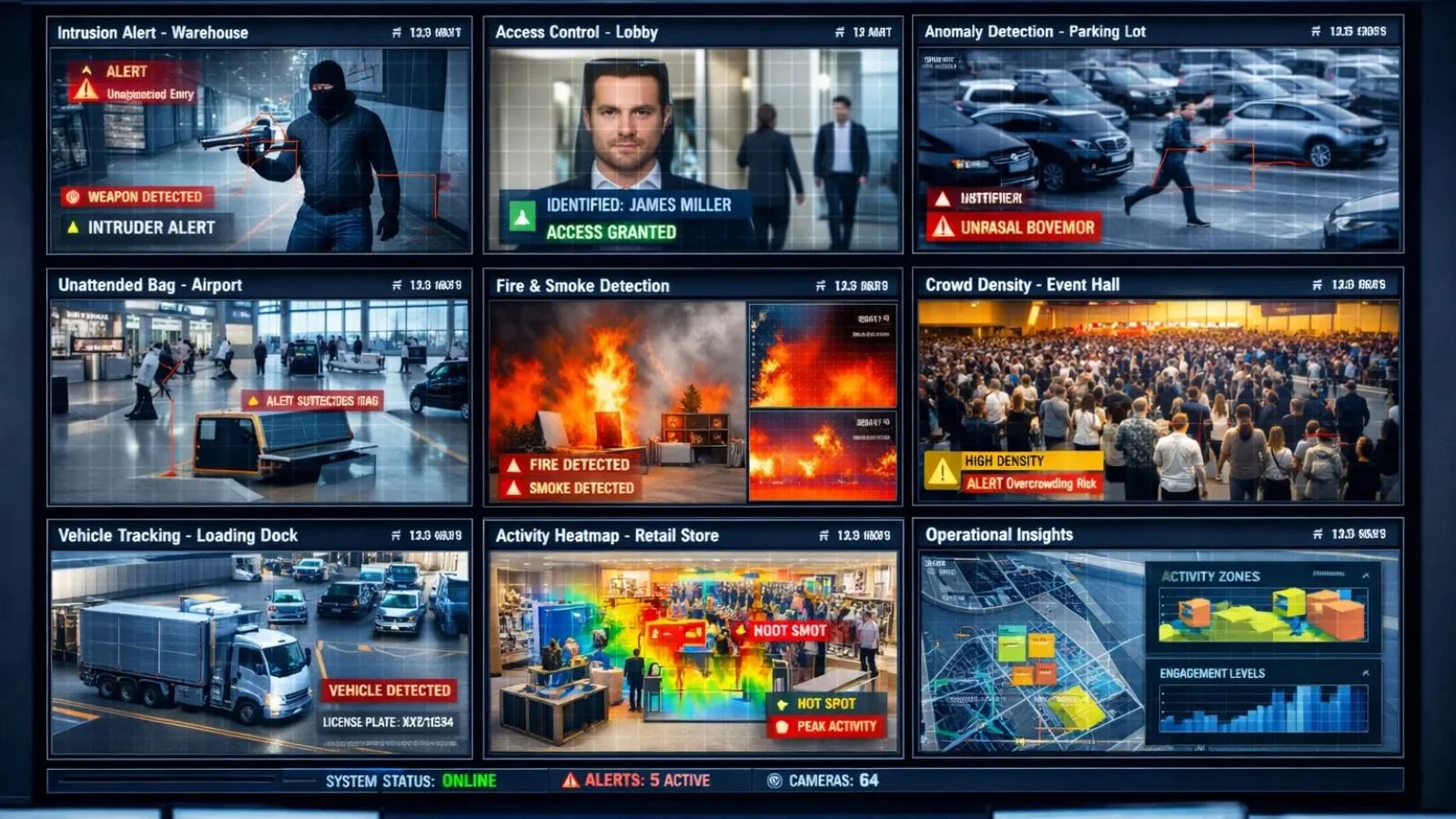
How can AI be used for security beyond traditional surveillance applications? The technology’s versatility extends to comprehensive security ecosystems that integrate multiple systems and data sources.
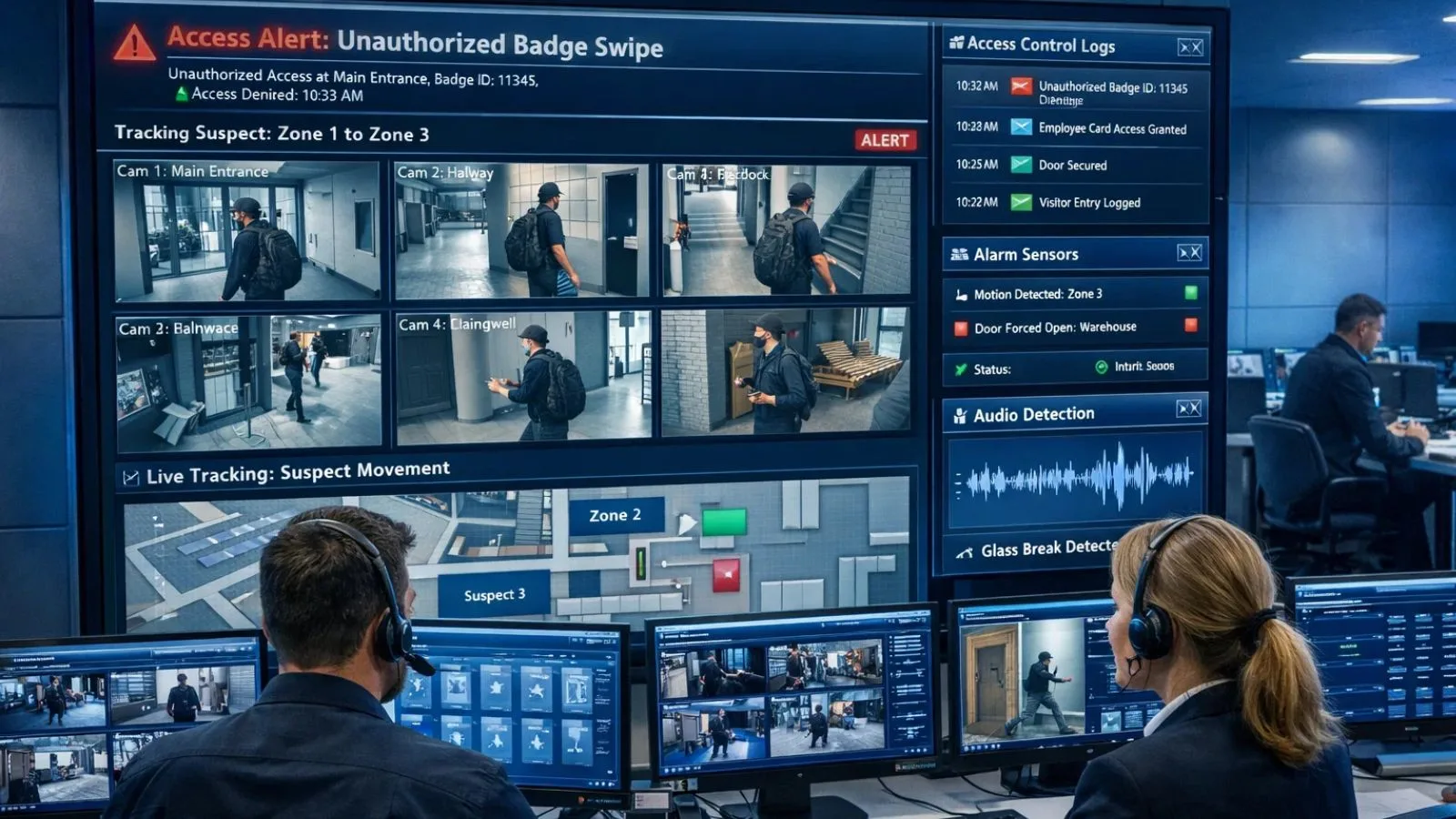
AI coordinates information from surveillance cameras, access control systems, alarm sensors, and even audio detection to create unified security awareness. When an access control system logs an unauthorized badge swipe, AI can immediately pull up relevant camera footage and track the individual’s movements throughout the facility.
Predictive analytics represents another dimension of how can AI be used for security. By analyzing historical data and identifying patterns, AI can forecast when and where security incidents are most likely to occur, allowing organizations to allocate resources strategically.
Also Read:
How To Improve Retail Store Video Surveillance Systems?
How AI Video Surveillance Is Transforming Modern Security Systems
VideoraIQ: Smart Surveillance That Actually Works:
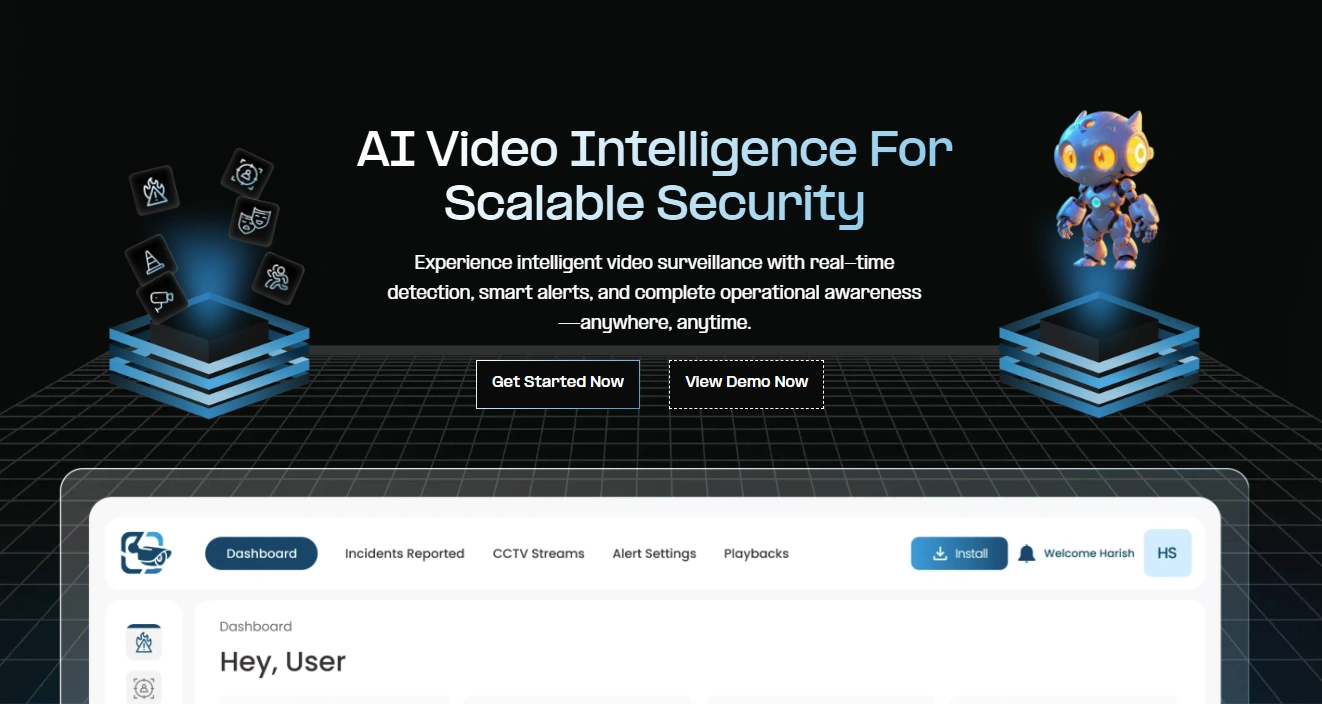
When organizations ask how AI is used in surveillance in real-world environments, the answer lies in platforms that go beyond theory and actually perform under pressure. VideoraIQ is designed precisely for that, turning raw video feeds into real-time, decision-ready intelligence. Unlike traditional surveillance systems that merely store footage, VideoraIQ applies advanced AI video analytics to actively detect, analyze, and respond to security and safety events as they happen. The system continuously interprets visual data, identifies risks, and alerts teams before situations escalate.
Key AI-Powered Features of VideoraIQ:
- Real-Time Intrusion Detection: Automatically identifies unauthorized access in restricted zones and sends instant alerts with visual evidence.
- Facial Recognition & Identity Verification: Enables controlled access, watchlist monitoring, and audit-ready identity tracking across multiple camera feeds.
- Behavior & Anomaly Detection: Flags suspicious movement patterns, loitering, unusual entry times, or abnormal activity that deviates from learned baselines.
- Abandoned Object Detection: Detects unattended bags or objects in sensitive areas, helping teams respond to potential threats proactively.
- Fire, Smoke & Heat Anomaly Detection: Uses AI and thermal data to identify early signs of fire or overheating, often faster than traditional sensors.
- Crowd Density & Safety Monitoring: Analyzes crowd movement and density to prevent congestion, stampedes, or blocked exits in public spaces.
- Centralized Alerts with Context: Every alert is delivered with relevant video clips, timestamps, and camera location, no blind alarms, no guesswork.
Built to Scale Across Industries:
What sets VideoraIQ apart is scalability without accuracy loss. The platform adapts across environments such as:
- Retail spaces (theft prevention, staff presence monitoring)
- Manufacturing plants (restricted zone compliance, safety violations)
- Warehouses (asset tracking, perimeter security)
- Healthcare facilities (patient safety, unauthorized access control)
- Corporate & public infrastructure (crowd and threat monitoring)
By filtering out noise and false positives, VideoraIQ ensures security teams act only on what truly matters. This intelligent prioritization reflects how modern AI surveillance should function: proactive, precise, and operationally efficient.
Conclusion:
What are the applications of AI in surveillance? It has much more to do with more than just video recording. From real-time threat detection and facial recognition to behavioral analysis and operational intelligence, AI has turned surveillance into a dynamic, intelligent security ally. The technology keeps a constant check on the environments, detects anomalies, and signals teams of possible problems before they escalate. Our seven discussed ways show that contemporary surveillance is not about monitoring everything, but rather knowing what is important. In the case of such solutions as VideoraIQ, as well as other AI-driven solutions, organizations have the means that tirelessly guard people and properties and give precious business data.
FAQ’s:
Q1: What is the difference between AI surveillance and traditional CCTV?
Ans: Traditional CCTV passively records footage for later review, while AI surveillance actively analyzes video in real time, automatically detecting threats, behaviors, and anomalies without requiring constant human monitoring.
Q2: Is AI surveillance accurate?
Ans: Modern AI surveillance systems achieve high accuracy rates, especially when properly configured for specific environments. The technology continuously learns and improves, reducing false alarms while maintaining vigilance.
Q3: What industries benefit most from AI surveillance?
Ans: Retail, manufacturing, healthcare, education, government facilities, and large venues all benefit significantly. Any organization needing to monitor multiple areas simultaneously or requiring advanced threat detection finds value in AI-powered surveillance.
Q4: Can AI surveillance systems integrate with existing cameras?
Ans: Many AI surveillance platforms can integrate with existing camera infrastructure, adding intelligent analytics capabilities without requiring complete system replacement.