

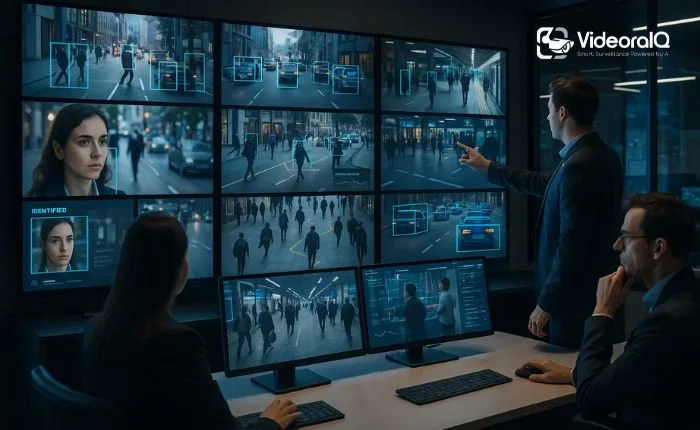
Security systems have evolved so much as compared to the simple CCTV cameras which only captured footage. Intelligent video analytics today is revitalizing the manner in which business and organizations track, interpret and react to security incidents in real-time.
It is a new technology which identifies meaningful information in the video feeds based on the use of artificial intelligence and machine learning to transform passive surveillance into active security management.
Intelligent video analytics is on the pinnacle of this revolution as threats continue to become more sophisticated and the demands of increasingly smart security measures increase.
In a hurry? Listen to the podcast now!
What Is Intelligent Video Analytics?
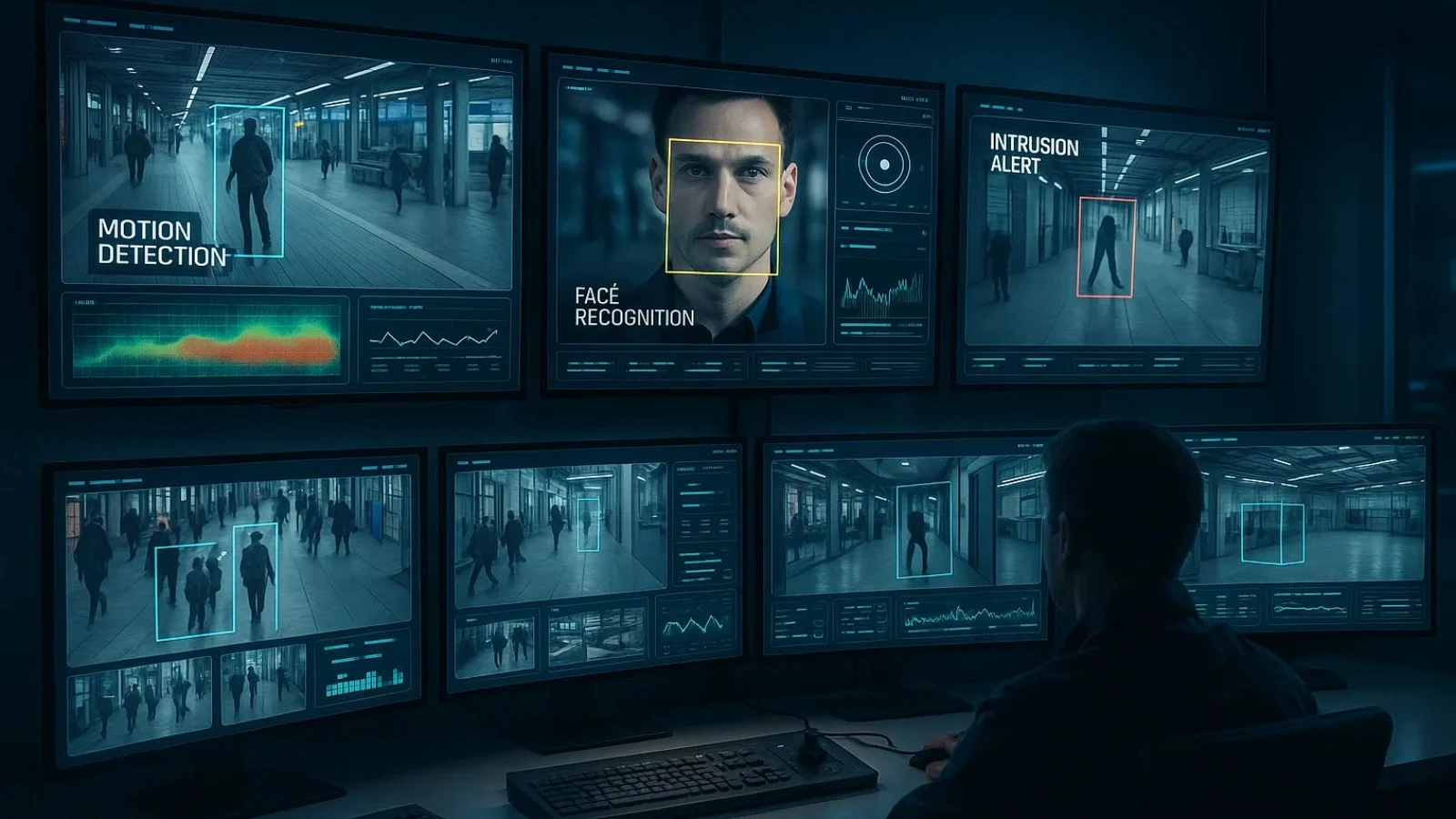
Intelligent Video Analytics (IVA) is a sophisticated technology that is based on the principles of artificial intelligence, computer vision, and machine learning to automatically interpret video footage in real time or stored video footage.
To understand What Is Video Analytics? it’s important to recognize that IVA is not about merely taking pictures—IVA is about recognising patterns, identifying critical events, monitoring objects or behaviour and providing real-time notifications or insights.
This turns the conventional CCTV systems into proactive and decision-support systems that can augment security, operational effectiveness, and to facilitate smarter and data-driven surveillance in retail, traffic management, and individual or group surveillance.
IVA does not have to involve human monitoring as is the case in traditional video surveillance, unlike the new technology which involves sophisticated algorithms to interpret what is going on inside the picture.
The technology is able to find abnormal activities, identify faces, enumerate individuals, identify intrusions, and even anticipate the security threats before they get out of hand. It is an invaluable tool in the present-day security activities as the system improves its accuracy through patterns.
The Technology Behind Intelligent Video Analytics:
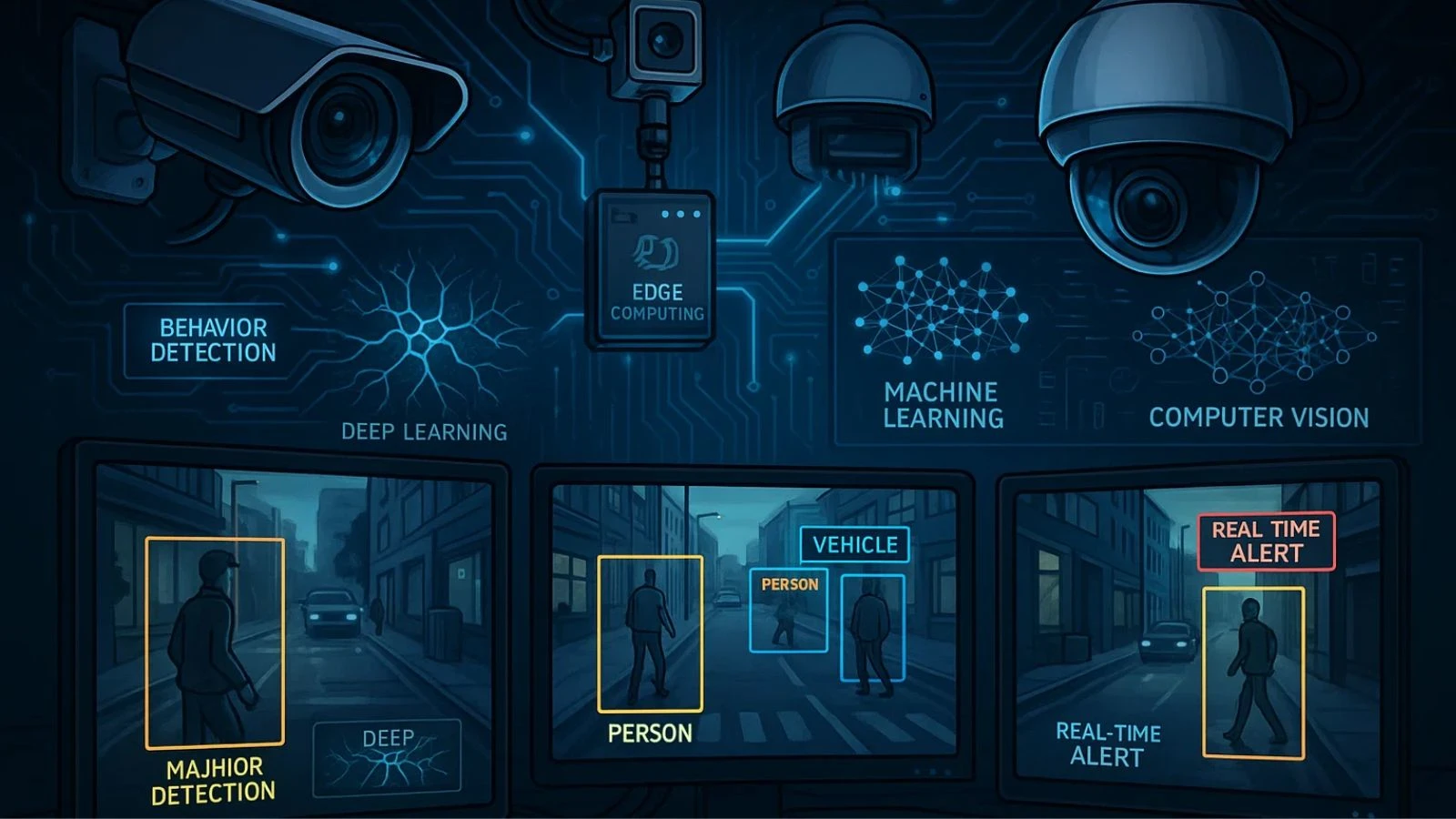
The foundation of intelligent video analytics lies in several key technologies working together seamlessly. Computer vision enables cameras to “see” and interpret visual information much like human eyes do. Machine learning algorithms process this information to identify patterns and anomalies.
Deep learning in video analytics has been particularly transformative. These neural networks can process vast amounts of video data, learning to recognize complex patterns and subtle behaviours that would be impossible for human operators to spot consistently.
The technology can distinguish between a person walking normally and someone exhibiting suspicious behaviour or differentiate between a car and a bicycle in challenging lighting conditions.
Modern systems also incorporate edge computing, where processing happens directly on the camera or nearby devices rather than sending all data to a central server. This reduces latency, improves response times, and decreases bandwidth requirements.
Key Benefits of Intelligent Video Analytics:
1. Enhanced Threat Detection:
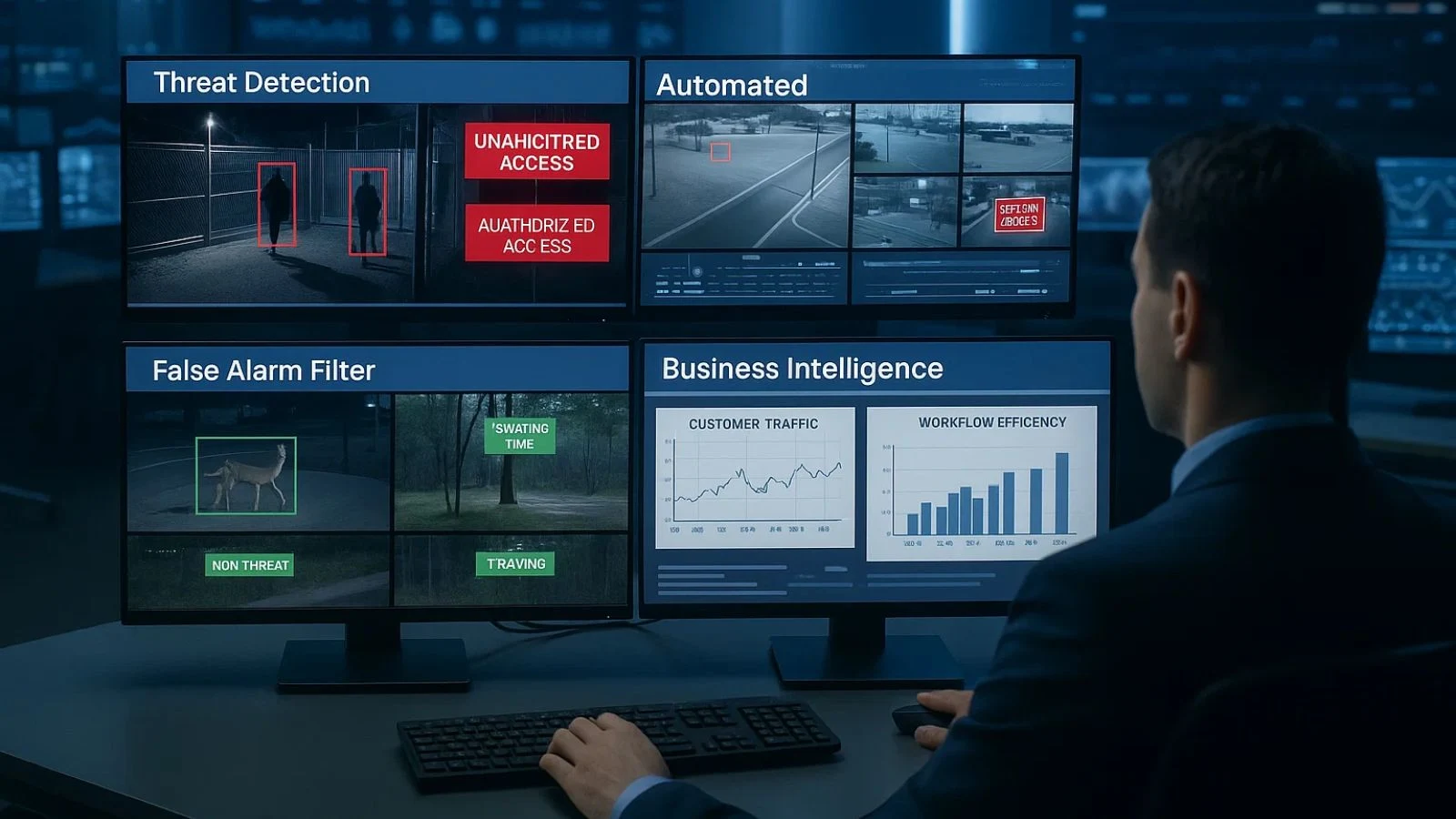
Intelligent video analytics dramatically improves threat detection capabilities. The system can identify potential security breaches in real-time, such as perimeter intrusions, unauthorized access to restricted areas, or abandoned objects in public spaces. By analyzing movement patterns and behaviours, it can alert security personnel to suspicious activities before they develop into serious incidents.
2. Reduced False Alarms:
Traditional motion-detection systems often trigger false alarms from harmless events like swaying trees or passing animals. Intelligent video analytics uses contextual understanding to filter out these non-threatening events, ensuring that security teams only respond to genuine threats. This dramatically reduces alarm fatigue and allows personnel to focus on real security concerns.
3. Operational Efficiency:
By automating the monitoring process, intelligent video analytics allows security teams to oversee larger areas with fewer personnel. The system works tirelessly 24/7, never losing focus or missing critical events due to human limitations. This not only improves security coverage but also reduces operational costs significantly.
4. Valuable Business Intelligence:
Beyond security, intelligent video analytics provides valuable insights for business operations. Retail stores can analyze customer traffic patterns and behaviour, helping optimize store layouts and staffing. Manufacturing facilities can monitor workflow efficiency and identify bottlenecks. The data collected becomes a strategic asset for decision-making.
Real-World Applications:
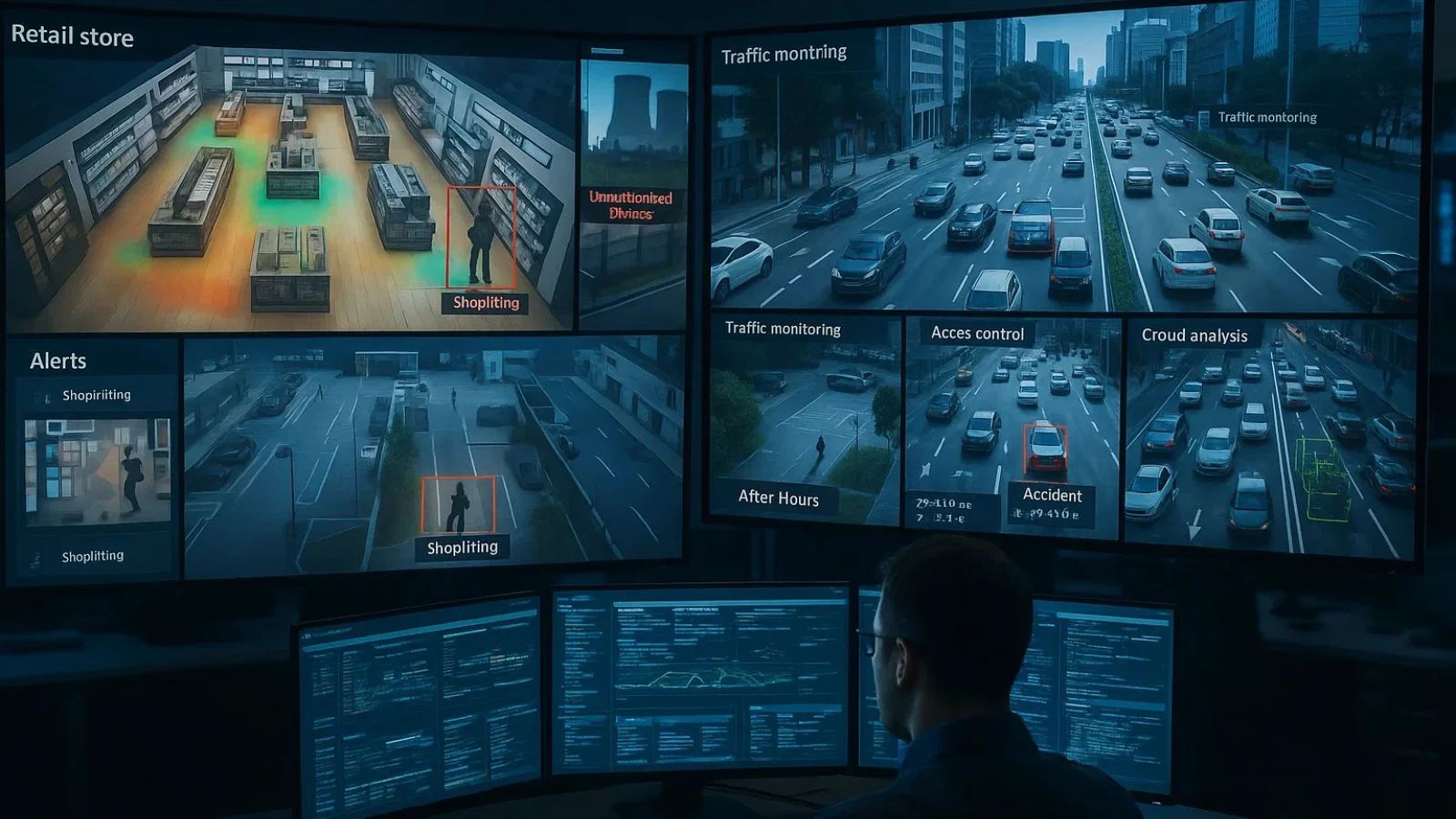
1. Retail Security and Analytics:
Retailers are leveraging intelligent video analytics for both loss prevention and customer experience enhancement. The technology can detect shoplifting behaviours, monitor checkout areas for suspicious activities, and track inventory movement. Simultaneously, it provides heat maps showing customer traffic patterns, helping retailers optimize product placement and store design.
2. Critical Infrastructure Protection:
Power plants, water treatment facilities, and transportation hubs use intelligent video analytics to protect critical infrastructure. The technology monitors vast perimeters, detects unauthorized access attempts, and identifies potential threats to essential services that communities depend on.
3. Smart Cities and Public Safety:
Urban areas are deploying intelligent video analytics to enhance public safety. The technology helps manage traffic flow, detect accidents quickly, identify crowd gathering patterns, and even assist in finding missing persons. It contributes to creating safer, more efficient urban environments.
4. Corporate and Campus Security:
Businesses and educational institutions use intelligent video analytics to secure their premises while maintaining a welcoming environment. The system can manage access control, monitor parking areas, detect unusual activities after hours, and provide valuable evidence when incidents occur.
Also Read:
How AI Video Analytics Detects Fire And Intrusions?
What Is Video Analytics? How It Works & Enterprise Use Cases
VideoraIQ: Revolutionizing Smart Security:
When it comes to implementing intelligent video analytics solutions, VideoraIQ stands out as a game-changer in the industry. What makes VideoraIQ unique is its innovative approach to upgrading existing security infrastructure.
Rather than requiring expensive hardware replacements, VideoraIQ installs AI-based software directly into your current cameras, transforming them into intelligent surveillance devices.
This software-first approach means businesses can leverage their existing camera investments while gaining access to advanced analytics capabilities.
VideoraIQ’s platform offers real-time threat detection, behaviour analysis, and automated alerting systems that integrate seamlessly with your current security operations.
The system provides intuitive dashboards that display actionable insights, making it easy for security teams to monitor multiple locations from a single interface. With customizable alerts and detailed reporting features, VideoraIQ ensures that security personnel have the information they need exactly when they need it.
What’s particularly impressive is how VideoraIQ handles the complexity of AI deployment. Their team manages the technical implementation, ensuring optimal camera positioning, proper configuration, and ongoing system optimization.
This turnkey approach removes the technical barriers that often prevent organizations from adopting advanced security technologies. For businesses looking to future-proof their security infrastructure without breaking the bank, VideoraIQ offers a practical pathway to implementing intelligent video analytics solutions.
The Future Landscape:
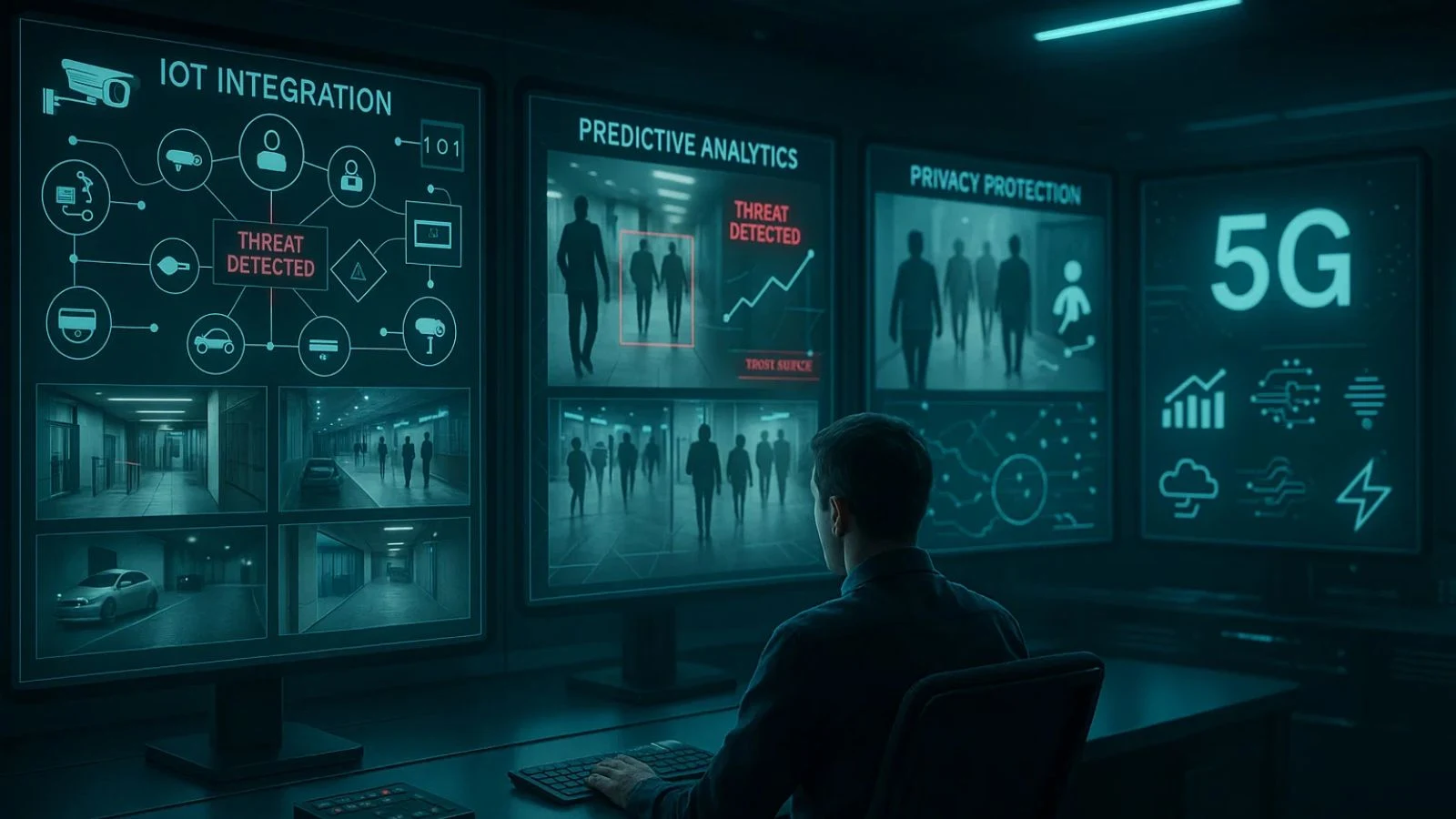
Even more advanced features are in the direction that intelligent video analytics is heading. The connection of the IoT devices will produce an integrated whole of security systems in which cameras, sensors, and access control systems will collaborate without any issues.
Predictive analytics will also be developed and be able to spot potential security threats before they occur, depending on the slight changes of patterns and previous information. Even more, privacy-protected technologies are being developed, which has enabled smart video analytics to deliver security advantages without violating individual privacy, such as auto-face blurring and anonymized tracking.
This is an issue that has been raised as a major issue regarding the use of surveillance technology. The 5G networks will provide a higher speed of transmitting data and more powerful edge processing that will allow more sophisticated analytics to operate in real-time, even on resource-constrained resources. This will open up the high-level security technology to smaller organizations by making it affordable.
Implementation Considerations:
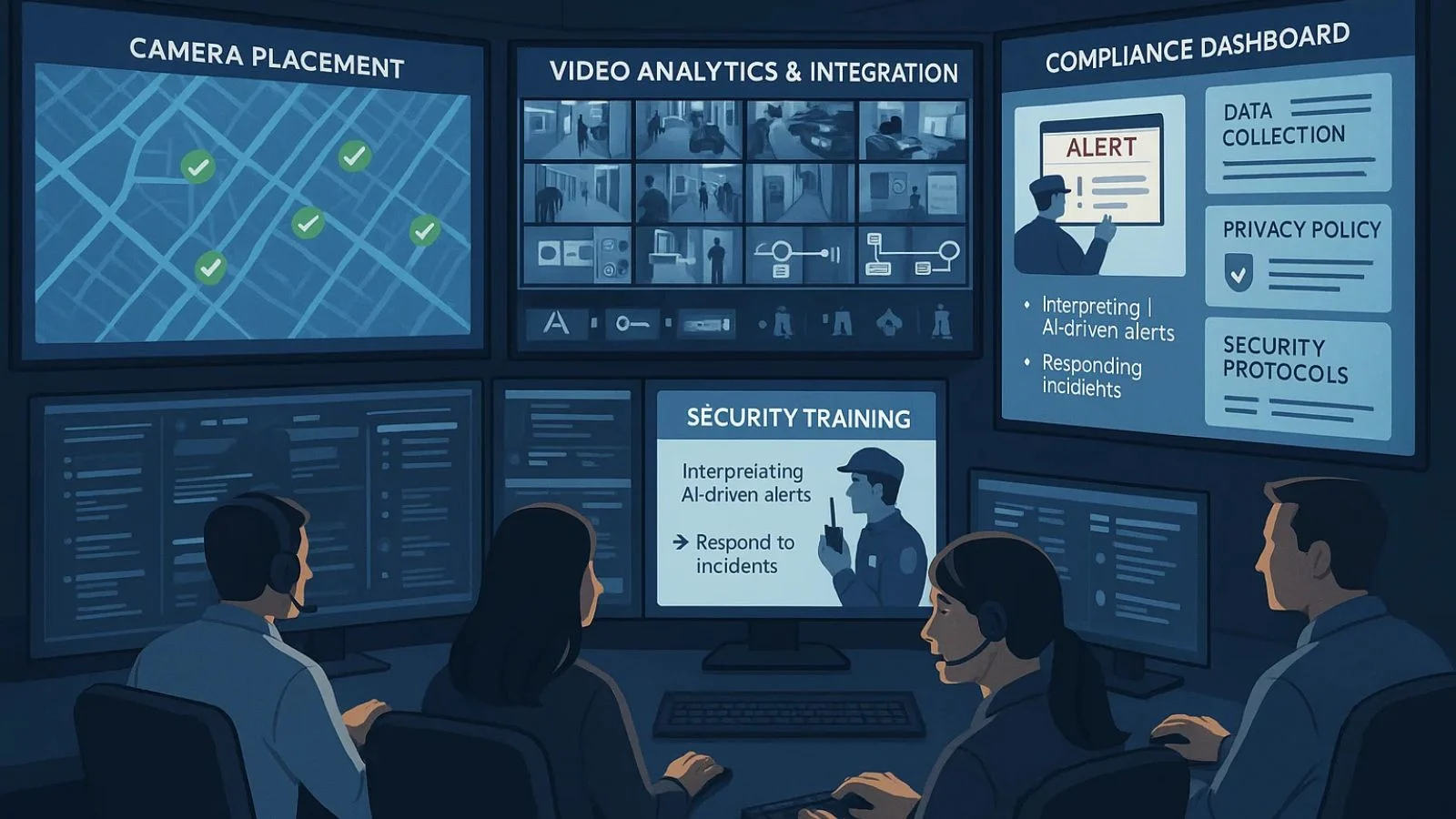
Organizations need to take into account a number of things when implementing intelligent video analytics. The placement of cameras and coverage are some of the most important aspects; even the finest software cannot replace the weakly placed cameras.
Infrastructure Networks and infrastructure should be able to support the needs of the data, and in case of cloud-based analytics tools, the infrastructure needs to be available. Combination with the prevailing security systems makes operations transition smooth.
The system should not replace the existing access control, alarm systems as well as security measures but rather it should operate to complement them. Security personnel should also be trained on the new technology: they should learn how to decode alerts and react accordingly. Lastly, privacy and compliance issues have to be addressed by organizations.
The nature of data that is collected, its application, access and retention can be clearly defined by policies. The rules on the local regulations on surveillance and data protection are not negotiable.
Conclusion:
Intelligent video analytics is a radical change in the approach to security. Through artificial intelligence and video surveillance, organizations receive proactive, efficient and intelligent security systems which do much more than just record footage. The technology will surely become the norm of security operations in all industries as it keeps on developing and becoming more accessible. The next generation of smart security is not only observing but knowing, anticipating, and thwarting threats to your organization.
FAQ’s:
Q1: How accurate is intelligent video analytics?
Ans: Modern systems achieve accuracy rates exceeding 95% in ideal conditions, with performance improving continuously through machine learning.
Q2: Can intelligent video analytics work with existing cameras?
Ans: Yes, many solutions like VideoraIQ can add intelligent analytics capabilities to existing camera infrastructure through software installations.
Q3: Is intelligent video analytics expensive?
Ans: Costs vary based on deployment scale and features, but software-based solutions significantly reduce expenses compared to complete hardware replacements.
Q4: Does it work in low-light conditions?
Ans: Advanced systems perform well in various lighting conditions, though optimal results require proper camera specifications and positioning.