

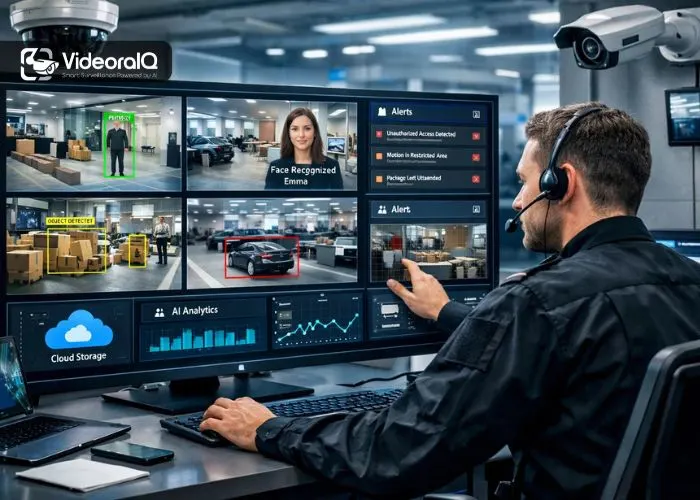
The way businesses protect their workplaces has changed dramatically, and IP cameras are right at the center of this transformation. Gone are the days when a grainy CCTV feed was considered adequate security. Today, IP cameras deliver crystal-clear footage, remote access, and intelligent monitoring capabilities that traditional systems simply cannot match.
As cyber threats evolve and physical security demands grow more complex, organizations are rapidly upgrading to IP cameras that offer real-time visibility, cloud storage, and seamless integration with AI-powered tools. Whether you manage a small office or a large enterprise, IP Camera are no longer a luxury; they are a necessity.
In this blog, we will explore exactly how IP cameras are reshaping workplace security and what you need to know to make the most of them in 2026.
Listen To The Podcast Now!
The Rise of IP Cameras in Modern Workplaces:
The global shift toward smarter security infrastructure has placed IP cameras at the forefront of workplace safety strategies. Unlike analog systems that rely on coaxial cables and DVRs, IP cameras transmit video data over standard network connections, making installation simpler and scalability effortless.
Businesses across industries, from retail and manufacturing to healthcare and corporate offices, are adopting IP surveillance cameras to gain sharper image quality, better coverage, and remote monitoring from anywhere in the world. The ability to access live feeds from a smartphone or laptop has completely changed how security teams operate daily.
Furthermore, modern IP cameras are not just passive recording devices. They come equipped with motion detection, night vision, two-way audio, and built-in analytics. This makes them powerful, proactive tools rather than simple recorders. As workplace environments become more dynamic and distributed, the demand for flexible, network-driven IP security cameras continues to grow at an impressive and consistent pace across the globe.
Real-Time Monitoring and Instant Threat Detection:
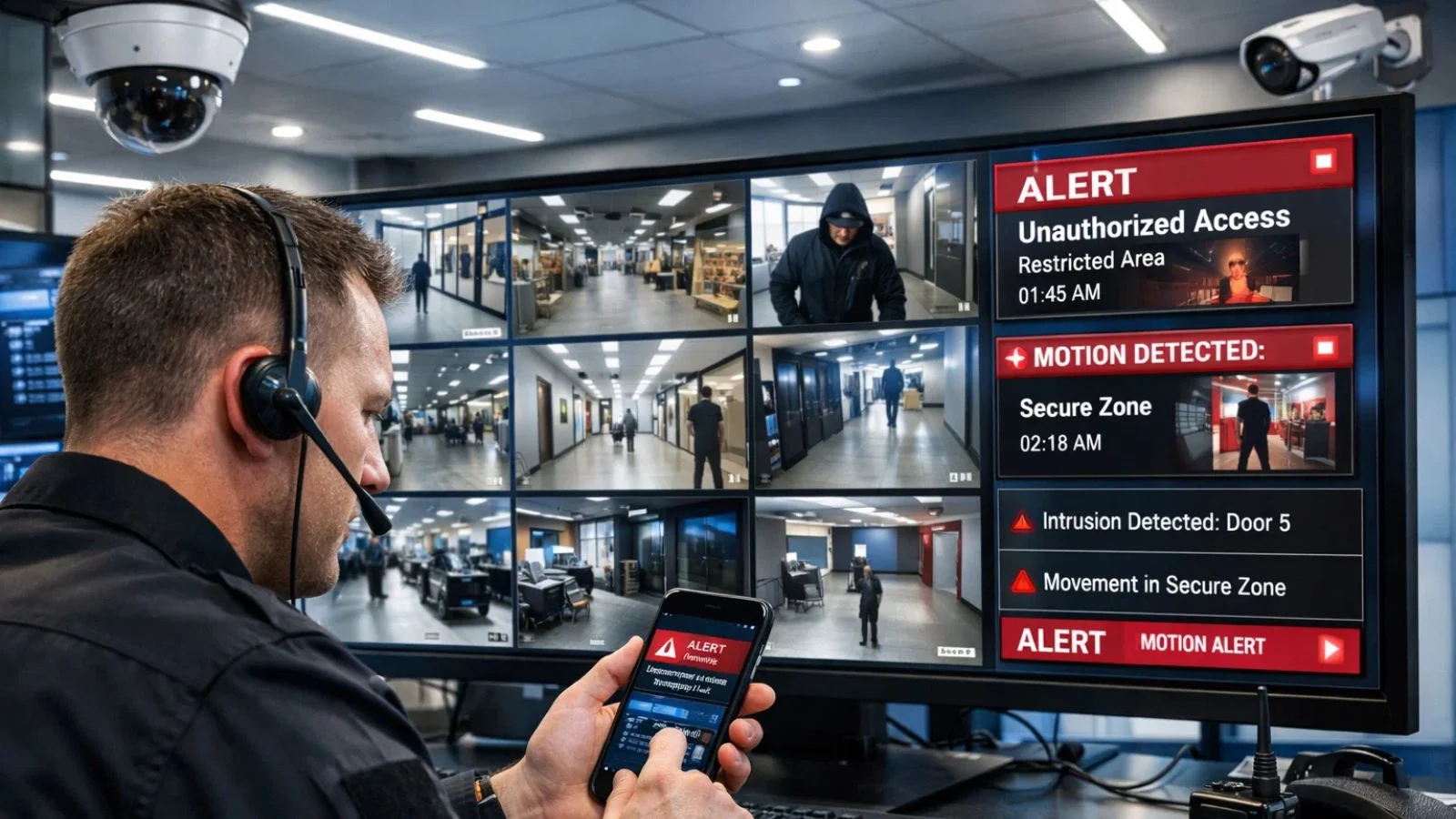
One of the biggest advantages of IP cameras in the workplace is the ability to monitor activity in real time. Security teams no longer need to sit in front of a wall of monitors all day. Modern IP cameras can be configured to trigger instant alerts whenever suspicious activity is detected, be it unauthorized access, unusual motion, or someone crossing a restricted zone.
These smart alert systems reduce response times significantly. When an incident occurs, security personnel receive immediate notifications on their devices, allowing them to act within seconds rather than minutes. This level of responsiveness was simply not possible with traditional CCTV systems, which required manual review of footage after the fact.
Real-time monitoring also supports employee accountability and workplace compliance. Managers can review footage remotely, ensure safety protocols are followed, and conduct post-incident investigations without physically being on-site. The combination of instant alerts and remote accessibility makes IP cameras an indispensable part of any modern workplace security strategy today.
How IP Cameras Improve Operational Efficiency?
Beyond pure security, IP cameras deliver measurable operational benefits for businesses across every sector. Retailers can monitor customer flow and peak hours to optimize staffing. Manufacturers can oversee production floor activity and identify bottlenecks before they impact output. Corporate offices can track access patterns and ensure compliance with workplace policies on an ongoing basis.
IP cameras also directly support HR and management functions. From verifying employee attendance to ensuring safety procedures are properly followed, the footage captured provides a reliable, objective record that managers can reference at any time without dispute.
Integrating IP cameras with other business systems, such as access control platforms, HR software, or incident management tools, further amplifies their overall value. When all systems communicate seamlessly with each other, businesses gain a unified, real-time view of their operations that supports smarter decision-making every single day. The result is not just a safer workplace but a measurably more efficient and well-managed one.
IP Cameras Across Different Industries:
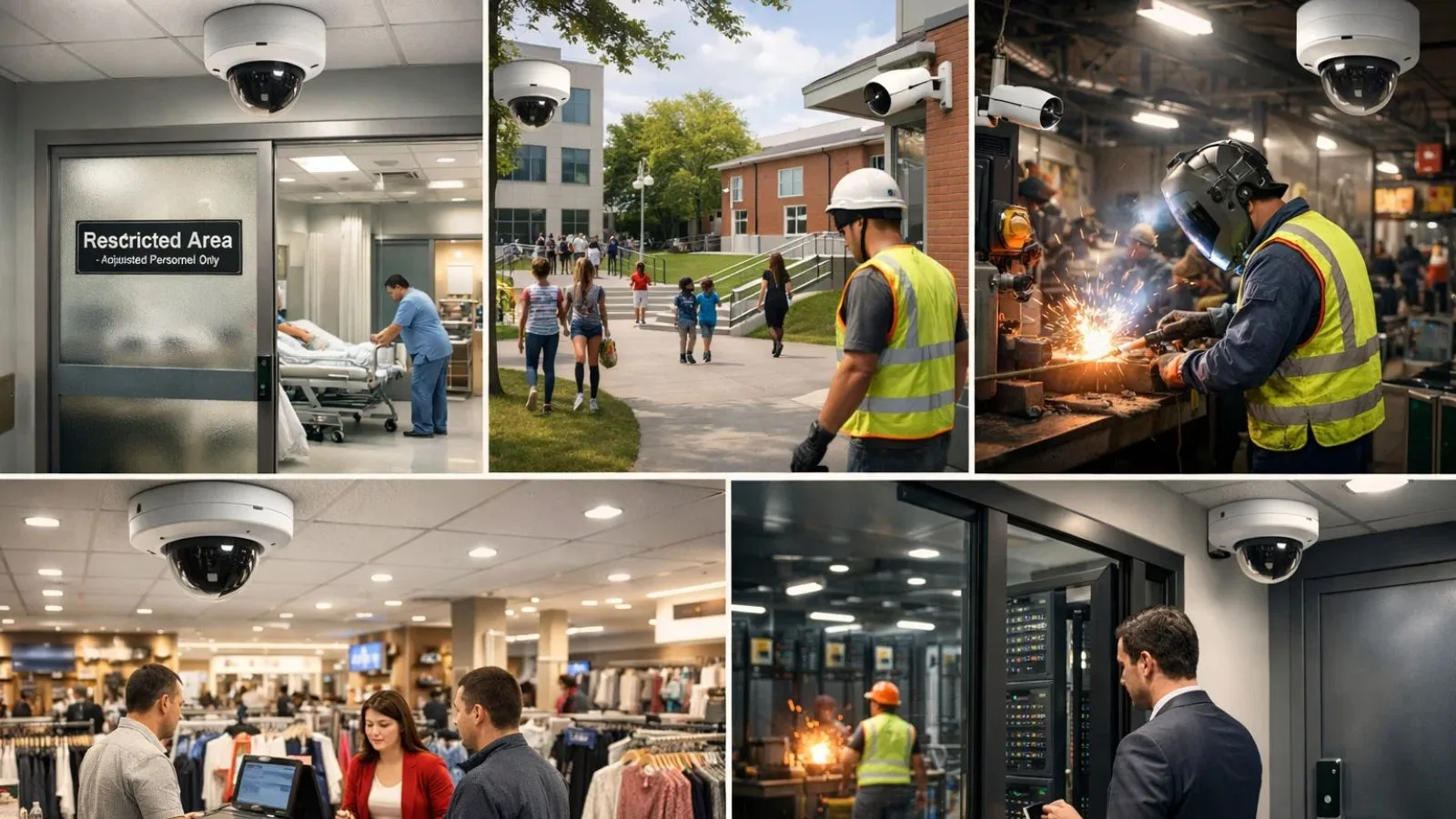
The versatility of IP cameras is one of their greatest strengths. Different industries use them in unique ways tailored to their specific security and operational challenges. In healthcare, cameras help monitor sensitive patient zones, staff movements, and restricted medication areas without compromising patient privacy. In education, campuses use them to prevent unauthorized entry and ensure student safety around the clock.
Manufacturing facilities rely on IP cameras to oversee hazardous zones, enforce PPE compliance, and detect fire or smoke risks before they escalate into disasters. Retail environments use them to combat shoplifting, monitor cashier activity, and improve customer experience by analyzing foot traffic patterns intelligently.
In corporate environments, IP cameras are essential for access control, ensuring that only authorized personnel enter sensitive areas such as server rooms or executive floors. Regardless of the industry, the adaptability and intelligence of modern IP cameras make them a universally valuable investment for organizations focused on safety and operational excellence.
How to Secure IP Cameras? Best Practices for Businesses:
As these devices become increasingly connected, understanding how to secure IP cameras is just as critical as deploying them. A poorly secured camera can become a serious vulnerability in your network rather than a protective asset.
Following the best practices is essential for every business:
- Change default credentials immediately; factory usernames and passwords are widely known and easy to exploit.
- Keep firmware regularly updated. Manufacturers release patches that address known security vulnerabilities.
- Segment your network; place cameras on a separate VLAN to limit exposure if a device is compromised.
- Enable end-to-end encryption; ensure all video transmissions are fully protected in transit and at rest.
- Restrict remote access; use VPNs and strong multi-factor authentication for any remote viewing sessions.
- Disable unused features, turn off services like UPnP or Telnet that are not needed for daily operation.
- Conduct regular security audits; routinely review access logs and camera settings to identify and close gaps.
Treating camera security as seriously as any other part of your IT infrastructure ensures your surveillance system remains a strength, not a liability.
Also Read:
VideoraIQ: Turning Your IP Cameras Into Intelligent Security Tools:
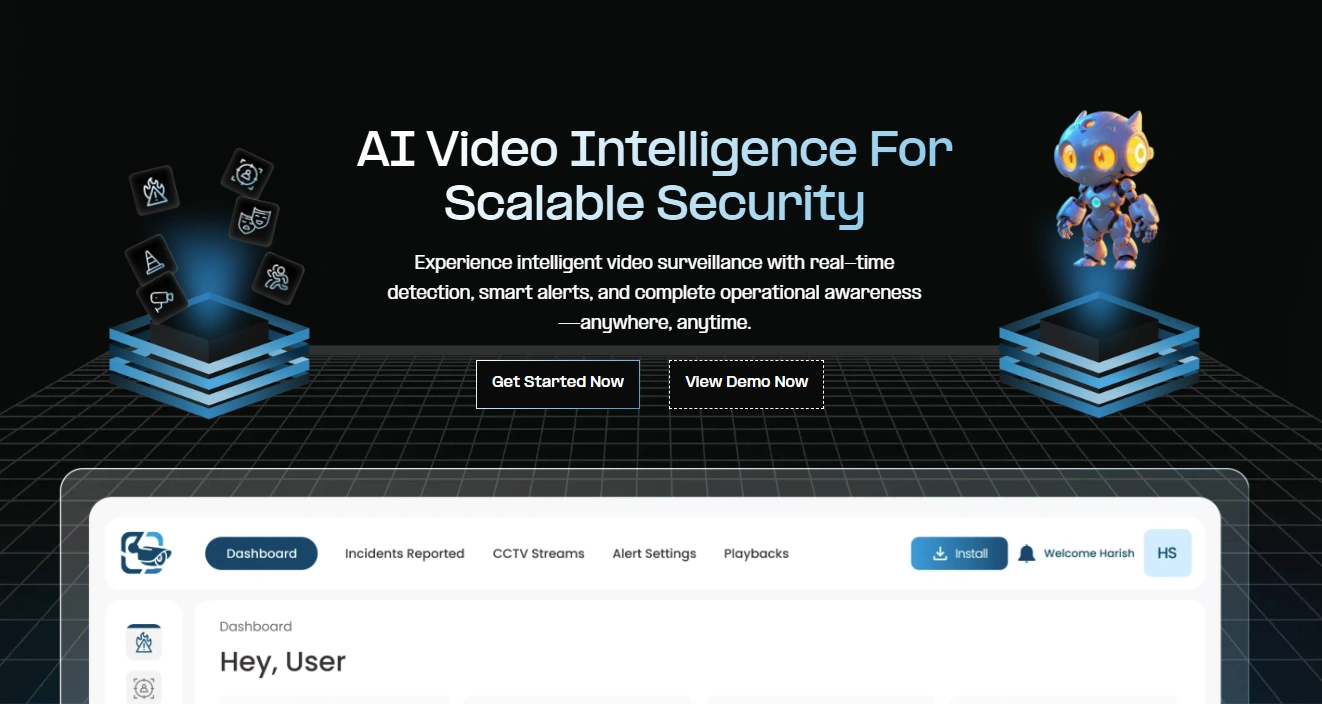
If you want to unlock the full potential of your IP cameras, VideoraIQ is the platform built for exactly that. It is an AI-powered, cloud-based video intelligence solution that transforms your existing surveillance setup into a proactive, always-on security system, without replacing your current hardware.
VideoraIQ analyzes live video in real time, detects threats instantly, and sends smart alerts so your team can act, not just watch.
Key Features:
- 🔍 Face Recognition identifies and tracks individuals for access control and security audits
- 🚨 Intrusion detection: real-time alerts for unauthorized movements in restricted zones
- 🔥 Fire & smoke detection: AI-powered early warning for rapid emergency response
- 🔒 Unauthorized Access Alerts: instant notifications when restricted areas are breached
- 🚗 Number Plate Recognition: automated vehicle tracking, and access logging
- 🧳 Unattended Baggage Detection: spot abandoned objects before they become hazards
- 📏 Line-Cross Detection: monitor virtual perimeters, and get alerted instantly
- 📦 Object Detection: automatically flags suspicious items in live footage
Visit VideoraIQ to book your personalized demo today.
Conclusion:
IP cameras have evolved well beyond simple recording devices. In 2026, they are the backbone of intelligent workplace security, delivering real-time monitoring, smart threat detection, and seamless AI integration.
Businesses that invest in modern IP cameras paired with platforms like VideoraIQ are not just protecting their premises; they are building a smarter, safer, and more efficient operation. The future of workplace security is proactive, not reactive, and IP cameras are leading that change. Now is the time to upgrade and stay ahead.
FAQ’s:
Q1. What is the difference between IP cameras and traditional CCTV?
Ans: IP cameras transmit footage digitally over a network, offering higher resolution, remote access, and AI-driven integrations. Traditional CCTV relies on analog signals with very limited scalability and intelligence.
Q2. Can IP cameras work without the internet?
Ans: Yes. Most IP cameras can record locally to an NVR or SD card. However, an internet connection is required for remote access, cloud storage, and real-time alert notifications.
Q3. How many IP cameras does a workplace typically need?
Ans: It depends on the size and layout of your premises. A small office may need 4–8 cameras, while large facilities like warehouses or manufacturing plants may require dozens spread across multiple zones.
Q4. Can IP cameras be hacked?
Ans: Yes, if left unsecured. Always change default credentials, keep firmware updated, enable encryption, and follow proper how to secure IP cameras best practices to protect your network effectively.
Q5. Are IP cameras suitable for small businesses?
Ans: Absolutely. Modern IP security cameras are highly scalable and available at various price points, making them a practical and cost-effective security solution for businesses of every size.