

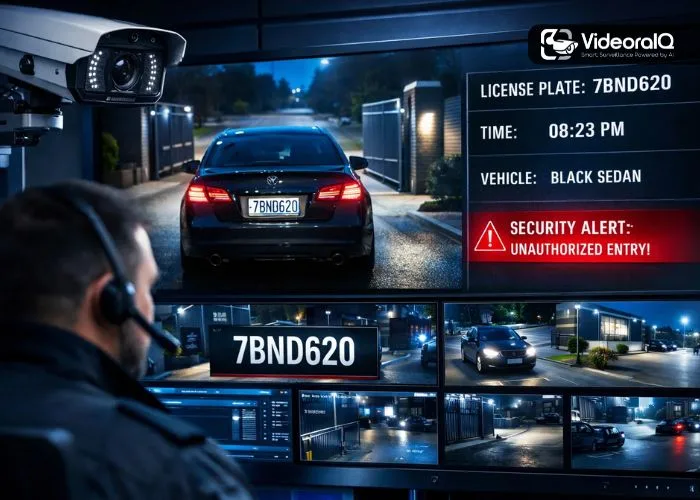
Security threats are evolving every day, and so should your approach to handling them. A license plate reader camera has become one of the most powerful tools for monitoring vehicle access, tracking suspicious activity, and strengthening overall security. Whether you manage a residential community, a commercial property, or a public space, installing a license plate reader camera gives you real-time visibility over every vehicle that enters or exits your premises. It is no longer just a tool for law enforcement; it is a smart security investment for businesses and property owners alike. In this blog, we will explore how this technology works, where it is used, and why it matters.
Listen To The Podcast Now!
What Is a License Plate Reader Camera?
How Does a License Plate Reader Camera Work?
A license plate reader camera works through a combination of high-resolution imaging, infrared lighting, and AI-powered software. Here is a simplified breakdown of the process: When a vehicle enters the camera’s field of view, the system captures a high-quality image of the plate. The OCR software reads the alphanumeric characters and converts them into digital text, which is then matched against a database, flagging vehicles that are stolen, blacklisted, or unauthorized.
The entire process happens within seconds, making a license plate reader camera ideal for high-traffic entry points where manual checks would be impossible. The data is stored for future reference and can be accessed remotely through a cloud-based platform. Modern systems also support integration with other security tools like access barriers, alarms, and surveillance cameras for a fully automated security response.
Key Benefits of Using a License Plate Reader Camera:
Installing a license plate reader camera on your property comes with several clear advantages:
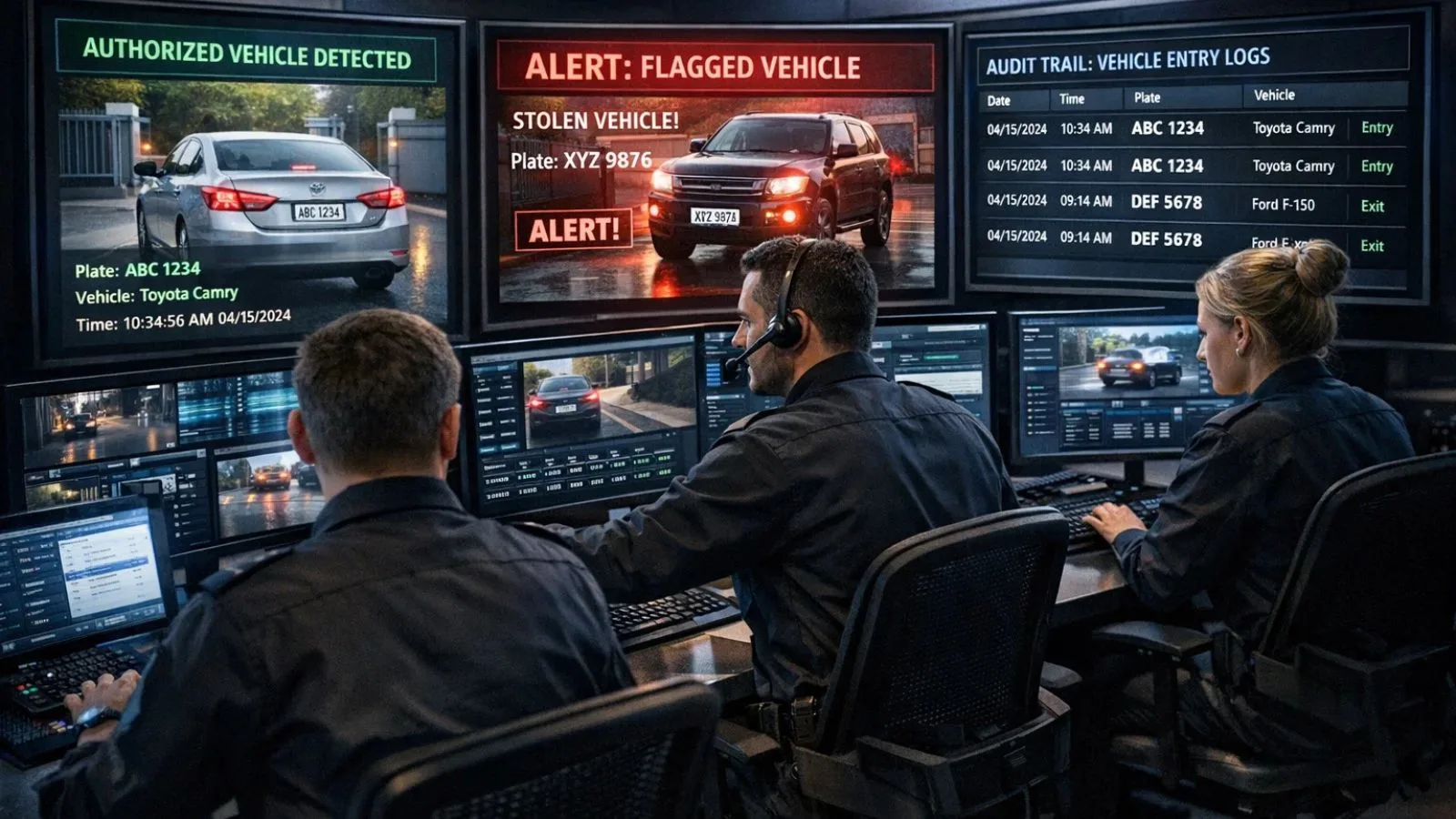
- Enhanced Vehicle Access Control: A license plate reader camera allows only authorized vehicles to enter a secured premises by automatically identifying and verifying plates against an approved list.
- Real-Time Threat Detection: The moment a flagged or blacklisted vehicle is detected, the system triggers an instant alert, allowing security teams to respond before a situation escalates.
- Accurate Record Keeping: Every vehicle entry and exit is logged with a timestamp, providing a reliable audit trail for investigations or compliance requirements.
- Reduced Human Error, Unlike manual security checks, a license plate reader camera operates with high accuracy 24/7 without fatigue or oversight gaps.
- Deterrence Effect: Visible cameras discourage unauthorized vehicles from even attempting access, acting as a proactive crime deterrent.
Common License Plate Reader Camera Locations:
Understanding license plate reader camera locations helps you plan an effective deployment strategy. The most common locations include: Parking lots and garages are among the top license plate reader camera locations, where access control and vehicle tracking are critical for both safety and operations. Gated communities and apartment complexes use them to restrict entry to residents and registered guests only.
Corporate campuses and office parks install them to monitor employee and visitor vehicle access. Retail and shopping centers use them for parking management and theft prevention. Highways and toll plazas rely on LPR systems for automated fee collection and traffic monitoring. Schools and universities place them at entry points to ensure campus security and prevent unauthorized vehicle access. Choosing the right license plate reader camera locations for your property directly impacts how effective your overall security setup will be.
LPR Systems vs. Standard CCTV: What Is the Difference?
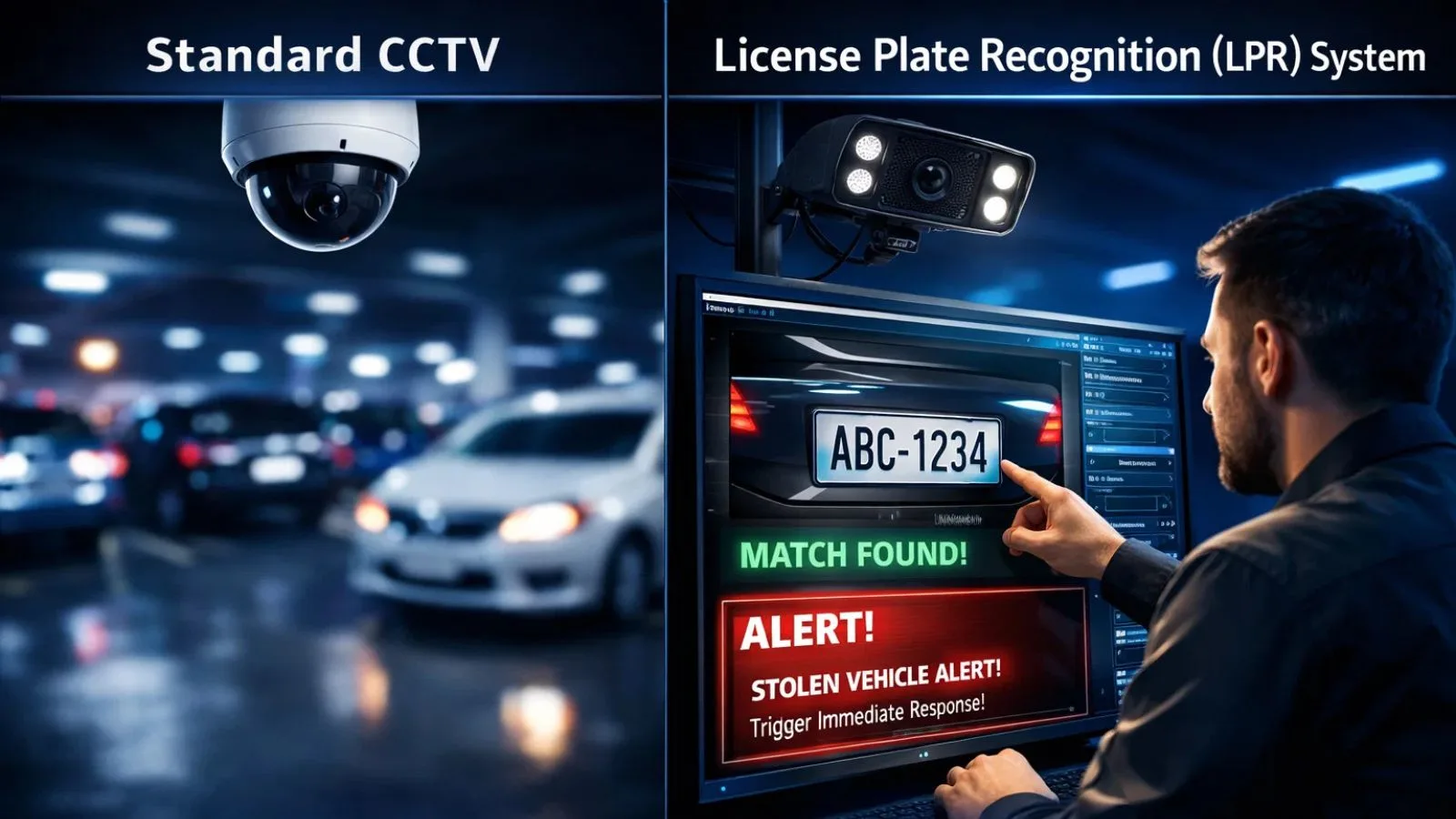
Many people confuse a license plate camera reader with a regular CCTV camera. While both record video, they serve very different purposes. A standard CCTV camera captures general footage of an area. A license plate camera reader, on the other hand, is specifically optimized to read plate numbers clearly, even when vehicles are moving at speed, or the lighting is poor.
LPR systems go a step further by integrating OCR software, real-time database matching, and automated alerts. This means they do not just record; they analyze and respond. Standard CCTV requires human review after the fact, while LPR systems take immediate action based on what they detect. For any property where vehicle access control is a priority, LPR systems are the smarter, more capable choice over traditional surveillance cameras.
Also Read:
How VideoraIQ Takes License Plate Security to the Next Level?
If you are looking for a smarter way to manage vehicle access and security, VideoraIQ is built for exactly that. VideoraIQ is an AI-powered, cloud-based video intelligence platform that transforms traditional cameras into smart, always-on security systems, including advanced Number Plate Detection.
Here is what makes VideoraIQ stand out:
- Automatic Number Plate Recognition: Detects and logs vehicle plates in real time with high accuracy, working seamlessly with your license plate reader camera setup.
- Instant Alerts: Flags unauthorized or suspicious vehicles and sends immediate notifications to your security team.
- Cloud-Based Access: Monitor your camera feeds remotely from anywhere, at any time.
- Seamless Integration: Works alongside face recognition, intrusion detection, object detection, and unauthorized access alerts for a complete security ecosystem.
- End-to-End Encryption: All data and footage are protected with secure storage and role-based access controls.
- Scalable Deployment, Suitable for single locations or multi-site operations across industries.
VideoraIQ serves the corporate, manufacturing, healthcare, education, public safety, and event venue industries, making it one of the most versatile AI surveillance platforms available today.
Conclusion:
A license plate reader camera is no longer an optional uupgradeit is a necessary layer of modern security. From controlling vehicle access to detecting threats in real time, this technology delivers accuracy, speed, and peace of mind that traditional systems simply cannot match. Whether you are securing a small business or a large facility, investing in the right setup can transform how you protect your property. Platforms like VideoraIQ make it even easier by combining AI intelligence with real-time monitoring in one powerful system.
FAQ’s:
Q1. Can this technology work at night?
Ans: Yes. Most modern license plate reader camera systems use infrared lighting to capture clear plate images in low-light or nighttime conditions without any loss of accuracy.
Q2. How far can these cameras read plates?
Ans: Depending on the model, they can typically read plates from 10 to 75 feet away, and some advanced models can go even further.
Q3. Is this technology legal for private use?
Ans: In most regions, yes. Private businesses and residential communities are generally permitted to use plate reader cameras on their own premises, though local regulations should always be reviewed.
Q4. What happens when a flagged plate is detected?
Ans: The system immediately sends an alert to the security team, and depending on the setup, it can also trigger access barriers, alarms, or camera zoom-ins for a rapid response.