


Traffic is becoming a significant problem in almost every municipality.
Roads have become more crowded, travel takes longer than you think, and small incidents quickly become long traffic jams.
Old methods of monitoring traffic, such as manual closed-circuit television (CCTV) checks or field reports, are too slow.
Therefore, many cities are starting to use AI-powered traffic monitoring. These systems monitor roads in real time, spot accidents within seconds, count vehicles, and show where traffic is getting slow. They help teams to solve problems and keep traffic moving.
By 2026, this technology is expected to become much more accurate and affordable.
In this guide, you will learn what AI traffic monitoring is and how it works. And why it is becoming increasingly important for safety and smoother roads.
Don’t have time to read? Listen instead.
What Is Traffic Monitoring?
Traffic monitoring involves observing the activities on the roads. This thing helps you to understand how many vehicles are driving and where traffic is slowing down.
Before these changes, the traffic police used basic CCTV cameras, road sensors, or reports from traffic police. Now the process has become more advanced with AI intelligence integration.
Modern traffic monitoring systems use cameras and software to automatically monitor the roads. They can also.
- Count cars, bikes, buses, and trucks
- Spot accidents or stopped vehicles
- Show where congestion is building
- Track how traffic changes
- And plan better routes and signal timeline
Good traffic monitoring can be best for safe roads and responses when problems happen.
How AI Transforms Modern Traffic Monitoring Systems?
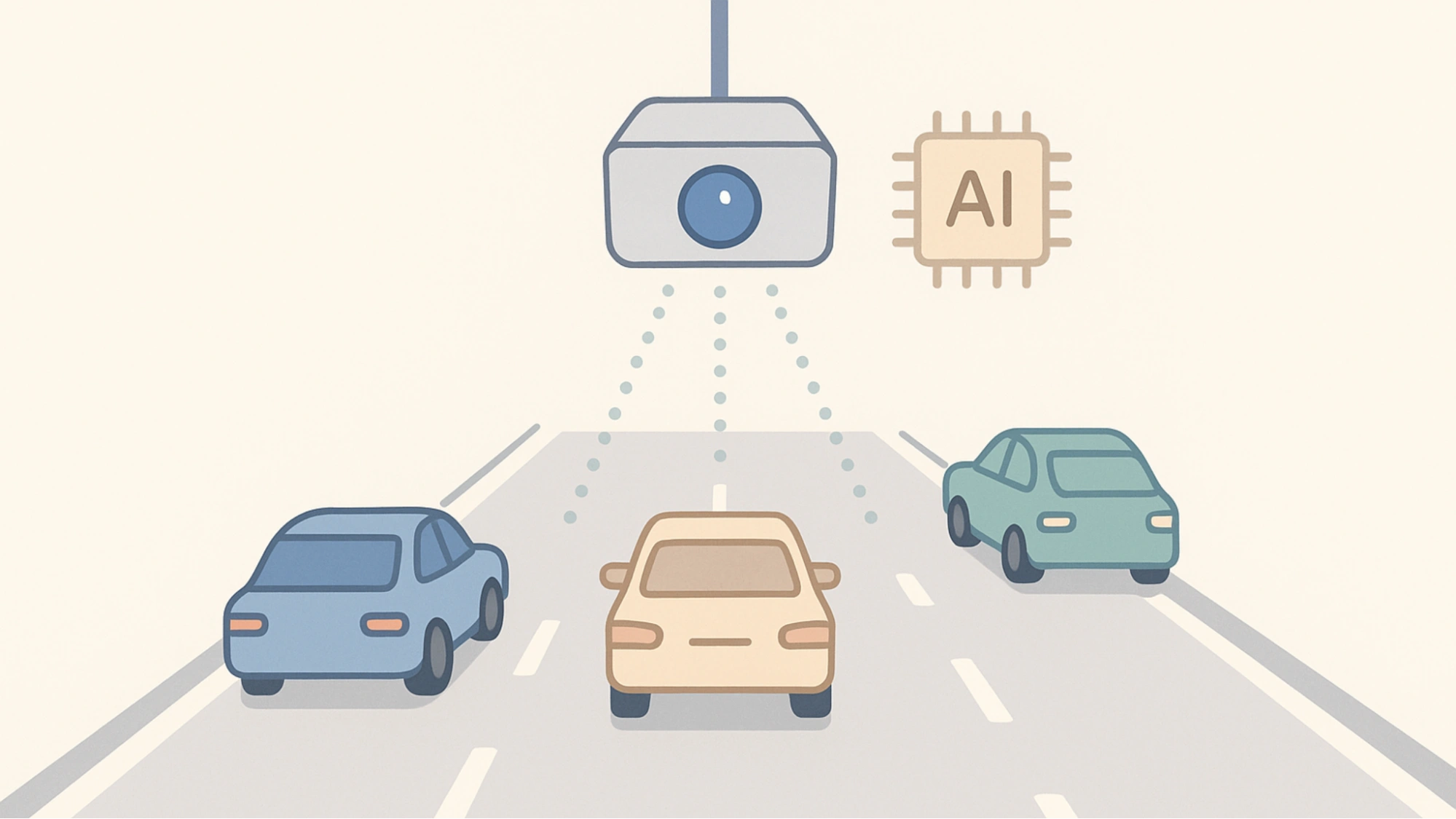
AI has changed the way people use Yo to monitor their traffic. You don’t have to spend more time in front of a screen; this AI automatically looks at the road and understands what is happening in real time.
The following are ways in which AI improves traffic monitoring:
1. Detects vehicles and incidents automatically
AI can analyze live camera footage and instantly recognize cars, bikes, trucks, and pedestrians. It can also detect accidents, wrong-way driving, sudden stops, and vehicles parked in the wrong place.
2. Tracks traffic flow in real time
AI measures everything. It shows how vehicles are driving, where congestion is building, and which lanes are slowing down. This helps Police teams react before a traffic jam.
3. Improves signal timings
With accurate live data, AI can help to adjust traffic signals.
For example, if one side has heavy traffic, the system can provide that side with a longer green light to reduce the waiting time.
4. Reduces human errors
People get tired. AI does not. AI can actively watch every camera 24/7 and never misses any important possibilities.
5. Helps with long-term planning
AI tracks traffic patterns over days, weeks, and months. This thing helps you to plan flyovers, new signals, road expansions, and public transport routes based on real data.
Recommended For You
How To Protect Your Dealership Using AI VMS Software?
Traffic Monitoring Cameras & CCTV Technologies To Know In 2026
Traffic cameras became much more intelligent in 2026.
They do not just record video anymore; many of them can analyze traffic on their own.
And that way, choosing the right type of camera is really important because every road and highway has different needs.
The main types of cameras used for traffic monitoring are as follows:
Standard CCTV Cameras For Traffic
These are regular cameras that are used at intersections.
In 2026, most of them will come with better resolution and night vision, so they can capture clear footage even in low light. When connected to AI software, they can detect vehicles, accidents, and slow-moving traffic.
2. Smart AI Cameras (Edge Cameras)
These cameras are equipped with built-in AI chips. They can:
- Detect vehicles instantly
- Count traffic
- Spot accidents
- Identify unsafe driving
- Because they process data on the camera itself, they reduce the load on networks and send only important alerts.
3. ANPR Cameras (Automatic Number Plate Recognition)
These cameras read the number plates in real time. They help with:
- Traffic rule enforcement
- Toll collection
- Monitoring stolen or suspicious vehicles
- They function even when cars are traveling at super speed.
4. Thermal Cameras
Thermal cameras detect heat rather than light. They are useful in:
- Fog
- Heavy rain
- Night-time monitoring
- They help ensure that the system still works when visibility is poor.
5. Pan-Tilt-Zoom (PTZ) Cameras
These cameras can move, rotate, and zoom in on areas. They are useful for:
- Monitoring large junctions
- Events and peak traffic hours
- Following incidents or unusual movements
What Matters When Choosing Cameras
Before installing cameras, cities usually check the following:
- Resolution: Higher resolution means clearer details
- Night vision: Needed for accurate monitoring after sunset
- Weatherproofing: Important for highways and open areas
- Field of view: The camera should cover the right angle
- Onboard AI: Helpful for real-time detection
Benefits of AI Traffic Monitoring for Cities & Highways
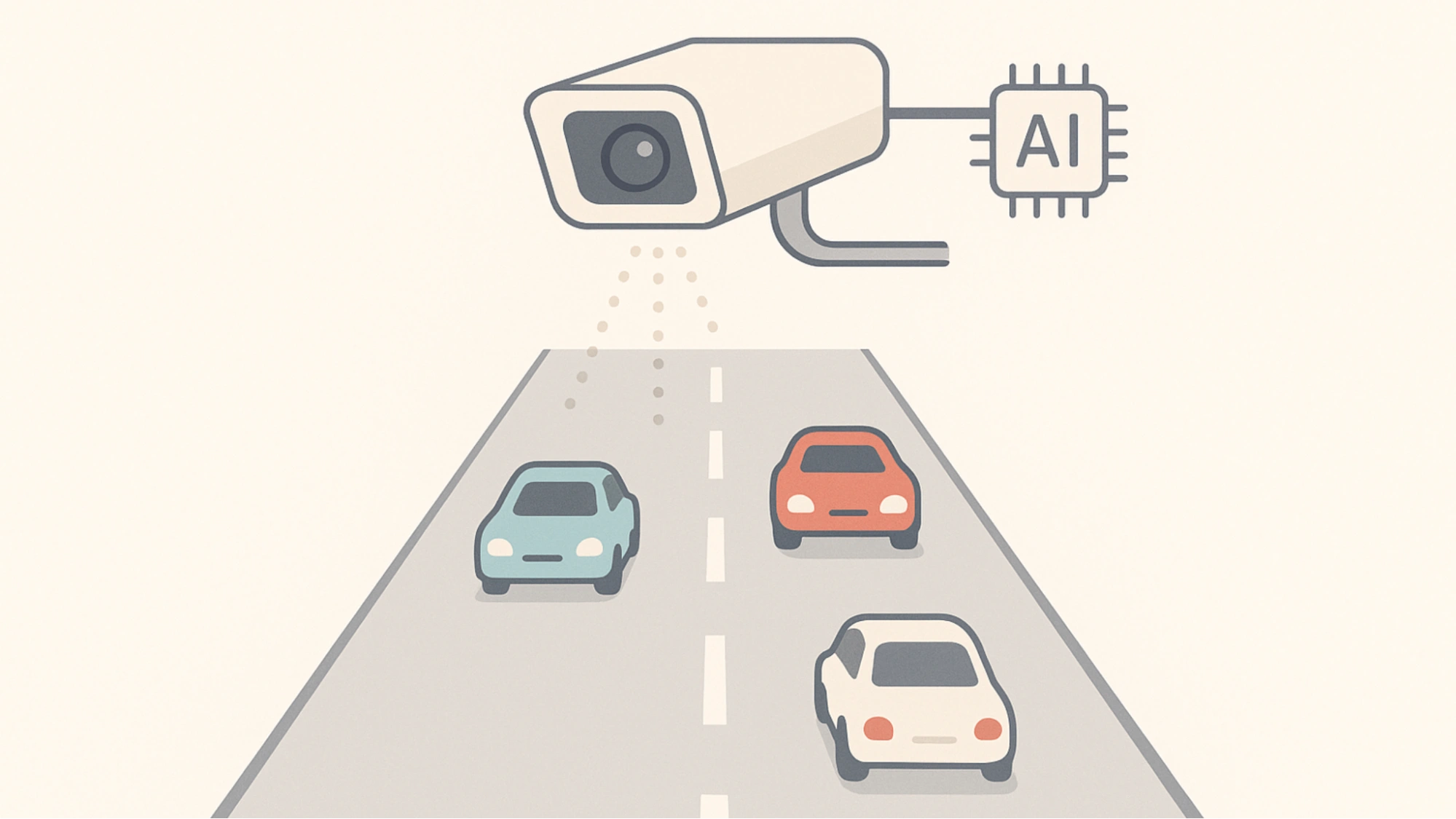
AI traffic monitoring devices offer several practical benefits that make roads safer and traffic smoother. These benefits are not theoretical; cities worldwide are already witnessing real results.
1. Faster Response to Accidents
AI can detect incidents within seconds.
This means:
- Quicker alerts
- Faster dispatch of traffic police or emergency teams
- Less chance of secondary accidents
Even a 2–3-minute response can prevent long traffic jams.
2. Reduced Congestion
Smarter signal timings and early detection of slowdowns help traffic move more smoothly.
Cities that have introduced AI-based signal control have experienced the following:
- Shorter waiting times at junctions
- Smoother peak-hour flow
- Reduced travel time across major corridors
3. Better Road Safety
AI can identify risky situations, such as:
- Speeding
- Wrong-way driving
- Pedestrians crossing unsafely
- Near-miss incidents
This helps authorities take action before accidents occur.
4. More Accurate Traffic Data
AI collects continuous data that shows
- How busy each road is
- When peak hours occur
- Which intersections need upgrades
This helps planners make better decisions and improve infrastructure based on real data.
5. Cost Savings
AI reduces the need for manual monitoring and reduces the cost of handling congestion.
Cities save money on:
- Fuel losses from jams
- Manual enforcement
- Maintenance caused by traffic damage
Systems lead to fewer resource wastages.
6. Improved Public Transport Planning
When the system understands traffic patterns, cities can improve as follows:
- Bus routes
- Timetables
- Lane priority for public transport
This makes commuting easier and reduces the pressure on roads.
7. Better Experience for Drivers
When the traffic moved smoothly:
- Drivers save time
- There is less stress
- Road conditions feel safer and more predictable
This improves the overall quality of life in busy urban areas.
Selecting The Right Traffic Monitoring System (Buyer’s Guide)

Choosing a traffic monitoring system is not just about purchasing cameras. It is about ensuring that the entire setup works smoothly, delivers accurate insights, and is easy for you to manage.
The most important factors to consider when selecting the appropriate solution are as follows.
1. Camera Quality and Types
One of the important things you should support is cameras that offer the following:
- High resolution
- Strong night vision
- ANPR capability (if needed)
- Weatherproof designs for outdoor use
Better camera quality implies better AI accuracy.
2. AI Processing: Edge or Cloud
You can choose between:
- Edge AI cameras, which analyse traffic on the device
- Cloud-based AI, which processes footage on a remote server
Edge AI is suitable for instant alerts.
Cloud AI is suitable for large-scale insights and detailed analytics.
3. Compatibility With Existing Systems
A good platform should work with the following:
- Existing CCTV cameras
- Traffic signals
- Control rooms
- Current software tools
This saves money and avoids the need to replace the entire setup.
4. Simple Dashboards and Real-Time Alerts
Your team should be able to do the following:
- See traffic flow clearly
- Get quick alerts about incidents
- Review patterns and peak hours
- Understand everything without technical training
A clean interface is more important than fancy features.
5. Privacy and Data Protection
Choose systems that support the following:
- Anonymization
- Secure storage
- Access control
- Short data retention
Good privacy practices help build public trust.
6. Reliability and Vendor Support
Look for:
- Strong customer support
- Frequent system updates
- Good uptime
- Long-term maintenance options
Traffic runs 24/7, so the system should too.
The Best Tool for Real-Time AI Detection
VideoraIQ is one of the best software solutions that offers a wide range of AI video analytics tools. These features help cities, businesses, and security teams understand what is happening in real time. The meaning of each feature in simple language is as follows:
Face Recognition: Facial recognition is a system that can identify and match faces in real-time. They are useful for security checkpoints, access control, and monitoring sensitive areas.
Intrusion Detection: It alerts you when someone enters a restricted or protected area. This is helpful for sensitive zones, buildings, or controlled spaces.
Object Detection: Recognizes different kinds of objects, vehicles, bags, equipment, and more. This helps with traffic monitoring and general surveillance.
Unauthorized Access Alerts: It sends an instant notification when someone tries to enter an area that they are not allowed to access.
Fire and Smoke Detection: It detects early signs of fire or smoke directly from camera feeds. This allows for quick action before the situation becomes dangerous.
Line Cross Detection: An alert is triggered when a person or vehicle crosses a virtual line. It is useful for tracking movement, counting entries, or monitoring restricted lanes.
Unattended Baggage Detection: Identifies bags or objects that have been left unattended for too long. This is important for public safety in crowded areas.
Cashier Absence Detection: It notifies the store manager when a cashier leaves the counter unattended. This is useful for retail stores and supermarkets.
Number Plate Detection (ANPR): It automatically reads vehicle number plates. It helps with traffic enforcement, parking management, and vehicle tracking.
Data, Privacy & Compliance In Traffic Surveillance Cameras

Although AI traffic monitoring is powerful, it also handles sensitive information. Therefore, cities and organizations must follow proper data and privacy rules. The goal is simple: to use technology to improve traffic without putting people’s privacy at risk.
1. What Data Is Collected?
Traffic surveillance cameras usually capture
- Vehicle movement
- Number plates (if ANPR is enabled)
- Speed and lane information
- Accidents and road events
- Pedestrian activity at crossings
These data help improve safety and traffic flow; however, they must be handled carefully
2. Why Privacy Matters
People want safer roads, but they also want their personal information protected.
Strong privacy practices build trust and reduce the risk of legal issues.
3. Data Protection Best Practices
A good traffic monitoring system should support the following:
• Anonymization
Faces and number plates can be blurred when they are not required.
Edge devices can mask sensitive details before sending the footage.
• Secure Storage
All data were stored in a protected system with encryption and access controls.
Only authorized teams should be able to view or download the footage.
• Limited Retention
Traffic footage does not need to be permanently stored.
Most cities maintain data on the following:
- A few days for traffic review
- Longer only for accidents or investigations
Shorter retention periods reduce risks and storage costs.
• Clear Access Rules
Different teams (traffic, police, and city staff) should have different permission levels.
This avoids misuse or unnecessary access to the data.
4. Public Transparency
People should know when cameras are used and why.
Clear signboards and public awareness campaigns help citizens understand the following:
- What the system monitors
- How the data improves safety
- How privacy is protected
5. Compliance With Local Laws
Every country has its own rules.
- India: DPDP Act
- EU: GDPR
- US: State-level privacy laws
- Middle East / Asia: City-specific surveillance policies
A responsible traffic system follows these laws and regularly updates its policies.
How To Implement An AI Traffic Monitoring System Step-by-Step
Setting up an AI traffic monitoring system does not have to be complicated. The process becomes easier if a clear, structured plan is followed. Here is a simple step-by-step approach that cities and organizations can use.
1. Identify the Problem and Set Clear Goals
Start by defining what you want to fix.
- Reducing congestion
- Detecting accidents faster
- Improving signal timings
- Monitoring junctions
- Enhancing safety for pedestrians
Clear goals help in choosing the right tools and features.
2. Survey Your Existing Cameras and Infrastructure
Before purchasing anything new, check what you already have.
- CCTV camera locations
- Internet or network availability
- Condition of poles and mounts
- Control room setup
Many cities can upgrade their old cameras using AI instead of replacing them.
3. Choose the Right AI Platform
Select a platform that fits your needs and budget requirements.
A tool such as VideoraIQ is useful because it can turn ordinary CCTV cameras into smart traffic monitoring cameras without the need to install new hardware.
Look for:
- Real-time alerts
- Vehicle and number plate detection
- Traffic flow analytics
- Easy dashboard
- Good vendor support
4. Start With a Small Pilot
Do not go city-wide immediately.
Test the system on:
- 1–2 busy junctions
- A highway stretch
- A congestion-prone corridor
During the pilot, the following measures were taken:
- Accuracy of alerts
- Incident detection time
- Traffic flow improvement
- User experience for operators
This helps you understand what works and what needs to be improved.
5. Train Your Team
Ensure that your operators are aware of the following:
- Use the dashboard
- Respond to alerts
- View recordings
- Monitor daily traffic patterns
A simple 1–2 h training session is usually sufficient.
6. Connect the System With Traffic Signals
Integrate the AI platform with traffic lights to
- Adjust timings automatically
- Reduce waiting time
- Improve peak-hour traffic flow
This step can significantly reduce congestion.
7. Scale Up Gradually
Once the pilot performs well, the system should be expanded.
- Add more cameras
- Cover more intersections
- Include highways and accident-prone zones
- Enable additional features like ANPR or pedestrian analytics
Scaling slowly ensures stability and fewer technical problems.
8. Monitor, Review, and Improve
AI systems improve over time.
Keep track of:
- System accuracy
- Feedback from operators
- New traffic patterns
- Changes in peak hours
- Technology updates
Regular reviews help ensure that the system remains effective.
Conclusion
AI-powered traffic monitoring is becoming a practical solution for the problems cities face every day. With smarter traffic monitoring systems, modern cameras, and advanced traffic vision tools, cities can finally understand what is happening on their roads in real time and take appropriate action.
CCTV for traffic monitoring has evolved beyond basic video analysis methods and now uses advanced video intelligence software.
Modern traffic monitoring cameras can detect incidents, read number plates, study vehicle flow, and highlight safety risks within seconds.
Tools such as VideoraIQ make the process even easier by converting normal CCTV footage into powerful insights without replacing existing hardware.
When combined with strong privacy practices and clear data rules, AI becomes a reliable partner for better city planning and smoother daily travel.
AI-driven traffic surveillance cameras and monitoring platforms will continue to become more accurate, affordable, and widely adopted. Cities that invest in these technologies will build safer roads, smarter infrastructure, and a more efficient traffic environment in the future.
In simple terms, improved traffic monitoring leads to better cities. With AI, this future is finally within reach.
FAQ: AI-Powered Traffic Monitoring
Does AI traffic monitoring work during power cuts or network problems?
Yes. Most modern systems have backup power options, and many AI cameras can continue detecting events locally, even if the network goes down. The alerts are synchronized once the connection is re-established.
Can AI traffic monitoring work with old or low-quality camera systems?
In many cases, yes. Platforms can upgrade normal CCTV footage using AI. However, extremely blurry or outdated cameras may still need to be replaced for reliable results.
How long does it take to set up an AI-based traffic-monitoring system?
A small pilot setup (two to five cameras) can be established in a few days. Full-city deployment takes longer, depending on the number of cameras and integration with traffic signals.
Can AI detect traffic patterns during festivals and special events?
Yes. AI can quickly adjust to unusual traffic conditions and highlight the abnormal patterns. This is useful during celebrations, parades, sports events, and VIP movements.