

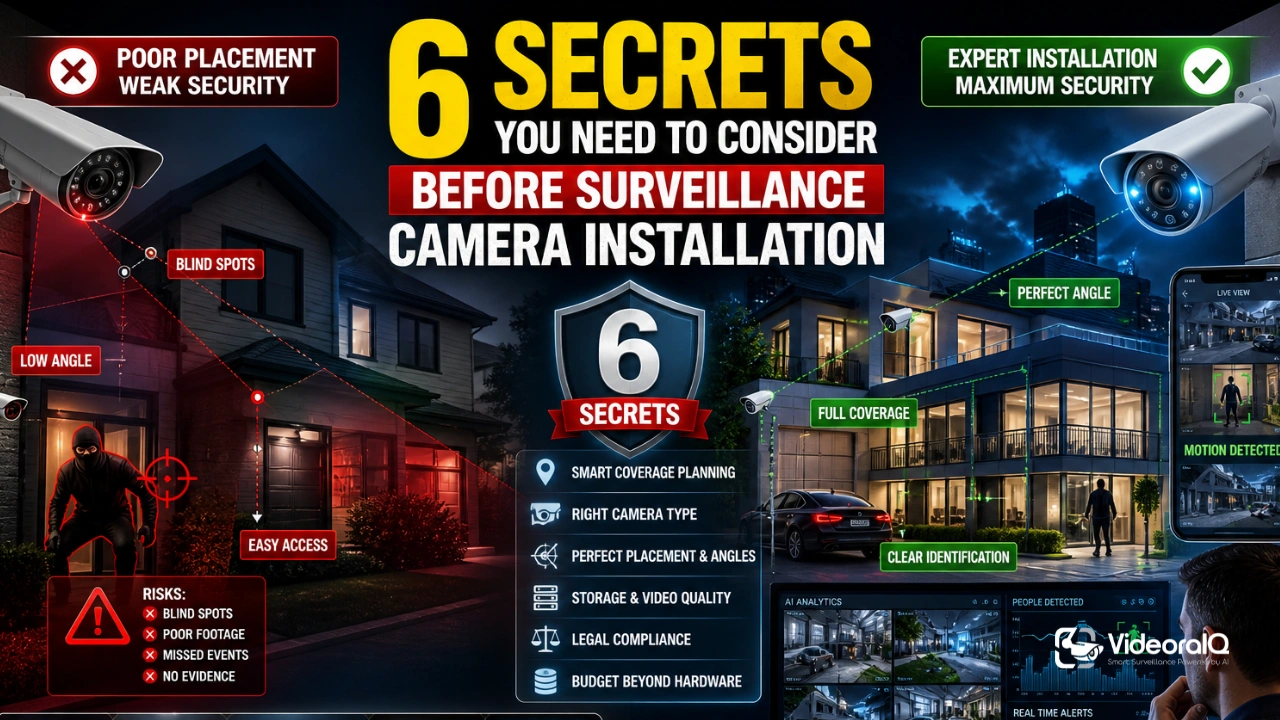
Most security systems fail not because of cheap cameras, but because of poor planning. You could spend thousands on premium equipment and still have critical blind spots. Surveillance camera installation is more than mounting a device on a wall. It requires strategy, knowledge, and the right decisions before a single screw goes in.
Here are the six secrets professionals use to build security systems that actually work.
Listen To The Podcast Now!
Why Most Surveillance Camera Installations Fail Before They Even Start
Homeowners and businesses make the same mistakes over and over. They buy cameras first and plan later. They focus on specs and ignore placement. They overlook legal requirements and budget only for hardware.
The result: a system that looks impressive but fails when it matters most. Smart surveillance camera installation starts with knowledge, not equipment.
Secret 1: Smart Coverage Planning Beats Random Camera Placement
More cameras do not automatically mean better security. Strategic placement does.
Before buying anything, map your property. Identify every entry and exit point. Think like an intruder. Where would someone approach from? Where are the shadows? What areas are hidden from the street?
Effective surveillance camera installation focuses on high-risk zones first:
- Front and back doors, which account for the majority of break-in entry points
- Driveways and garages, where vehicles and valuables are exposed
- Side gates and blind corners hidden from street view
- Indoor hallways, stairways, and main living areas
One key decision: do you want cameras that act as a visible deterrent, or do you prefer discreet monitoring? Visible cameras stop many criminals before they even try. Hidden cameras are better for capturing evidence if someone does enter.
Always create overlapping coverage between cameras. If one camera covers a 90-degree field of view, position the next camera so its coverage begins where the first one ends. Zero blind spots is the goal.
Secret 2: Your Camera Type Directly Impacts Performance
Not every camera works in every situation. The wrong type creates gaps in your system.
Choosing the right camera is a critical part of any successful security camera installation. Here is a simple breakdown:
- Bullet cameras are fixed, pointing in one direction, and ideal for long driveways or straight corridors
- Dome cameras offer a wide field of view and work well in commercial spaces, retail stores, and large rooms
- PTZ cameras (pan, tilt, zoom) can move and track subjects, best for large open areas
- AI-powered cameras use computer vision to detect people, vehicles, and unusual behavior automatically
- Wireless cameras are easy to install and flexible, great for renters or temporary setups
- Wired cameras offer stable connections and continuous power, better for permanent CCTV installation in homes and businesses
For commercial surveillance camera installation, dome and PTZ cameras tend to perform best. For homes, a combination of bullet cameras at entry points and wide-angle dome cameras indoors delivers solid coverage.
Secret 3: Placement Height, Angles, and Lighting Make or Break Your System
Even the best camera captures useless footage if mounted incorrectly.
The industry standard for video surveillance camera installation is a mounting height of 8 to 10 feet. This range prevents tampering while still capturing clear facial features. Mount too low and cameras get disabled easily. Mount too high and you only capture the tops of heads, making identification impossible.
Angle matters just as much as height. Follow these rules:
- Tilt cameras 15 to 30 degrees downward, not straight ahead
- Aim to capture shoulder height and above for clear facial recognition
- Never point cameras directly at the sun or bright light sources
- Avoid pointing cameras through glass doors or windows, since infrared night vision reflects off glass and ruins footage completely
For night coverage, pair cameras with motion-activated lighting. This improves footage quality dramatically and also acts as a psychological deterrent. Color night vision AI security cameras need some ambient light, while infrared cameras work in total darkness but produce black and white footage.
Read More:
AI Security Camera: Everything You Need To Know
Video Surveillance Systems for Business: What You Need to Know
Secret 4: Storage, Resolution, and Connectivity Can Save or Sabotage You
Great footage is worthless if it never saves, or disappears before you need it.
Resolution matters, but only up to a point. Here is what actually makes a difference in surveillance camera installation:
- 1080p (2MP): Acceptable for general monitoring inside a home
- 2K (4MP): Better detail for medium-sized properties and outdoor use
- 4K (8MP): Required if you need to read license plates or identify faces from 30 or more feet away
Higher resolution means larger file sizes, which means more storage space and more bandwidth required. Balance your resolution choice with your internet speed and storage budget.
For storage, you have two main options. Local hard drives give you control and no monthly fees, but they need periodic replacement and are at risk if stolen or damaged. Cloud storage keeps footage safe offsite and accessible from anywhere, but comes with ongoing subscription costs.
For wireless cameras, always test your WiFi signal at the exact camera location before installation. Weak signal causes missed recordings, delayed alerts, and constant disconnections. Use a WiFi extender if needed, or switch to a wired system for those locations.
Videoraiq: Turning Your Cameras Into an Intelligent Security System

Installing cameras is just the beginning. The real power comes from what your system does with that footage.
VideoRaiq transforms ordinary CCTV installation into an intelligent security operation. Whether you manage a single home or multiple commercial properties, VideoRaiq gives you AI-powered monitoring, real-time alerts, and centralized control, so you stop watching hours of footage manually and respond only to what actually matters.
VideoRaiq features include:
- AI intrusion detection and unauthorized access alerts
- Face recognition for identifying known individuals
- Fire and smoke detection
- Number plate recognition for vehicles
- Unattended baggage detection
- Real-time smart alerts across all your cameras
VideoRaiq reduces false alarms, improves response time, and helps you get maximum value from your video surveillance camera installation, without adding complexity. It works alongside both DIY setups and professionally installed systems.
Book a free demo at videoraiq.com
Secret 5: Legal Compliance Can Protect You from Major Headaches
Installing cameras without understanding the legal side can create serious problems, even when your intentions are good.
Privacy laws around CCTV installation vary by region, but some rules apply almost everywhere:
- Always inform domestic workers, regular visitors, and household staff that surveillance cameras are in use
- Never install cameras in private spaces such as bathrooms, changing rooms, or bedrooms
- Outdoor cameras that capture a neighbor’s property or a public road may require permission from local authorities or a housing association
- In residential complexes and apartment buildings, check with your Residents’ Welfare Association before proceeding with surveillance camera installation
- For commercial surveillance camera installation, businesses are often required to display visible notices informing people that CCTV is in operation
Ignoring these rules can result in fines, legal action, or being forced to remove your entire system. A quick check before installation saves significant trouble later.
Secret 6: Budgeting Beyond Hardware Prevents Expensive Surprises
The camera price tag is just the starting point. Many buyers forget the costs that add up fast.
A realistic budget for security camera installation includes more than equipment. Here is what to plan for:
- Installation labor: Professional installation costs more upfront but reduces errors, especially for wired systems with hidden cable runs
- Storage subscriptions: Cloud plans are often monthly or annual and vary by the number of cameras and footage retention period
- Maintenance: Lens cleaning, firmware updates, bracket checks, and battery replacements for wireless cameras
- Upgrades: Technology evolves quickly, so budget for periodic camera upgrades to stay current
- Repairs and replacements: Outdoor cameras face weather, vandalism, and wear, so set aside a small fund for unexpected costs
DIY installation works well for one to three wireless cameras in simple layouts. Once you move to four or more cameras, wired systems, multi-story properties, or commercial spaces, professional installation pays for itself in reliability and coverage quality.
7 Common Mistakes That Instantly Weaken Your Security
Avoid these errors during your video surveillance camera installation to protect your investment from day one:
- Weak WiFi placement: Cameras in dead zones disconnect constantly and miss critical events
- Poor motion detection settings: Default settings trigger hundreds of false alerts from passing cars and small animals
- Glass reflections: Pointing cameras through windows destroys night vision completely
- Ignoring obstructions: Trees, bushes, and decorations block camera views and trigger false motion alerts
- Wrong angles: Steep downward angles only capture the tops of heads, making identification impossible
- No lighting strategy: Cameras without proper lighting produce unusable dark footage at night
- No maintenance plan: Dirty lenses, dead batteries, and outdated firmware silently degrade your system over time
Conclusion: Smart Surveillance Starts Before You Install a Single Camera
The difference between a security system that works and one that fails usually has nothing to do with the price of the cameras. It comes down to planning: knowing where to place cameras, what type to use, how high to mount them, and how to manage the footage.
Use these six secrets to avoid the mistakes most homeowners and businesses make. Plan your coverage carefully, choose the right camera for each location, respect the legal requirements, and budget for the real total cost of your system.
The right surveillance camera installation does not just record what happens. It stops incidents before they start. Start with strategy, invest where it counts, and let the right technology do the rest.
FAQs: Surveillance Camera Installation Questions Everyone Asks
How many surveillance cameras do I need for my home?
Most homes need four to six cameras minimum for solid coverage. Focus on the front door, back entrance, driveway, garage, and main indoor areas. Larger properties or multi-floor homes will need more. The key is zero blind spots at every entry and exit point.
Is professional surveillance camera installation worth the cost?
Yes, especially for wired systems, multi-camera setups, or commercial properties. Professionals ensure optimal placement, correct angles, hidden cable management, and full system testing. The upfront cost is worth it when you consider the expense of redoing a poorly installed system.
What is the best height for mounting security cameras?
8 to 10 feet is the recommended mounting height for most security camera installation scenarios. This height keeps cameras out of easy reach while still capturing clear facial features. For areas requiring higher placement, increase the downward angle to compensate.
Should I choose wired or wireless cameras for my CCTV installation?
Wireless cameras are ideal for renters, small homes, and flexible setups where drilling is not practical. Wired systems are better for permanent installations, large properties, and commercial use because they offer continuous power, stable connections, and better long-term reliability.
How can VideoRaiq improve my surveillance camera installation?
Videoraiq adds AI-powered intelligence on top of your existing or new camera system. It detects intrusions, recognizes faces, identifies vehicles, and sends real-time alerts so you respond only to genuine threats. For both home and commercial surveillance camera installation, Videoraiq turns passive cameras into an active, intelligent security system.