

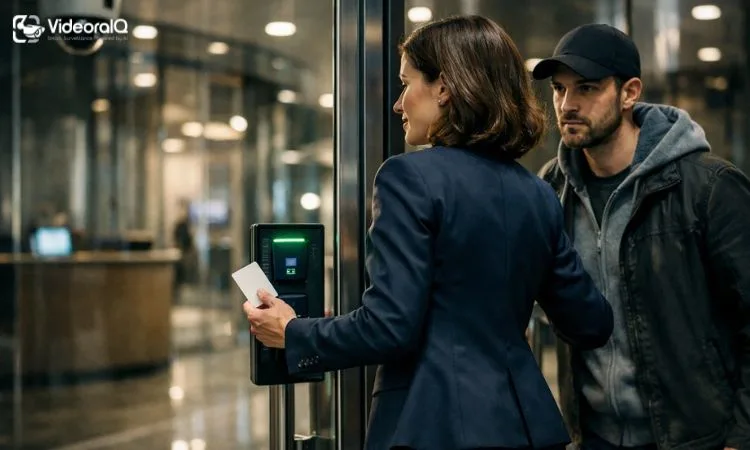
Picture this: an employee swipes their access card, the door clicks open, and someone casually walks in right behind them. No hacking. No force. No alarms. Just a simple moment of courtesy, and suddenly, your security is compromised.
That’s exactly how a tailgating attack happens.
While many organizations focus heavily on firewalls, passwords, and cybersecurity tools, physical access vulnerabilities often get overlooked. A tailgating attack doesn’t rely on complex technology. It relies on human behavior- politeness, distraction, urgency, or even fear of confrontation.
And it’s not limited to office buildings. From corporate headquarters and data centers to hospitals, warehouses, and even digital systems, unauthorized access through social engineering is becoming more common than most businesses realize.
you can listen to this blog here
What Is a Tailgating Attack?
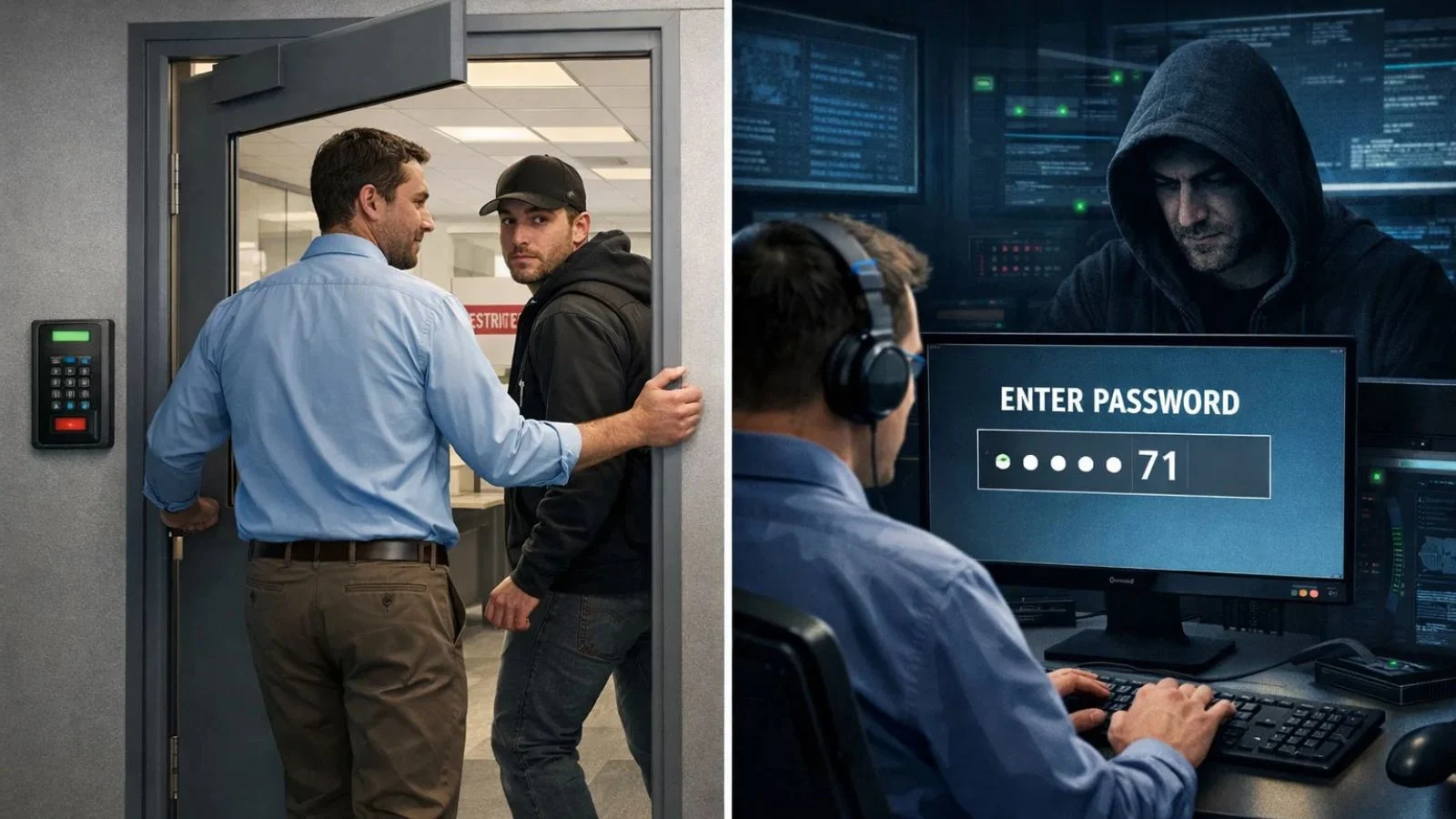
So, what is a tailgating attack exactly?
A tailgating attack is a security breach where an unauthorized person gains access to a restricted area by following someone who has legitimate access. Instead of hacking into a system, the attacker simply “rides along” behind an authorized individual, often without raising suspicion.
It’s one of the simplest yet most overlooked forms of social engineering.
Here’s how it usually works:
- An employee badges into a secure office.
- Someone behind them asks to be let in — or just walks in closely behind.
- The employee, trying to be polite, holds the door open.
- The unauthorized individual now has access.
No technical exploit. No forced entry. Just human psychology.
Tailgating as Social Engineering
A tailgating attack succeeds because it exploits natural human tendencies:
- Politeness (“Let me hold the door for you. ”)
- Authority bias (someone dressed like IT staff)
- Urgency (“I forgot my badge; can you help me?”)
- Avoiding confrontation
In many cases, the authorized person doesn’t even realize they’ve violated security protocol.
Physical vs Digital Tailgating
Although tailgating is often associated with physical buildings, it can also happen digitally.
In physical security:
- An intruder enters a restricted office, data center, or storage room.
In cybersecurity:
- An attacker may access a system by watching someone enter their password.
- Or use shared credentials to log in without authorization.
- This is sometimes referred to as cyber tailgating.
In both scenarios, the core idea is the same — unauthorized access gained by closely following someone who already has permission.
Tailgating vs Piggybacking
You might also hear the term “piggybacking attack” used interchangeably. While they’re similar, there’s a subtle difference, which we’ll explore in detail later in this guide.
For now, remember:
A tailgating attack is less about technology and more about exploiting people.
How a Tailgating Attack Happens (Step by Step)
A tailgating attack usually follows a simple pattern. It doesn’t require advanced tools — just opportunity and human behavior.
The Attacker Waits
They identify a building or system with restricted access and observe how employees enter. Weak enforcement of access control tailgating rules makes things easier.
They Exploit Politeness
The attacker may pretend to be:
- A delivery person
- A contractor
- An employee who “forgot their badge.”
Most people don’t question someone who looks legitimate.
Access Controls Are Bypassed
Instead of using a badge or credentials, the attacker simply follows closely behind an authorized person. The system is never triggered because only one valid entry is recorded.
Unauthorized Access Is Gained
Once inside, they can:
- Access restricted rooms
- Connect devices to internal networks
- View sensitive information
- Move unnoticed
In digital cases, cyber tailgating can involve watching passwords being entered or using shared logins.
Tailgating Attack Examples (Real-World Scenarios)
A tailgating attack might sound minor — until you see how easily it happens in real life.
Here are a few common scenarios.
1. The “Polite Door Hold”
An employee badges into a secure office. Someone behind them smiles and says, “Thanks!” The employee holds the door open.
The visitor doesn’t have a badge. No one questions it. That’s one of the most common tailgating attack examples, and it happens daily in corporate buildings.
The Delivery Disguise
An attacker carries boxes and waits near the entrance. When someone unlocks the door, they step in, pretending to struggle with the load.
Employees assume they’re legitimate and allow access without verification.
3. The Fake IT Support
Someone claims to be from IT and says they need urgent access to fix a system issue. Staff members, not wanting to delay operations, let them in.
Once inside, sensitive systems become vulnerable.
4. Digital or Cyber Tailgating
Not all incidents are physical.
In cyber tailgating, someone:
- Watches a coworker type their password
- Uses a shared workstation left unlocked
- Logs in with borrowed credentials
No forced hacking is required — just opportunity.
Tailgating vs Piggybacking Attack: What’s the Difference?
The terms are often used interchangeably, but there’s a subtle difference between a tailgating attack and a piggybacking attack.
Here’s the simple breakdown:
Tailgating Attack
In a tailgating attack, the unauthorized person enters without the knowledge or consent of the authorized individual.
Example:
An employee badges in, and someone quietly slips in behind them without being noticed.
The authorized person may not even realize it happened.
Piggybacking Attack
In a piggybacking attack, the authorized person knowingly allows someone to enter, even if they shouldn’t.
Example:
A visitor says, “I forgot my badge,” and the employee intentionally lets them in.
The employee is aware, but they choose convenience or politeness over policy.
Why Both Are Dangerous
Whether intentional or not, both situations:
- Bypass security protocols
- Undermine access control systems
- Create serious compliance risks
- Exposes organizations to theft or data breaches
From a security perspective, the outcome is the same — unauthorized access.
That’s why modern tailgating security strategies focus not just on technology, but also on behavior and awareness.
Why Tailgating Attacks Are So Dangerous
At first glance, a tailgating attack may seem harmless, just someone slipping through a door. But the consequences can be serious.
1. Data Theft
Once inside, an attacker can access:
- Confidential documents
- Internal systems
- Customer records
- Financial data
Even a few minutes of unauthorized access can lead to major data breaches.
2. Network Compromise
In secure facilities, attackers may plug devices into internal networks, install malware, or plant spyware, turning a physical breach into a cybersecurity incident.
3. Physical Theft or Sabotage
Equipment, prototypes, and sensitive hardware can be stolen. In high-security environments, sabotage is also a risk.
4. Compliance & Legal Risks
Industries like healthcare, finance, and government must meet strict compliance standards. A single tailgating attack can result in:
- Regulatory fines
- Legal liability
- Reputation damage
5. Invisible Insider Threats
The most dangerous part? Many incidents go unnoticed.
Because access logs show a valid entry, the breach may not be detected until long after the damage is done.
That’s why preventing a tailgating attack requires more than just locked doors — it requires awareness, enforcement, and smarter monitoring.
Common Weak Points in Access Control Systems
Even organizations with badge scanners and surveillance cameras can fall victim to a tailgating attack. Why? Because technology alone isn’t enough.
Here are the most common weak spots.
1. Over-Polite Workplace Culture
Employees feel uncomfortable questioning others. Holding doors open becomes a habit — even in restricted areas.
Without strict access control, tailgating policies, and courtesy overrides, security.
2. Weak Badge Enforcement
If staff don’t visibly wear ID badges or security doesn’t challenge unknown individuals, unauthorized access becomes easier.
3. Poor Visitor Management
No proper sign-in system. No temporary badges. No escort requirements.
This creates easy entry points.
4. Passive Surveillance
Cameras record incidents but don’t actively alert teams in real time. By the time footage is reviewed, the damage is done.
5. Shared Credentials & Unlocked Systems
On the digital side, weak password policies and shared logins enable cyber tailgating without anyone physically entering a space.
How to Prevent a Tailgating Attack
Preventing a tailgating attack isn’t about making workplaces unfriendly; it’s about building a security-first culture supported by smart systems.
Here’s what works.
Train Employees to Challenge Politely
Awareness is your first defense.
Employees should:
- Never hold doors open in restricted areas
- Politely ask to see badges
- Report suspicious behavior
Simple scripts like “Security policy requires individual badge access” make enforcement easier and less awkward.
Strengthen Access Control Policies
Clear rules reduce ambiguity.
- Enforce “one badge, one entry.”
- Require visible ID badges
- Use visitor registration systems
- Escort guests at all times
Strong enforcement minimizes access control tailgating risks.
Upgrade Surveillance with Real-Time Monitoring
Traditional cameras only record. Modern systems can:
- Detect multiple entries on one badge swipe
- Identify unusual movement patterns
- Send instant alerts
Active monitoring dramatically improves tailgating security.
Secure Digital Access
For cyber tailgating, implement:
- Multi-factor authentication (MFA)
- Automatic screen locks
- Zero-trust policies
- Login monitoring
Unauthorized access shouldn’t be possible — even if someone is physically inside.
Combine Human Awareness + Smart Technology
Policies without enforcement fail.
Technology without culture fails.
The strongest protection against a tailgating attack combines:
- Trained employees
- Strict procedures
- AI-powered monitoring tools
Speaking of smart monitoring, let’s look at how AI-driven video intelligence is changing the way organizations detect and prevent unauthorized access.
How VideoraIQ Helps Prevent Tailgating Attacks
Modern threats require modern solutions. Preventing a tailgating attack today isn’t just about installing more cameras; it’s about making those cameras intelligent.
That’s where VideoraIQ.com comes in.
VideoraIQ is an AI-powered video analytics platform designed to transform standard surveillance into smart, real-time security monitoring.
Here’s how it strengthens tailgating security:
AI-Powered Behavior Detection
VideoraIQ can analyze movement patterns and detect unusual entry behavior, such as multiple individuals entering on a single access event.
Real-Time Alerts
Instead of reviewing footage after an incident, security teams receive instant notifications when suspicious activity is detected.
Anomaly Recognition
The system learns normal traffic patterns and flags deviations, helping identify potential access control tailgating incidents early.
Cloud-Based Monitoring
Security managers can monitor multiple locations from a centralized dashboard, making it ideal for offices, campuses, warehouses, and enterprise facilities.
Actionable Insights & Reporting
Detailed analytics help organizations identify weak access points and improve policies before a tailgating attack occurs.
The biggest advantage? VideoraIQ doesn’t replace your existing cameras — it enhances them with intelligent analysis.
In a world where unauthorized access can happen in seconds, smart monitoring makes the difference between prevention and damage control.
Conclusion
A tailgating attack may seem simple, but its impact can be serious, from data breaches and physical theft to compliance violations and reputational damage.
The truth is, most incidents don’t happen because security systems are missing. They happen because human behavior is predictable.
Politeness. Distraction. Assumptions.
That’s why effective prevention requires a layered approach:
- Clear access control policies
- Employee awareness training
- Strong digital authentication
- AI-powered video monitoring
When organizations combine human vigilance with intelligent technology, tailgating risks drop significantly.
Security isn’t about distrust — it’s about accountability.
And in today’s environment, being proactive isn’t optional. It’s essential.
Also Read,
What Is Video Intelligence Software? Epic Benefits, Features & Uses
FAQs
What is a tailgating attack in cybersecurity?
A tailgating attack in cybersecurity refers to unauthorized access gained by exploiting human behavior rather than technical vulnerabilities. While it often involves physical entry into restricted areas, it can also include digital scenarios, such as watching someone enter login credentials or using shared accounts without permission. This is sometimes called cyber tailgating.
Is tailgating the same as a piggybacking attack?
Not exactly. A piggybacking attack happens when an authorized person knowingly allows someone without proper credentials to enter a restricted area. In a tailgating attack, the authorized individual may not realize they’ve allowed access. Both bypass security controls and create serious risks.
What are common tailgating attack examples?
Common tailgating attack examples include:
- Holding the door open for someone without a badge
- Letting a “delivery person” into a secure office
- Allowing someone who forgot their ID to enter
- Using shared login credentials in a workplace
These scenarios often appear harmless but can lead to major security breaches.