

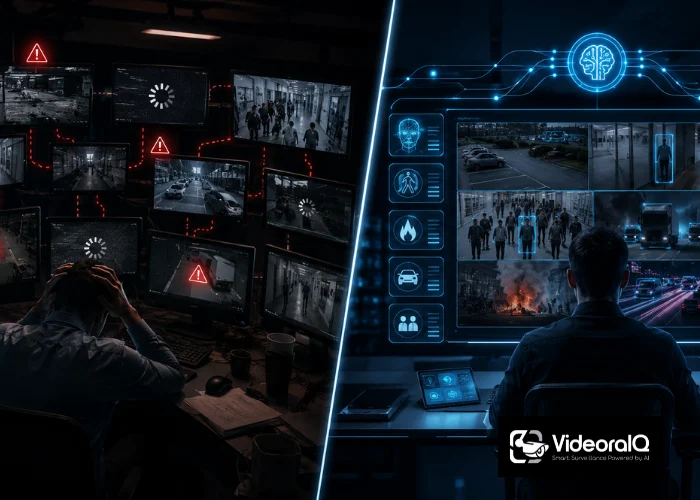
Most enterprise security purchases I’ve reviewed share a quiet, expensive mistake. The buyer procured a best-of-breed face recognition system, then separately procured a best-of-breed ANPR system. Now they’re running two parallel AI stacks on the same camera network; nobody planned it that way. A pilot here, an urgent requirement there, and suddenly the security director is managing two vendor contracts, two model-training cycles, two audit trails, and two alert pipelines that don’t talk to each other.
This is the split-stack trap, and it costs far more than the extra licensing fees.
Listen to the podcast!
Why Two AI Systems Are Worse Than One, Operationally
The obvious cost is duplicated effort. But the deeper cost is policy drift. When face recognition and number plate recognition run on separate platforms, their watchlists, alert thresholds, and evidence-export formats evolve independently. A vehicle blacklist updated in one system doesn’t automatically cross-reference the face watchlist in the other. A person who is both on a face watchlist and driving a flagged vehicle generates two separate alerts routed through two separate pipelines and neither alert carries the full picture.
Running a split stack doubles your training overhead, your vendor audit surface, and your failure points. It also creates a specific compliance problem: under GDPR and HIPAA, you must demonstrate consistent data-handling policy across every system that processes biometric data. Two stacks means two policies to keep aligned and regulators don’t accept “the systems weren’t integrated” as a defense when one of them is mis-configured.
The False-Positive Tax Nobody Budgets For
Here’s the number that actually gets security directors fired: the false positive rate.
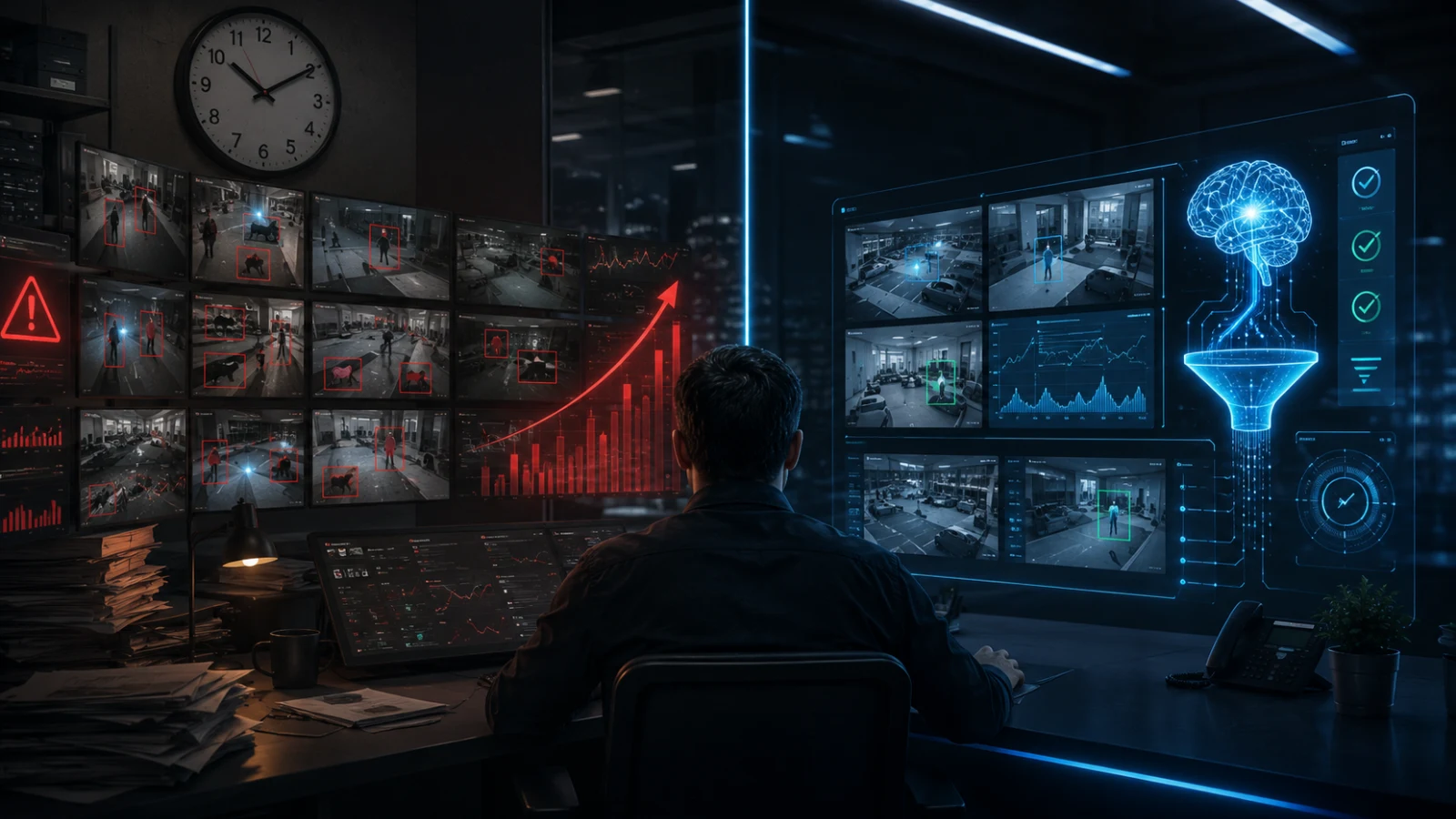
A false positive in AI video analytics isn’t just a nuisance. In a dense environment, a manufacturing floor, a transit hub, a corporate campus at shift change, a false positive rate even slightly above tolerance drains response teams. Guards chase phantom alerts. Dispatch software fills with noise. Over time, the team starts ignoring alerts entirely, which defeats the purpose of the whole system. This failure mode never appears in vendor demos because vendor demos don’t run at 2 AM on a 150-camera deployment with faces in motion and vehicles at odd angles.
As our own research notes, traditional perimeter alarm systems generate false alerts from stray animals and non-threat movement, producing “alarm fatigue” that erodes team response quality over time. Two split stacks compound this problem: each system generates its own alert stream, and operators must triage across both. The cognitive load alone erodes the speed advantage that AI is supposed to deliver.
Read more!
What Is AI Video Analytics? A Complete Guide For Businesses
How AI Video Analytics Detects Fire And Intrusions?
What a Unified Platform Actually Changes
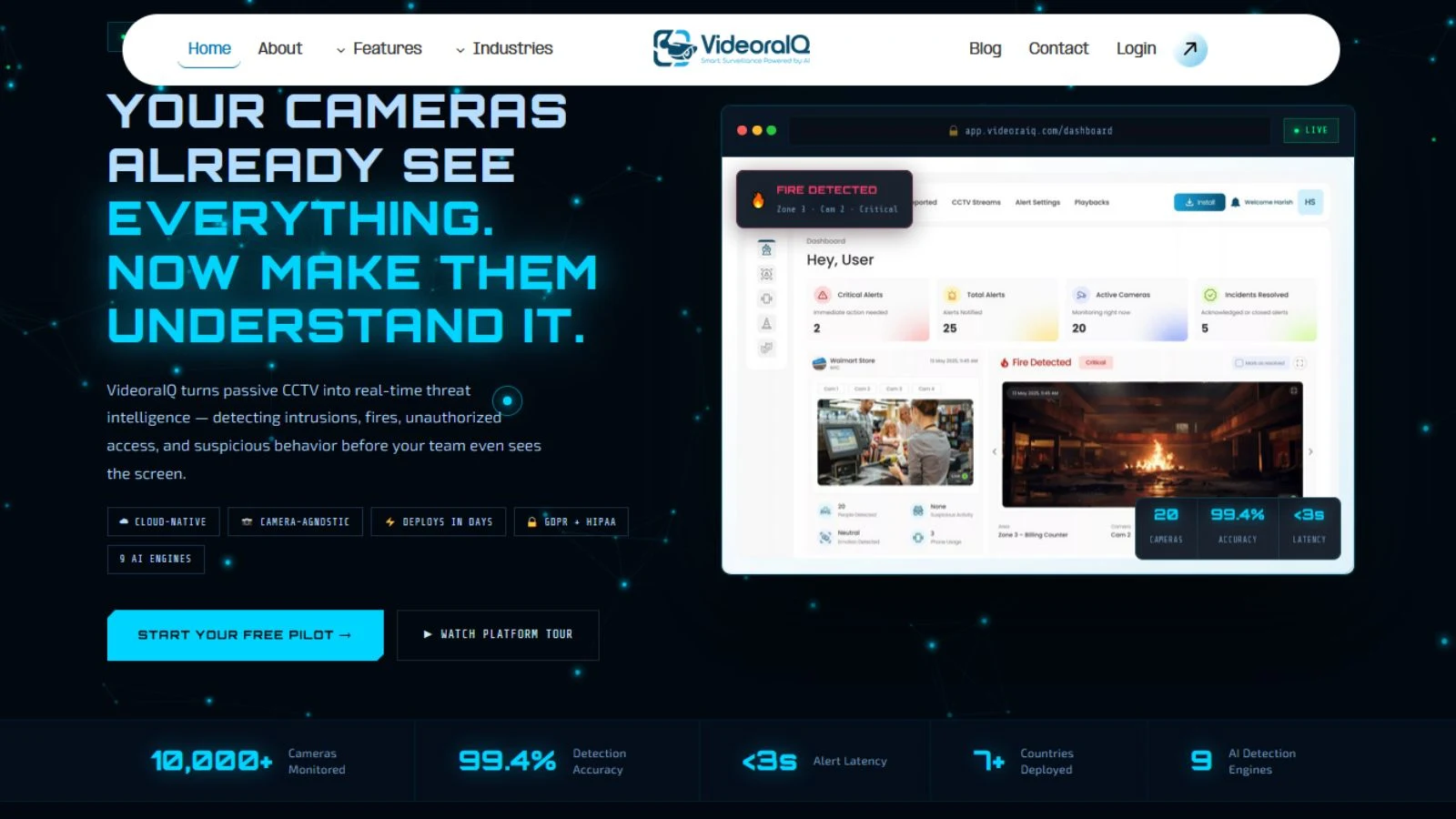
VideoraIQ was built as a single AI platform, not a bolt-together of separate products. One engine runs face recognition, number plate recognition, intrusion detection, fire and smoke detection, line-crossing detection, and unauthorised access monitoring. That architectural decision has concrete operational consequences.
Watchlist management is one. The workflow for face watchlists and vehicle blacklists shares a single governance layer: one approval workflow, one audit log, one compliance posture. No drift between two independently managed systems.
Alert distribution is another. A detected threat face match, plate match, or zone breach generates a single payload: video clip, location tag, and timestamp, delivered in under three seconds from detection to dispatch-ready alert. Radios, email, and incident management tools all from one pipeline. A split system can’t promise that, because the two alert pipelines don’t share a clock.
→ See how VideoraIQ’s unified detection pipeline works in practice
The Camera Fleet Question That Kills Retrofit Budgets
Every split-stack evaluation eventually hits the camera question. Some competitors require proprietary cameras existing third-party camera fleets cannot be reused, which drives up Year 1 cost on retrofit projects substantially. At 150+ cameras, the per-camera hardware replacement cost alone can dwarf the software licensing difference between vendors.
VideoraIQ works across existing camera infrastructure monitoring over 10,000 cameras across 7+ countries without requiring a proprietary hardware fleet. If your site already has cameras, you don’t rip them out. That single fact often closes the retrofit budget argument before it opens.
The AI layer adds intelligence on top of existing infrastructure, not instead of it.
Fire and Smoke: The Detection Gap Nobody Talks About
While most buyers focus on face and plate, the split-stack trap extends to safety detection too. Many sites run a separate fire-detection vendor alongside their video analytics vendor. VideoraIQ’s Fire & Smoke Detection module does something traditional heat sensors cannot: it uses visual AI to identify fire and smoke 40–60 seconds before a traditional heat sensor triggers. In a manufacturing environment, that margin is the difference between a contained incident and a line shutdown.
As our fire detection research explains, traditional fire alarms respond only after smoke reaches a sensor meaning fire has already spread before detection. Safety teams using VideoraIQ receive a live feed notification the moment the AI detects smoke or flame visually. One platform. One alert channel. No separate fire-detection vendor to audit.
The Accuracy Floor That Makes Any of This Work
None of the above matters if the underlying detection engine is unreliable. The AI video analytics market is expanding fast. Grand View Research puts it at $15.15 billion in 2025, growing to $71.3 billion by 2033 at a 21.4% CAGR, which means a lot of vendors are entering the space with varying levels of real-world accuracy.
VideoraIQ’s detection accuracy reaches 99.4%. That is the number that matters at scale. Validate it in your own environment across your specific lighting conditions, camera angles, and use-case scenarios before relying on any platform-level figure. Accuracy in controlled demos often degrades in live deployments. At a detection rate that holds near that threshold in real conditions, the false-positive tax shrinks to something response teams can actually absorb. Below it, you’re back to the problem where operators start muting alerts.
Evidence Export: The Compliance Detail That Breaks Post-Incident
One more place where split stacks fail: evidence. When an incident goes to internal or legal, you need clips that carry timestamps, camera IDs, and operator notes in consistent formats. A face recognition system that exports one format and an ANPR system that exports another force your security team to reconstruct a coherent incident timeline manually. That’s slow, error-prone, and inadmissible in some jurisdictions.
A unified platform exports a single evidence package per incident, with consistent metadata across every detection type. For enterprise deployments, that’s not a nice-to-have; it’s what legal teams and compliance officers actually require.
Before You Buy: Three Questions to Ask Any Vendor
- Does your platform share a single watchlist and alert pipeline across face recognition, ANPR, and zone detection, or are those separate systems under one brand? Vendors who repackaged acquisitions often can’t answer this clearly.
- What is your false positive rate in dense, moving crowds, not in a controlled demo environment? Ask for a reference site at similar scale.
- Can your system ingest our existing camera fleet without proprietary hardware requirements? If the answer involves hardware lock-in, price the replacement fleet before comparing licensing costs.
The U.S. AI video analytics segment alone is projected to grow from $2.23 billion in 2025 to $16.79 billion by 2035. There is no shortage of vendors entering that market. The split-stack trap persists not because buyers are unsophisticated it persists because vendors make it easy to add a second system without surfacing the downstream cost. Now you know where to look.
For a deeper look at how AI video analytics processes every camera frame in real time to deliver alerts, dashboards, and reports, our published research covers the full technical workflow from video capture through ML model inference to dispatch.
If you’re ready to stop managing two stacks and start getting alerts that actually mean something, start your free VideoraIQ trial and see unified video intelligence in your own environment.