


Three percent sounds harmless. It isn’t. On a 200-camera enterprise deployment, a platform running at 97% accuracy generates hundreds of false alerts every single day. Security operations teams slowly stop responding to their own systems because of it. That’s not a software problem. That’s a broken deployment.
Yet “accuracy” is still the number one factor most buyers consider when evaluating video analytics vendors. They ask for a headline figure, hear something in the mid-to-upper 90s, and move on to pricing. The vendors who know this are happy to oblige.
So before you shortlist anyone, do the math first.
Listen to the Podcast!
The False-Positive Calculation Nobody Does in the Demo
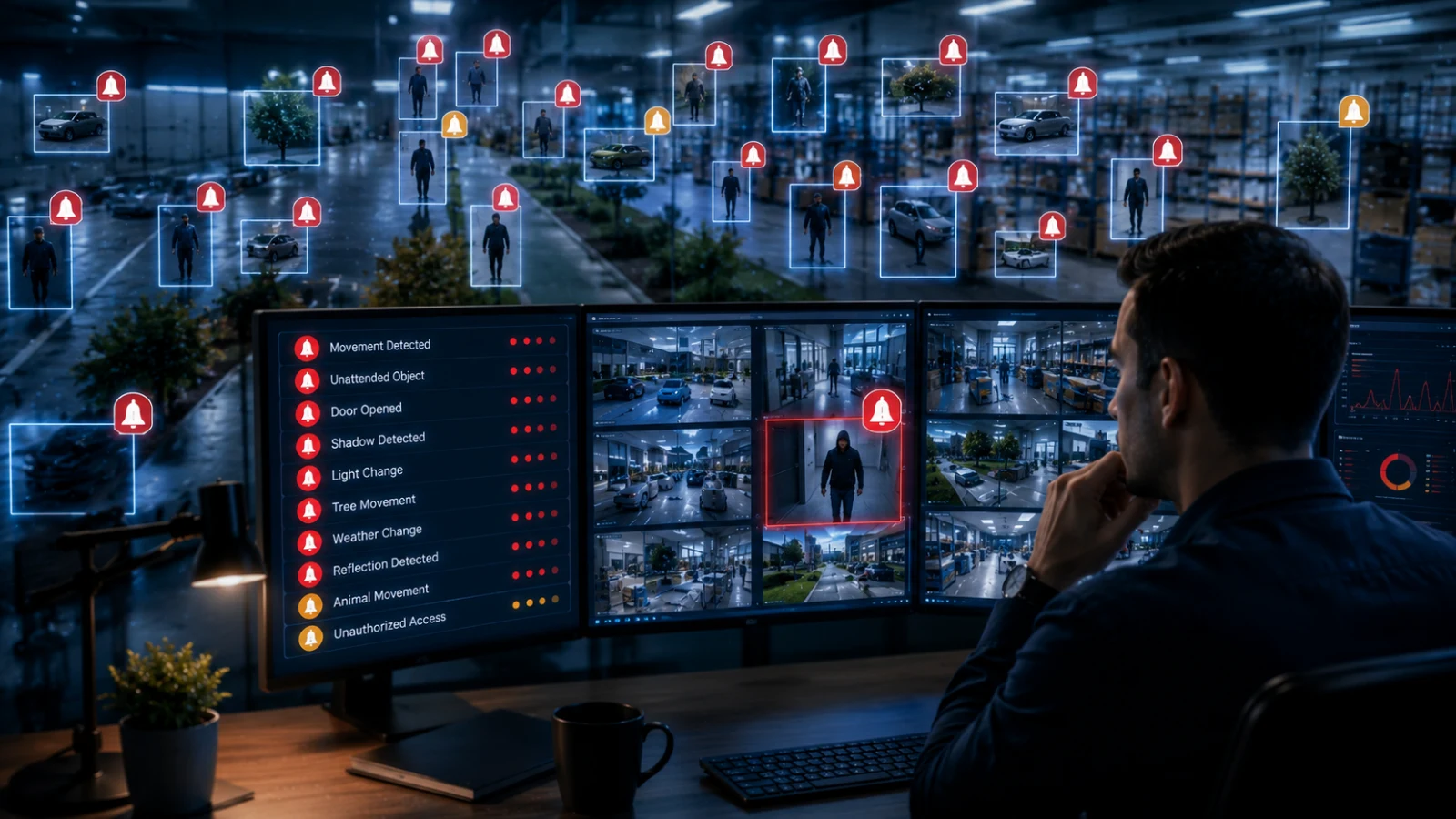
Take a modest corporate campus: 200 cameras running mixed detection types across a shift face matches, line-cross triggers, number-plate reads, intrusion alerts. As our 2026 face recognition and ANPR guide documents, accuracy below 99% on a deployment of that scale, pushing thousands of events, produces hundreds of false pings daily. Those aren’t edge cases tucked into late-night low-traffic windows. They arrive throughout the shift, mixed in with real events, indistinguishable until a guard physically reviews the clip.
The guard team doesn’t get smarter; they get numb. Alert fatigue is the technical term. “Nobody checks those anymore,” is what it sounds like on the floor.
There’s a secondary cost that’s harder to measure: the real event that gets missed during the false-positive flood. A genuine watchlist hit buried under a wave of noise alerts isn’t a system failure, it’s a staffing failure caused by a system failure. Good luck explaining that distinction after the incident review.
Why Vendors Get Away With Quoting 95–97%
Partly because buyers don’t push back and partly because the figure is technically true under lab conditions, on clean frontal-face images, on controlled datasets. Real-world deployments are not lab conditions. Cameras are mounted at angles. Lighting shifts. Crowds occlude. The gap between benchmark accuracy and operational accuracy is where expensive platforms quietly underperform.
The other reason is that accuracy is rarely tested at volume during a proof-of-concept. A week-long pilot on a quiet site will not surface the flood of daily false positives that a live operational environment produces. Run the numbers yourself and ask the vendor to guarantee them contractually not just cite them in a slide deck.
The Accuracy Floor That Actually Matters
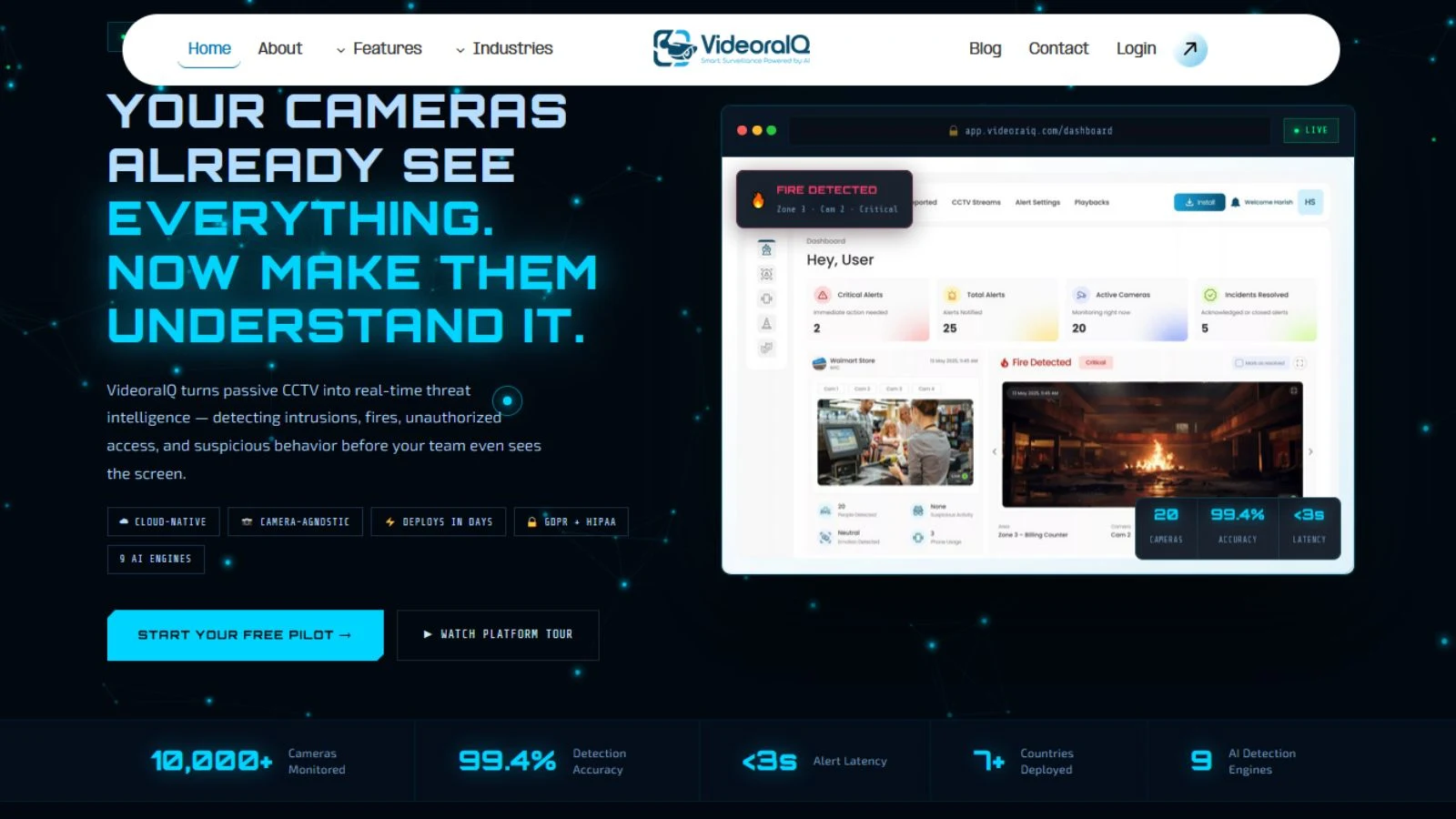
The threshold worth holding out for is 99% or above and not on a hand-picked test set. VideoraIQ publishes a 99.4% detection accuracy figure across its deployed estate, which currently spans more than 10,000 cameras across enterprise, banking, telecom, and healthcare environments in 7+ countries. That’s not a lab number. It’s an operational one, drawn from live deployments at scale.
The practical difference between 97% and 99.4% isn’t dramatic on paper. Run it through a real deployment’s daily event volume, and you move from hundreds of false alerts per day to a fraction of that – the difference between a guard team that trusts the system and one that treats it as background noise they’ve learnt to filter manually.
Accuracy Is Half the Problem; Latency Is the Other Half
A high-accuracy platform that fires alerts 15 seconds after a gate breach is still operationally useless. A 15-second alert delay at a gate means a suspect vehicle is already inside; this is documented, not hypothetical. The physics of vehicle movement makes it a fact.
The benchmark that matters for live gate response is sub-five seconds. The gold standard, as identified in our 2026 deployment guide, is under three seconds. VideoraIQ’s alert latency sits under three seconds across face recognition hits, ANPR blacklist matches, and intrusion zone breaches. That figure matters because accuracy and latency compound: a platform that’s accurate but slow is reliable after the fact. You want reliability in time to act.
The Split-Stack Problem That Multiplies Both Errors
Many enterprise sites inherit a fragmented architecture: one vendor for face recognition, a separate system for ANPR, and possibly a third for intrusion detection. Each fires its own alert on its own timeline with its own threshold. A vehicle enters a restricted zone and triggers both a plate-read alert and a line-cross alert, but the timestamps don’t match and the event IDs don’t correlate. A guard now has two pings, two clips, and no automated way to know they describe the same incident.
The manual correlation cost is real. So is the accuracy degradation: each system is tuned independently, calibrated on its own training data, and subject to its own false-positive rate. Two engines, each running below 99%, don’t average their noise; they stack it.
Running multiple detection types through a single unified engine resolves this. VideoraIQ runs nine AI detection engines on the same camera feeds, including face recognition, ANPR, line-crossing detection, intrusion detection, Unauthorized Access monitoring, and Fire & smoke detection. One camera feed. One event record. One alert with a correlated clip, location tag, and timestamp. The guard sees a single, actionable notification, not two systems arguing about the same incident.
What to Actually Ask in a Vendor Evaluation
Most RFP processes ask for the headline accuracy number and move on. A sharper set of questions will surface real operational performance:
- What is your false-positive rate on a 200+ camera deployment running mixed detection types in a live operational environment? Ask for a reference site, not a test set.
- What is your median alert latency from detection event to guard notification, not average, median? Averages hide the tail. A system that’s fast 90% of the time and slow 10% of the time fails at the worst moments.
- How do face recognition and ANPR alerts correlate when they fire on the same event? Single event record or two separate pings?
- Does the platform require proprietary cameras, or does it work with existing infrastructure? Vendors who require hardware replacement dramatically inflate Year 1 cost on retrofit projects and lock you into their roadmap on hardware refresh cycles. VideoraIQ works with 200+ IP camera brands and requires no server replacement.
- What compliance frameworks are supported natively? Biometric and watchlist data touch GDPR, HIPAA, CCPA, and BIPA depending on jurisdiction. Confirm which frameworks any competitor certifies against before handling watchlist data.
Read More!
AI Video Analytics: Cut CCTV False Alarms 90% (2026)
AI Video Analytics: Why Bundled VMS Modules Fail
The 85% Problem Beneath All of This
One more figure worth keeping in mind: 85% of CCTV footage is never reviewed. That’s not a VideoraIQ-specific observation; it reflects the structural reality of security operations everywhere. Human review doesn’t scale. The entire value proposition of video analytics is converting unreviewed footage into actionable events. A system that floods operators with false positives doesn’t solve that problem. It makes it worse: operators have less incentive to check alerts, and genuine events get buried alongside the noise.
Accuracy, then, isn’t a technical vanity metric. It’s the mechanism by which video analytics earns operator trust. Without that trust, you have expensive software and people who’ve learned to ignore it.
The Right Order of Evaluation
Start with accuracy not the headline number, but the false-positive rate at your expected event volume. Then stress-test latency. Then ask how the platform handles correlated alerts across detection types. Pricing comes after. A cheaper platform generating hundreds of false alerts per day costs more in guard time, missed events, and eroded trust than a more expensive one that doesn’t.
For a practical comparison of how detection accuracy and alert latency stack up across platforms on face recognition and ANPR specifically, the 2026 face recognition and license plate reading comparison is worth reading before you finalize your shortlist.
The math isn’t complicated. Three percent feels small until it’s your team’s attention it’s consuming.
Start your free VideoraIQ trial and see what 99.4% accuracy and sub-three-second alert latency looks like on your own camera infrastructure.