

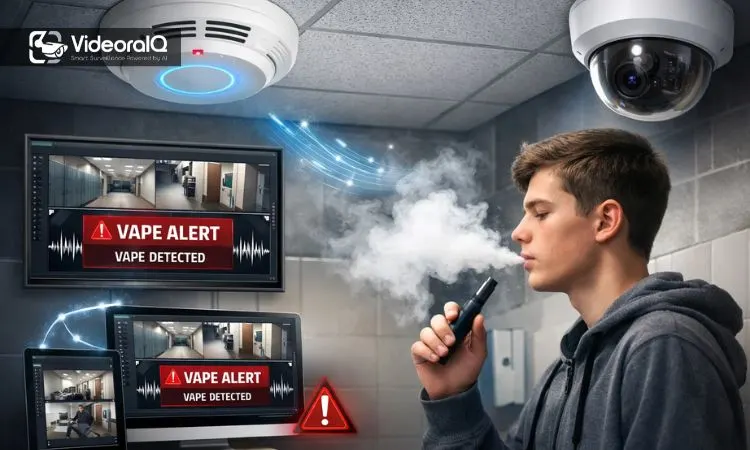
Vaping has become a challenge to monitor in controlled spaces, primarily because vape devices produce little odor and no visible smoke, unlike traditional cigarettes. This makes it difficult for standard safety systems to detect when someone is vaping.
This is where a vape detector becomes crucial. Vape detectors are designed to identify the presence of vapor in the air, providing a more effective solution for monitoring and maintaining safety.
As vaping continues to grow in popularity, these detectors are becoming increasingly important, especially in 2026, with AI-powered systems like VideoraIQ offering advanced, real-time detection capabilities.
Listen To The Blog Post!
What Is a Vape Detector? (Understanding the Basics)
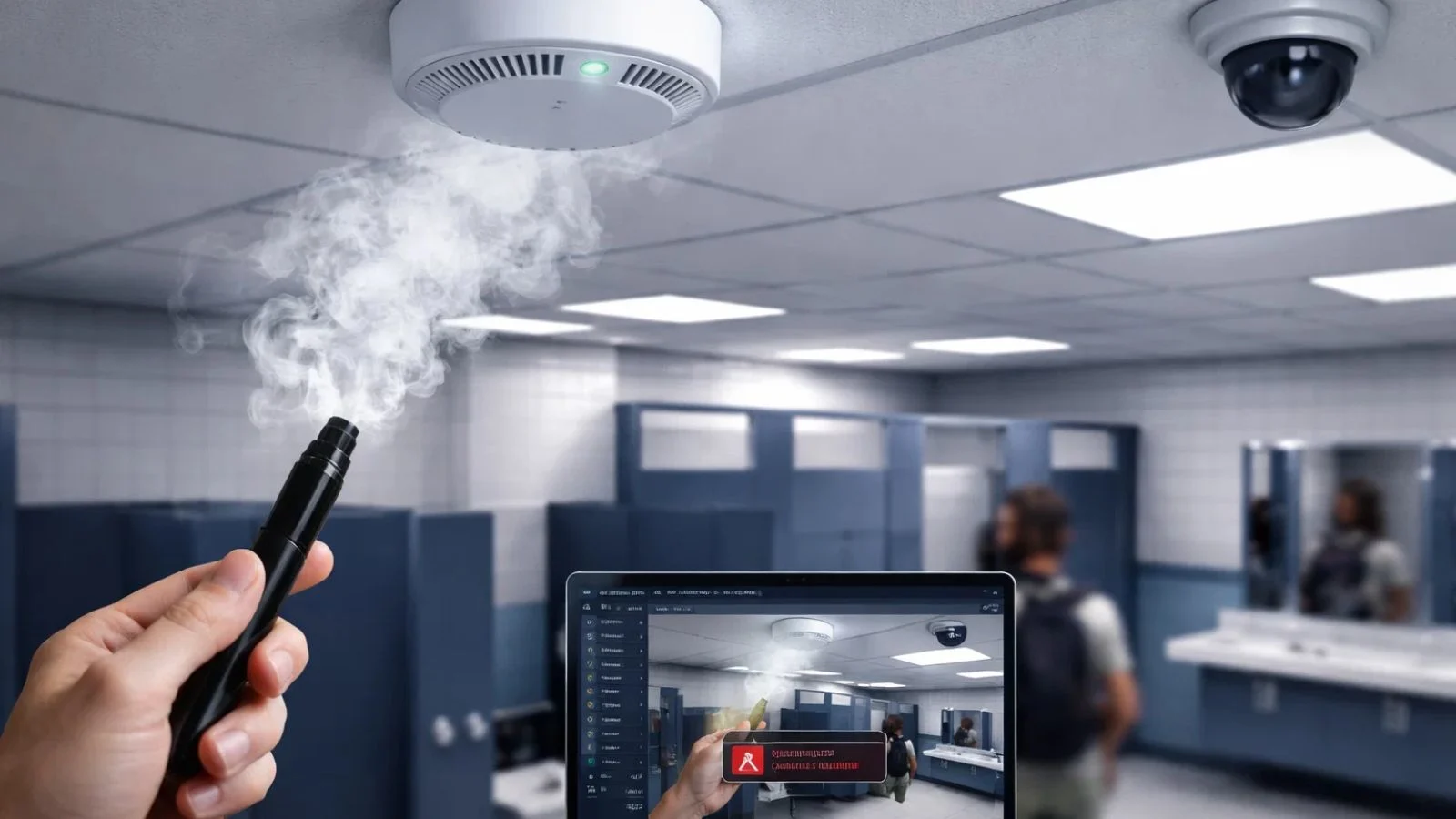
A vape detector is a smart indoor sensor designed to recognize vaping activity even when it’s barely visible to the human eye. Unlike traditional smoke detectors that react to thick smoke or heat from fire, vape detection systems focus on the subtle signs vaping leaves behind.
When someone uses an e-cigarette, it doesn’t create smoke through combustion. Instead, it releases a fine aerosol mist. This mist contains tiny airborne particles, chemical compounds, and moisture that linger briefly before fading. While it may look harmless or disappear quickly, it still alters the air in measurable ways.
Modern vape detectors are built to sense those small changes, including:
- Ultra-fine aerosol particles released by e-cigarettes
- Volatile Organic Compounds (VOCs) present in the vapor
- Sudden humidity spikes from concentrated vapor clouds
- In some advanced systems, traces linked to nicotine or THC
Because vaping doesn’t produce thick smoke or high heat, standard fire alarms often don’t react at all. That’s why traditional detectors miss it.
Why Vape Detection Is a Growing Concern
Vaping is no longer something confined to private homes or discreet outdoor areas. In 2026, it has become a growing operational and compliance concern across schools, workplaces, healthcare facilities, and hospitality environments. In schools, students often use e-cigarettes in restrooms and locker rooms where supervision is minimal.
In corporate offices, vaping can violate workplace policies, affect indoor air quality, and create discomfort for other employees.
Hospitals face even greater risks, as vulnerable patients require clean air environments, and any form of vapor exposure can raise safety and liability concerns.
Hotels and public venues must also manage vaping carefully to maintain fire safety standards and meet indoor air regulations.
At the same time, regulations around indoor air quality and nicotine use in public spaces are becoming stricter. Organizations that fail to address vaping incidents may face legal liability, compliance penalties, health and safety violations, and reputational damage.
The challenge is that vaping produces very little visible evidence and dissipates quickly, making it difficult to detect through routine supervision alone. This enforcement gap is precisely why many institutions are turning to a vape detector system to proactively monitor indoor spaces and respond before small incidents turn into larger problems.
How Does a Vape Detector Work? (The Technology Behind It)
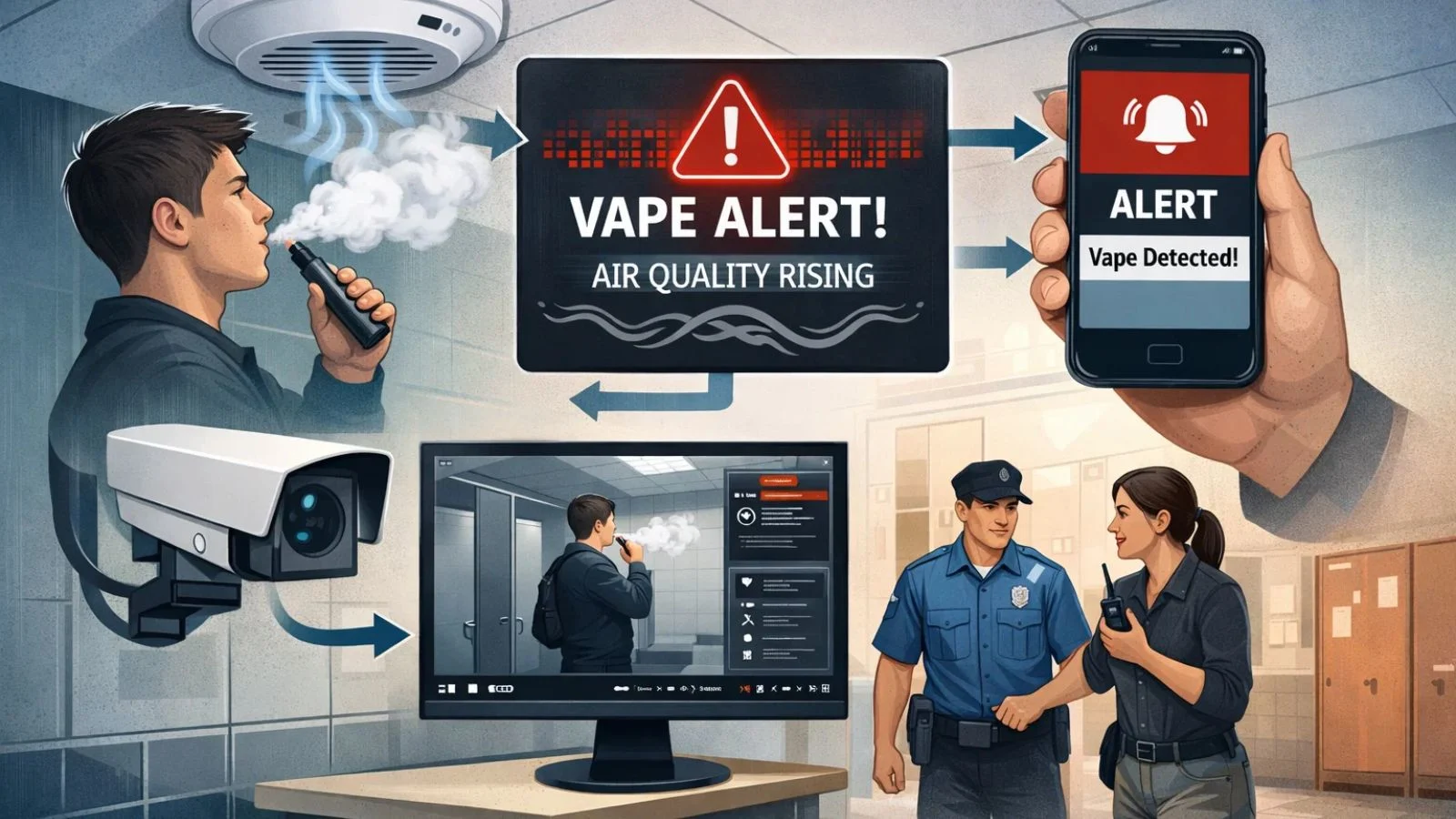
This is where the technology behind a vape detector truly stands out. Modern systems don’t rely on a single trigger. Instead, they combine multiple sensing technologies to accurately identify vaping events while minimizing false alarms.
1. Particle Detection
When someone vapes, the device releases ultra-fine aerosol particles into the air. These particles are much smaller than traditional smoke and disappear quickly. It uses highly sensitive particulate sensors to monitor changes in air composition.
If the concentration of microscopic particles suddenly rises beyond a calibrated threshold, the system flags it as a potential vaping event. Because vape aerosol behaves differently from fire smoke, these sensors are tuned to detect subtle and short-lived particle spikes.
2. VOC (Volatile Organic Compound) Detection
E-cigarette liquids typically contain substances such as propylene glycol, vegetable glycerin, flavoring agents, and nicotine. When heated, these compounds release distinct volatile organic compounds (VOCs) into the air.
Advanced detectors continuously monitor background air quality and look for abnormal VOC spikes that match vapor signatures. By comparing real-time readings with baseline environmental levels, the system can differentiate normal air fluctuations from vaping-related chemical changes.
3. Environmental Monitoring
To improve accuracy, many systems also track environmental factors like humidity, temperature, and air pressure. For example, a sudden, localized rise in humidity in a restroom, combined with an increase in fine particles, can significantly strengthen the confidence level of a vaping detection.
This multi-layered sensing approach reduces the chances of false alerts caused by harmless activities such as steam from hand dryers or cleaning sprays.
4. Smart Alert Systems
Detection alone is not enough; response time matters. Once vaping activity is confirmed, the system immediately sends alerts to administrators or security personnel. Notifications can be delivered through dashboards, email, or mobile apps.
Most systems also log incident data automatically, helping organizations maintain compliance records and review patterns over time.
The ultimate goal of a vape detector is simple: provide fast, reliable awareness while filtering out noise, so decision-makers can act with confidence.
Types of Vape Detectors Available Today
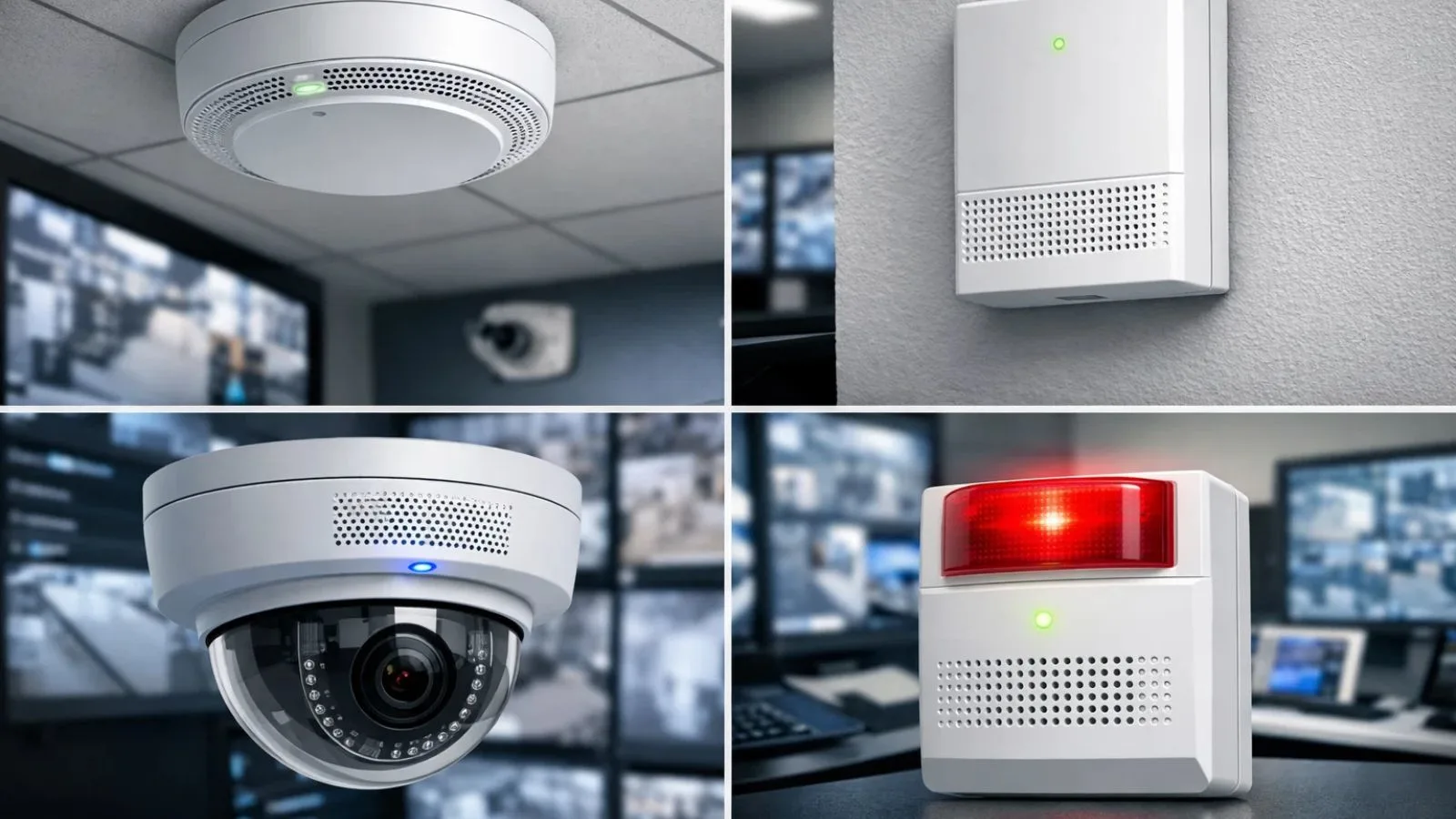
As organizations begin evaluating a vape detector solution, they generally come across two primary approaches. Each serves the same purpose, but the way they operate and scale is very different.
A. Standalone Hardware Sensors
These are physical, wall-mounted devices typically installed in restrooms, hallways, stairwells, or other enclosed areas where vaping is likely to occur. They continuously monitor the air for particles, chemical compounds, and environmental changes.
Advantages:
Standalone systems offer direct air monitoring and can trigger immediate alerts when vapor is detected. They are relatively straightforward to deploy in smaller facilities and do not rely on camera infrastructure.
Limitations:
However, each device covers only a limited area. Larger buildings require multiple units to achieve meaningful coverage, which increases hardware, installation, and maintenance costs. Additionally, while these systems can detect the presence of vapor, they do not provide behavioral context or visual confirmation of who was involved.
In a large school campus or multi-floor corporate building, achieving full coverage may require dozens of devices, making scaling more complex and expensive over time.
B. AI-Powered, Camera-Integrated Solutions
This is where detection technology evolves beyond traditional sensing.
Instead of installing new hardware in every potential hotspot, AI-powered platforms leverage existing CCTV infrastructure to identify vaping behavior visually. Rather than monitoring air composition alone, these systems analyze real-time video feeds to detect behavioral patterns associated with vaping.
One example is VideoraIQ, an AI video intelligence platform that transforms standard surveillance cameras into intelligent video monitoring systems. Instead of only identifying vapor particles, AI analyzes:
- Repeated hand-to-mouth gestures
- Small vapor cloud formations
- Suspicious group clustering behavior
- Loitering in restricted or unsupervised areas
Because most facilities already have cameras in place, this approach significantly reduces the need for additional physical hardware. It also expands coverage to every area monitored by cameras, making it easier to scale across large campuses or multi-building operations.
At this stage of evaluation, decision-makers often reconsider what a modern vape detector should look like.
Why install dozens of standalone sensors if existing cameras can be upgraded with intelligence?
That question naturally shifts the conversation toward AI-based detection solutions.
Where Should Vape Detectors Be Installed? (Ideal Use Cases)
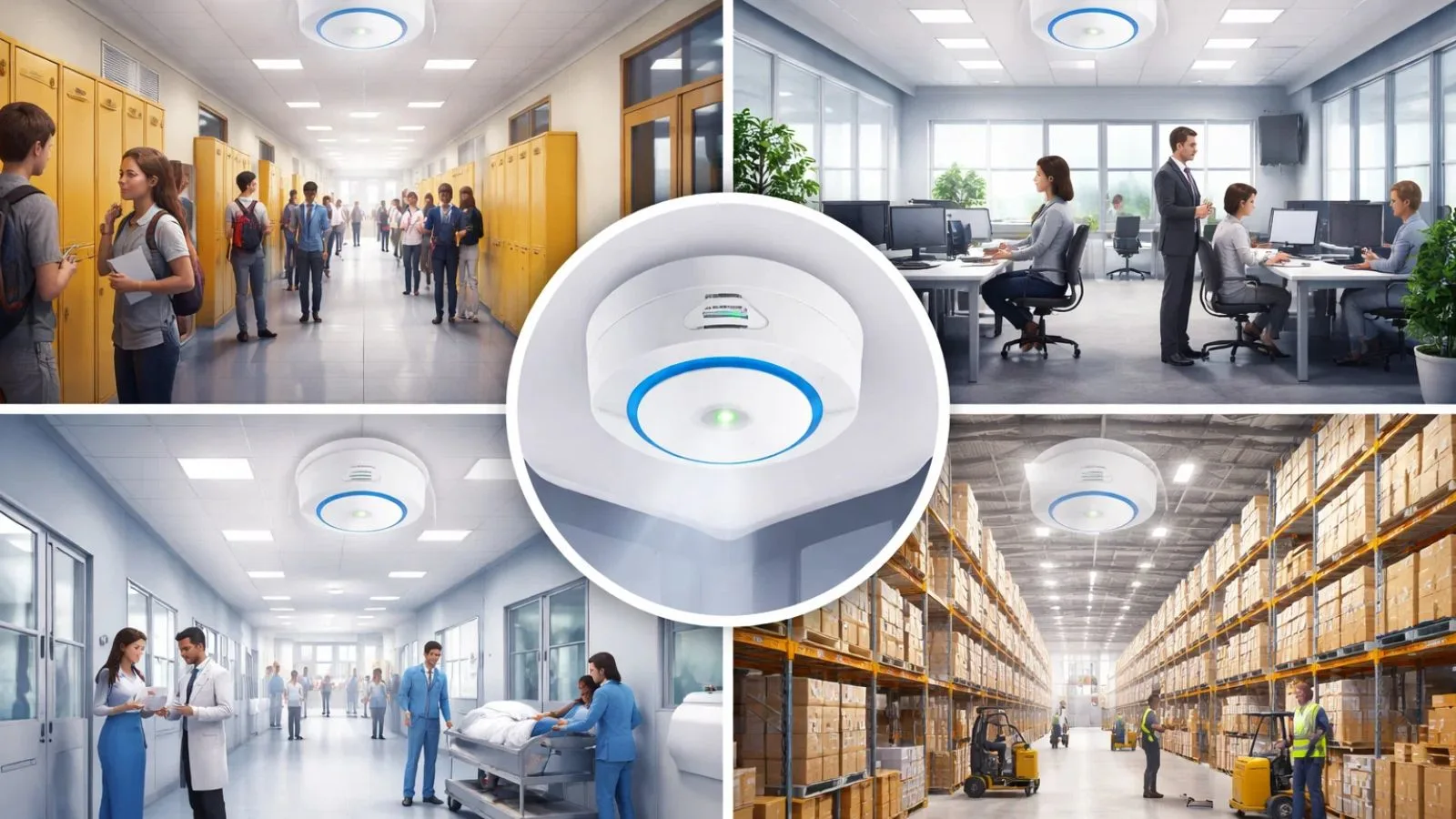
Placement strategy plays a critical role in how effective a vape detector system will be. Even the most advanced technology can underperform if it is not installed in the right locations. The goal is to position detection systems in areas where supervision is limited but policy enforcement and air quality control are essential.
- In schools, vaping most commonly occurs in restrooms and locker rooms, where privacy makes monitoring difficult. Hallways near isolated sections of the building can also become hotspots, especially during class transitions. Installing a vape detector in these high-risk areas helps administrators respond quickly while maintaining a safe learning environment.
- In hospitals, patient restrooms, waiting areas, and certain staff-only zones require close attention. Healthcare environments demand strict indoor air quality standards, and even small vaping incidents can raise safety concerns. Strategic placement ensures that vulnerable patients and visitors are protected.
- For corporate offices, restrooms, stairwells, and parking structures are typical areas where policy violations may occur unnoticed. Monitoring these semi-private spaces helps HR and facility managers enforce workplace guidelines without intrusive oversight in primary work areas.
- In hotels, guest hallways, public restrooms, and conference rooms often require monitoring to maintain compliance with smoke-free policies. Early detection helps prevent complaints, damage to reputation, and potential fire safety risks.
- Within warehouses and industrial facilities, break rooms, loading docks, and storage sections can become informal gathering spots. Installing detection systems in these areas reduces safety hazards, especially where flammable materials may be present.
Ultimately, effective vape detector placement follows one key principle: focus on locations where direct supervision is limited but maintaining safety, compliance, and policy enforcement is critical.
AI-Powered Vape Detection vs. Traditional Detectors
This is where the real difference becomes clear.
Traditional systems focus on environmental signals. A vape detector built on hardware sensors monitors changes in air composition and essentially answers one narrow question:
“Is there vapor in the air?”
That information is useful, but it doesn’t tell the full story.
AI-powered detection expands the scope. Instead of just measuring the air, it looks at human behavior and asks a more meaningful question:
“Is someone actively vaping right now?”
How AI-Based Vape Detection Works

AI platforms like VideoraIQ use advanced computer vision models trained to recognize vaping-related behavior in live camera feeds. Rather than relying solely on chemical or particle detection, the system visually interprets patterns that indicate vaping activity.
The AI continuously analyzes:
- Hand-to-mouth movements consistent with vape use
- Small, quickly dispersing vapor clouds
- Repetitive inhaling gestures over short intervals
- Groups clustering in areas where vaping commonly occurs
Because the system processes video in real time, it can distinguish between harmless gestures and behavior that matches vaping patterns. This dramatically reduces guesswork and improves response accuracy.
When a vaping pattern is identified, the AI-powered vape detector immediately triggers real-time alerts. It can automatically clip the relevant video footage, attach time stamps, and send notifications to administrators or security teams.
Instead of merely indicating that “something changed in the air,” a modern detection system delivers visual context and actionable insights. This leads to faster response times, clearer evidence collection, and more confident decision-making, particularly in large facilities where continuous manual monitoring simply isn’t practical.
Key Advantages Over Hardware Sensors
When comparing a traditional vape detector with an AI-powered solution, the difference becomes clear, especially in large facilities.
|
Traditional Vape Detector |
AI-Powered Detection (VideoraIQ) |
| Detects particles only | Detects behavior + visual evidence |
| Requires new hardware installation | Uses existing CCTV cameras |
| Limited to installed locations | Covers entire camera network |
| Higher cost in large facilities | Scalable and centrally managed |
In large campuses or multi-floor offices, installing standalone sensors in every area can quickly become expensive and operationally complex. An AI-powered detection system, however, can extend monitoring across all camera-covered zones without adding new physical devices. This approach delivers broader coverage, faster incident alerts, and more streamlined evidence management, all while maximizing the value of existing infrastructure.
How to Choose the Right Vape Detection Solution for Your Facility
Selecting the right vape detector requires more than simply comparing price tags. Decision-makers should evaluate solutions based on performance, scalability, and long-term operational value. Here’s a structured checklist to guide your decision:
1. Accuracy and False Alarm Control
A reliable system must clearly distinguish between genuine vaping incidents and harmless environmental changes such as steam, deodorant sprays, or cleaning chemicals. Look for advanced filtering, AI validation, or multi-sensor confirmation to minimize unnecessary alerts and reduce alert fatigue.
2. Integration with Existing Infrastructure
The ideal solution should integrate seamlessly with your current CCTV surveillance, security platforms, or access control systems. A vape detector that works within your existing ecosystem reduces deployment challenges and avoids unnecessary infrastructure expansion.
3. Real-Time Alerts and Response
Immediate notifications are essential for preventing escalation. Whether delivered through dashboards, email, or mobile apps, alerts should enable security teams or administrators to respond quickly and confidently.
4. Scalability Across Locations
For organizations operating across multiple floors, buildings, or campuses, the system should scale efficiently without requiring repeated hardware installations in every area.
5. Reporting and Evidence Management
Strong reporting capabilities are critical. The platform should log incidents automatically, generate compliance-ready documentation, and maintain clear audit trails for internal reviews and regulatory requirements.
6. Total Cost of Ownership
Evaluate not just the upfront hardware cost, but also installation, maintenance, upgrades, and future expansion expenses. A lower initial price may result in higher long-term operational costs.
For organizations that already have surveillance cameras installed, AI-driven platforms like VideoraIQ offer a smarter path forward. Instead of adding layers of new hardware, you can transform your existing cameras into intelligent vape detection systems, gaining wider coverage, stronger evidence, and scalable protection without multiplying infrastructure.
Final Thoughts
Vape detection is no longer optional for schools, hospitals, and corporate environments. It’s part of maintaining air quality, enforcing policy, and protecting people.
Traditional hardware sensors provide basic environmental detection. AI-powered systems go further, identifying behavior, reducing blind spots, and scaling across entire facilities.
As detection technology evolves, the smarter question becomes:
How can you make the systems you already have work harder?
See how VideoraIQ can turn your existing cameras into smart surveillance, delivering real-time intelligence without adding new hardware.
Because the future of vape detection isn’t just sensing the air.
It’s understanding the activity.
FAQs
1. Can a Vape Detector Differentiate Between Vaping and Steam or Perfume?
Yes, advanced systems are designed to reduce false positives by analyzing multiple environmental factors at once. A modern vape detector does not rely solely on a single trigger like humidity or scent. Instead, it evaluates particle density, chemical signatures, and environmental patterns together. For example, steam from a hand dryer may increase humidity, but it won’t produce the same aerosol and VOC combination as vaping. Multi-layer detection significantly improves accuracy.
2. Does a Vape Detector Record Audio or Invade Privacy?
Most hardware-based systems do not record audio or video. They are designed strictly to monitor air quality indicators. Even AI-integrated vape detector solutions typically analyze visual patterns without capturing private conversations. Organizations can configure systems to comply with local privacy regulations, ensuring monitoring focuses only on policy enforcement and safety — not personal surveillance.
3. How Long Does It Take to Install and Configure a Vape Detector System?
Installation time depends on the type of solution chosen. A standalone vape detector may require physical mounting, wiring, and calibration, which can take several hours per device. AI-based systems that integrate with existing CCTV networks often deploy faster because they leverage current infrastructure. Configuration mainly involves software setup, alert customization, and defining monitoring zones rather than extensive hardware work.