


Security has come a long way from simple guards and passive CCTV cameras. In the past, surveillance systems were mainly used to record footage for later review, often after an incident had already occurred. This reactive approach is no longer enough in today’s fast-moving, high-risk environments where threats can emerge and escalate within seconds.
Modern organizations manage hundreds or even thousands of cameras, generating massive volumes of video data every day. Manually monitoring these feeds is not only inefficient but also prone to human error, fatigue, and delayed response. As security challenges grow more complex, traditional surveillance systems struggle to keep up.
This is where video analytics AI becomes essential. Instead of just capturing footage, AI-powered systems actively analyze video streams in real time, identify patterns, detect anomalies, and trigger alerts automatically. Security teams move from simply watching screens to making faster, smarter decisions based on actionable insights.
With the rise of smart cities, connected workplaces, and data-driven operations, security is no longer just about prevention—it’s about intelligence. The shift toward AI-driven surveillance marks a critical evolution in how organizations protect people, assets, and operations in the modern world.
Listen to the Podcast.
What Is Video Analytics AI?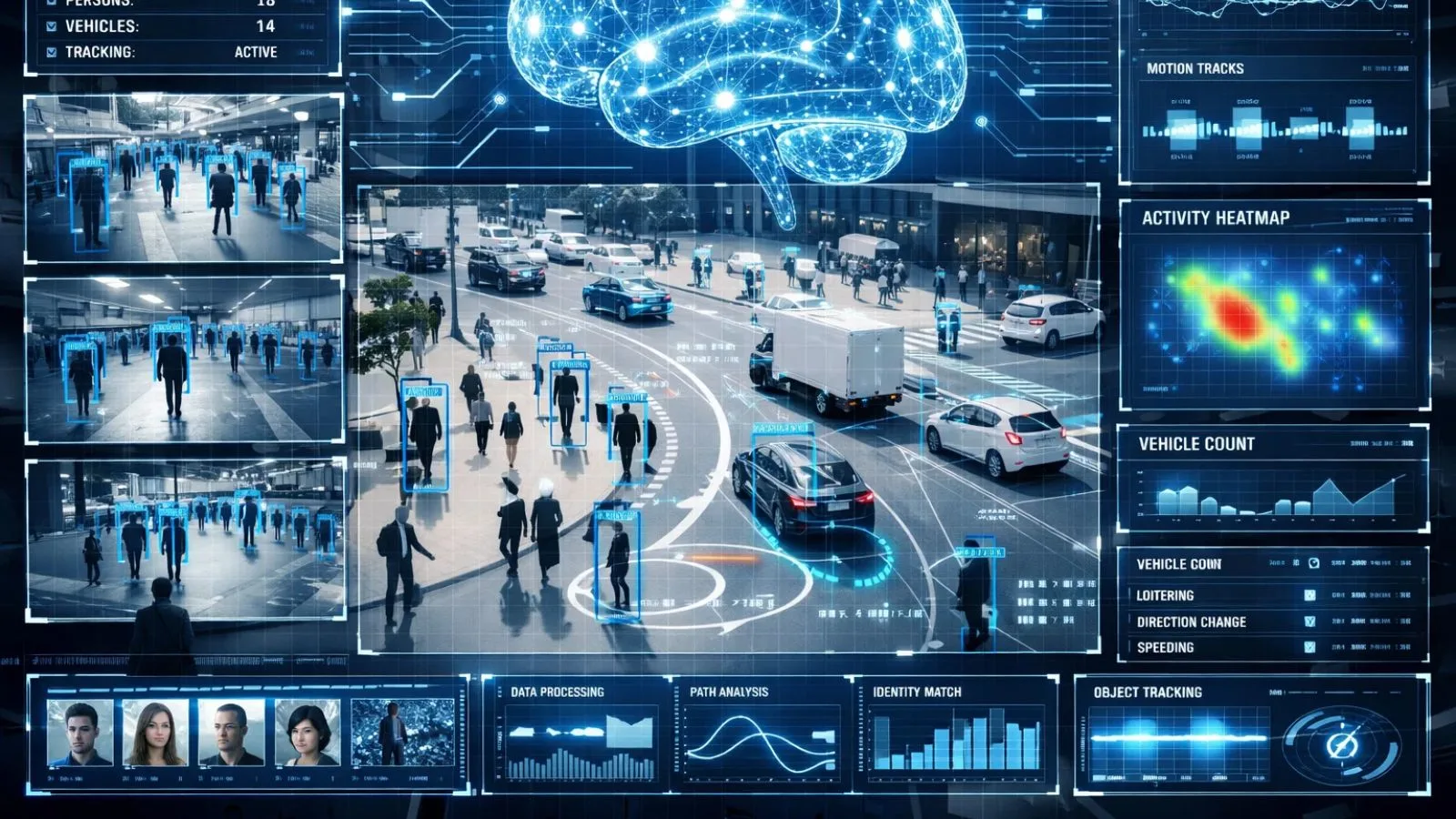
At its core, video analytics AI refers to the use of artificial intelligence to automatically analyze video footage and extract meaningful information from it. Instead of relying on human operators to watch live feeds or review recordings, AI systems process video data in real time and identify events, objects, and behaviors that matter.
These systems combine computer vision, machine learning, and deep learning algorithms to understand what’s happening within a video stream. The AI can recognize people, vehicles, movements, and even unusual behavior patterns, turning raw video into structured, searchable data.
Unlike traditional surveillance, which simply stores footage, intelligent video analytics actively interprets scenes. For example, the system can distinguish between normal activity and suspicious behavior, detect restricted-area intrusions, or identify loitering without constant human supervision. Over time, the AI learns from patterns, improving accuracy and reducing false alerts.
This shift from passive recording to active intelligence is what makes AI-driven systems so powerful. By continuously analyzing live and recorded footage, organizations gain real-time visibility, faster incident detection, and actionable insights—making video no longer just evidence, but a strategic security asset.
Limitations of Traditional Video Surveillance
Traditional video surveillance systems were designed for a simpler time—when fewer cameras, lower data volumes, and limited security threats were the norm. While basic CCTV setups can record footage, they fall short when it comes to proactive threat detection and real-time decision-making.
One of the biggest challenges is human dependency. Security personnel are expected to monitor multiple screens for long hours, which inevitably leads to fatigue, reduced attention, and missed incidents. Important events can go unnoticed simply because no one was watching at the right moment.
Another limitation is the reactive nature of conventional systems. Footage is often reviewed only after an incident has occurred, making it useful for investigations but ineffective for prevention. This delay can result in higher losses, increased risk, and slower response times.
Scalability is also a concern. As organizations add more cameras, managing and reviewing footage becomes increasingly complex and expensive. Storage costs rise, false alarms increase, and valuable data remains unused. Without intelligence built into the system, traditional surveillance struggles to deliver real security value in today’s dynamic environments.
These limitations highlight why organizations are moving toward AI-driven solutions that can analyze, alert, and act in real time rather than simply record and store.
How Video Analytics AI Enhances Modern Security
Modern security demands speed, accuracy, and proactive response—areas where video analytics AI excels. By continuously analyzing live video streams, AI-driven systems can detect potential threats the moment they occur, rather than after the damage is done.
One of the biggest advantages is real-time threat detection. The system can instantly identify unusual movements, unauthorized access, or suspicious behavior and trigger alerts for security teams. This allows faster intervention and significantly reduces response times. In environments where seconds matter, this capability can prevent incidents from escalating.
AI-powered solutions also improve accuracy through advanced pattern recognition. By learning what “normal” activity looks like, the system can flag anomalies while minimizing false alarms. This makes ai video surveillance far more reliable than motion-based or rule-only systems, which often generate unnecessary alerts.
Beyond detection, AI enhances situational awareness. Security teams receive contextual insights—what happened, where it happened, and why it matters—rather than just raw footage. This shift transforms security operations from constant monitoring to intelligent oversight, enabling teams to focus on critical decisions instead of watching screens all day.
Key Features of Intelligent Video Analytics Software
Modern security platforms rely on advanced capabilities that go far beyond basic recording. Intelligent video analytics software brings together multiple AI-driven features that help organizations detect, analyze, and respond to security events with greater precision.
One key feature is object and person recognition. The system can identify people, vehicles, and specific objects within a video feed, enabling accurate monitoring across large areas. This capability supports use cases such as access control, asset tracking, and unauthorized entry detection.
Another essential feature is intrusion and perimeter detection. AI can monitor defined zones and immediately alert security teams when someone crosses into a restricted area. Unlike traditional motion detection, AI understands context, reducing false alarms caused by shadows, weather, or animals.
Behavior and anomaly detection further enhance security intelligence. The software learns normal activity patterns and flags unusual behavior, such as loitering, sudden crowd formation, or abnormal movement paths. Combined with intelligent video analytics, this allows security teams to act before incidents escalate.
Additionally, searchable video and automated reporting make investigations faster and more efficient. Instead of manually scanning hours of footage, teams can quickly locate relevant events, saving time and improving overall security operations.
Real-World Use Cases Across Industries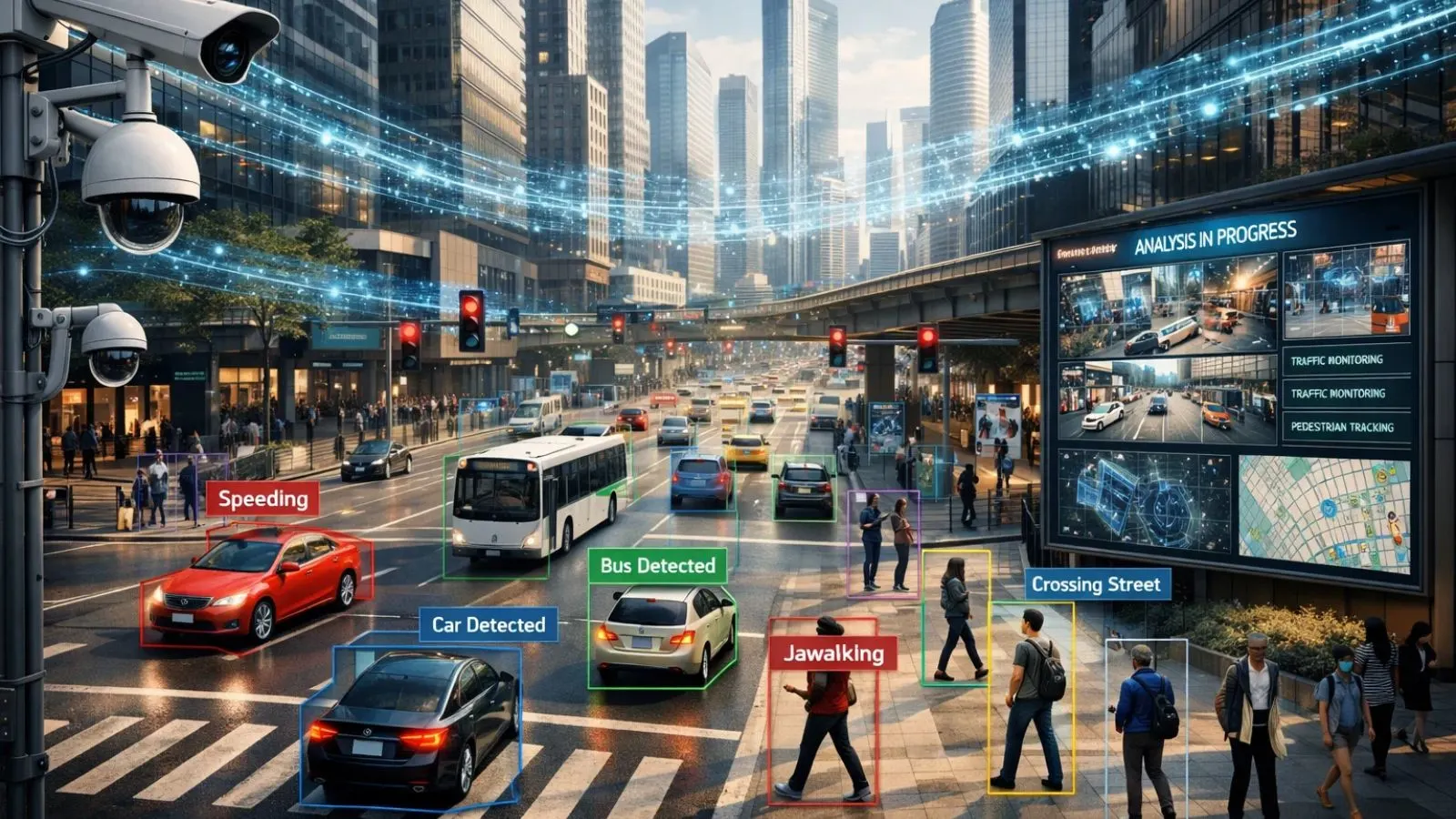
The impact of AI-powered video analysis extends far beyond traditional security rooms. Today, organizations across multiple industries rely on intelligent systems to enhance safety, efficiency, and operational awareness.
In smart cities and public spaces, AI-driven surveillance helps monitor traffic flow, detect suspicious behavior, and improve public safety. Authorities can respond faster to incidents while managing large-scale environments more effectively using video analytics ai.
In retail environments, video intelligence plays a dual role. It helps prevent theft and shoplifting while also providing insights into customer movement, dwell time, and the effectiveness of store layouts. This combination of security and business intelligence delivers measurable value.
Corporate offices and campuses use AI-based systems to manage access control, monitor restricted areas, and ensure employee safety. Automated alerts reduce the need for constant monitoring while improving response times.
In warehouses, manufacturing plants, and logistics hubs, AI-powered video analytics helps track movement, detect safety violations, and prevent unauthorized access to sensitive zones. These insights improve both security and operational efficiency.
Across industries, the ability to turn video into actionable data makes AI-driven surveillance a critical component of modern infrastructure.
Business Benefits Beyond Security
While enhanced protection is the primary goal, video analytics AI delivers significant value beyond traditional security use cases. By transforming video footage into actionable data, organizations unlock insights that improve overall operations and decision-making.
One major benefit is operational efficiency. Automated monitoring reduces the need for large security teams to manually watch video feeds, freeing resources for higher-value tasks. AI-driven alerts ensure attention is focused only where it’s needed most.
Data-driven decision-making is another key advantage. Video analytics reveals patterns in movement, behavior, and space utilization that organizations can use to optimize layouts, workflows, and staffing. These insights turn security infrastructure into a strategic business asset rather than a cost center.
AI-powered systems also support compliance and risk management. Automated incident logging, searchable footage, and audit-ready reports simplify investigations and regulatory requirements. This reduces legal risk and improves accountability.
Over time, cost savings become evident. Fewer false alarms, faster incident resolution, and better resource allocation all contribute to a stronger return on investment. By leveraging intelligent video insights, businesses gain measurable benefits that extend well beyond safety alone.
Why VideoraIQ Is a Smarter Choice
Choosing the right platform is just as important as adopting AI-driven surveillance itself. VideoraIQ is designed to help organizations unlock the full potential of video analytics AI without adding complexity to their existing security infrastructure.
VideoraIQ offers real-time video analysis and intelligent alerts, allowing security teams to respond instantly to potential threats. Its AI models are trained to recognize patterns, detect anomalies, and reduce false alarms—ensuring teams focus only on critical events.
One of VideoraIQ’s key strengths is its seamless integration with existing camera systems. Organizations don’t need to replace their current hardware to benefit from advanced analytics. The platform works across multiple environments and scales easily as needs grow.
With a centralized dashboard and detailed reporting, VideoraIQ provides complete visibility across all monitored locations. Security teams can search events, review insights, and generate reports quickly, improving both operational efficiency and incident response.
By combining powerful AI capabilities with ease of deployment and scalability, VideoraIQ stands out as a practical and future-ready solution for modern security challenges.
Implementation Considerations for AI-Powered Security
Adopting AI-driven surveillance requires thoughtful planning to ensure long-term success. While the benefits of video analytics AI are significant, organizations must address a few key considerations during implementation.
First, it’s important to assess infrastructure readiness. This includes camera quality, network bandwidth, and storage capabilities. AI systems perform best when they receive clear, consistent video feeds, so evaluating existing hardware helps maximize accuracy and performance.
Privacy and data protection are also critical. Organizations should establish clear policies around data usage, access controls, and retention periods. Transparent practices not only support regulatory compliance but also help build trust among employees, customers, and the public.
Scalability is another essential factor. As security needs evolve, the platform should be able to support additional cameras, locations, and analytics features without major upgrades. Solutions that grow with the organization reduce future costs and complexity.
Finally, teams should be trained to work alongside AI systems. Rather than replacing human judgment, AI enhances it. When security personnel understand how to interpret alerts and insights, organizations achieve the best balance between automation and human oversight.
Conclusion:
Security challenges today are faster, smarter, and more unpredictable than ever before. Relying on traditional surveillance systems is no longer enough to protect people, assets, and operations effectively. Video analytics AI bridges this gap by transforming video data into intelligence that enables proactive, real-time decision-making.
From reducing human error and false alarms to delivering valuable operational insights, AI-powered video analytics has become a foundational component of modern security strategies. Organizations that adopt these technologies gain not only stronger protection but also a competitive edge through efficiency and data-driven insights.
As threats continue to evolve, the question is no longer if businesses should adopt AI-powered security—but how soon. With solutions like VideoraIQ, upgrading to intelligent, future-ready security has never been more achievable.
FAQs
- How is video analytics AI different from traditional CCTV systems?
Traditional CCTV systems mainly record footage for later review. In contrast, video analytics AI actively analyzes live video feeds, detects anomalies, sends instant alerts, and helps prevent incidents before they escalate. - What are the main benefits of intelligent video analytics for security?
Key benefits include real-time threat detection, reduced false alarms, faster response times, improved situational awareness, and lower operational costs. It also provides valuable insights that go beyond security use cases. - Can intelligent video analytics software work with existing cameras?
Yes. Most modern platforms, including VideoraIQ, are designed to integrate with existing camera infrastructure. This allows organizations to upgrade their security capabilities without replacing current hardware.