

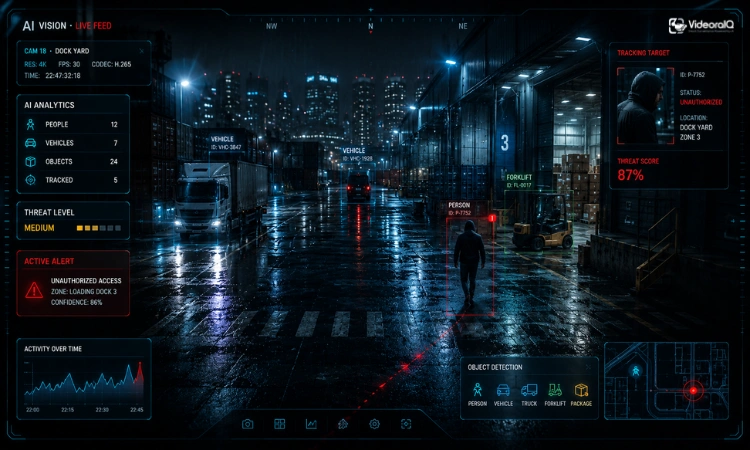
The Quick Answer: What Does a Video Monitoring System Actually Do?
A video monitoring system is a security setup that uses cameras, software, storage, and analytics tools to monitor, record, and analyze activity in real time. But that definition only scratches the surface.
Unlike a simple camera plugged into a wall, a modern platform combines hardware and intelligent software to detect events, flag anomalies, send alerts, and give you remote access from anywhere. It captures video, processes what it sees, stores footage efficiently, and connects everything under one interface. The goal isn’t just to record – it’s to respond.
Read Aloud!
Why Traditional Security Cameras Are No Longer Enough
Recording Isn’t the Same as Monitoring
There’s a common assumption that installing cameras equals having security. It doesn’t. A camera recording empty hallways for eight hours generates footage – that’s not monitoring. Real monitoring means something is actively watching, processing, and reacting.
Most businesses discover this the hard way. Cameras capture an incident perfectly. Nobody notices until the next morning.
Human Attention Has Limits
Security operator performance research shows a sharp decline in attention after just 20 minutes of watching live feeds. Miss that window, and critical events go undetected. A video monitoring system addresses this directly – AI handles continuous observation so humans don’t have to sustain what their attention simply can’t.
Businesses Need Faster Incident Response
The difference between stopping a threat and reviewing it later comes down to response time. Post-incident footage is useful for investigations, but doesn’t prevent damage. Businesses increasingly need real-time awareness, not recordings they’ll review the next day.
What Makes Up a Modern Video Monitoring System?
Cameras and Smart Sensors
The hardware layer includes fixed cameras, PTZ (pan-tilt-zoom) units, fisheye lenses, and thermal sensors for challenging environments. What separates modern cameras from older setups is edge processing – many cameras now analyze footage locally before sending anything upstream.
The Software Layer
The management software is the brain of the operation. It organizes feeds, manages recordings, controls access permissions, and connects to analytics tools. Without strong software infrastructure, even the best cameras produce fragmented, hard-to-use data.
Cloud or Local Storage
Footage needs somewhere to go. On-premise storage keeps data local and avoids internet dependency. Cloud storage adds flexibility and easier scalability. Many businesses now use hybrid setups – storing recent footage locally and archiving older clips to the cloud.
AI Video Analytics
This is where modern systems genuinely diverge from older approaches. AI analytics layers identify people, vehicles, objects, and behaviors. They can flag tailgating near secure doors, detect loitering in a restricted zone, or spot an abandoned bag in a public area – none of which basic motion detection handles reliably.
Real-Time Alert Systems
Smart alert systems route the right notification to the right person. Not every event needs human escalation. AI filtering reduces noise so your team only acts on what genuinely matters, rather than drowning in false positives.
How a Video Monitoring System Actually Works
The Core Workflow
Cameras capture continuous video. That footage flows to either an edge processor or a central server, where analytics software evaluates it against predefined rules. When something matches a trigger – a person crossing a boundary, a vehicle in a restricted area – the system generates an alert. That alert routes to a dashboard, a mobile notification, or an automated response protocol. The entire cycle can happen in seconds.
How AI Detects Suspicious Activity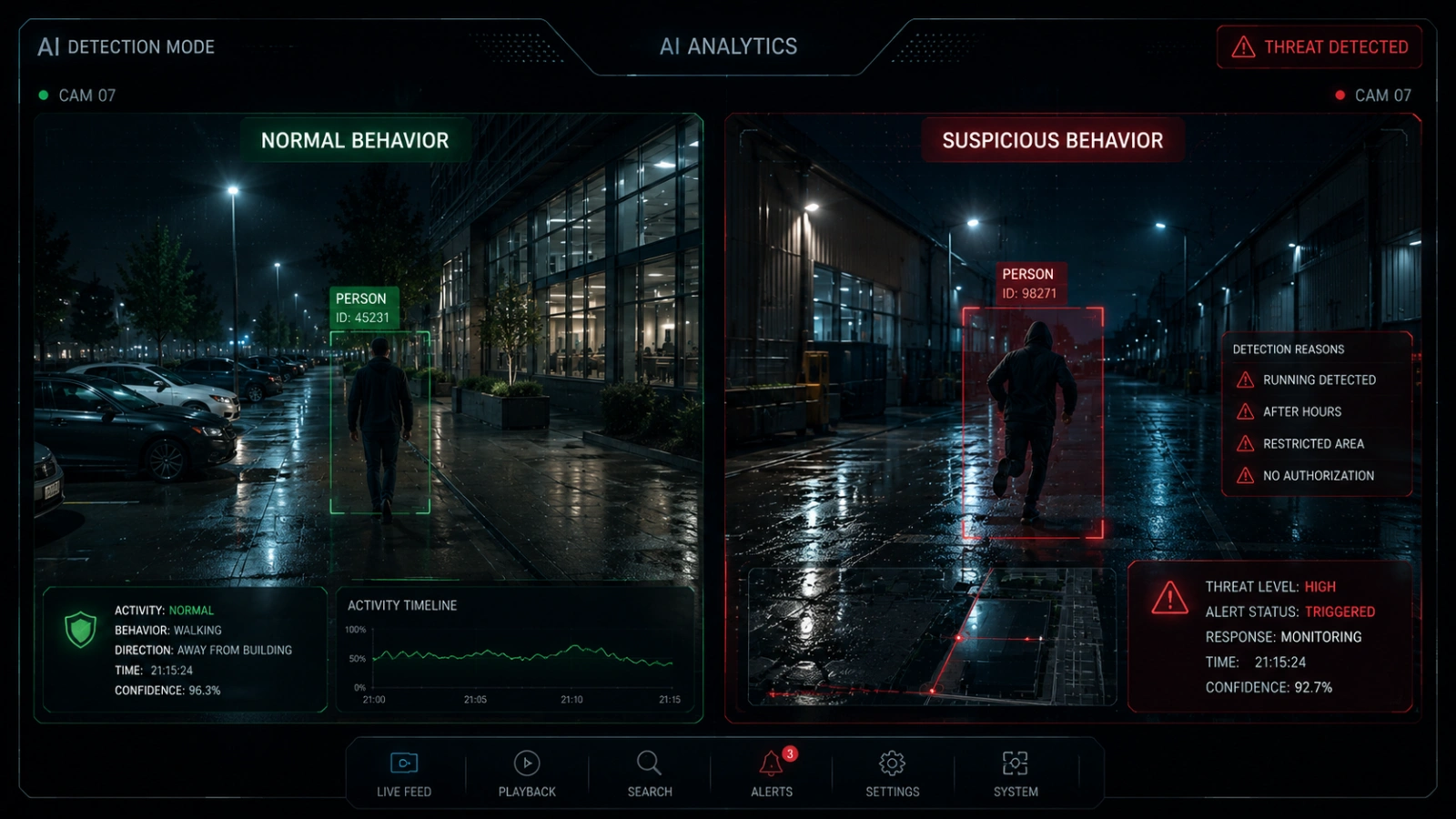
Modern AI in a video monitoring system doesn’t just look for movement. It classifies it. A person walking through a lobby looks different from someone running. A car parked briefly looks different from one sitting for three hours. Systems learn contextual patterns and flag deviations – far more useful than raw motion triggers that catch shadows and ceiling fans with equal enthusiasm.
Remote Access and Visibility
Remote camera monitoring is one of the most operationally useful advantages these platforms offer. Whether managing a retail chain across five cities or checking a single warehouse after hours, live access from a phone or laptop changes what’s practically possible for security teams and business owners alike.
Where These Systems Are Being Used Today
Retail and warehouses use a video monitoring system for loss prevention, staff safety, and loading dock oversight. Offices and commercial buildings apply it to access points, visitor tracking, and after-hours coverage. Manufacturing sites rely on it for safety compliance – flagging PPE violations and detecting workers in dangerous zones.
Residential communities use centralized monitoring to manage entry points and common spaces without requiring full-time personnel at every location. At urban scale, video security networks across transit systems and public infrastructure feed into operations centers where AI helps coordinate emergency response faster than manual observation can.
Video Monitoring vs CCTV: What’s the Real Difference?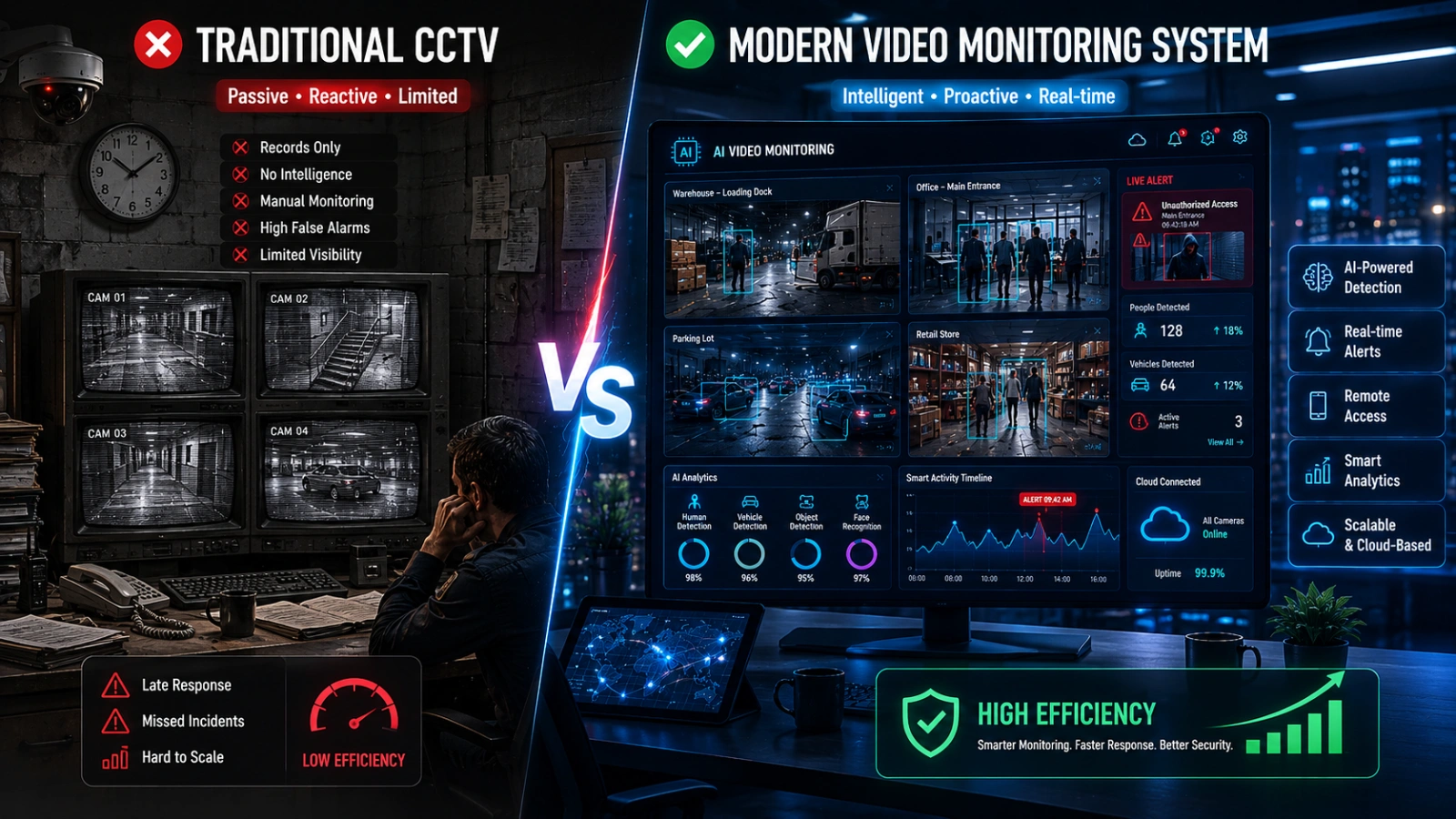
Traditional CCTV systems record footage. A video monitoring system processes it – actively, continuously, and intelligently. One generates data. The other generates actionable insight.
The scalability difference is equally significant. CCTV setups are hardware-heavy and location-dependent. Modern monitoring platforms are software-defined, meaning you can add cameras, locations, and analytics rules without tearing out existing infrastructure. For businesses that need real-time awareness and remote visibility, a connected monitoring approach is no longer optional – it’s the baseline expectation.
The Biggest Benefits Businesses Care About in 2026
Faster threat detection is the headline benefit of a modern video monitoring system. Seconds matter during security incidents, and AI-assisted monitoring compresses response time significantly compared to manual oversight.
Reduced false alarms follow closely. Motion-based systems trigger constantly – wind, shadows, animals. AI filtering cuts through that noise so your team responds to actual threats rather than chasing false positives all shift.
Beyond security, operational visibility has become a genuine selling point. Businesses use monitoring data to optimize workflows, verify compliance, and make staffing decisions backed by actual observation rather than assumption.
Lower long-term costs come from automation replacing manual camera-watching. One operator managing an AI-assisted platform can often cover what previously required an entire overnight security team.
Read More!
How Remote Video Monitoring Enhances Security and Reduces Costs
Who Can Benefit from AI Video Analytics? Industries, Use Cases, and Practical Applications
How to Choose the Right Setup
Start With Risk Areas, Not Camera Count
The instinct is to ask, “How many cameras do I need?” The better question is “where are my highest-risk zones?” Map those first. Camera placement in a video monitoring system follows risk logic, not square footage.
Cloud vs. On-Premise Storage
On-premise gives you control and avoids internet dependency. Cloud provides flexibility and remote access. Hybrid approaches often make the most sense for businesses balancing both priorities across multiple locations.
Evaluate AI Features Carefully
Not all AI is equal. Some vendors market basic motion zones as “AI detection.” What you actually want is object classification, behavioral analytics, and event-based alerting. Ask vendors for specific detection accuracy metrics before committing to any video monitoring system.
Prioritize Alert Accuracy Over Feature Quantity
More features don’t equal better security. A platform generating ten actionable alerts per day beats one that sends two hundred notifications you’ll start ignoring within a week. Alert fatigue is a real operational risk.
Common Mistakes That Create Blind Spots
Installing cameras without monitoring logic is the most widespread mistake in any video monitoring system. Hardware without software intelligence just creates expensive storage overhead.
Relying only on motion detection leaves too much room for error. It catches everything indiscriminately, which means it effectively catches nothing useful.
Ignoring alert fatigue quietly undermines entire monitoring setups. Once operators tune out noisy, low-value alerts, the system loses its value at exactly the moments it matters most.
Overlooking access controls creates internal vulnerabilities. Poorly managed permissions around who can view or export footage create both security and compliance risks that are easy to miss until something goes wrong.
How VideoraIQ Makes Modern Video Monitoring Smarter
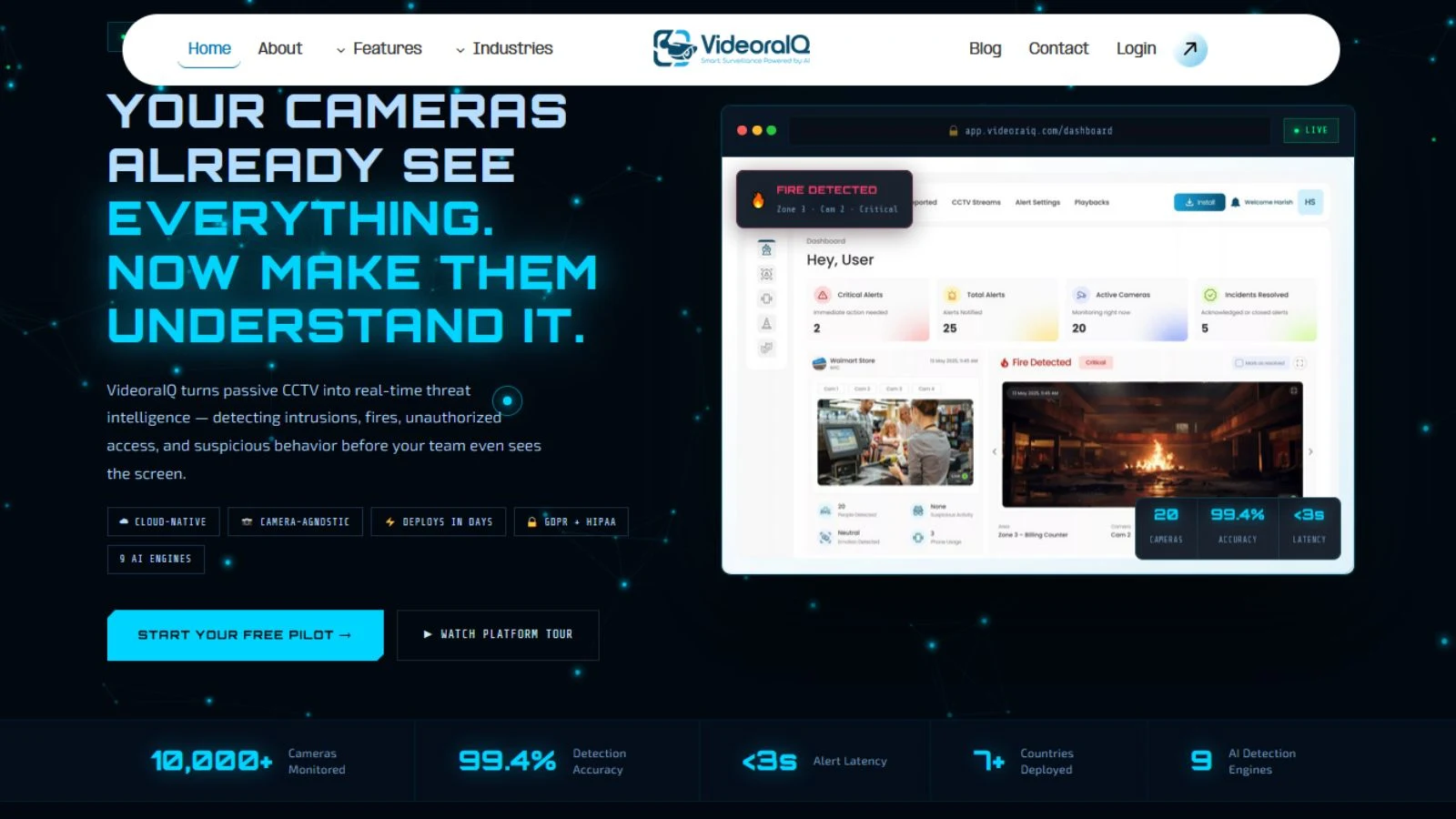
VideoraIQ integrates AI-powered analytics directly into existing monitoring workflows, without requiring full infrastructure replacement.
- AI-powered event detection that classifies behavior, not just movement
- Real-time insights delivered to a unified dashboard
- Visibility across multiple sites from one interface
- Faster incident response through intelligent alert prioritization
- Scalable workflows that grow with your operation
- Better operational awareness beyond traditional security use cases
The design philosophy is straightforward: reduce the work humans shouldn’t be doing, and improve the speed of the decisions they should be making.
The Future of Video Surveillance Is Becoming Predictive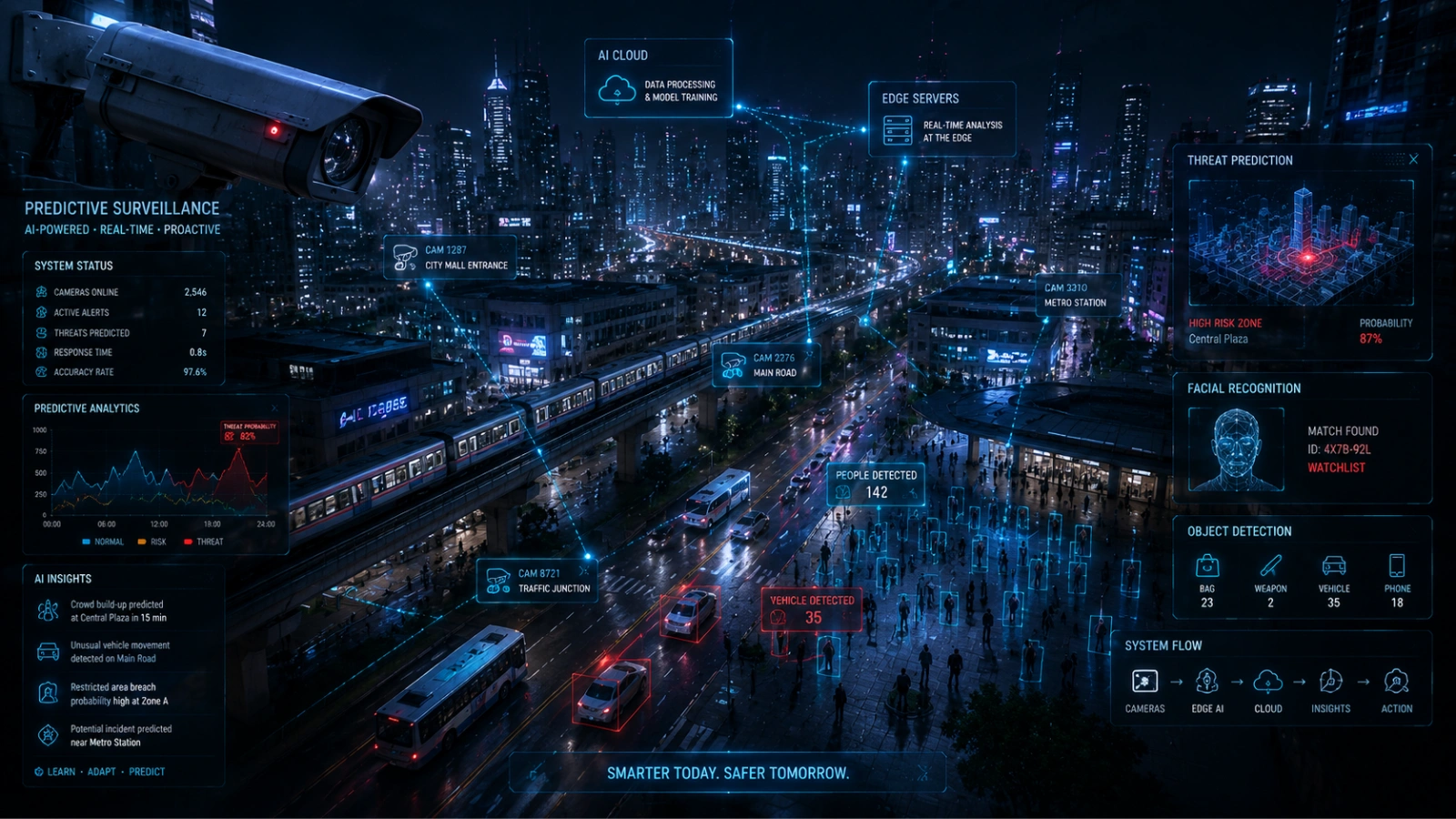
The most significant shift happening right now isn’t a hardware upgrade – it’s a philosophical one. Security is moving from “record and review” to “detect and prevent.” AI systems increasingly recognize pre-incident behavioral patterns, not just the incident itself.
Edge computing is accelerating this shift. Processing video at the camera level reduces latency and bandwidth strain, enabling real-time analytics even in environments with limited connectivity – manufacturing floors, remote infrastructure, and underground facilities.
Human error in surveillance isn’t a training problem. It’s a physiological problem. Attention limits are hard-coded. AI doesn’t fatigue or get distracted. Intelligent systems don’t replace human judgment – they protect it by handling the continuous observation humans aren’t physiologically designed to sustain across long shifts.
Modern deployments increasingly connect a video monitoring system with access control, alarm systems, and visitor management platforms. The result isn’t just a security tool. It’s an intelligence layer for the entire physical environment.
Security Is No Longer About Watching Screens All Day
The shift happening across the security industry isn’t subtle. Cameras are getting smarter. Alerts are getting more accurate. The expectation that humans should stare at monitors for hours on end is finally being replaced by something more practical.
A well-designed video monitoring system today isn’t just a security tool – it’s an operational asset. It tells you what’s happening across your entire physical environment, flags what matters, and gives you the visibility to act before situations escalate.
The most effective systems don’t just record incidents. They help prevent them.
FAQs On Video Monitoring System
What is the purpose of a video monitoring system?
To capture, analyze, store, and act on video data in real time – enabling faster threat detection, remote visibility, and smarter security decisions.
How is it different from CCTV?
CCTV passively records footage. A monitoring system actively analyzes it using software, AI, and real-time alerting – turning raw video into actionable intelligence.
Can these systems send real-time alerts?
Yes. Modern platforms trigger instant notifications based on defined events – unauthorized access, unusual behavior, perimeter breaches, and more.
What is a video management system (VMS)?
It’s the software platform that organizes camera feeds, manages recordings, controls user access, and connects analytics tools within a monitoring setup.
Are AI-powered systems worth it?
For businesses with multiple cameras, locations, or high-security requirements, yes. AI dramatically reduces false alarms and improves detection accuracy over basic motion-based setups.