

Book a fast site assessment → to see how fire and smoke detection from cctv underscores early detection and evacuation coordination. You already run drills on jet bridges, baggage halls, and platform tunnels. The weak link is the gap between when smoke is on camera and when a ceiling device sounds.
Camera-based analytics don’t replace life-safety detectors. They add an earlier visual cue, guide responders to the source, and reduce chaos.
As you weigh options in 2026, focus on alert latency, false alarm control, and how well the system plugs into your mixed camera fleet. The goal is simple: act sooner, with proof you can trust.
Why Airports and Transit Stations Are Uniquely Vulnerable to Fire and Smoke Incidents — and How Fire and Smoke Detection from CCTV Helps
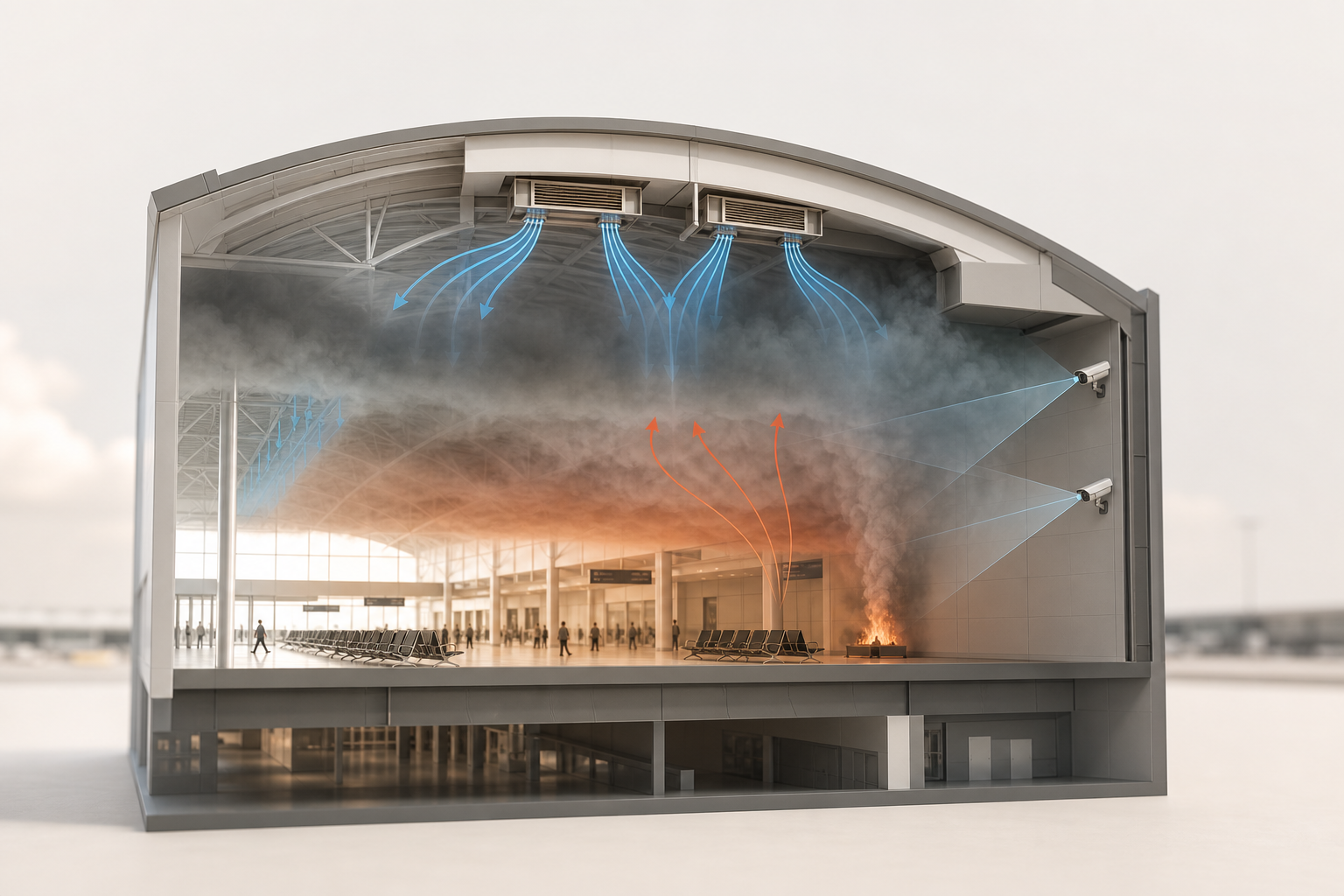
Large public buildings move a lot of air. In long concourses and platform tunnels, fans and ducts can thin smoke fast. As a result, ceiling detectors may trigger late, well after smoke is visible on cameras.
On jet bridges, hot APU exhaust or glycol mist can swirl. That can confuse both people and devices that rely on air samples.
Operators stare at walls of screens. However, 85% of CCTV footage is never reviewed, which means human eyes miss slow‑burn events.
A trash fire that starts under a seat in a crowded gate can smolder for minutes. In a food court, steam plumes and glare add to the clutter. You need a system that watches every frame and flags risk in real time.
In terminals and stations, the first 60 seconds set the tone for everything that follows — detection, dispatch, and passenger flow.
Intermodal stations add another wrinkle: train piston winds, bus bay cross‑drafts, and station stack effects can carry smoke in counterintuitive directions. What looks like a minor wisp on one camera may indicate a spreading hazard two platforms away.
That’s where fire and smoke detection from cctv closes the gap. Visual AI reads smoke evolution as it emerges in view, not only when dilution settles near a detector inlet.
Ventilation, visibility, and crowd movement for CCTV fire and smoke detection
Regulators care about speed and clarity. ICAO standards support safe evacuation, lighting, and guidance when visibility drops. Local fire codes and NFPA expectations push facilities to detect early and move people fast.
That pressure rises in high‑ceiling spaces, where smoke stratifies and alarms lag. In a crush of passengers, 30 seconds can be the line between calm and panic.
Most hubs already have hundreds of IP cameras. Yet few have intelligent analysis tied to risk zones like baggage makeup, electrical rooms, platform edges, and fueling areas.
Without AI, you depend on chance, that an operator looks at the right pane at the right time. With AI, every camera becomes a sensor that can spot smoke or flame and direct teams with a timestamp and location tag.
Hard-to-detect zones that drive risk for fire and smoke detection from CCTV
- Jet bridges with variable airflow and hot exhaust
- Baggage handling with conveyors and dust loads
- Platform tunnels with piston winds from trains
- Electrical rooms and UPS spaces near public areas
For airports and transit owners, the fix isn’t ripping out detectors. It’s adding camera intelligence that runs in parallel. That’s where fire and smoke detection from cctv adds value fast, without rewiring your life‑safety backbone.
Real‑world ignition patterns you can expect to see on CCTV
- Seat‑level ignition at gates: smoldering paper or batteries under seating tends to produce thin, low‑contrast smoke before it mushrooms.
- Food‑court flare‑ups: grease flare or overheated appliances create fast, high‑contrast plumes that rise then spread along the ceiling plane.
- Platform bin fires: small trash can ignitions create intermittent wisps that get pulled along tracks by piston winds, confusing ceiling sensors.
- Service corridor shorts: electrical arcs can present as brief flashes with delayed smoke, best caught visually rather than by air sampling alone.
- Vehicle bays: idling buses produce exhaust patterns that resemble smoke; a tuned AI distinguishes warmth, texture, and persistence over time.
What to Look for in a Fire and Smoke Detection Camera System for Transit Environments (CCTV-Based)
Choosing a platform for an airport or metro is not the same as picking a camera for a store. You manage mass‑occupancy spaces, mixed vendors, and strict audits. The right tool must work with what you have and raise the signal‑to‑noise ratio for your team.
1) Sub‑5‑second alert latency
Every second counts in a terminal or station. Look for under‑5‑second end‑to‑end alerts with video proof. Faster alerts help you start evacuation cues, call responders, and contain the source before traffic backs up.
Latency targets should be measured from “first pixel‑level detection” to “operator notification with clip,” not just processing time inside a model.
2) Integration with existing camera infrastructure
Airports run mixed fleets. You may have 10+ camera models from different years. Rip‑and‑replace is not viable. Demand proven support for 200+ camera brands and network video recorders, so you can add AI without new hardware or rewiring.
Include compatibility with your VMS or PSIM. Support for RTSP, ONVIF, and common codecs (H.264/H.265) helps you plug in quickly and preserve storage budgets.
3) Low false alarm rate in harsh conditions
Steam from kitchens, de‑icing mist near gates, and exhaust on service roads can look like smoke. A transit‑ready model needs pattern recognition trained on those scenes. In addition, it should offer time‑based thresholds to filter brief plumes that are not fire.
Your aim is fewer false positives pulling teams off real work. Ask for per‑camera sensitivity controls, scene learning, and tools to quickly tag and suppress recurring benign sources.
4) Zone‑based monitoring for high‑risk areas (CCTV fire/smoke)
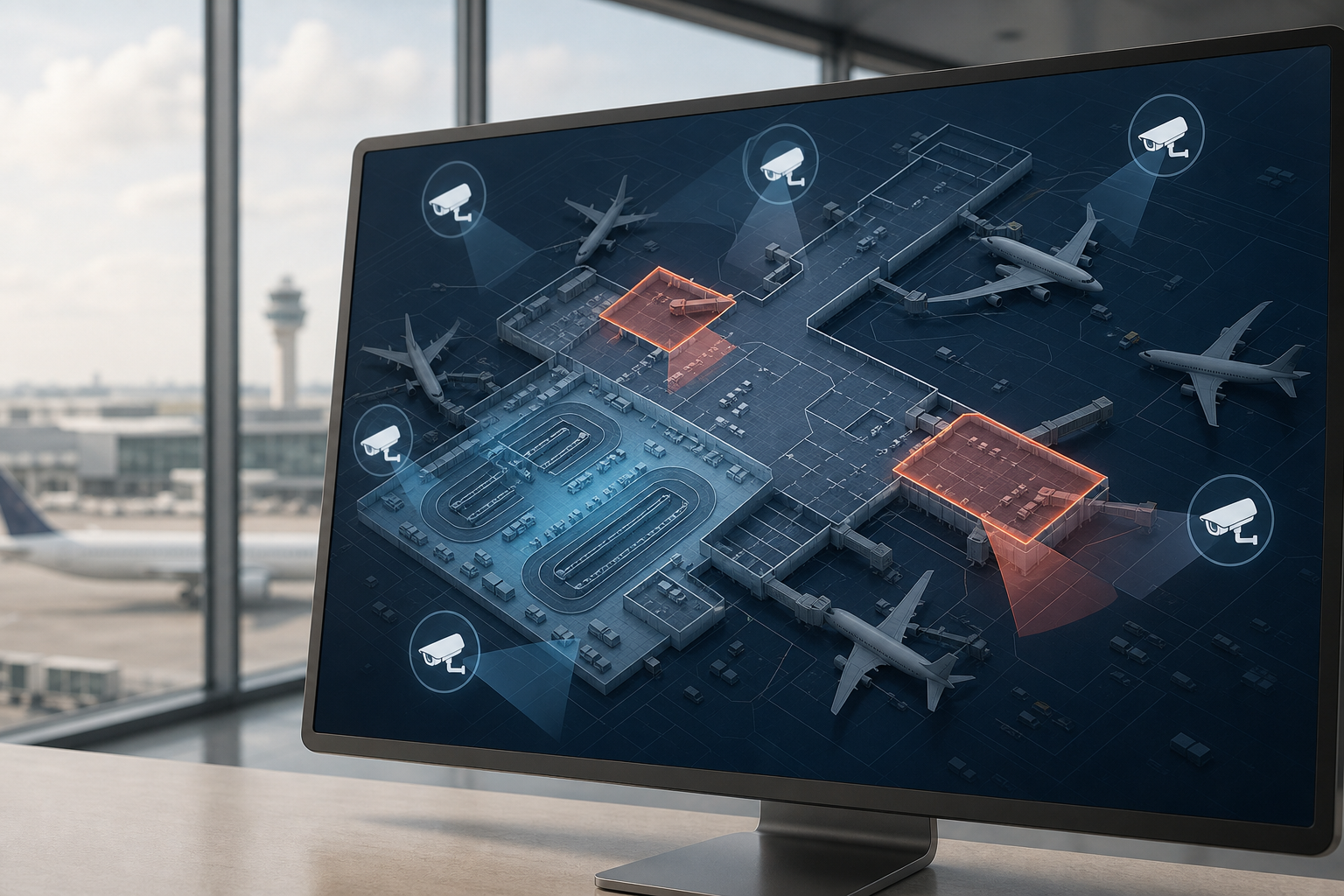
Define virtual zones where risk is highest: baggage carousels, fuel storage, electrical rooms, platform edges, and jet bridges. Then tune rules per zone. For example, you may allow brief fog near a loading dock, but you want instant alerts in a UPS room.
Map zones to your SOPs and radio call‑signs so alerts route cleanly. This trims dispatch time when seconds matter.
5) Cloud vs. on‑prem architecture
Some hubs need strict data sovereignty. Others prefer to reduce server loads. A cloud approach cuts on‑prem gear and speeds rollout, while a hybrid path can meet local retention or privacy rules.
Demand clear data handling practices and controls that match your policies. Look for export logs and regional data residency options where required.
6) Compliance and certifications
International airports cross jurisdictions. If you operate in the EU or process EU passenger data, GDPR matters. Healthcare transit links can touch HIPAA concerns. Choose systems that document GDPR and HIPAA compliance and align with your legal team’s review.
Also consider ISO 27001 alignment and SOC 2 reports if your procurement process calls for formal audits.
7) Multi‑threat detection on the same CCTV feed
A tool that only spots smoke leaves value on the table. Look for platforms that run multiple engines on the same stream: unattended baggage, intrusion, face recognition, license plates, line‑cross, unauthorized access, and more. The broader the coverage, the higher the return.
This lets you compound benefits across safety, security, and operations without new cameras.
8) Camera placement and lighting for CCTV fire/smoke detection
Analytics quality depends on what the camera can see. Favor stable mounts with clear sight lines to likely ignition points and avoid direct backlight from glass curtain walls or platform portals. Ensure frame rates of 15–30 fps and sufficient low‑light performance so smoke texture is visible at dawn, dusk, and overnight.
Small placement changes can shave seconds off alert times and cut false alarms. If needed, add inexpensive auxiliary lighting in deep shadows rather than swapping cameras.
9) Cybersecurity and uptime
Video analytics that touch passenger flows and safety require hardened security. Ask for SSO/SAML options, role‑based access, encryption in transit and at rest, and change‑control logging. For uptime, confirm multi‑region redundancy, health monitoring, and graceful degradation if a camera or network segment goes down.
These details determine whether alerts still reach you when traffic is heaviest. Verify incident response SLAs and patch cadences before go‑live.
10) Operator training and SOP alignment
Technology succeeds when people do. Create quick‑hit training for dispatchers and floor wardens that shows how a fire and smoke detection from cctv alert looks, how to validate with the live link, and how to trigger evacuation messaging without delay.
Embed alert types and zone priorities into SOPs. The goal is consistent, repeatable action, regardless of shift or staffing.
In busy hubs, speed without context is noise. See the alert, the clip, and the camera location in one view — then act.
As you compare vendors, note how each point maps to your zones and SOPs. In each criterion, ask how the model helps you deploy fire and smoke detection from cctv without breaking your network or your shift cadence.
Field testing checklist before go‑live
- Validate sub‑5‑second latency across peak and off‑peak hours, including Wi‑Fi and wired segments.
- Capture at least 20 sample clips per high‑risk zone, including benign plumes and true hazards, to tune thresholds.
- Confirm alert routing to SOC dashboards, email groups, and radios/PA systems with timestamps and location tags.
- Test per‑camera sensitivity controls and zone shapes; document changes in a change‑log for audit.
- Rehearse two SOPs end‑to‑end: one for evacuation cues, one for localized suppression and crowd diversion.
Operational KPIs to demand from vendors
- Mean time to detect (MTTD) across representative zones, including high‑ceiling concourses and tunnels.
- Mean time to notify (MTTN) with proof clip delivered to operator endpoints and mobile devices.
- False positive/negative rates by zone type after initial tuning, plus weekly drift reports.
- Percentage of cameras onboarded without hardware changes and the average onboarding time per camera.
- Uptime SLA, failover behavior, and time to patch critical vulnerabilities.
Also Read!
How to Choose an Intrusion Detection Security Camera System for Manufacturing Plants and Warehouses
Best Intrusion Detection Security Camera for Manufacturing Plants and Warehouses in 2026
How VideoraIQ Detects Fire and Smoke Using CCTV Across Airport and Transit Camera Networks
Nine engines, one CCTV stream
VideoraIQ runs 9 AI detection engines on the same camera feed: fire and smoke detection, unattended baggage, intrusion detection, face recognition, ANPR/license plate recognition, line‑cross, unauthorized access, object detection, and cashier absence detection. That matters in airports and metros where threats overlap in seconds.
One stream delivers many signals, which means fewer panes to watch and faster, clearer decisions. Operators can confirm context in a single pass instead of stitching clues from multiple systems.
Speed you can act on
Speed is the first win. Alerts arrive in under 3 seconds with video proof, a location tag, and a timestamp. Your dispatcher sees what started the event and where to send the team. In a concourse, that can move hundreds of people before smoke thickens.
In fact, one user saw a fire flagged 52 seconds before a legacy smoke alarm sounded, the kind of head start you want for gates and platforms.
- Typical chain of action:
- AI flags smoke in-frame and auto‑clips the event.
- The SOC receives a dashboard alert and email with location and clip.
- Dispatcher confirms, radios the nearest team, and initiates PA messaging.
- Supervisors join via the live link to coordinate routes and crowd flow.
Works with what you own
Integration is straight. VideoraIQ works with existing cameras across 200+ brands. You keep your hardware and wiring. There’s no on‑prem server to rack; the platform is cloud‑based, which simplifies rollout and updates.
For data governance, you can align retention and access with your policy. That way, the system fits your existing VMS, PSIM, and storage footprint without disrupting operations.

Accuracy with context in CCTV fire and smoke detection
Accuracy and context reduce noise. Pattern recognition and customizable time thresholds help filter steam plumes or short exhaust bursts. You can define zone‑based monitoring around jet bridges, baggage carousels, electrical rooms, and platform edges.
Then you set tighter rules where risk is high and looser ones where benign haze is common. Fine‑tuning per camera view helps the model distinguish smoke from glare, reflections on polished floors, or snow haze entering vestibules.
The goal is a high‑signal, low‑noise alert stream your team trusts.
“Our fire was detected 52 seconds before our smoke alarm triggered. The VideoraIQ alert came with a live camera link — my team was already on their way before the alarm sounded. That system saved the building.” — Nilesh Kapoor, Plant Safety Supervisor
Multi‑threat value for transit
Multi‑threat value matters for transit. The same deployment that catches smoke can also flag an unattended bag during rush hour.
“Unattended bag alerts help us catch potential threats instantly in crowded platforms. It buys us time and improves passenger safety.” — Rakesh Mehra, Transit Operations Head
Operational analytics and continuous improvement
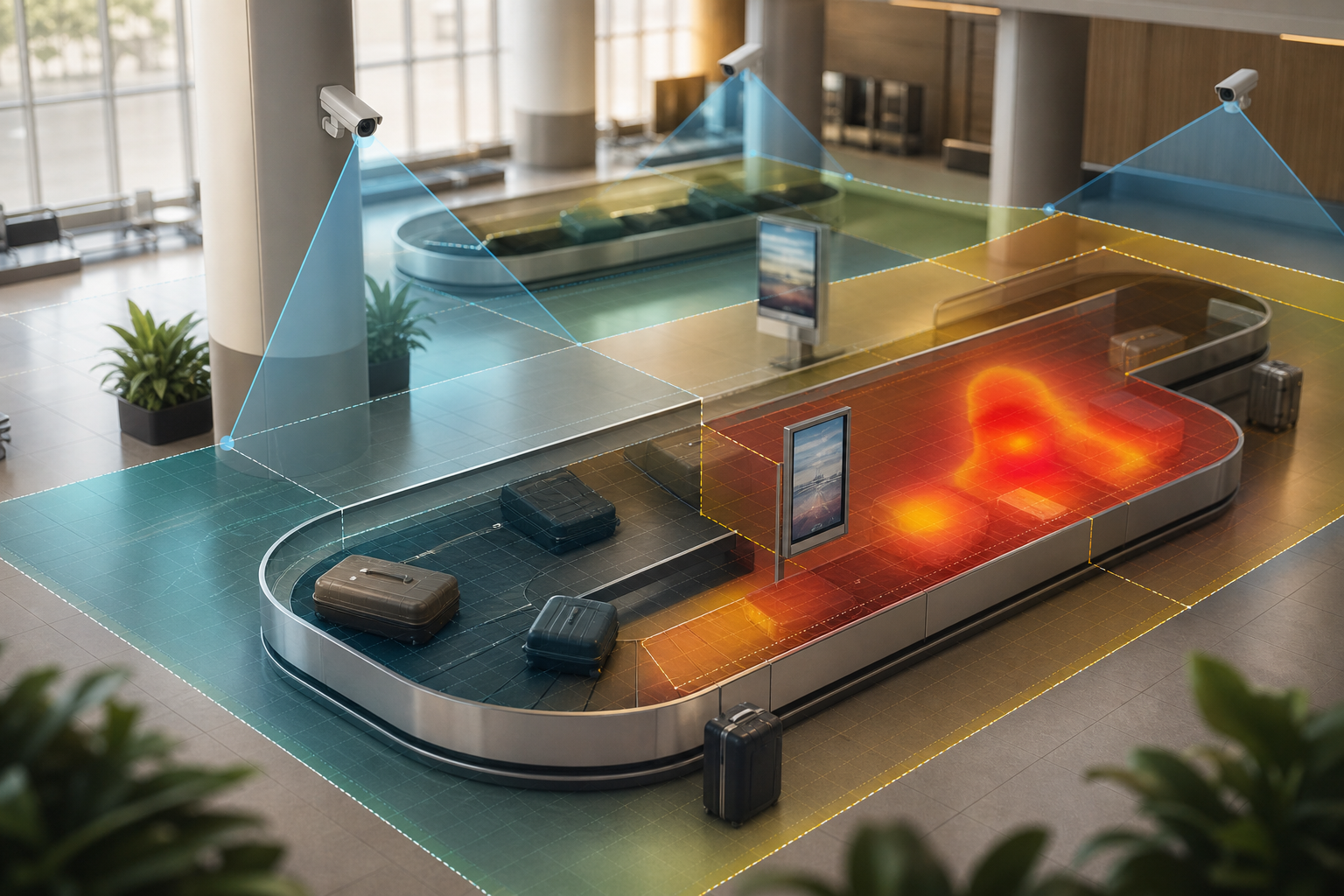
Moreover, VideoraIQ brings Heatmaps & Analytics so you can spot hotspots and adjust patrols. Across 10,000+ monitored cameras and deployments in 7+ countries, the platform reports 99.4% detection accuracy. For airport ops, that means fewer false trips and faster real action. It’s fire and smoke detection from cctv that pays off in day‑to‑day work, not just in audits.
Edge conditions handled by VideoraIQ
- Backlit glass curtain walls creating glare and reflections in concourses.
- Wind‑driven exhaust on aprons and open bus bays with shifting shadows.
- Low‑contrast smoke at dawn/dusk when camera gain changes rapidly.
- Snow haze, vapor, and fog entering vestibules and platform portals.
- Transient steam bursts from food courts and maintenance work.
At‑a‑glance benefits versus other approaches
**[Get instant alert demos →] |
|—|—|—|—|
| Early-warning speed | Detect airborne particles at ceiling level; airflow can delay trigger | Detect heat/flame well; fast on line-of-sight heat | Visual smoke/flame at frame rate; sub‑3‑second alerts with video proof |
| Hardware cost | Already installed; required for code | High per unit; single purpose | Uses existing CCTV; no new cameras or servers |
| Coverage area | Localized to device placement | Narrow FOV; line-of-sight | Any camera angle; zone-based across large spaces |
| Multi‑threat value | None | Single purpose | 9 engines on one feed (fire/smoke, unattended bag, intrusion, etc.) |
| False alarms | Sensitive to dust/airflow | Less prone to steam; may miss cool smoke early | Tunable thresholds; transit‑specific patterns reduce steam/exhaust noise |
| Compliance role | Code‑required life‑safety backbone | Specialized supplement in select zones | Complementary early‑warning visual layer |
| Vendor lock‑in | N/A | Camera-specific | Works with 200+ camera brands |
Detectors vs Thermal vs AI Video (CCTV): Quick Comparison
Below is a clean reference table covering three common approaches used in terminals and stations.
| Capability | Traditional Point/Aspirating Detectors | Thermal/Flame Cameras | AI Video (VideoraIQ) |
|---|---|---|---|
| Early-warning speed | Detect airborne particles at ceiling; HVAC can delay trigger in high volumes | Excellent on line-of-sight heat/flame; limited on cool smoke | Visual smoke/flame at frame rate; sub‑3‑second alerts with clip |
| Hardware cost | Already installed; code-required | High per unit; single purpose | Uses existing CCTV; no new cameras/servers |
| Coverage | Localized to device placement | Narrow FOV, line-of-sight | Any camera angle; zone-based across large areas |
| Multi‑threat value | None | Single purpose | 9 engines on one feed (fire/smoke, unattended bag, intrusion, etc.) |
| False alarms | Sensitive to dust/airflow | Strong on heat; can miss early cool smoke | Tunable thresholds; patterns trained on steam/exhaust |
| Compliance role | Life-safety backbone | Specialized supplement | Complementary early-warning visual layer |
| Vendor lock‑in | N/A | Often vendor-specific | Works with 200+ brands; open protocols |
Traditional point‑type and aspirating systems are the foundation. They sample air and must stay in place for compliance.
However, in high ceilings and strong HVAC, they can lag.
Situational factors that delay ceiling detectors
- High air change rates and stratification that keep particulates off the ceiling plane.
- Piston winds from trains or aggressive return‑air pulls in mezzanines.
- Micro‑ignitions that produce cool, thin smoke not easily sampled early.
- Detector placement gaps created by architectural features or renovations.
VideoraIQ adds a fast, visual layer that spots what cameras already see and guides teams with clips and locations. It complements, not replaces, your life‑safety system.
The visual confirmation shortens the loop between “something’s wrong” and “help is on the way,” while your code‑required backbone continues to provide regulatory compliance.
When thermal cameras are the right fit
- Small electrical rooms with clear lines of sight to panels or racks.
- Fuel farms or pump rooms where radiant heat signatures are strong.
- Enclosed areas with known ignition sources and minimal visual clutter.
Thermal and flame cameras do a solid job in specific rooms. Yet they are expensive and single‑use. Compared to those, VideoraIQ runs on cameras you already own and brings 8 more engines on the same stream. You gain broad coverage without new hardware spend.
Video AI in mixed‑fleet environments
Other AI video analytics tools excel at forensic search. For example, Briefcam, Avigilon Appearance Search, and Hanwha Vision AI help you find people or objects after the fact.
VideoraIQ’s focus is real‑time action: sub‑3‑second alerts, multi‑threat detection including fire/smoke, and broad camera brand support so you’re not locked into one ecosystem.
“Installation was quick, and it worked with our current CCTV—no downtime, no extra investment.” — Sana Ibrahim, Hotel Security Lead
“The system handles surveillance 24/7. No more missed alerts or relying solely on camera operators.” — Jason Rodriguez, Security Manager
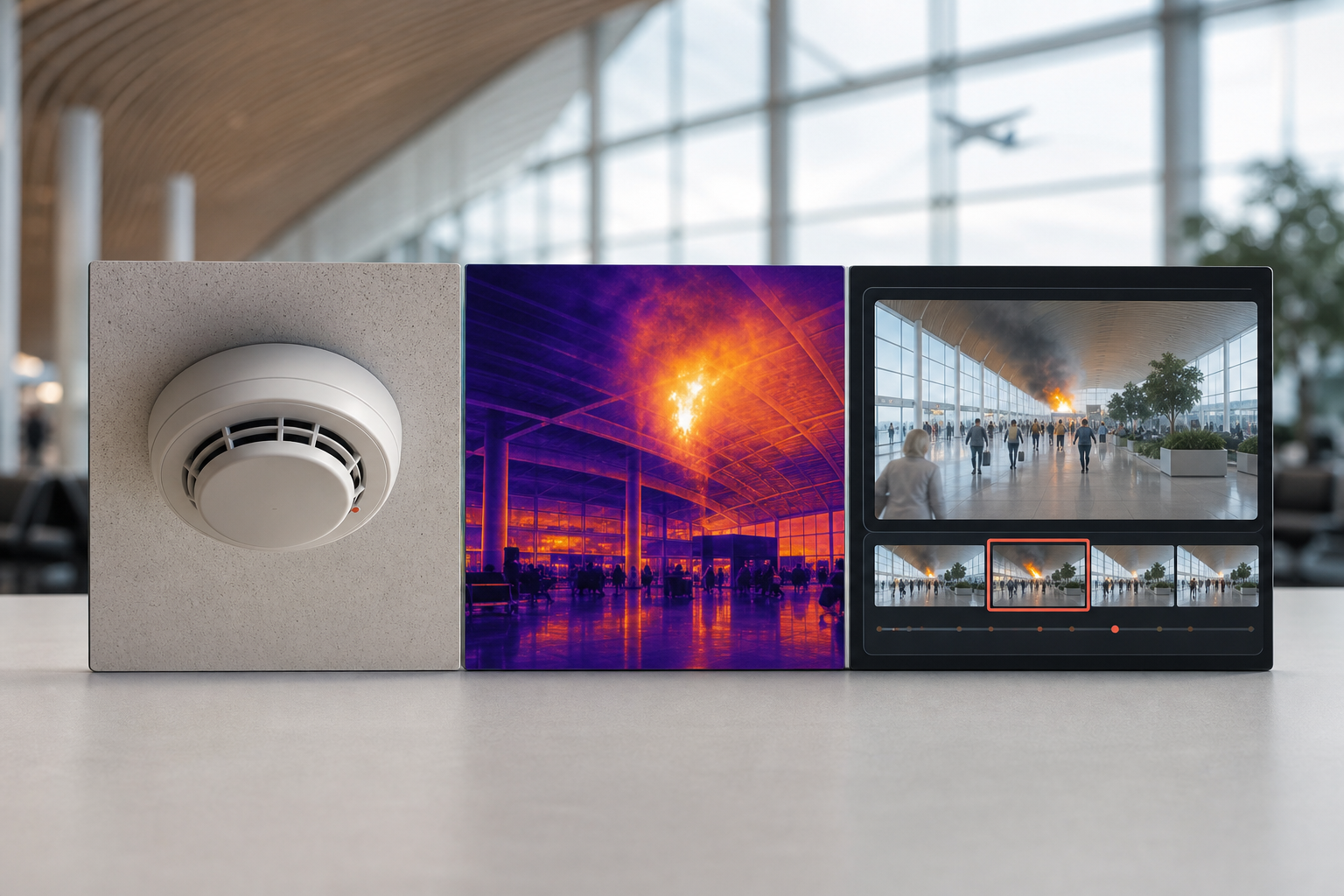
For regulators, the story is layered risk control. ICAO’s safety goals (see the International Civil Aviation Organization) and NFPA guidance align with this approach: keep code-required sensors, and add tools that speed detection and response.
Regulator alignment checklist for airports and transit
- Keep point/aspirating detectors as the life‑safety backbone to satisfy code and insurers.
- Add visual analytics for early confirmation and evacuation guidance in high‑ceiling spaces.
- Document privacy controls, retention, and access in a DPA aligned with GDPR/HIPAA where applicable.
- Run joint drills with airport fire, security, and operations to validate time‑to‑first‑alert metrics.
- Maintain change logs for camera placements, zones, and thresholds to support audits.
Also Read!
How to Choose an Intrusion Detection Security Camera System for Airports and Transit Stations
Trust, Compliance, and Proven Scale for High-Security Environments with CCTV Fire and Smoke Detection
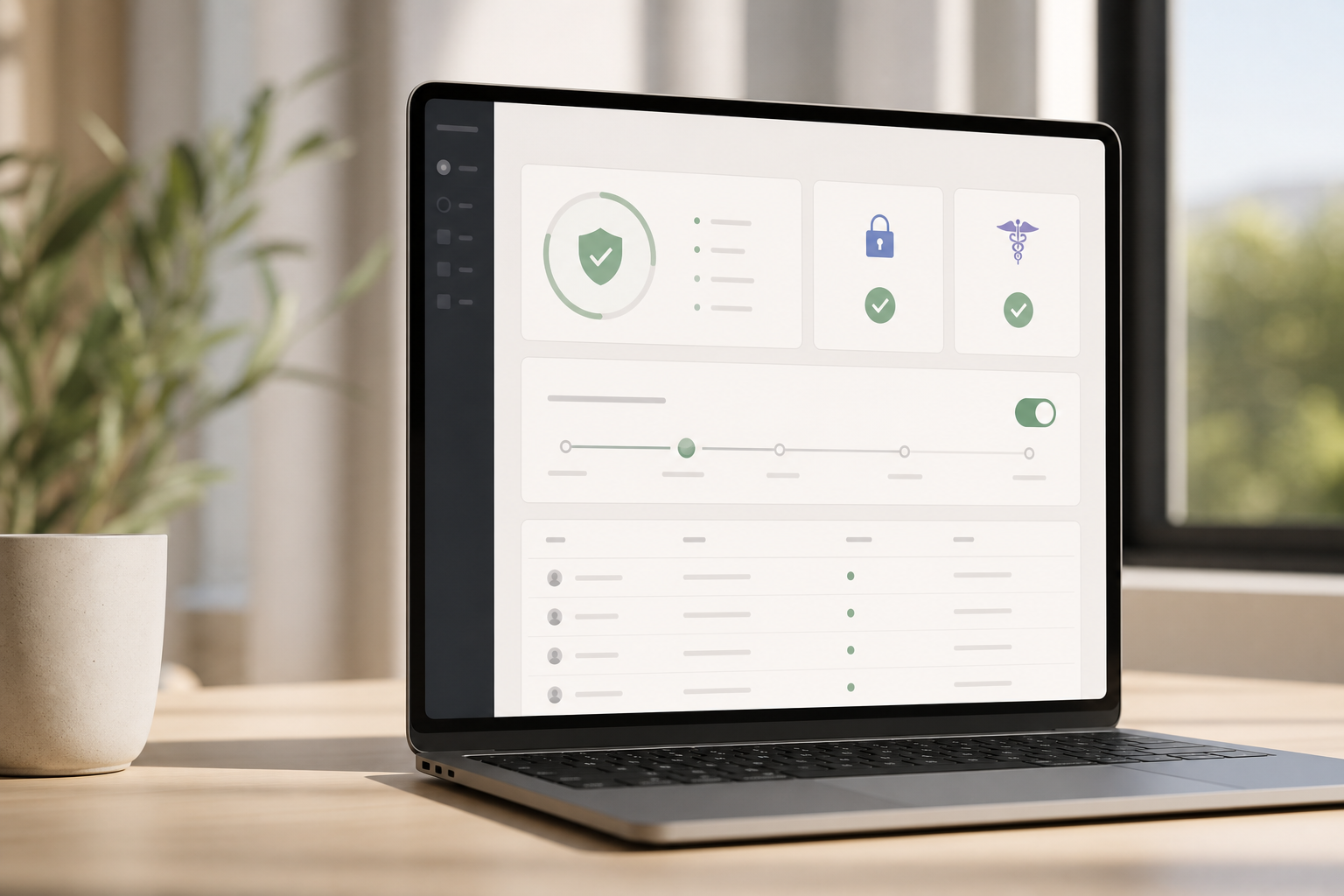
Scale and trust are not nice‑to‑haves when you run a hub. VideoraIQ is GDPR compliant and HIPAA compliant. That matters if you process EU passenger data or link to medical transport. Cloud delivery removes on‑prem servers while keeping data handling in line with your policy.
Across 10,000+ cameras monitored and deployments in 7+ countries, the platform reports 99.4% detection accuracy. In practice, that means fewer false alarms and cleaner shifts. Teams spend time on true alerts with video proof, not on dry runs caused by steam near a fryer.
- Common compliance artifacts you can request:
- Data Processing Addendum (DPA) and subprocessors list
- SOC 2 and ISO 27001 reports or mappings
- Encryption standards, key management practices, and audit log samples
- Regional data residency statements and retention controls
“We went from finding out about incidents in the morning briefing to being notified in real time. VideoraIQ caught an intruder at 2AM that our overnight guard missed. That one event alone justified the entire platform cost.” — Ananya Mehta, Head of Facilities, 200‑Camera Corporate Campus
Retention, audit, and procurement support
Enterprise buyers also need long audit trails. The Enterprise tier supports unlimited cameras and custom AI models with 90‑day cloud retention. That lines up with airport investigations, where you often need weeks of look‑back for incident review.
For mid‑size stations or terminals, the Professional tier covers up to 200 cameras with all AI engines and 30‑day retention. If your legal team needs to review cross‑border data flows, you’ll have the proof points.
And if your ops team wants to tie alerts into existing dashboards or email workflows, Real‑Time Alerts & Notifications fit right in. It’s fire and smoke detection from cctv with the paperwork to pass a procurement check.
Procurement teams also appreciate predictable rollout patterns and training schedules. Establish a simple cadence, pilot, expand, certify, and capture acceptance criteria for each wave.
That makes the investment and benefits legible to finance, safety, and IT simultaneously.
Procurement rhythm and rollout playbook
- Phase 0 — Readiness: confirm camera inventory, network routes, and data policies; collect SOC 2/ISO docs.
- Phase 1 — Pilot: 20–50 cameras in top‑risk zones; measure latency, precision/recall, and operator response times.
- Phase 2 — Scale: add zones by wing or line; integrate with paging/ticketing; finalize SOP language per alert type.
- Phase 3 — Certify: document acceptance tests, retention settings, and user training logs; brief insurers/auditors.
- Phase 4 — Optimize: quarterly reviews of false positives/negatives, refresh thresholds, and camera placements.
Also Read!
How to Choose Fire and Smoke Detection Security Cameras for Retail Stores and Chains
VideoraIQ vs Verkada for Retail Chains: Which Is Better for Fire and Smoke Detection via CCTV?
FAQ: Fire and Smoke Detection from CCTV for Airports and Transit
Does camera-based fire and smoke detection replace code-required detectors?
No. It complements your existing life-safety backbone. Fire and smoke detection from cctv provides early visual confirmation and context, while point and aspirating detectors remain in place to satisfy code and provide redundant sensing.
How fast are fire and smoke detection from CCTV alerts, end to end, in real environments?
With VideoraIQ, typical end-to-end alerting is under 3 seconds from detection to operator notification with a clip. In practice that creates a 30–60 second head start over ceiling devices in high-ceiling, high-HVAC areas where smoke stratifies.
Will steam, de-icing mist, or vehicle exhaust cause false alarms in CCTV fire and smoke detection?
Transit environments are noisy, but thresholds and pattern recognition are tuned for kitchens, de-icing zones, and service roads. You can apply Customizable Time Thresholds and per-zone sensitivity so brief plumes are filtered, while persistent smoke triggers immediate alerts.
Can we use our existing mixed camera fleet for fire and smoke detection from CCTV?
Yes. VideoraIQ supports 200+ brands and standard protocols (RTSP/ONVIF) so you can use current IP cameras and NVRs. That avoids rip-and-replace and preserves storage, wiring, and maintenance practices.
What image quality and frame rate do we need for CCTV fire/smoke detection?
Aim for 1080p at 15–30 fps with stable mounting and consistent lighting. If some views are 720p, you can still detect, but ensure the field of view covers likely ignition points and avoids direct backlight that washes out smoke texture.
Is cloud deployment acceptable for airports with strict data policies?
Many hubs deploy cloud or hybrid to balance speed and sovereignty. VideoraIQ offers retention controls, access logging, and regional data residency options so security and privacy teams can align the platform with policy.
How does this integrate with our VMS, PSIM, and incident workflows for fire and smoke detection from CCTV?
You’ll route Real‑Time Alerts & Notifications to your SOC via dashboard and email. Most teams also link alerts to ticketing or paging systems, including location tags and clips so dispatchers can act quickly and document actions.
What about cybersecurity and access control for CCTV fire/smoke detection?
Expect SSO/SAML, role-based permissions, encryption in transit and at rest, and change/audit logs. VideoraIQ follows secure development and patch practices so security teams can verify controls during procurement.
How do we tune zones around jet bridges and platform tunnels in CCTV fire and smoke detection?
Use Zone‑Based Monitoring to draw polygons around risk areas. Start with moderate sensitivity, capture sample clips for a week, then tighten thresholds where persistent smoke should be zero-tolerance (e. g., UPS/MCC rooms) and loosen near benign fog (e. g., vestibules).
Will camera analytics hold up at night or during low visibility for fire and smoke detection?
Yes, provided the camera has adequate low-light performance or supplemental lighting. The model evaluates temporal and spatial patterns in pixels, so even thin smoke layers are detectable when contrast and frame rate are sufficient.
How quickly can we pilot a CCTV fire/smoke detection pilot across a live terminal?
Most teams stand up a 20–50 camera pilot in 1–2 weeks using existing cameras. You’ll validate sub‑3‑second alerts, tune sensitivity, and train dispatchers before expanding in phases.
What’s the measurable ROI beyond safety from CCTV fire/smoke detection?
You gain reduced false trips, faster containment of small incidents, and multi-threat value from added engines like unattended baggage and intrusion. Combined, teams spend more time on true events and less on manual screen-watching.
Does this help with audits and after-action reviews for fire and smoke detection from CCTV?
Yes. The platform keeps clips, timestamps, and zone configurations for retention windows (30–90 days depending on tier). That evidence simplifies investigations, supports insurer questions, and compresses audit prep.
Are there limitations we should know with CCTV fire and smoke detection?
No camera analytics can see through solid obstacles or around corners. Place cameras with clear sight lines to ignition points, avoid extreme backlight, and check that network bandwidth supports the selected frame rates.
How do we validate accuracy for fire and smoke detection from CCTV before scaling?
Run scripted tests with safe smoke simulants in multiple zones and lighting conditions. Collect precision/recall metrics from at least 50 test clips per zone, and adjust thresholds until you meet your target false‑positive rate.
Can we restrict access to clips for privacy while preserving auditability?
Yes. Use role‑based permissions so only designated users can view or export clips. Pair that with immutable audit logs and retention limits that align with GDPR or local privacy rules.
What’s the best way to communicate new CCTV fire/smoke detection procedures to tenants and airlines?
Provide a one‑page SOP addendum with sample alert screenshots, zone maps, and call‑sign routing. Hold short briefings for gate agents, retail managers, and maintenance staff so everyone understands who acts first and how to escalate.
Does fire and smoke detection from CCTV work outdoors on aprons or open bus bays?
It can, if cameras have appropriate weatherproofing, stable mounts, and lighting. Expect to fine‑tune thresholds for wind‑driven exhaust and glare; zone shapes and time filters help suppress benign conditions.
Can we integrate alerts into mass notification systems for rapid passenger messaging?
Yes. Many teams route verified alerts to PA systems, visual signage, and mobile notifications. Include the camera location and a brief scripted message to move passengers calmly and avoid congestion.
Can AI alerts trigger automated suppression or HVAC changes?
In many deployments, yes. Teams use verified alerts to trigger predefined actions such as closing dampers, starting smoke exhaust, or releasing localized suppression provided safety interlocks are in place and approved by authorities.
How do we manage model drift over seasons or renovations?
Use scheduled retraining windows and quarterly reviews. As scenes change with new storefronts, lighting, or schedules, refresh per‑camera sensitivity and capture new sample clips to keep precision/recall steady.
Getting Started: Deploying Fire and Smoke Detection Across Your Airport or Transit Network
Rolling out across a large site is simple if you take it in steps. Here’s a field‑tested path you can start this week.
- Step 1: Camera audit
List every IP camera, model, and location. Confirm feed access. VideoraIQ works with existing cameras across 200+ brands, so expect broad coverage without swaps. - Step 2: Zone mapping
Mark high‑risk zones: electrical rooms, baggage handling, fuel areas, platform tunnels, and food courts. Use Zone‑Based Monitoring to draw virtual zones on each view. - Step 3: Threshold configuration
Tune sensitivity and Customizable Time Thresholds per zone. For example, allow short steam bursts in kitchens, but tighten rules near UPS and MCC rooms. - Step 4: Phased rollout
Start a pilot with 20–50 cameras in top‑risk zones using the Professional tier. Validate sub‑3‑second alerts and noise levels. Then expand in waves. - Step 5: Integration with incident management
Route Real‑Time Alerts & Notifications via the dashboard and email to your operations center, fire teams, and facilities. Include location tags to speed dispatch. - Step 6: Ongoing optimization
Use Heatmaps & Analytics to spot hotspots, refine zone lines, and adjust sensitivity based on false alarm data. Review weekly for the first month, then monthly. - Step 7: Acceptance testing and training
Run scripted tests across multiple zones and lighting conditions. Capture clips of known benign plumes (steam, fog) and true hazards to refine thresholds. Train dispatchers and floor wardens on how to interpret alerts and launch SOPs quickly. - Step 8: Live drills and after‑action reviews
Coordinate with airport fire, station managers, and public address teams to simulate smoke in a controlled setting. Measure time‑to‑first‑alert, time‑to‑dispatch, and passenger messaging clarity. Feed lessons back into camera placement, zone shapes, and notification routing. - Step 9: Stakeholder communication and signage updates
Brief tenant managers, airlines, and third‑party vendors on how fire and smoke detection from cctv alerts appear and who responds. Update on‑site signage and PA templates so messaging is clear during real incidents and drills.
If you also manage retail space inside terminals, this retail deployment guide shows the same playbook in a different setting: this retail deployment guide.
**Schedule a no‑obligation pilot →. It shows how the same approach scales to different crowds and layouts.
**Book your site assessment today →
As you plan upgrades against ICAO and NFPA expectations, aim for layered sensing and faster, clearer decisions. That’s how fire and smoke detection from cctv turns your camera wall into an early‑warning network.