

**Get instant pricing & demo →
Most multi-store retailers that need fast rollouts and real-time security alerts will favor VideoraIQ, while teams focused on deep forensic review and shopper demographics will favor BriefCam. Both support face recognition and license plate reading, but they solve different retail jobs.
In 2026, you have to move fast. ORC crews hit stores and lots in minutes. You need alerts now, not a week later in a case review. Yet LP teams also need to stitch cases across stores, fast-forward hours of video, and hand clear clips to law enforcement.
"Within 3 weeks VideoraIQ identified a recurring pattern of after-hours cashier zone access. We discovered internal theft we had no idea was happening. It paid for 6 months of subscription in the first incident." — Sujata Rao, Regional Operations Manager, 14-Location Retail Chain
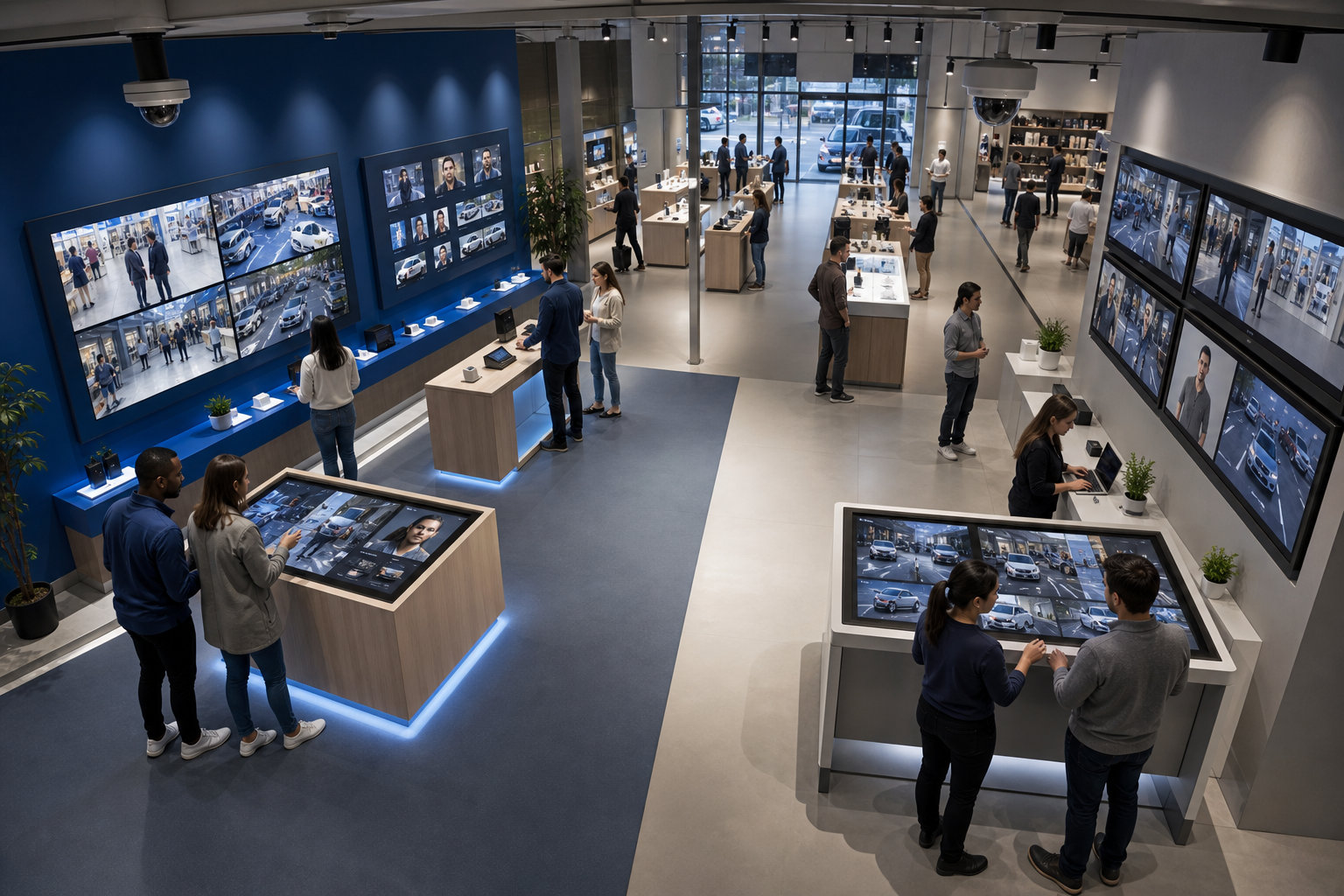
For extra context on cross-industry uses, you can scan this related airport and transit comparison and this campus comparison with Verkada. They show how needs shift by site type, even with the same core tech.
What Retail Chains Actually Need From Face Recognition and License Plate Software
Retail is messy. Lighting changes from bright entryways to dim aisles. Crowds surge on weekends and are calm on weekdays. Parking lots face glare, rain, and dirty plates.
Staff turnover, so your watchlists must update fast. And ORC rings test your response time. That is why face recognition and license plate reading must work beyond lab demos.
You also have a time problem. About 85% of CCTV footage is never reviewed. That means missed events, slow incident building, and delayed police reports. Real-time AI alerting can flip that equation by flagging the two minutes that matter in a 12-hour shift.
Moreover, big chains rarely rip out cameras. You need analytics that plug into the cameras you already have, across brands and models. A vendor that works with existing cameras across 200+ brands removes risk and cost. Central oversight then ties it all together, so HQ sees events across 10 to 500 stores in one place.
The Five Dimensions That Matter
- Accuracy in stores: Varying light, occlusions, masks, hats, and crowd density
- ANPR/LPR reliability: Mixed plate styles, night glare, bad weather in lots
- Centralized management: One dashboard to run 10–500+ sites
- Infrastructure fit: Use existing IP cameras, avoid forced rip-and-replace
- Compliance: GDPR, BIPA, and state biometric laws, with opt-in controls and audit logs
For compliance basics, review the EU’s GDPR overview and the Illinois Biometric Information Privacy Act text. These rules set consent, retention, and disclosure baselines. In stores, that means clear signage, tight role-based access, and proof of purpose for any watchlist use.
Also Read!
Best Fire Smoke Detection Security Camera for Corporate Offices and Campuses in 2026
How to Set Up Fire and Smoke Detection Using Security Cameras on Corporate Campuses
VideoraIQ Overview: Strengths and Weaknesses for Retail Chains
VideoraIQ is a cloud-native AI video analytics platform with nine detection engines, including face recognition and ANPR. It runs on your current IP cameras and needs no extra on-site servers. For chains, that matters: HQ can add sites with a few clicks and avoid local compute, UPS, or rack space.
The platform posts <3 second-latency alerts and claims 99.4% detection accuracy across engines. In practice, that speed helps floor staff catch theft-in-progress, not just file a clean clip later. Real-time alerts include video proof, a location tag, and a timestamp, so your team acts, not hunts.
Retail-focused features include cashier absence detection, zone-based monitoring, and heatmap analytics for spotting loss patterns. A chain running 10,000+ monitored cameras across 7+ countries shows real-world scale. The face recognition and license plate reading engines sit beside intrusion, fire and smoke, and unattended object detection, which adds value for backroom, lot, and perimeter risk.
"We integrated VideoraIQ with our existing CCTV setup, and within a few weeks it flagged a pattern of after-hours activity around the cashier area that we'd never noticed before. After reviewing the footage, we uncovered an internal theft issue. The loss we prevented from that single incident more than covered several months of the subscription." — Sujata Rao, Regional Operations Manager, 14-Location Retail Chain
What Stands Out and What’s Missing
- Strong for operations and security: sub-3s alerts, zone rules, cashier checks
- No new hardware: works with existing cameras across 200+ brands; cloud-based with no need for on-premise servers
- Tiered plans map to chain sizes: Starter (up to 20 cameras), Professional (up to 200), Enterprise (unlimited)
Now the trade-offs. VideoraIQ’s roots are in high-security zone monitoring. The product docs and roadmap lean toward security outcomes more than retail merchandising.
Shopper demographics or POS tie-ins may be less mature than forensic-first retail tools. Also, cloud-only design can raise data sovereignty questions for chains with rules that restrict cloud use. While VideoraIQ is GDPR and HIPAA compliant, some legal teams still prefer an on-prem option.
For retail chains that need live security signals across stores, VideoraIQ’s real-time posture is a fit. If your brief leans toward market research from cameras, keep reading. BriefCam’s history there is strong.
BriefCam Overview: Strengths and Weaknesses for Retail Chains
BriefCam, a Canon Group company, is known for VIDEO SYNOPSIS, a feature that condenses hours of footage into minutes by layering events in a single view. For LP teams, that turns a day of review into a short session. You scan, filter, and export fast. In forensic mode, that speed can shape the next shift’s plan.
BriefCam also offers face recognition with demographic analysis. It can tag age and gender ranges to help marketing teams read store traffic patterns. For mixed-use teams. LP plus marketing, that dual view is useful. And because BriefCam integrates deeply with leading VMS platforms like Milestone and Genetec, it often slides into existing security stacks with less retraining for operators used to those consoles.
On deployment, BriefCam shines for organizations that want on-premise control. Chains with strict data governance, or those that must keep footage inside a private network, can meet policy without a cloud dependency. BriefCam’s retail case studies span years, so buyers can see proof points and playbooks.
Strengths and The Fine Print
- VIDEO SYNOPSIS for fast forensic review and incident building
- Demographic analytics for age/gender insights beyond security use
- On-premise deployment with VMS integrations (Milestone, Genetec)
Now the trade-offs for multi-store rollouts. Most deployments need on-site servers, which means capex per location or a regional hub. That adds hardware sourcing, racking, patching, and power/UPS work. License plate recognition exists but can require extra modules, which adds planning and cost lines.
Pricing tends to be enterprise and quote-based, with fewer self-serve tiers. Real-time alert latency can be longer than cloud-first tools since processing lives on local compute. At scale, say 30 to 200 stores, that means more moving parts to keep aligned.
If your main job is post-event forensics, you will like BriefCam. If your main job is live response across many stores with face recognition and license plate reading in one stack, you may want cloud-first speed.
Also Read!
VideoraIQ vs Avigilon for Corporate Campuses: Which Is Better for Fire and Smoke Detection?
Best AI Add-On for Existing Security Cameras for Corporate Offices and Campuses in 2026
Feature-by-Feature Comparison: VideoraIQ vs BriefCam for Retail
Both platforms can serve a chain. The right pick depends on the job. Here is how they stack up by key dimension, with a clear call on each.
1) Face Recognition Accuracy
VideoraIQ claims 99.4% detection accuracy and delivers sub-3-second alerts. BriefCam is strong on recognition and adds demographic analysis at the same time. Winner: Tie. VideoraIQ for live alerts; BriefCam for analytics depth.
2) License Plate / ANPR
VideoraIQ includes ANPR as one of its nine built-in engines. BriefCam supports LPR but may need add-on modules. Winner: VideoraIQ for out-of-box availability and simpler rollout of lots.
3) Multi-Location Scalability
VideoraIQ’s cloud model requires no on-site servers and scales from 10 to 500+ stores with one dashboard. BriefCam can scale, but you manage per-site servers or a hub design. Winner: VideoraIQ for chains with 10+ locations.
4) Existing Camera Compatibility
VideoraIQ works with existing cameras across 200+ brands, avoiding rip-and-replace. BriefCam integrates through major VMS platforms, which also provides strong camera coverage via the VMS layer. Winner: Slight edge to VideoraIQ for direct camera support breadth.
5) Real-Time Alerting
VideoraIQ’s <3 seconds alert latency with video proof, location tag, and timestamp stands out. BriefCam shines more in forensic, post-event review. Winner: VideoraIQ for real-time response; BriefCam for forensics.
6) Retail-Specific Analytics
VideoraIQ focuses on loss prevention operations: cashier absence detection, heatmaps & analytics, and zone-based monitoring. BriefCam offers demographics and VIDEO SYNOPSIS for investigations and marketing. Winner: BriefCam for marketing analytics; VideoraIQ for operational security.
7) Compliance and Privacy
Both are GDPR-aware. VideoraIQ also lists HIPAA compliant status, which signals strong data handling controls. Either way, you must manage biometric consent, retention limits, and access logs, especially for face recognition and license plate reading across public-facing sites. Winner: Tie, policy and process decide more than the tool.
8) Deployment Complexity
VideoraIQ is cloud-based with no need for on-premise servers, so pilots and rollouts move fast. BriefCam’s on-prem design adds hardware, patching, and site-to-site variance. Winner: VideoraIQ for speed to deploy across locations.
We recommend adding an HTML comparison table here so buyers can scan winners per category at a glance.
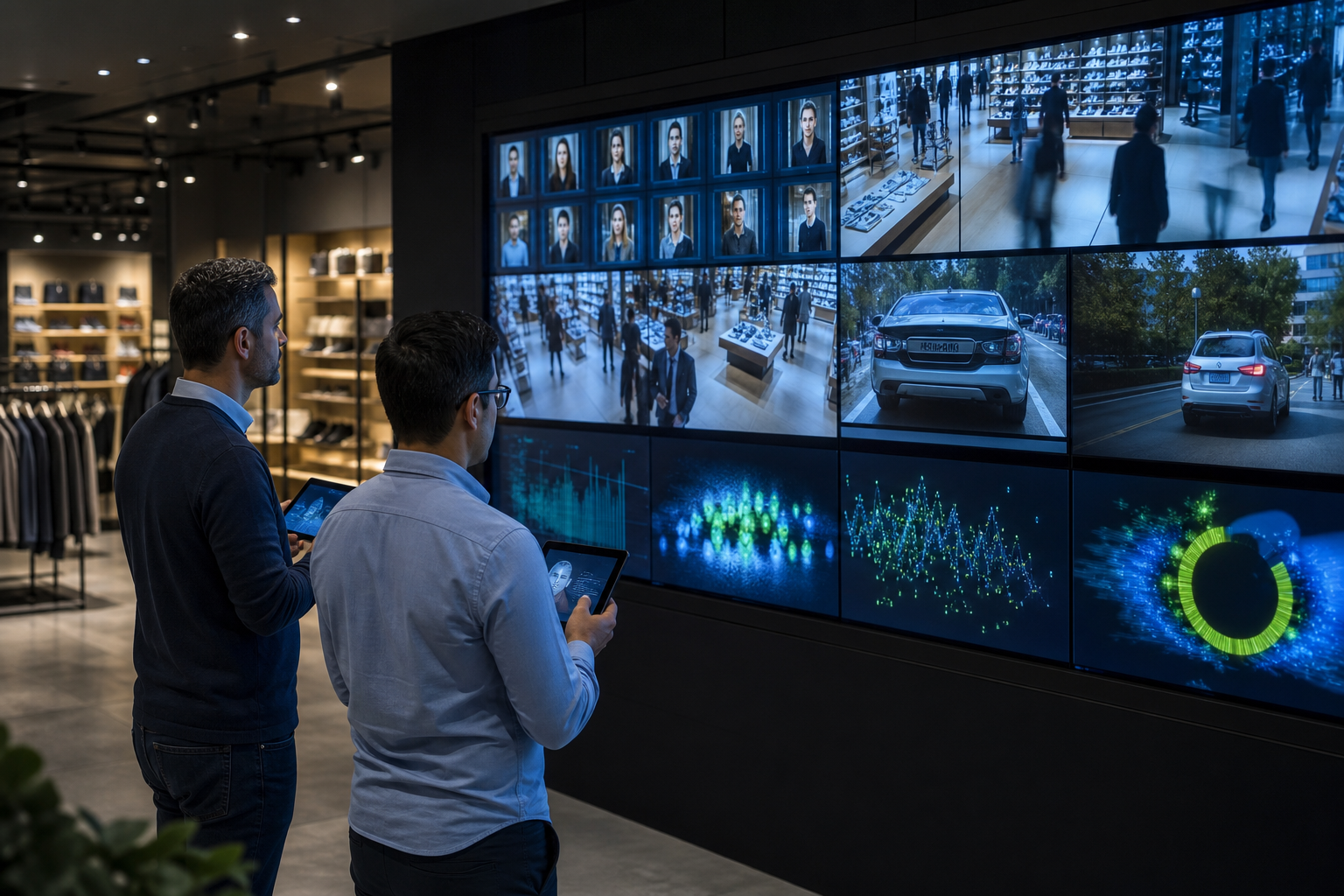
**Get a side-by-side demo today →
Pricing Comparison: How Costs Scale for Multi-Store Retail Deployments
VideoraIQ uses a tiered subscription. Starter covers up to 20 cameras with real-time alerts and 7-day cloud retention. Professional raises that to 200 cameras with all nine AI engines and 30-day retention. Enterprise supports unlimited cameras, custom AI models, and 90-day cloud retention. This structure makes store-by-store estimates clear, even if the exact per-camera price is not public.
BriefCam pricing is quote-based. You plan licenses by server or channel, and you also buy and maintain on-prem servers. For a 15‑store chain with about 300 cameras, those servers add capex per site or per hub, plus IT time for patching and monitoring. Network costs also enter if you centralize compute. Exact pricing varies by config and must come from vendor quotes.
Total Cost of Ownership Inputs
- Software: subscriptions or perpetual licenses, plus modules
- Hardware: on-prem servers, storage, UPS, racks, and spares (BriefCam path)
- IT time: setup, patching, monitoring, and audits
- Network: bandwidth for cloud upload or hub links
- Cameras: usually reused — no additional hardware for VideoraIQ integrations
As of 2026, cloud tools reduce capex and speed pilots. On-prem tools can fit chains with sunk hardware and strict data governance. For face recognition and license plate reading at dozens of stores, the delta in server costs and IT time tends to be the swing factor.
Verdict: Which Platform Wins for Retail Chain Face Recognition and License Plate Security
If you need fast multi-location deployment, real-time operational alerts, and combined engines out of the box, VideoraIQ is the better fit. Sub-3-second alerts, zone rules, and cashier absence detection support live loss prevention across many stores without adding servers. The pricing tiers (Starter, Professional, Enterprise) also make planning simple.
If you prioritize forensic review and shopper demographics, BriefCam is the stronger pick. VIDEO SYNOPSIS is rare and useful. The on-prem option gives legal teams tight control, and deep Milestone/Genetec integrations match security playbooks that many retailers already use.
Neither platform covers every single retail ask. Some chains even deploy a mix: cloud for live response, on-prem for forensics and marketing. Your call should start with the job: stop theft fast, build cases fast, or arm marketing with traffic insights from cameras.
Quick Decision Guide
- Choose VideoraIQ if you need real-time alerts (<3s), easy scaling without on-site servers, and out-of-box face recognition and license plate reading across many stores.
- Choose BriefCam if you need VIDEO SYNOPSIS for investigations, marketing demographics, and on-prem governance tied to a Milestone or Genetec VMS.
- Consider a hybrid if LP needs live alerts while investigations and marketing need forensic review and people metrics.
**Book a fast demo, no IT lift →
Disclosure: This article is published by VideoraIQ. The analysis reflects an independent, retail-focused view based on the features and constraints described above, including GDPR and HIPAA compliant claims and performance figures such as 99.4% detection accuracy, <3 seconds alert latency, and 10,000+ cameras monitored.