

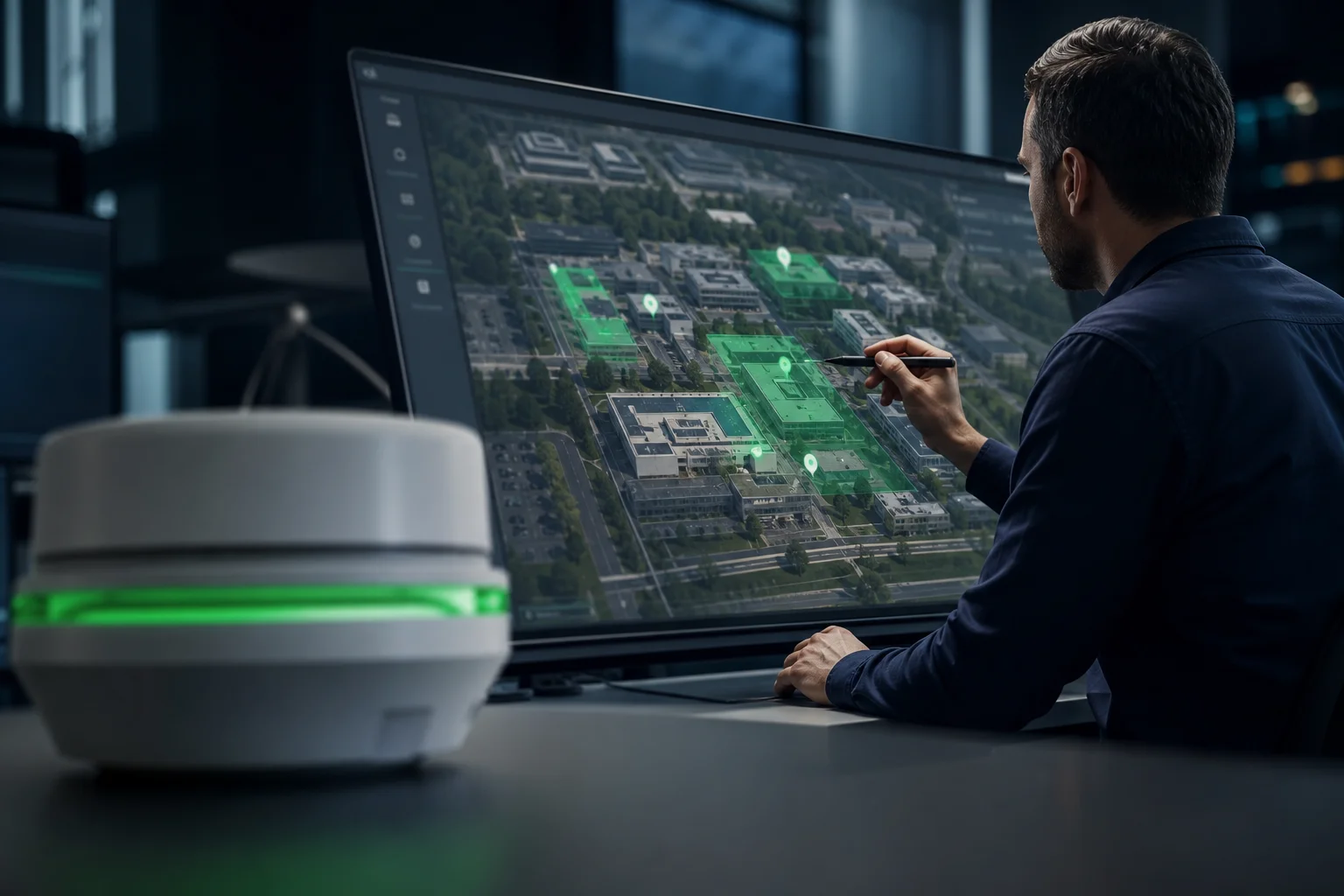
A HALO sensor is a privacy-safe ceiling device that detects vaping, THC, air quality issues, and aggression cues. It works by reading air particles, sound patterns, and environmental changes to trigger real-time alerts. Unlike cameras, it does not record video or store audio.
85% of CCTV footage is never reviewed. For example, it flags aerosol particles from e‑cigs, THC traces, sharp impulse sounds like gunshots, or a rapid rise in volatile organic compounds (VOCs) and CO2. As a result, you get quicker notice in places where cameras are banned or less useful, like bathrooms, nurse stations, dorms, or locker rooms.
Moreover, pairing it with video analytics in halls or entries gives you context without invading privacy in sensitive rooms. Therefore, you can uphold policy, act faster, and still respect people’s rights. In 2026, this balance matters as policies tighten and facilities face real safety and wellness goals.
What Is a HALO Sensor and What Does It Detect?
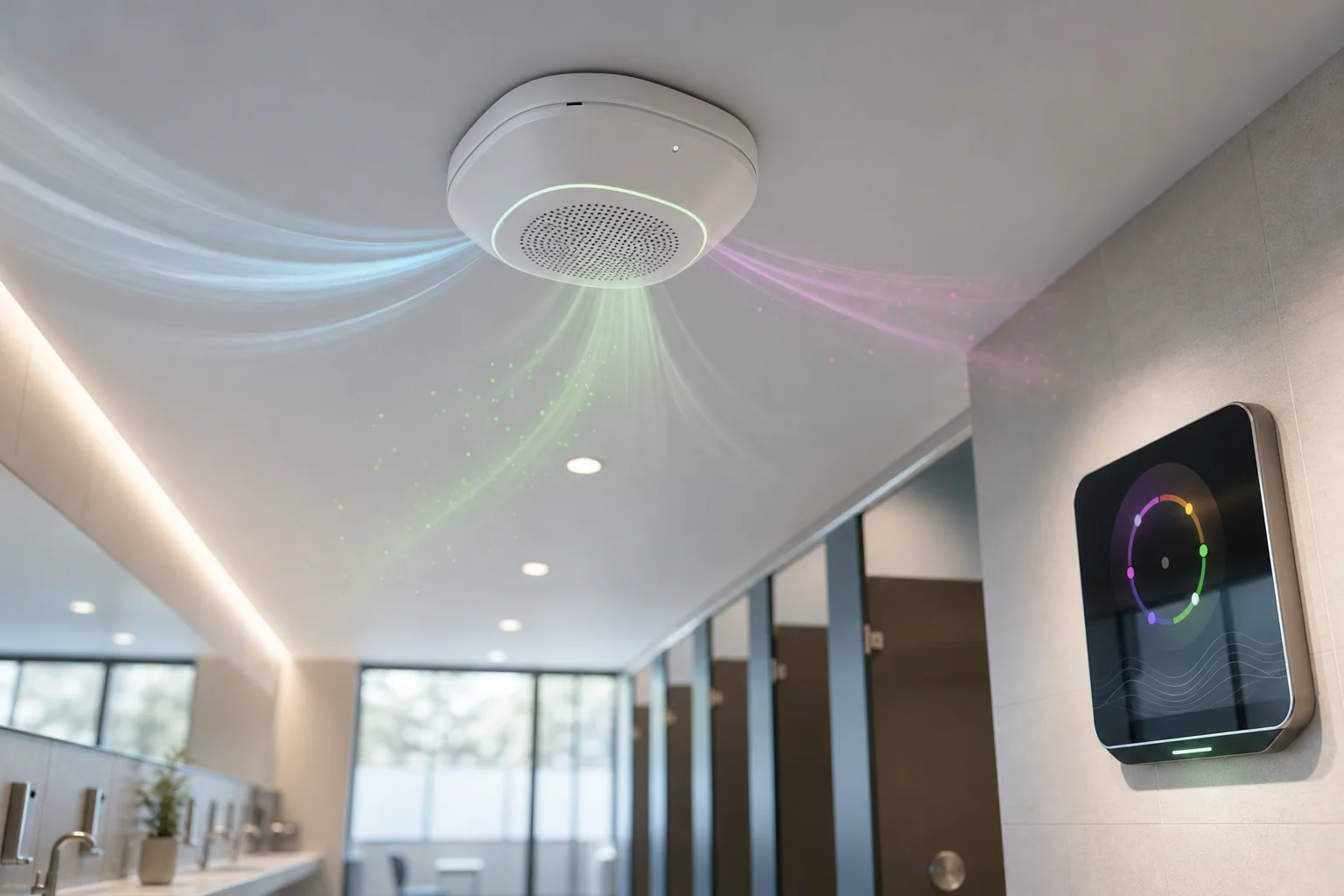
A HALO sensor (by IPVideo Corporation) is a multi-sensor unit that mounts on a ceiling or wall and samples the air and sound levels around it. It is built for places where cameras are not a fit or are not allowed. It focuses on signals that point to risk: chemicals in the air, sharp or aggressive sound patterns, and changes in the room’s environment. To be clear, it does not record video and it does not store intelligible voice audio. That privacy-safe design is a core reason schools, clinics, and offices use it.
Specifically, the device detects vaping aerosols, THC markers, and nicotine. It also tracks CO2, VOCs, temperature, and humidity to spot poor air quality that can raise headaches or slow focus. In addition, it classifies spikes in sound pressure that match aggression, fighting, or a gunshot impulse. It then pushes an alert to your dashboard, email, or SMS with time and location so you can respond.
Understanding how a halo sensor does work helps you choose the right zones and set the right thresholds. For a bathroom, you might tune nicotine and THC alerts tighter. For a lab or clinic, you might care more about VOCs and CO2. For a hallway near an exit, aggression and gunshot patterns may be the top watch items.
Detections at a Glance
| Signal Type | What It Looks For | Example Use |
|---|---|---|
| Vaping/THC | Aerosols, THC markers, nicotine | Stop e‑cigs in restrooms |
| Air Quality | CO2, VOCs, temp, humidity | Improve ventilation plans |
| Aggression Noise | Raised dB, spectral cues | De‑escalate fights faster |
| Gunshot Impulse | Short, high‑energy spike | Trigger lockdown workflow |
Furthermore, VOCs are a helpful proxy for chemical loads indoors. If you need a primer, see this overview of volatile organic compounds. On the sound side, the device uses pattern matching to flag events without storing voices. That protects privacy while still alerting you to risk.
Privacy and Compliance That Still Works
- No camera lens or video recording.
- No storage of intelligible voice audio.
- Alerts log time and location only.
- Fits common privacy frameworks like GDPR principles and HIPAA awareness zones when configured correctly.
Therefore, you can deploy in sensitive areas and still meet policy goals on privacy and data minimization.
How HALO Sensors Work: A Step-by-Step Breakdown
At the core, the sensor samples air and sound in short cycles, then runs those samples through built-in models. First, chemical sensing checks for aerosol density, THC, nicotine, and VOC spikes. Second, air quality monitors track CO2, temperature, and humidity shifts that affect comfort and health. Third, sound classification watches for aggression profiles and gunshot-like impulses. Each path feeds into a local rules engine that decides when to alert.
Moreover, particle and VOC readings give early signals that people are vaping nearby. For reference, VOC health context is covered by the WHO Air Quality and Health program. On the audio side, gunshot impulse detection looks for fast, high‑energy transients distinct from doors slamming; you can read more background in the gunshot detection system overview.
Specifically, a halo sensor does work through four layers: sensing, feature extraction, classification, and alerting. Sensing grabs raw data. Feature extraction turns it into useful markers (e.g., aerosol particle size distribution).
Classification scores risk. Alerting sends a message when a threshold is crossed. You can tune those thresholds by zone and time of day.
Step 1: Mount the Sensor
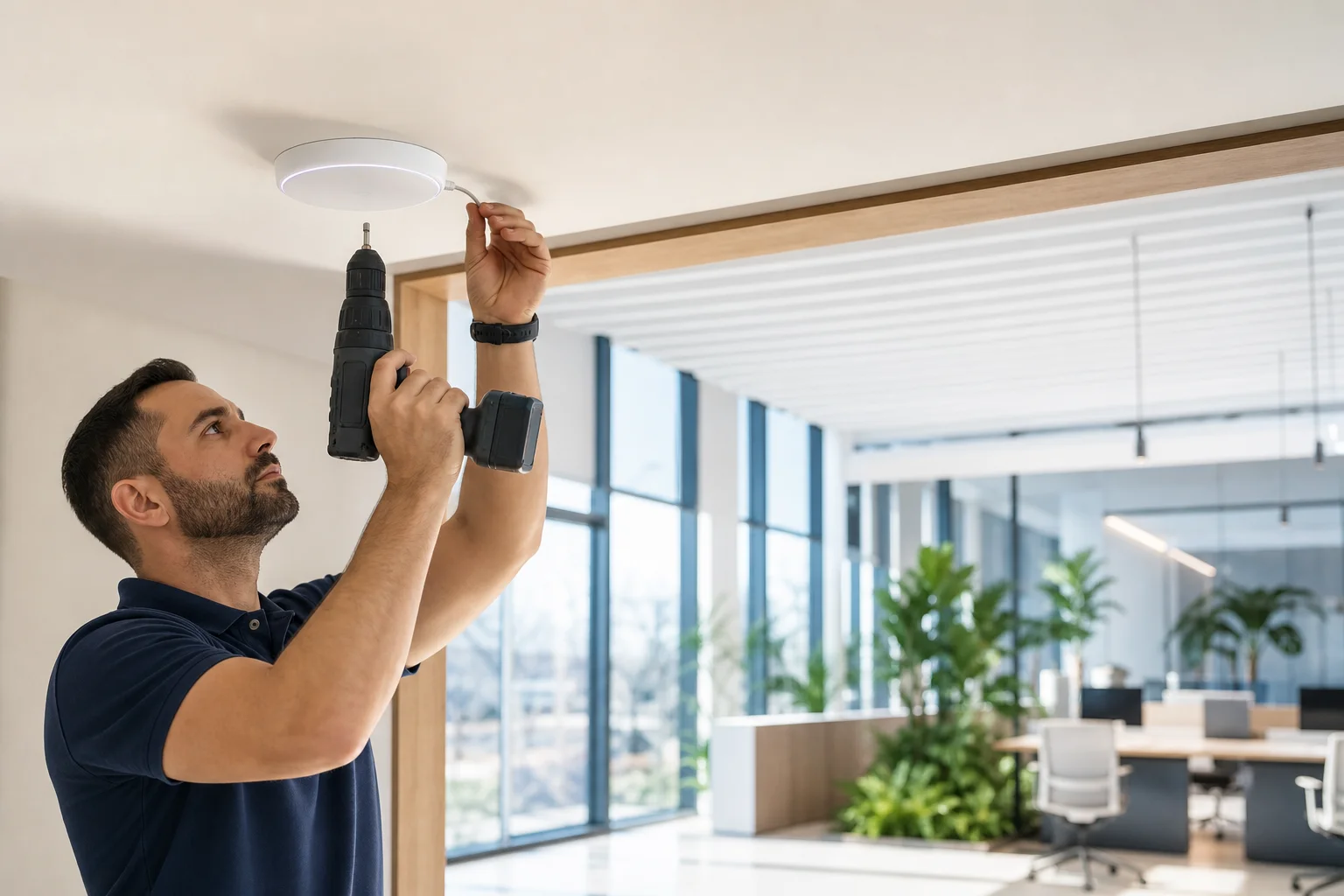
Install on a ceiling in the target room, away from vents that could dilute samples. Use screws and anchors rated for the surface. Keep line-of-flow with where aerosol might rise.
Step 2: Connect Power and Network
Use PoE if available to reduce cabling and improve uptime. If you need a refresher, Power over Ethernet shows how power and data travel on one cable. Assign a static IP or a reserved DHCP lease for easy management.
Step 3: Enroll in the Dashboard
Add the device to your management portal. Name it by building, floor, and room (e.g., “B2‑North‑Restroom‑03”). That clear tag speeds response and reporting.
Step 4: Configure Thresholds and Schedules
Set alert thresholds for vaping/THC, air quality, and aggression. Then apply schedules by bell times or shifts. For example, tighten vaping alerts during school hours and loosen after-hours to reduce false flags from cleaning supplies.
Step 5: Test and Train
Trigger test alerts with safe aerosols or canned sound patterns. Confirm that emails and SMS arrive in under 3 seconds, the common target for fast notice. Finally, train staff on actions tied to each alert type.
Therefore, you avoid noisy alerts and gain trust in the system. As a result, your team moves from guesswork to clear, repeatable steps.
Also Read!
A Complete Guide to Intrusion Alarm Systems: How They Work, Types, and How to Choose One
The Complete Guide to Fisheye Cameras: How They Work, When to Use Them, and How to Choose One
Common Mistakes When Choosing Security Sensors
A single sensor type rarely tells the full story. If you rely only on air signals, you may miss loitering, propped doors, or trespass in nearby halls. On the flip side, cameras in public areas do not see what happens in a bathroom or nurse station. A balanced mix is the win.
However, people skip integration planning. If your HALO alerts do not post into your incident tool, your team will chase emails. Moreover, many buyers leave defaults in place. That leads to false alerts from cleaning sprays or HVAC shifts. Tune thresholds by zone and time to reduce noise.
In addition, privacy gets overlooked. A halo sensor does work without video and without storing voices, but you still need a data map: what you collect, where it goes, and who can see it. That helps you follow privacy frameworks like GDPR principles or HIPAA awareness in clinical areas.
"We went from finding out about incidents in the morning briefing to being notified in real time. VideoraIQ caught an intruder at 2AM that our overnight guard missed. That one event alone justified the entire platform cost." — Ananya Mehta, Head of Facilities, 200-Camera Corporate Campus
Avoid These Pitfalls First
- Relying on one signal: Pair air, audio classification, and video context.
- Skipping integration: Feed alerts into the same console your team already uses.
- Ignoring thresholds: Calibrate by room type and schedule.
- Neglecting a video layer: Use corridor cameras to add visual proof while keeping sensitive rooms camera-free.
Therefore, map your risks, then choose the right mix rather than the loudest single device.
Tools and Alternatives for full Security Monitoring
If you want air-focused monitoring, HALO by IPVideo is the best-known brand in the category. You can also look at Verkada sensor, Triton vape detectors, and Soter FlySense. Each covers vaping/THC and basic air quality. Some include aggression or keyword alerts; others keep to ambient metrics. The right pick depends on your privacy stance, target rooms, and budget.
For visual layers, AI video platforms like VideoraIQ work with your existing cameras across 200+ brands and add nine detection engines, including intrusion, fire and smoke, and unattended baggage. With 99.4% detection accuracy, <3 seconds alert latency, and real-time alerts that include video proof, a location tag, and a timestamp, tools like VideoraIQ can provide the context your air sensors lack. They are also GDPR compliant and HIPAA compliant when configured for healthcare workflows. Today, 10,000+ cameras are monitored on such platforms across 7+ countries.
A halo sensor does work best when paired with a visual layer outside sensitive areas. That way, a vaping alert in a restroom can link to nearby hall cameras for who-entered/who-exited context without filming inside the restroom.
Where Each Tool Shines
| Tool Type | Focus Area | Privacy Profile | Good For |
|---|---|---|---|
| HALO (IPVideo) | Vaping/THC, air, aggression | No video; no stored voice | Schools, clinics, offices |
| Verkada sensor | Air, vape alerts | Ties into vendor cams | Single-vendor stacks |
| Triton vape | Vape detection | Air only | Budget restroom installs |
| Soter FlySense | Vape/air | Air only | Rapid school rollouts |
| VideoraIQ (AI video) | Intrusion, fire/smoke, unattended baggage, etc. | Works with 200+ brands | Multi-site camera fleets |
What to Do Next: Building a Layered Security Strategy
Start small, but plan the system. A short pilot beats a long debate. Here is a quick plan you can run this month to prove value and reduce risk.
Step 1: Audit What You Have
List current sensors and cameras by room. Note blind zones like restrooms, labs, or stairwells. Capture where alerts land today (email, SMS, console).
Step 2: Identify Gaps by Signal Type
Mark which areas need air signals, which need audio classification, and which need video context. A halo sensor does work in privacy-sensitive rooms; cameras cover public corridors.
Step 3: Trial One Zone
Pick one high-risk zone (e.g., B‑Wing restrooms). Install one air sensor and link it to your alert console. Define a clear, two-week test window.
Step 4: Prove the Alert Flow
Trigger safe tests. Verify who sees alerts, what they do, and how fast they respond. Aim for clear logs with time, location, and action taken.
Step 5: Expand with Rules
Tune thresholds to cut false alerts. Then scale to the next two zones. Add a video layer outside sensitive rooms to provide proof without filming private spaces.
Therefore, you get results fast, build trust, and avoid wasted spend.
Key Takeaways
- A HALO device detects vaping/THC, air quality shifts, aggression noise, and gunshot-like impulses without recording video or storing voices.
- Air sensors excel in private rooms; video analytics add proof and response workflows in public areas.
- Tune thresholds and schedules by room type to cut false alerts from cleaners or HVAC cycles.
- Pair privacy goals with safety goals: log only what you need and send alerts to one console your team already uses.
What to Do This Week
Walk the site with a floor map and mark private areas where cameras do not fit. Choose one pilot zone and plan five tests you can run in two weeks. Set thresholds, schedule alerts to your main console, and log response times. Then write a short report with wins, misses, and next steps.