
Think about the last time your office reported a break-in or a retail store flagged a shoplifting incident. In most cases, the security team reviewed hours of footage after the incident had already occurred. That is the core problem with traditional surveillance: it tells you what happened, not what is happening.
Live security cameras change that entirely.
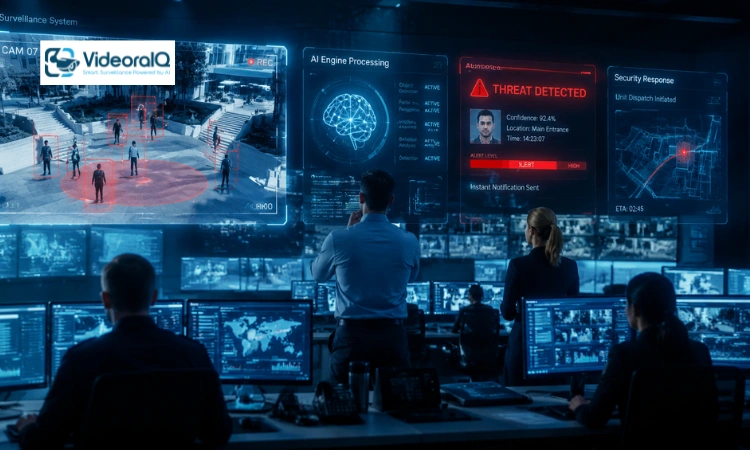
Unlike passive CCTV systems that simply record and store footage, live security cameras give you real-time visibility into what is happening on your premises at any given moment. Powered by AI, these systems don’t just watch; they analyze, detect, and alert. They are the difference between reacting to a threat and stopping it before it escalates. This guide covers everything you need to know about live security cameras, how they work, what makes them smarter than traditional systems, and how platforms like Videoraiq are transforming modern surveillance.
Listen to the Podcast.
What Are Live Security Cameras?
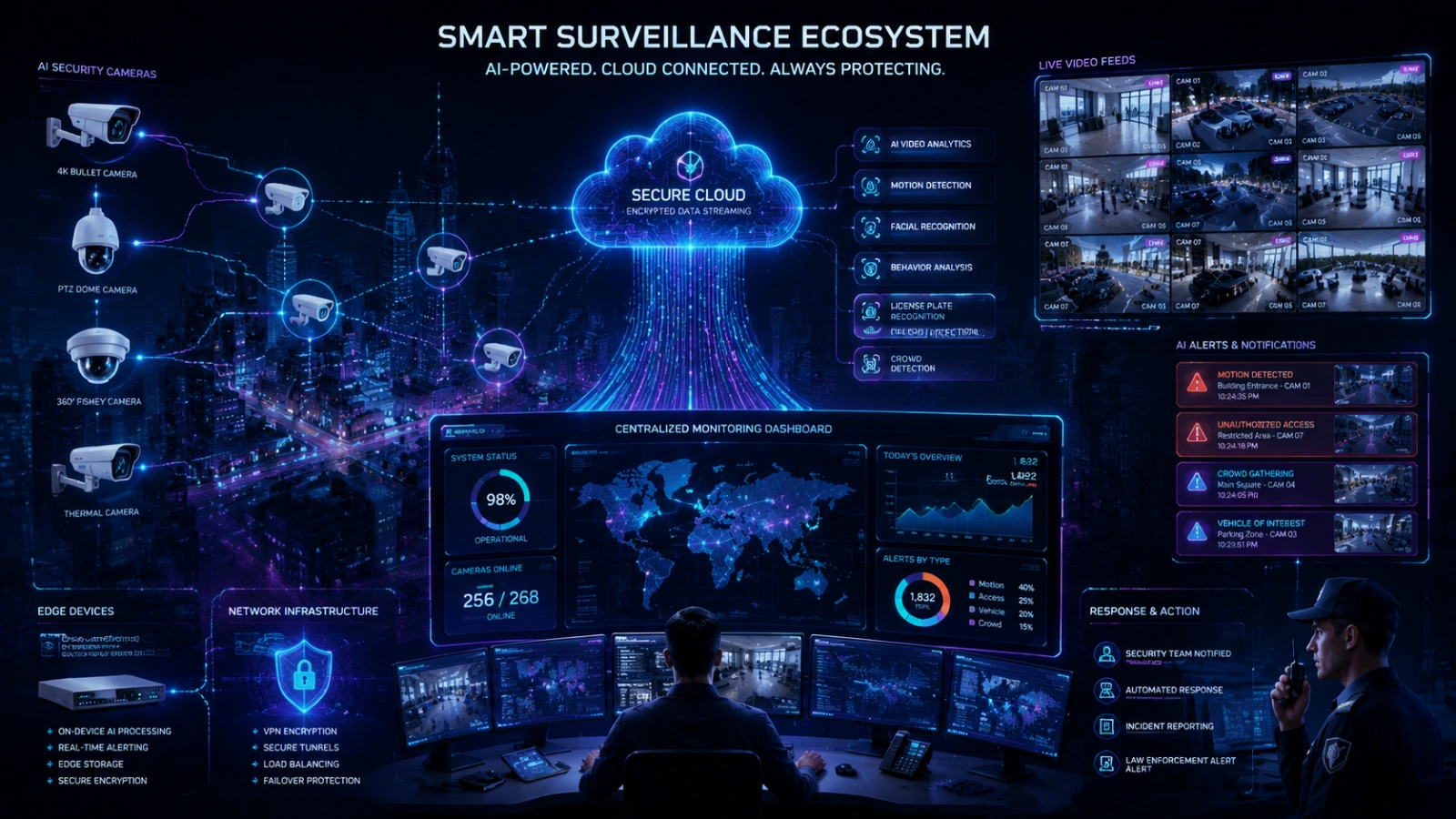
Live security cameras are network-connected surveillance devices that stream video footage in real time to a monitoring system, mobile device, or cloud platform. Unlike old-school CCTV setups that store footage on local hard drives for later review, live security cameras give you an uninterrupted, real-time view of your property from anywhere in the world.
But the modern definition goes further than just “live video.” Today’s live security cameras are AI-powered systems capable of analyzing what they see. They can identify people, detect unusual behavior, recognize vehicles, and trigger automated alerts all without a human staring at a monitor all day.
There are broadly three levels of camera surveillance:
- Basic CCTV — Records and stores footage passively. No real-time analysis or alerts.
- Live surveillance cameras — Stream live video that can be monitored remotely by a person or security team.
- AI-powered live security cameras — Combine live streaming with machine learning to analyze events, detect threats, and send instant notifications automatically.
Most modern businesses are now moving toward the third category AI-powered live security cameras that deliver security surveillance as an intelligent, always-on system rather than a passive recording tool.
How Live Security Cameras Work: A Step-by-Step Breakdown

Understanding the technology behind live security cameras helps you choose the right system and get the most out of it. Here is how the process works from the moment a camera is installed to the moment you receive an alert on your phone.
Step 1: Video Capture Through Smart Cameras
The process starts with the camera itself. Modern live security cameras capture high-definition video, often at 4K resolution, continuously throughout the day and night. Many cameras are equipped with wide-angle lenses, infrared night vision, and weather-resistant housings for 24/7 outdoor coverage.
Step 2: AI Video Processing and Analytics
The captured footage is processed either on the camera itself (edge AI) or sent to a cloud server for analysis. AI models analyze every frame in real time, looking for specific objects, people, vehicles, or movements that match defined threat patterns.
Step 3: Threat Detection and Event Recognition
The AI engine classifies what it sees. It can distinguish a person from a dog, a forklift from a car, or normal foot traffic from someone loitering near a restricted zone. This is where AI security cameras dramatically outperform traditional systems; they don’t just detect motion; they understand it.
Step 4: Real-Time Alerts and Notifications
When a live security camera detects a defined threat or unusual event, it immediately sends an alert. This can be a push notification to a mobile app, an email, an SMS, or an integration with your existing alarm system — all in a matter of seconds.
Step 5: Live Monitoring and Response
Security teams or operators can pull up a live feed instantly when an alert is triggered. Many live camera monitoring platforms allow for two-way audio, remote PTZ (pan-tilt-zoom) control, and direct coordination with on-ground security personnel or emergency services.
Live Security Cameras vs Traditional CCTV Systems
If you are still running a traditional CCTV setup, here is a direct comparison that shows why the industry is shifting rapidly toward live security cameras:
| Monitoring approach | Passive recording | Real-time monitoring |
|---|---|---|
| Security posture | Reactive | Proactive |
| Footage review | Manual, after the fact | AI-powered, automatic |
| Alert speed | Delayed (hours or days) | Instant |
| Accessibility | On-site only | Remote, from any device |
| Automation | Minimal | Intelligent, AI-driven |
| Storage | Local hard drives | Cloud or hybrid |
| Scalability | Limited | Easily scalable |
The contrast is clear. Traditional CCTV is a documentation tool. Live security cameras are an active security system, one that works around the clock to detect and prevent threats rather than simply recording them.
Key Features of AI Security Cameras
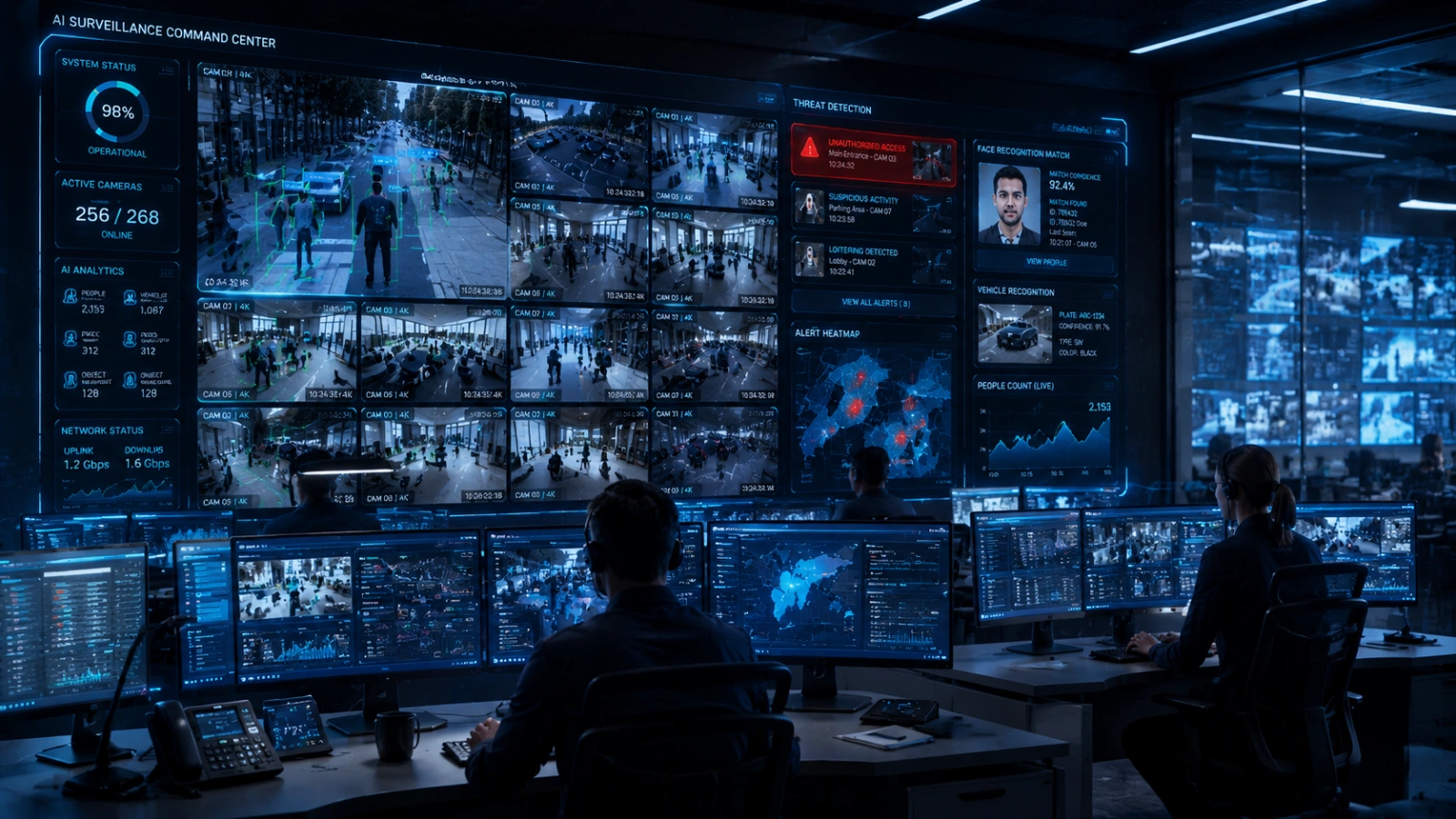
Not all live security cameras are built the same. Here are the core features that define a high-performance AI security camera system:
AI Motion Detection
Advanced motion detection doesn’t just flag every shadow or swaying tree. AI-powered live security cameras analyze motion context so you get alerts only when there is genuine human or vehicle movement that matters.
Facial Recognition
Modern AI security cameras can match faces against watchlists in real time, helping businesses manage access control and flag known threats the moment they appear on camera.
Object and Vehicle Detection
Live security cameras can identify and classify specific objects — packages, weapons, machinery — and vehicles by type or license plate. This is especially valuable in logistics, manufacturing, and parking management.
Behavioral Analysis
Beyond identifying who is in frame, AI systems analyze what they are doing. Loitering, tailgating, crowd formation, or running in restricted areas can all trigger automatic alerts.
Cloud Video Storage
Modern video security systems store footage on encrypted cloud servers, making it accessible remotely and immune to on-site tampering or hardware failure.
Remote Mobile Monitoring
Access live feeds, review footage, and receive alerts directly from your smartphone. Live camera monitoring no longer requires a dedicated security operations center.
Night Vision and Smart Tracking
High-quality live security cameras use infrared and thermal imaging to maintain clear visibility in complete darkness and can automatically track moving subjects across multiple camera feeds.
Benefits of Live Camera Monitoring
Switching from passive recording to live camera monitoring delivers real, measurable advantages for businesses:
Faster Incident Response — When an alert is triggered, your team knows in seconds, not hours. That speed can be the difference between catching a thief in the act and reviewing footage the next morning.
Theft Prevention — Retail stores using live security cameras report significant reductions in shoplifting because the system detects suspicious behavior before the item even leaves the store.
Reduced False Alarms — AI filtering means your team only gets alerted to real events, not every leaf that blows past a sensor. This dramatically reduces alarm fatigue.
Lower Operational Costs — Intelligent live security cameras reduce the need for large on-site security teams by automating routine monitoring tasks.
24/7 Visibility — Your premises are watched every minute of every day, even during holidays, nights, and weekends — without overtime costs.
Remote Access — Business owners and security managers can check in on any location from their phone, whether they are across town or across the world.
Real-World Examples:
- A warehouse uses perimeter-based live security cameras to detect unauthorized after-hours entry and alert the on-call security team before an intruder reaches the storage floor.
- A retail chain deploys AI security cameras at checkout areas to flag suspicious customer behavior, reducing inventory shrinkage by over 30%.
- A construction site uses live camera monitoring to ensure no equipment theft occurs overnight and that only authorized personnel access the site during working hours.
Industries Using Live Security Cameras
Live security cameras are no longer limited to banks and government facilities. Here is where AI-powered surveillance is making the biggest impact:
Retail Stores
Monitoring customer behavior, preventing shoplifting, and managing store traffic flow — all in real time.
Warehouses and Logistics
Tracking inventory movement, preventing theft, monitoring forklift activity, and ensuring worker safety on the floor.
Manufacturing Facilities
Ensuring compliance with safety protocols, monitoring restricted equipment zones, and detecting unauthorized access.
Construction Sites
Remote site monitoring, theft prevention, and workforce activity tracking across large, open areas.
Corporate Offices
Managing visitor access, monitoring server rooms, and ensuring only authorized personnel enter sensitive areas.
Smart Cities and Public Infrastructure
Municipalities are deploying live security cameras at intersections, transit hubs, and public spaces to monitor crowd behavior, manage traffic, and improve emergency response times.
Common Challenges in Smart Surveillance
Live security cameras and AI security cameras bring tremendous benefits, but it is important to acknowledge the challenges too:
Privacy Concerns — Employees, customers, and the public have legitimate expectations around how surveillance footage is collected and used. Clear policies and visible signage are essential.
Cybersecurity Risks — Network-connected live security cameras can be vulnerable to hacking if not properly secured. Using encrypted connections, regular firmware updates, and strong authentication protocols is non-negotiable.
AI Accuracy Issues — No AI system is 100% accurate. Poorly trained models can produce false positives or, worse, miss real threats. Choosing a platform with continuously improving AI is critical.
Cloud Storage Costs — Storing large volumes of high-definition footage in the cloud can become expensive at scale. Businesses should evaluate hybrid storage options.
Regulatory Compliance — Depending on your industry and region, there may be strict rules around data retention, facial recognition, and surveillance disclosure. Legal compliance must be built into your surveillance strategy from day one.
Read More :
Why Video Analytics AI Is Essential for Modern Security?
Top Benefits of Using CCTV Video Analytics Software
How VideoraIQ Enhances Smart Surveillance
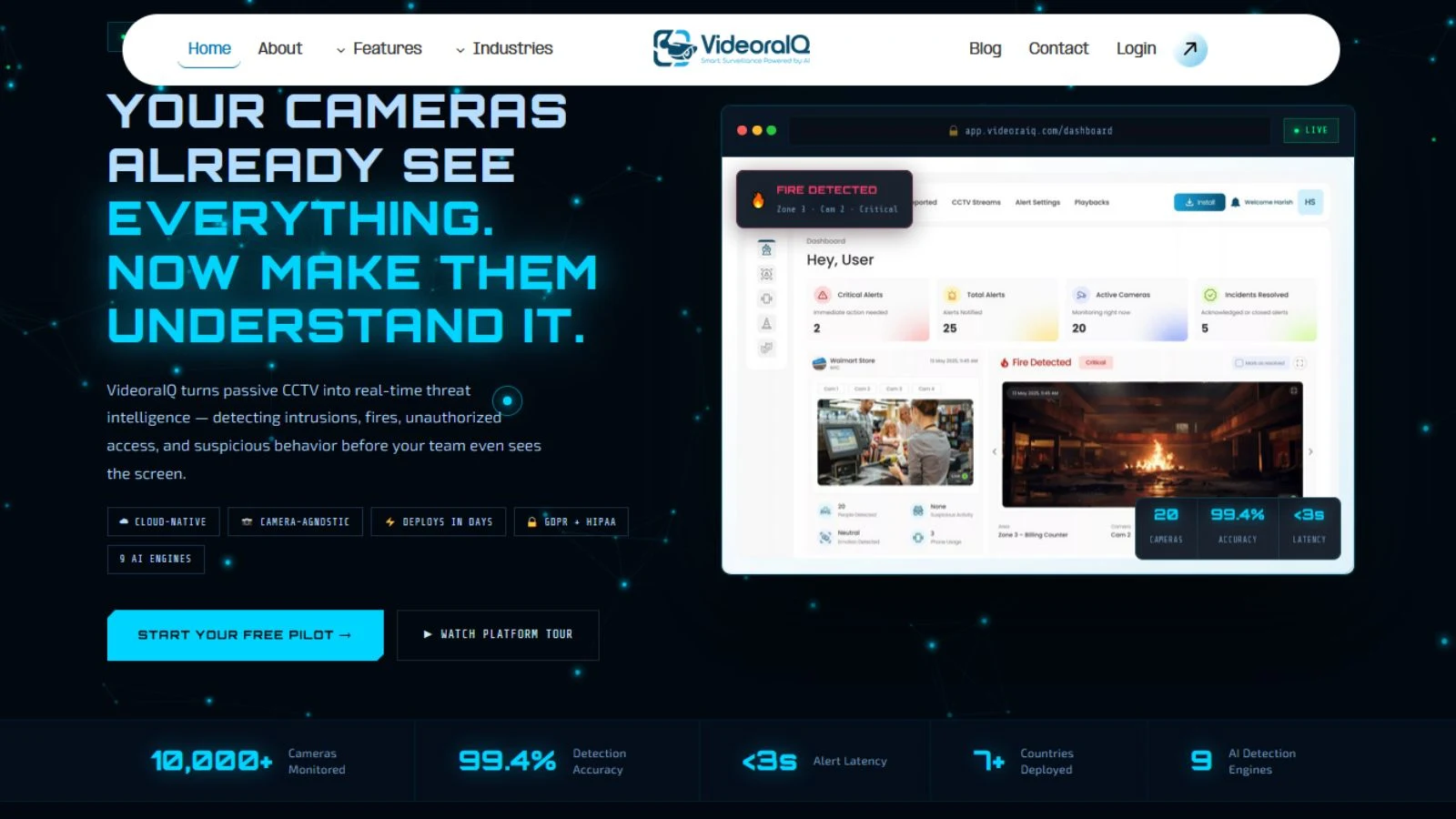
Traditional surveillance records events. VideoraIQ helps you act on them in real time, before they become incidents.
VideoraIQ is an AI-powered surveillance intelligence platform designed to turn your existing camera infrastructure into a proactive security system. It doesn’t replace your live security cameras; it makes them smarter.
Real-Time AI Threat Detection
VideoraIQ AI engine continuously analyzes feeds from your live security cameras to detect intrusions, unauthorized access, fire, smoke, and perimeter breaches the moment they occur. Alerts are delivered instantly to the right people, enabling rapid response before situations escalate.
AI Video Analytics for Smarter Monitoring
Beyond threat detection, VideoraIQ provides actionable operational intelligence. Its AI identifies behavioral anomalies, classifies events by type, and filters out noise so your security surveillance team spends time on real threats, not false alarms. Intelligent event recognition and smart filtering ensure that every alert counts.
From Passive Recording to Intelligent Surveillance
Where traditional systems document what happened, VideoraIQ enables businesses to identify, analyze, and respond to threats while they are still unfolding. This shift from reactive to proactive is not just a technical upgrade; it is a fundamentally different approach to security.
Centralized Monitoring Across Multiple Locations
VideoraIQ brings all your live security cameras under a single cloud-accessible dashboard. Whether you manage five retail outlets or fifty warehouses, you get unified visibility, remote monitoring, and centralized control from one interface.
Business Use Cases
Videoraiq is built for real-world enterprise environments, logistics centers, retail operations, factories, warehouses, and corporate campuses. Any business that relies on live camera monitoring to protect people, assets, and operations can leverage Videoraiq to get more intelligence out of every camera it already has.
The Future of Live Security Cameras
The trajectory for live security cameras points toward one thing: intelligence at scale.
Edge AI will become standard, meaning cameras process video locally without relying on cloud bandwidth, enabling faster responses and reduced data costs.
Predictive surveillance will move beyond detecting what is happening to forecasting what is likely to happen based on behavioral patterns, flagging risk before a threat materializes.
IoT integration will connect live security cameras with access control systems, alarm panels, environmental sensors, and smart building infrastructure into a unified security ecosystem.
AI-assisted monitoring will continue to reduce the human oversight burden, making enterprise-grade security surveillance accessible even to small and mid-sized businesses.
And as cities invest in smart infrastructure, live security cameras will become core components of public safety networks — managing traffic, supporting emergency services, and improving quality of life at the urban scale.
How to Choose the Right Video Security System
Before investing in live security cameras, use this checklist to evaluate your options:
Camera Resolution — 4K or, at minimum, 1080p for clear, actionable footage.
AI Capabilities — Does the system offer genuine AI analytics, or just basic motion detection with an “AI” label?
Scalability — Can the system grow from five cameras to five hundred without a complete rebuild?
Cloud Integration — Is footage stored securely off-site? Can you access it remotely?
Cybersecurity — Are connections encrypted? Is there multi-factor authentication?
Remote Accessibility — Can your team monitor and respond from any device, anywhere?
Monitoring Infrastructure — Will you manage alerts in-house, or does the platform offer managed monitoring support?
Choosing the right video security systems is not just a technology decision it is a business continuity decision. The right platform pays for itself in reduced losses, faster response times, and improved operational visibility.
Frequently Asked Questions
What are live security cameras?
Live security cameras are network-connected surveillance devices that stream real-time video to a monitoring platform. Modern versions include AI-powered analytics that detect threats and send instant alerts automatically.
How do AI security cameras work?
They capture video, process it through AI models (either on the device or in the cloud), and identify specific events — people, vehicles, behaviors — that match defined threat criteria. When detected, they trigger instant alerts.
What is the difference between CCTV and live surveillance?
Traditional CCTV records and stores footage passively for later review. Live surveillance cameras stream footage in real time and can be monitored remotely. AI-powered live security cameras go further by analyzing footage automatically.
Are live security cameras monitored 24/7?
Yes AI-powered live security cameras can monitor your premises around the clock without requiring a human operator to watch every screen. Alerts are generated automatically and sent to the relevant personnel.
Can AI surveillance reduce false alarms?
Significantly. AI systems distinguish between meaningful events (a person entering a restricted zone) and irrelevant triggers (a flag moving in the wind), dramatically cutting down on unnecessary alerts.
What industries use live camera monitoring?
Retail, warehousing, logistics, manufacturing, construction, corporate offices, hospitality, healthcare, and smart city infrastructure are among the most active adopters.
Are cloud-based video security systems secure?
When properly configured, yes. Reputable platforms use end-to-end encryption, access controls, and regular security audits to protect your footage from unauthorized access.
What features should businesses look for in smart surveillance systems?
High resolution, AI analytics, cloud storage, remote access, cybersecurity features, scalability, and fast alert delivery are the core features every business should evaluate before choosing live security cameras.