

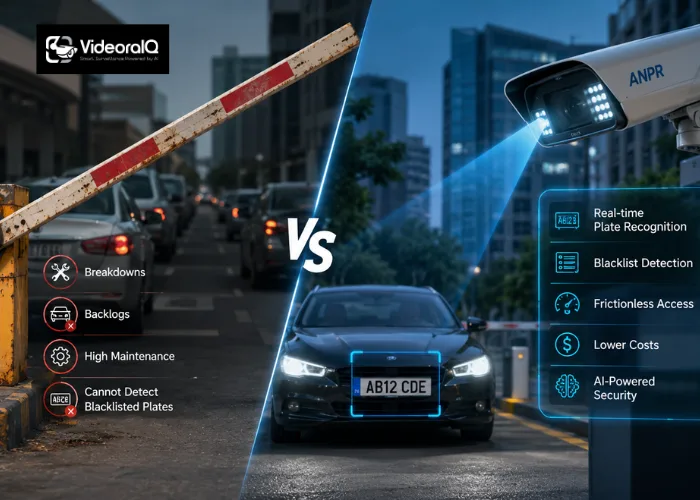
Mechanical boom gates have one job. They still manage to fail at it routinely, expensively, and at the worst possible moment.
I’ve spoken with enough physical security managers over the past decade to know the pattern. The gate arm gets clipped by a van, the ticket printer jams on a Monday morning, or the motor gives out on a public holiday when your maintenance contractor is unreachable. And while facilities teams spend hours on call-outs, the actual security question is who drove in, when, and should they have been allowed to? goes unanswered.
By 2025, facility managers were already rapidly decommissioning mechanical gate systems in favour of barrier-free ANPR architectures, and the operational logic is straightforward: mechanical parts break down. Boom gates suffer from vehicle strikes, motor degradation, and paper jams in ticket machines, each one a maintenance event that creates a gap in your access record. ANPR has no moving parts to degrade.
But here’s the mistake I see buyers make when they finally decide to switch: they treat ANPR as a gate replacement rather than a security layer. That framing leads to under-specified deployments that inherit the old system’s blind spots in a new form.
Listen to this podcast!
What AI-Powered ANPR Actually Does (vs. What People Think It Does)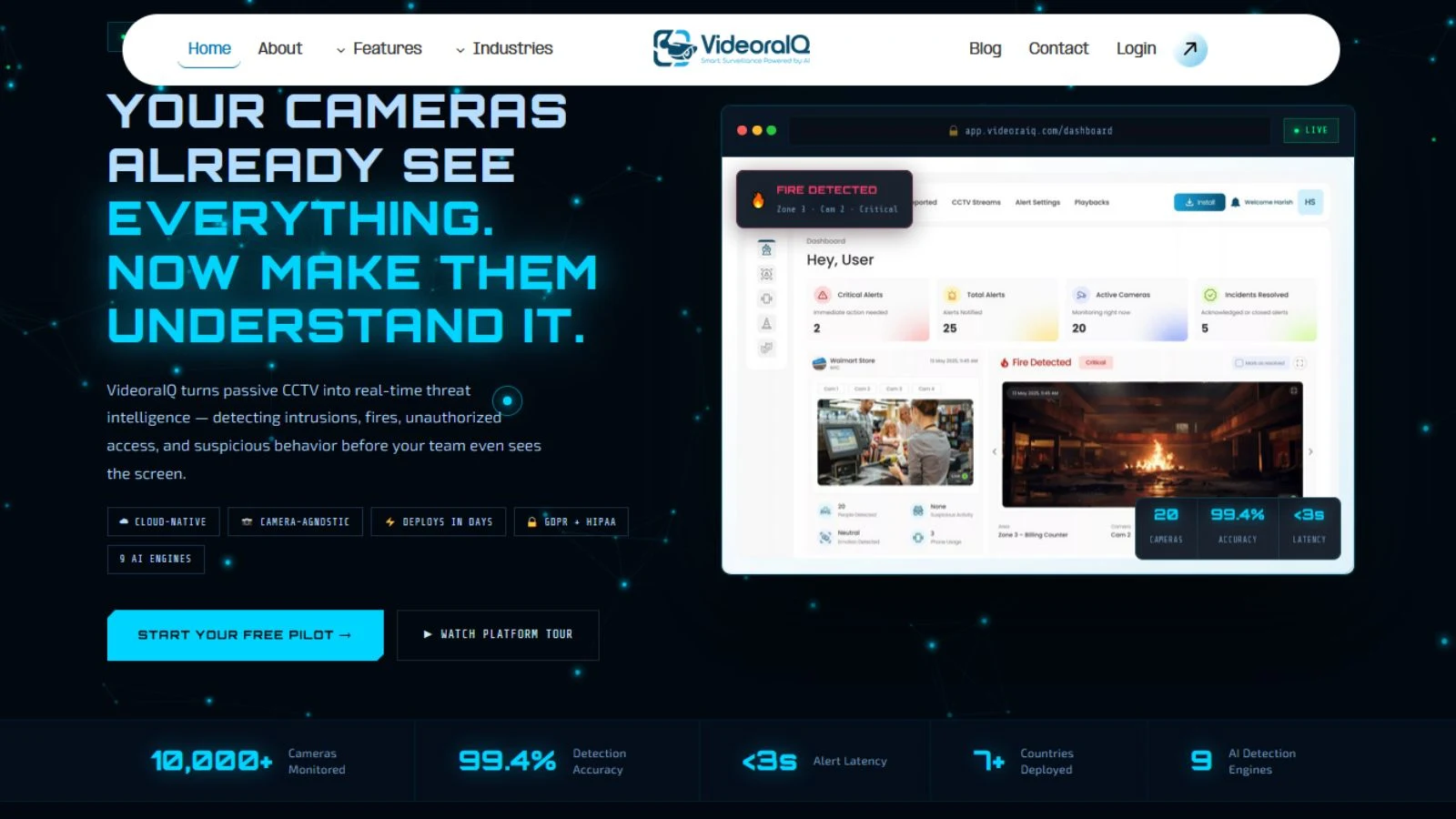
A basic plate reader logs plates. That’s table stakes. What separates a video-intelligence ANPR platform from a standalone camera-plus-database setup is what happens the moment a plate is read.
VideoraIQ‘s Number Plate (ANPR) module does automatic vehicle entry and exit logging, but it also runs every plate against a blacklist in real time, across all sites simultaneously. That last part matters more than most buyers realise when they’re scoping a deployment. A vehicle blacklisted at your city-centre site is just as dangerous at your warehouse perimeter. With siloed systems, that cross-site check doesn’t happen automatically. With a platform managing over 10,000 cameras, it does.
The alert latency is worth stating plainly: under 3 seconds from detection to alert, with a timestamped video clip, location tag, and camera ID attached. That’s not a dashboard refresh. A security operator gets an actionable information plate, clip, and location before the vehicle has finished manoeuvring into a bay.
The Blacklist Problem Nobody Talks About
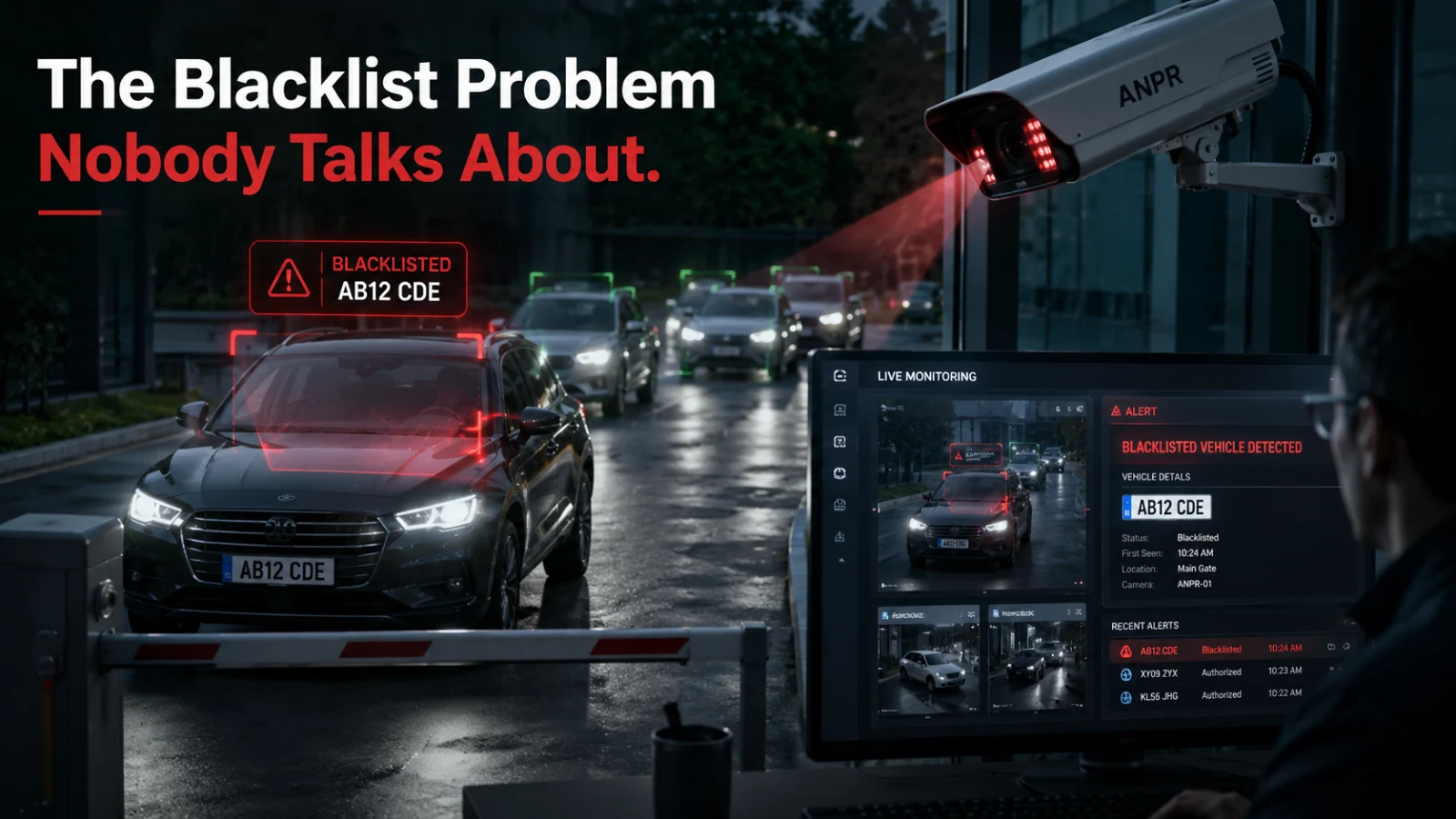
Most vehicle access deployments I’ve audited have a blacklist. Almost none of them have a current blacklist. Plates get added after incidents. They rarely get audited for staleness. And they rarely propagate to every camera covering every entrance.
This is where barrier-free ANPR with real-time blacklist matching changes the security posture entirely. As AI-ANPR platforms demonstrate, facilities like offices or gated communities can now open access for authorised vehicles while denying blacklisted plates contactlessly, without a guard needing to eyeball a laminated list.
The consequence of getting this wrong isn’t just a failed audit. It’s a vehicle that should have been flagged entering a site and an access log that shows nothing unusual because the plate was never checked against anything meaningful.
The Three Layers a Serious ANPR Deployment Needs
Here’s the framework I’d give any security team evaluating vehicle access control. It’s not complicated, but most deployments only implement one of these three layers:
1. Entry/Exit Logging That Actually Closes the Loop
Every vehicle in, every vehicle out, timestamped and stored. Not just entry. Exit logging matters for dwell-time analysis: a vehicle that entered at 06:00 and hasn’t exited by 23:00 is an anomaly worth flagging. The VideoraIQ ANPR module handles both automatically, building a continuous record without operator input.
2. Real-Time Blacklist Matching Across Sites
Single-site blacklists are a false sense of security. If your platform doesn’t cross-reference every read against a unified list in under three seconds, you have a gap. Full stop. The case for AI-driven vehicle detection cameras rests precisely on this kind of platform-level intelligence that a standalone reader cannot provide.
3. Integration With Your Broader Security Picture
ANPR in isolation tells you a plate arrived. ANPR integrated with zone monitoring tells you that the same vehicle’s occupant then attempted to enter a restricted area. VideoraIQ’s Intrusion Detection and Unauthorised Access modules work alongside ANPR. A flagged plate entering the car park and a subsequent restricted-zone breach can be correlated in the same incident record, not siloed into two separate alert queues that nobody connects.
This is where ANPR in 2025 and beyond has moved: it’s no longer just about reading plates. It’s about making that data immediately useful to the broader security stack the moment it’s captured.
What Commonly Goes Wrong
Camera placement is where most ANPR deployments fail before they start. Plates need to be captured at an angle and under lighting conditions the AI can reliably read, which is rarely the same position that gives you the best situational overview of a car park entrance. The two objectives conflict, and buyers who don’t plan for this end up with cameras positioned for the guard booth’s line of sight rather than for the ANPR algorithm’s requirements.
The second failure mode is over-relying on ANPR to replace human judgement entirely. The system’s job is to flag anomalies instantly. A 99.4% detection accuracy rate means the occasional read will still need human review. The difference is in the workflow: operators receive the alert, the clip, and the location tag in under three seconds so that review takes seconds, not minutes of rewinding footage.
Third, and this is the one that bites organisations months after go-live, is blacklist maintenance. The technical infrastructure can be perfect. If no one owns the process of keeping that list current and consistent across sites, the accuracy of the underlying AI is irrelevant.
Compliance Isn’t Optional Anymore
Vehicle access logs are increasingly treated as compliance artefacts, not just operational records. Depending on your sector and geography, those records may be subject to data retention requirements and privacy regulations. VideoraIQ is GDPR and HIPAA compliant, which matters if you’re operating across multiple jurisdictions, as many of the organisations I work with are. The platform is deployed in seven or more countries, and the regulatory surface that it creates is not trivial.
If you’re evaluating ANPR platforms and compliance isn’t part of the conversation, start that conversation now. It will surface requirements for data residency, retention limits, and access controls on the logs themselves that affect platform choice significantly.
Read More!
ANPR Blacklist Matching: The Multi-Site Blind Spot
The Real Question to Ask Before You Buy
Not “can it read plates?” Every system on the market can read plates. The questions that separate a deployment that improves security from one that just generates data are these:
- Does blacklist matching happen in real time, across all sites, without manual synchronisation?
- Does a match trigger an alert with a clip and location tag before the vehicle has moved on?
- Can ANPR events be correlated with zone breach or face recognition events in the same record?
- Who owns blacklist maintenance, and is that process documented?
- Is the platform compliant with the data-protection frameworks that apply to your operating jurisdictions?
ANPR is one layer in a broader physical security stack, not the whole answer. If you’re building that broader case, the full picture of modern access control systems covers how face recognition, zone monitoring, and intrusion detection work alongside it.
Boom gates were never really a security tool. They were a flow-control tool with a lock on it. ANPR, done properly, is something categorically different: a real-time intelligence layer that knows who arrived, cross-checks them against every risk list you maintain, and alerts your team in under three seconds if something is wrong.
That’s the shift worth making. Start your free VideoraIQ trial and see what your vehicle access data looks like when the platform is actually working for your security team.