

**Book a free campus assessment →
Fire spreads fast, and your cameras already see the first signs. In 2026, the safest and most cost‑effective way to add earlier warning is fire and smoke detection from cctv layered onto the cameras you already own. That answer is direct because seconds matter more than specs on a datasheet.
According to VideoraIQ deployment data, 85% of CCTV footage is never reviewed. As a result, visual cues of smoke or flame go unnoticed during the crucial first minute. Meanwhile, traditional point smoke detectors in large atriums, parking structures, or loading docks may not trip until particulates rise to the ceiling. Therefore, you lose time you cannot buy back.
For corporate facilities directors and CSOs, those lost seconds translate to asset loss, downtime, and liability. However, you do not have to rip out your life‑safety systems. You can complement them with visual AI that watches every feed at once and alerts in under three seconds with video proof. In addition, cloud‑based analytics scale from a pilot to a campus in days, not quarters.
In this guide, you’ll get a practical evaluation framework, a candid comparison of options, and a proven recommendation that uses your existing IP cameras. You’ll also see results from real deployments, including a case where AI detected a fire 52 seconds before a smoke alarm. The goal is simple: earn your trust with clear steps, hard numbers, and compliance‑first guidance.
Why Corporate Campuses Are Uniquely Vulnerable to Undetected Fire Events
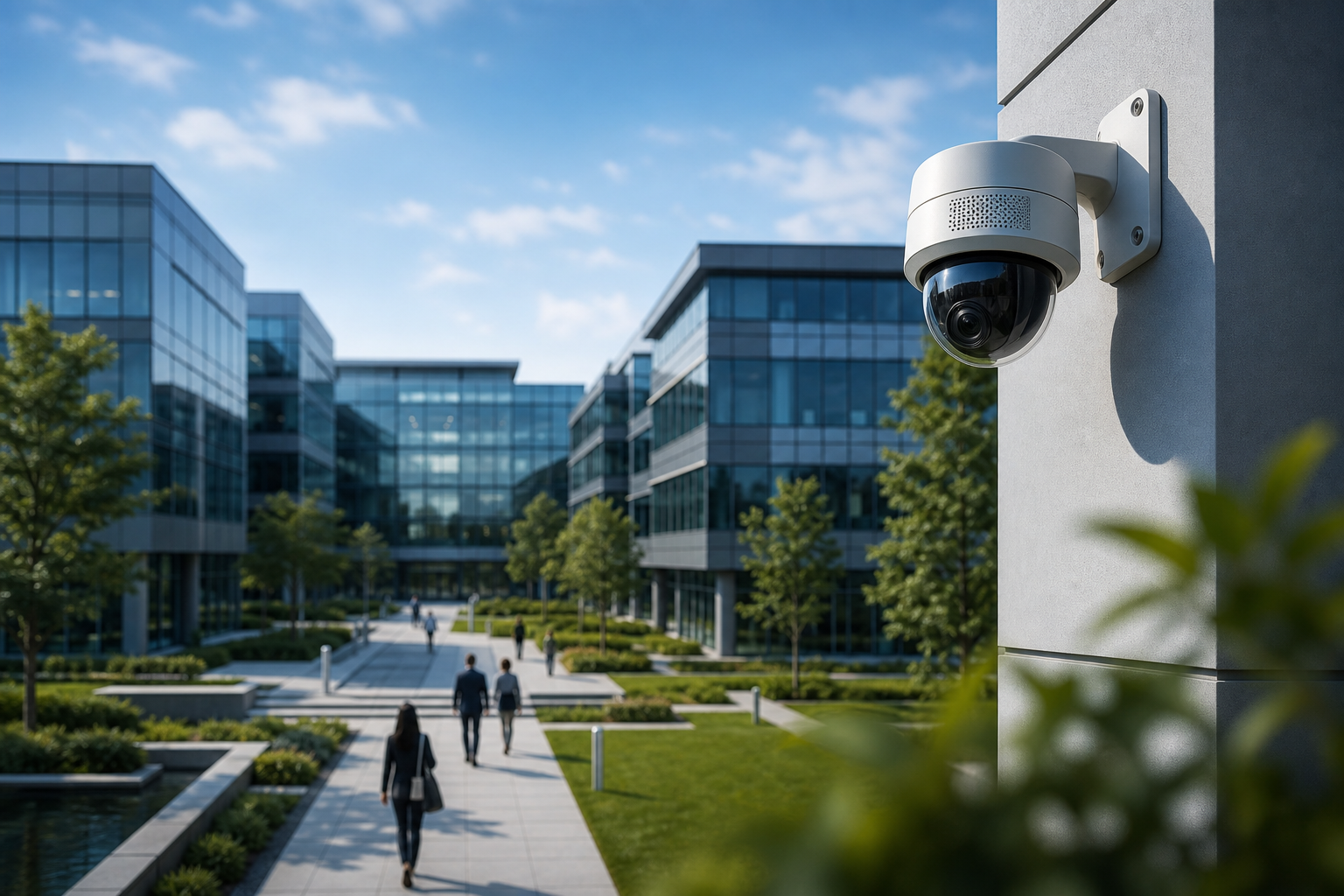
Corporate campuses are not single rooms with low ceilings. They are sprawling sites with server rooms, kitchens, lobbies with 12–20 m ceilings, parking garages, loading bays, and outdoor courtyards. In those spaces, smoke and heat can take precious time to reach ceiling‑mounted sensors. According to Smoke detector basics, point detectors trigger when particulates reach the sensing chamber; in large volumes of air, that delay can be severe.
Moreover, campus SOC teams watch dozens to hundreds of camera feeds with limited staff. Per VideoraIQ Stats, 85% of CCTV footage is never reviewed. In practice, that means cameras that “saw” the first wisp of smoke didn’t prompt action because no one was watching. However, AI can watch 100% of streams, 24/7, without fatigue.
The cost of delayed response stacks up fast. For example, a server‑room incident can escalate from a cable flare to a rack fire in under a minute, risking equipment worth millions and days of outage. In addition, kitchen flare‑ups in employee cafeterias, EV‑related fires in parking structures, and pallet ignitions at loading docks threaten people first, then property.
Furthermore, insurance carriers scrutinize your controls and response times. Therefore, preventable escalation impacts premiums and claims. On the other hand, earlier visual detection supports faster evacuation, targeted suppression, and clear evidence for post‑incident review. The value is not abstract; it is reduced damage, shorter downtime, and a stronger duty‑of‑care case.
Where Ceiling Sensors Fall Short
- Large atriums and warehouses where smoke stratifies below detectors.
- Outdoor and semi‑open areas (garages, docks) where point sensors are impractical.
- After‑hours zones where no one is present to notice early visual cues.
- Spaces with airflow that dilutes particulates before they reach sensors.
What to Look for in a Fire and Smoke Detection Camera System for Offices
Buying for a campus is different from picking a single new camera. You need an AI layer that plugs into your existing CCTV, respects privacy, and scales from one building to a portfolio. The seven criteria below form a pragmatic checklist that aligns with most corporate RFPs and real‑world constraints.
First, focus on detection accuracy and false alarms. In offices, steam from dishwashers, vape plumes, and HVAC exhaust can confuse weak models. You need documented accuracy, 99.4% in VideoraIQ’s case, and a low false alarm rate through pattern recognition. Moreover, you should see video proof in every alert so operators can verify in seconds.
Second, measure alert latency end‑to‑end. The difference between 12 seconds and under 3 seconds is the difference between a local grab of an extinguisher and a room involved. Therefore, insist on measured sub‑3‑second alert delivery, not “real time” claims.
Integration With Your Existing CCTV
Ripping and replacing hundreds of cameras is not a plan. Instead, require support for 200+ camera brands and standard RTSP/ONVIF streams so you can connect NVRs and VMS feeds you already own. Compared to alternatives that force proprietary hardware, an open approach protects sunk capex and speeds rollouts. For a side‑by‑side view with a niche visual‑fire vendor in transit settings, see the VideoraIQ vs Araani comparison.
Cloud vs. On‑Premise Architecture
On‑prem GPU servers per building add cost, delay, and single points of failure. Cloud‑native AI shifts compute to managed infrastructure, so you avoid sizing racks, patching drivers, and shipping parts. In addition, cloud simplifies multi‑site governance and uniform policy. However, verify bandwidth and encryption, and confirm your retention settings by site.
Zone‑Based Monitoring and Sensitivity Rules
Kitchens, server rooms, lobbies, and garages behave differently. Therefore, choose software with zone‑based monitoring to draw virtual areas and set tailored sensitivity and time thresholds. For example, you may allow brief steam in a kitchen but demand instant smoke detection near electrical panels.
Compliance Requirements
If you process employee or visitor video, GDPR applies in the EU, and HIPAA can apply to health areas on campus. Your vendor should be GDPR compliant and HIPAA compliant, with clear data retention options and access controls. For the legal text of GDPR, review Regulation (EU) 2016/679 on europa.eu.
Scalability From Pilot to Portfolio
Finally, plan the journey. Start with a building, then roll to 50, then to multi‑country. Therefore, demand evidence of scale (e.g., 10,000+ cameras monitored, deployed in 7+ countries) and pricing tiers that fit a pilot and an enterprise rollout. For deployment‑specific tips in high‑risk industrial spaces, this industrial buyer’s guide offers added context.
Also Read!
How to Set Up Fire and Smoke Detection Using Security Cameras on Corporate Campuses
VideoraIQ vs Avigilon for Corporate Campuses: Which Is Better for Fire and Smoke Detection?
How VideoraIQ Detects Fire and Smoke Across Corporate Campuses
VideoraIQ adds AI to the IP cameras you already have. The platform ingests RTSP/ONVIF streams from 200+ camera brands and runs visual models tuned for flame and smoke patterns. As a result, it delivers under 3 seconds alert latency with video proof, a location tag, and a timestamp, so your team can act while an incident is still small.
In practice, that speed outpaces point detectors, especially in big or open spaces.
“Our fire was detected 52 seconds before our smoke alarm triggered. The VideoraIQ alert came with a live camera link, my team was already on their way before the alarm sounded. That system saved the building.”
— Nilesh Kapoor, Plant Safety Supervisor (480 cameras)
That is what earlier visual confirmation looks like on a real site.
Accuracy matters just as much as speed. VideoraIQ reports 99.4% detection accuracy and a low false alarm rate through pattern recognition. Furthermore, zone‑based monitoring lets you draw areas and set different thresholds for kitchens, server rooms, lobbies, and outdoor locations. Therefore, you cut nuisance alerts without dulling true positives.
Beyond detection, the platform gives your SOC tools to improve risk over time. Heatmaps and analytics help you spot hotspots, recurring triggers, and staffing gaps. In addition, the same camera feed powers nine AI detection engines, including intrusion, face recognition, ANPR, unattended baggage, and more. As a result, you avoid a single‑purpose tool and extend value across security use cases.
Moreover, cloud‑based architecture removes the need for on‑prem servers per building. You connect streams, set zones, and start receiving alerts without new racks or GPUs. “We went from finding out about incidents in the morning briefing to being notified in real time.
VideoraIQ caught an intruder at 2AM that our overnight guard missed. That one event alone justified the entire platform cost.”. Ananya Mehta, Head of Facilities, 200‑Camera Corporate Campus.
What an Alert Looks Like
- Under 3 seconds from detection to delivery.
- Auto‑captured clip with bounding and time marker.
- Camera name, mapped location, and zone label.
- One‑click acknowledge, escalate, or export for reports.
VideoraIQ vs. Traditional Fire Detection and Competing AI Camera Systems
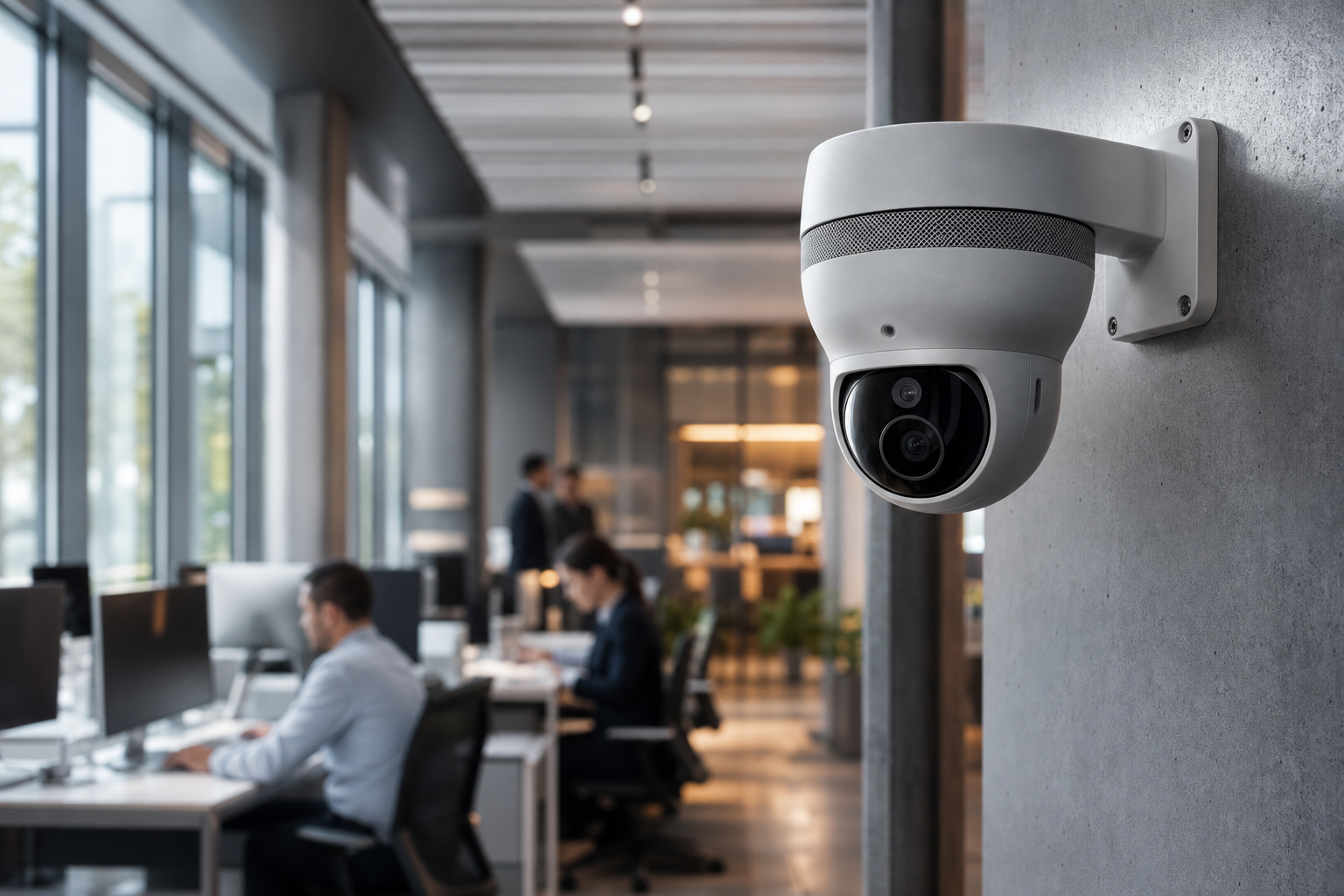
Choosing a tool for life safety demands a balanced view. Below is a candid look at how VideoraIQ compares across the three paths you are likely weighing for 2026.
1) VideoraIQ vs. Traditional Smoke Detectors and Sprinklers
VideoraIQ does not replace code‑mandated systems. It complements them. Traditional detectors and sprinklers remain essential for compliance and suppression. However, visual AI provides earlier confirmation in large open areas, outdoor zones, and garages where ceiling‑mounted sensors can be slow or impractical.
Compared to alarms alone, VideoraIQ adds under 3 seconds alert latency with video proof that helps operators verify and dispatch without guesswork. In addition, heatmaps and analytics reveal recurring risks for targeted fixes. You get both speed and context, while core life‑safety systems stay in place.
2) VideoraIQ vs. Dedicated Thermal/Fire Detection Cameras
Thermal cameras can be right for niche points, such as inside enclosed server racks or behind sealed panels. They sense heat, not just visual cues. However, they require new hardware, higher per‑point cost, and they add little to general security.
By contrast, VideoraIQ works with existing IP cameras across 200+ brands. You add fire detection as one of nine AI engines on the same feeds. Therefore, you spread cost across outcomes: fire, intrusion, ANPR, and more. Where the use case truly needs heat sensing, keep thermal. Where you need broad campus coverage, visual AI wins on reach and ROI.
3) VideoraIQ vs. Other AI Video Analytics Platforms
Many analytics tools require on‑prem GPU servers and complex VMS tie‑ins. That adds capex, IT overhead, and risk of downtime. VideoraIQ is cloud‑native, so you avoid new hardware while still getting sub‑3‑second alerts and 99.4% accuracy.
Furthermore, integration is practical: “Installation was quick, and it worked with our current CCTV, no downtime, no extra investment.”. Sana Ibrahim, Hotel Security Lead. And for 24/7 consistency without staffing burdens: “The system handles surveillance 24/7. No more missed alerts or relying solely on camera operators.”. Jason Rodriguez, Security Manager.
Compliance, Certifications, and Proven Scale
Trust starts with proof. VideoraIQ is GDPR compliant and HIPAA compliant, which matters for campuses that process employee, visitor, and patient‑adjacent video. In addition, cloud retention is configurable by tier: 7, 30, or 90 days. Therefore, you can tune storage to your policies and jurisdictions.
Scale also matters. VideoraIQ monitors 10,000+ cameras and is deployed in 7+ countries. That scale means tested integrations across major camera brands and site types, and it shows the platform can grow with you. Moreover, a low false alarm rate through pattern recognition keeps your team focused on real events.
Pricing is transparent and tiered. Starter tier covers up to 20 cameras with 7‑day retention, ideal for pilots. Professional tier supports up to 200 cameras with all nine AI engines and 30‑day retention, which fits single‑campus deployments. Enterprise tier is for unlimited cameras, custom AI models, and 90‑day retention, built for multi‑campus organizations.
“Within 3 weeks VideoraIQ identified a recurring pattern of after-hours cashier zone access. We discovered internal theft we had no idea was happening. It paid for 6 months of subscription in the first incident.” — Sujata Rao, Regional Operations Manager, 14‑Location Retail Chain
Also Read!
Best AI Add-On for Existing Security Cameras for Corporate Offices and Campuses in 2026
Best AI Add-On for Existing Security Cameras for Manufacturing Plants and Warehouses in 2026
How to Deploy Fire and Smoke Detection Cameras on Your Corporate Campus
Rolling out visual AI should feel like a project, not a rebuild. The steps below reflect what works on real campuses without disrupting daily operations.
First, align facilities, security, and IT on scope. Then, map your camera inventory and risk zones so you know where earlier detection will make the biggest impact. Finally, run a contained pilot to prove accuracy, latency, and false‑alarm performance before a campus‑wide rollout.
- Step 1: Audit existing CCTV infrastructure. Note makes/models and streams; the platform works with 200+ brands.
- Step 2: Identify priority zones: server rooms, kitchens, panels, docks, garages, and outdoor paths.
- Step 3: Configure zone‑based rules. Set tailored sensitivity and customizable time thresholds per area.
- Step 4: Connect to the cloud. No on‑prem servers are needed; onboarding involves minimal downtime.
- Step 5: Integrate alerts. Use the dashboard, email, or tie into building systems for real‑time notifications.
- Step 6: Pilot one building. Use the Professional tier (up to 200 cameras), then scale to Enterprise.
Tip: Capture before/after metrics: alert time stamps, response actions, and outcomes. That data helps justify ROI to leadership.
Frequently Asked Questions
How much does an AI fire and smoke detection camera system cost for a corporate campus?
Pricing is software‑based because you keep your current IP cameras. The Starter tier covers up to 20 cameras with 7‑day retention for pilot projects. The Professional tier supports up to 200 cameras with all nine AI engines and 30‑day retention for single‑campus deployments. The Enterprise tier handles unlimited cameras, custom AI models, and 90‑day retention for multi‑campus groups. Therefore, you avoid hardware replacement costs and pay for the cloud platform.
Can AI camera‑based fire detection replace traditional smoke detectors and fire alarms?
No, and it should not. Camera‑based AI complements required systems by giving earlier visual detection, especially in large open areas, outdoor zones, and garages. Building codes still require conventional fire alarms and suppression. In real deployments, AI alerts can arrive 30–60 seconds earlier; one site saw a 52‑second lead time over a smoke alarm. That head start supports faster evacuation and targeted response.
What is the false alarm rate for AI fire and smoke detection in office environments?
False alerts disrupt operations, so the bar is high. VideoraIQ reports 99.4% detection accuracy and a low false alarm rate through pattern recognition. In addition, zone‑based monitoring and customizable sensitivity let you set different rules for kitchens versus server rooms. As a result, you reduce nuisance alerts without missing true threats.
Do I need to replace my existing security cameras to add fire detection?
You do not. VideoraIQ integrates with existing IP‑based CCTV systems across 200+ camera brands without added hardware. The AI runs in the cloud, so you avoid on‑prem GPU servers. Most campuses onboard with zero camera swaps and minimal downtime. Therefore, your capex stays intact while your detection stack improves.
How fast does AI fire detection alert my security team compared to traditional smoke alarms?
VideoraIQ delivers alerts in under 3 seconds from detection. In one documented case, fire was detected 52 seconds before the site’s smoke alarm sounded. Each alert includes a live camera link, video proof, a location tag, and a timestamp. That context lets your operators assess and act at once.
Is AI‑based fire detection from security cameras compliant with GDPR and HIPAA?
Yes. VideoraIQ is GDPR compliant and HIPAA compliant. Cloud retention is configurable at 7, 30, or 90 days aligned to your tier and policy. In addition, access controls and data handling meet privacy needs for regulated industries and cross‑border operations. That keeps privacy and safety goals aligned.
Can the system detect fire and smoke in outdoor areas of a corporate campus?
Yes. This is a key edge over point smoke detectors designed for enclosed areas. Any outdoor zone covered by an IP camera, parking structures, docks, courtyards, and perimeters, can be monitored with zone‑based rules tuned for wind and light. Therefore, your coverage extends to places traditional sensors miss.
What other security threats can the same cameras detect beyond fire and smoke?
VideoraIQ runs nine AI detection engines on the same feeds: fire and smoke, intrusion, face recognition, object detection, number plate recognition (ANPR), line‑cross detection, unauthorized access, unattended baggage, and cashier absence detection. As a result, you get one platform for safety and security, not a single‑use tool.
Key Takeaways for 2026
- Visual AI on your existing CCTV adds earlier warning in the zones where traditional sensors respond slowest, without new camera hardware.
- VideoraIQ brings under 3 seconds alerts, 99.4% accuracy, 200+ brand support, and GDPR/HIPAA compliance—at scale across 10,000+ cameras in 7+ countries.
- A staged rollout—inventory, zone rules, cloud connect, and a pilot—lets you prove ROI, reduce false alerts, and build the case for campus‑wide adoption.