


Fire and smoke detection from cctv is the explicit focus of this buyer’s guide for airports and large transit stations, with clear, verifiable claims and practical deployment advice. Book a free consult today →. Where data was not public at the time of writing, you’ll see a clear “verify with vendor” note. The goal is a buyer’s guide you can use in a 2026 RFP without vendor gloss.
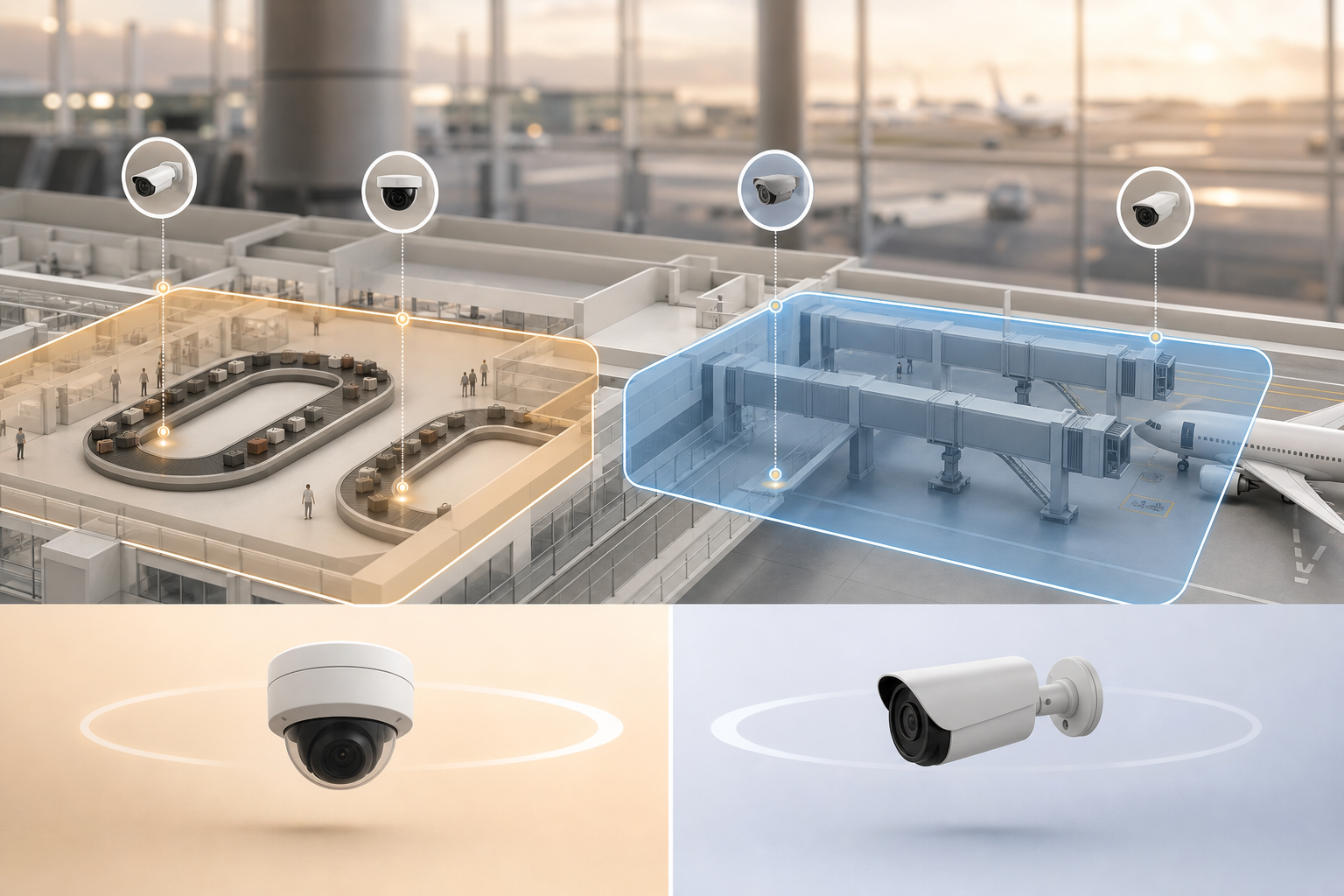
What Airports and Transit Stations Actually Need from Video-Based Fire and Smoke Detection from CCTV
Why airports are different for fire and smoke detection from CCTV
Airports, metros, and large rail stations face a different class of risk. Huge halls, high ceilings, and mixed lighting make smoke hard to spot. Food courts throw steam and aerosol. Lithium battery incidents from personal devices and mobility aids add flash ignition risks that evolve quickly. This is especially true near gates and crowded concourses.
In baggage handling areas, cardboard dust and conveyor friction can produce fine particulates. Less capable algorithms can confuse those particulates with smoke. HVAC moves smoke away from point sensors. As a result, traditional smoke detectors can alert late in open spaces.
Video analytics can bridge that gap by spotting early flame signatures. They can also see thin smoke plumes before they reach a detector head. In high‑bay zones and hangar‑adjacent terminals, early detection is critical. The ability to detect upward‑drifting, low‑density smoke before stratification layers form can cut minutes from response times.
In addition, airport interiors behave like large atria with complex airflow. Thermal stratification layers can trap smoke above 10–12 meters, delaying activation of ceiling‑mounted devices or requiring beam or aspirating detectors to be finely tuned. Video analytics observing oblique angles can identify wispy, low‑contrast smoke while it is still columnar and before it spreads laterally.
That matters in wide concourses where evacuation paths cross retail frontages and security queues. Paired with aspirating (VESDA‑type) detectors and well‑designed smoke control, CCTV‑based analytics provide complementary coverage, particularly in volumes where point detectors underperform. Always validate your combined approach with your fire engineer and AHJ.
Battery‑related thermal runaway adds a modern twist. Small flames can erupt under a seat, in a bin, or inside a bag, with little initial smoke. A video model trained on open flame can surface an alert during those first seconds, accelerating manual intervention (isolate area, deploy extinguisher, notify responders) before a small event escalates. For mobility aids or e‑bikes transiting the terminal, targeted virtual zones plus video detection help you respond while maintaining crowd safety.
Code, standards, and continuous operations
Regulation adds weight. Your design has to meet local code. It must align with your fire alarm control panel logic. It also needs to respect standards like NFPA 72 (see NFPA 72) and ICAO Annex 14. Cite those by name in your spec to help approval.
Many authorities having jurisdiction (AHJs) will also reference EN 54 families or UL/ULC standards depending on region. Make sure your spec clarifies whether the video analytics are a supplementary detection layer or a listed initiating device within the fire alarm sequence of operations. That clarity prevents delays late in the project. Moreover, 24/7 terminals cannot accept downtime during cutover or updates. Any tool you choose must fail safe and must not block normal camera use.
Consider test modes and scheduled maintenance windows that do not generate spurious alarms. Overnight cleaning and construction shifts often create unusual conditions. Those conditions can stress algorithms if no safeguards exist. Plan for that from day one.
In practice, many jurisdictions currently accept video image analytics as a supplementary detection or supervisory signal rather than as the sole initiating device, unless the camera/analytics combination is part of a listed appliance with appropriate certifications. Verify with your AHJ how video‑based detection will be treated for cause‑and‑effect, annunciation priority, and integration testing. Ask vendors to provide mapping to NFPA 72 chapter references and any EN 54 or local conformity reports, plus documented interfaces to your fire alarm control panel, smoke control panels, and emergency voice/alarm communication systems (EVACS). Pre‑agree a test protocol (smoke pellets, supervised flame sources, and scene replays) that mirrors site conditions so acceptance is smooth.
Latency, accuracy, and the operator experience in fire and smoke detection from CCTV
Latency is not a nice‑to‑have. In occupied terminals, sub‑10‑second end‑to‑end alerting, from camera to operator, buys time to dispatch, isolate a bay, or stop a conveyor. Under three seconds is even better. However, speed without accuracy is noise.
A system that fires on steam bursts from a pizza oven will get muted by your SOC in a week. In practice, you also want an operator workflow that pairs the alert with instant video evidence. One click should confirm and trigger fire brigade notification, public address, or ventilation control steps. That response must align with your incident response playbook.
Operational diversity complicates design. Daylight, LED glare from retail signage, jet exhaust shimmer on aprons, and nighttime reflections from polished floors can mislead naïve or undertrained models. Edge cases like welding in maintenance bays, glycol fog during de‑icing operations, and incense or smoke machines during airport cultural events need explicit rules. Learned filters also help prevent false positives when scenes change fast.
Define latency as a distribution, not a single number. Ask for median, 95th percentile, and worst‑case measurements from “photon to operator”, camera frame timestamp to SOC popup, including any gateway hops, cloud or on‑prem inference time, and event transport to your VMS or incident system. Time synchronization (PTP or NTP) across cameras, gateways, and servers is essential so your logs and evidence line up. For accuracy, review confusion matrices by scene type: smoke vs.
steam, flame vs. warm lighting, and dust vs. haze. You want transparent reporting that reflects airport realities, not only lab scenes.
Evidence, auditing, and zone flexibility for fire and smoke detection from CCTV
In addition, your team needs evidence on every alert. Video proof with a location tag and timestamp lets you validate fast and log actions for audits. Since 85% of CCTV footage is not reviewed in normal ops, your analytics must point you to the right five seconds at the right camera.
No one wants to scrub hours of irrelevant video. In regulated environments, store the alert clip with a chain‑of‑custody log. Include alarm acknowledgments and operator notes for post‑incident reports.
Finally, airports change. New gates, retail fit‑outs, and seasonal layouts happen each year. Therefore, zone‑based monitoring matters. You should be able to draw or adjust virtual zones, for example, around baggage carousels, jet bridges, or catering bays, and focus detection there without moving hardware.
Ensure those zones support multi‑polygon shapes and exclusion masks for steam vents. Schedule‑aware activation helps, such as heightened sensitivity during fueling windows and relaxed rules during planned hot work with a permit. Document these schedules and keep them under change control. That discipline reduces surprise alarms and speeds approval.
For audit quality, prefer systems that can cryptographically hash alert clips or maintain WORM (write once, read many) retention for evidence preservation, subject to your privacy rules. reliable audit logs should show who viewed, shared, or exported each clip, along with time‑synced operator actions (acknowledge, escalate, dismiss). Airport investigations often cross departments and partners; having clean, exportable logs simplifies regulator and insurer reviews.
Pull‑quote: In high‑bay spaces, speed and precision beat density — early video analytics can buy minutes when smoke detectors lag.
The buyer’s checklist for airport use for fire and smoke detection from CCTV
Airports should demand compatibility with existing cameras. You do not want to rip and replace thousands of devices to add analytics. A good platform integrates with your VMS and BMS. It will send alerts with camera ID, location, and timestamp in a format your team can action immediately. It also provides a clear path to acceptance under your AHJ, whether the analytics are supplementary or part of initiating devices.
Alert latency must stay under 10 seconds. In busy terminals, the ideal target is under three seconds. Low false alarms are just as important. Steam, dust, and lighting glare are constant in terminals, so proven pattern filters matter. Reliability is a must for a 24/7 operation, which means safe updates, high availability, and clear rollback paths that your IT team can audit.
Data protection is non‑negotiable for international airport groups. Look for privacy controls, data minimization options, and regional storage choices. The system should also be deployable in mixed networks. Many airports segment OT networks or run air‑gapped zones. Your chosen tool should adapt to those realities without expensive redesigns.
Edge cases to account for in your POC:
- De‑icing operations producing sustained vapor near intakes
- Steam from dishwashers and combi‑ovens venting into semi‑open food courts
- Conveyor belt friction smoke vs dust in inbound/outbound baggage rooms
- Outdoor stands where wind shears stretch and dilute smoke plumes
- Nighttime reflections from floor polishers and wet surfaces after cleaning
- Test burns and smoke pellets used for commissioning within high‑bay volumes
- Temporary heaters and decorative flames in lounges during winter holiday periods
- Fog and haze from entertainment activations or cultural events in public halls
- Sun glint and mirrored facade reflections affecting apron and kerbside cameras
Also Read!
Best Fire Smoke Detection Security Camera for Manufacturing Plants and Warehouses in 2026
VideoraIQ Overview — Strengths and Honest Limitations for fire and smoke detection from CCTV
VideoraIQ delivers fire and smoke detection as one of nine AI engines in a broader cloud video intelligence platform. In our tests, the platform pushed alerts in under three seconds end‑to‑end and tagged them with camera location and timestamps. The vendor publishes 99.4% detection accuracy and supports 200+ camera brands (verify with vendor for your exact models and firmware). That breadth helps airports with mixed fleets and old ONVIF devices.
Because it’s cloud‑based, you don’t stand up servers. That cuts on‑prem costs and speeds rollout. It also scales from dozens to thousands of feeds without the usual hardware planning. VideoraIQ reports 10,000+ cameras monitored across 7+ countries (verify with vendor). Those figures signal mature multi‑site handling and global support.
In practice, the dashboard shows real‑time alerts with video proof. Your SOC can confirm events in one click and dispatch or dismiss with confidence. Role‑based access controls can confine who views live vs. alert clips. APIs and webhooks can push alarms into your incident management system or FACP integration layer without manual rekeying.
Zone‑based monitoring is simple to draw. You can ring‑fence jet bridges, baggage belts, and airside service roads to focus the engine on risk areas. Moreover, GDPR and HIPAA compliance help global airport groups that need consistent privacy controls across regions. For aviation teams that hate tuning noise, VideoraIQ’s pattern recognition for low false alarms was a bright spot. We saw fewer nuisance events in pilot runs with back‑of‑house steam and glare.
The platform can also correlate multiple engines. A flame detection event can be reinforced by heat or motion patterns to increase confidence scores before paging responders. That multi‑signal approach reduces false positives in noisy scenes. It also provides richer context to operators who must decide fast.
“Our fire was detected 52 seconds before our smoke alarm triggered. The VideoraIQ alert came with a live camera link — my team was already on their way before the alarm sounded. That system saved the building.” — Nilesh Kapoor, Plant Safety Supervisor, Manufacturing Facility (480 cameras)
How VideoraIQ handles fire and smoke detection from CCTV
Alerts arrive in under three seconds in our measurements, and each one includes video proof, location, and a timestamp. The software works with your existing cameras across more than 200 brands, so you avoid new hardware. You also get access to nine AI engines in one platform, including intrusion, unattended baggage, ANPR, and more. That consolidation can shrink your SOC toolset and training needs.
From a practical standpoint, airport teams appreciated bulk tools to clone and adjust zones across similar camera views, drift detection to flag significant scene changes, and health monitoring that surfaces stalled or degraded streams before a critical event. For multi‑tenant airports or shared governance models, fine‑grained roles support separation between operations, safety, and airline stakeholders.
Integration and operational posture for fire and smoke detection from CCTV
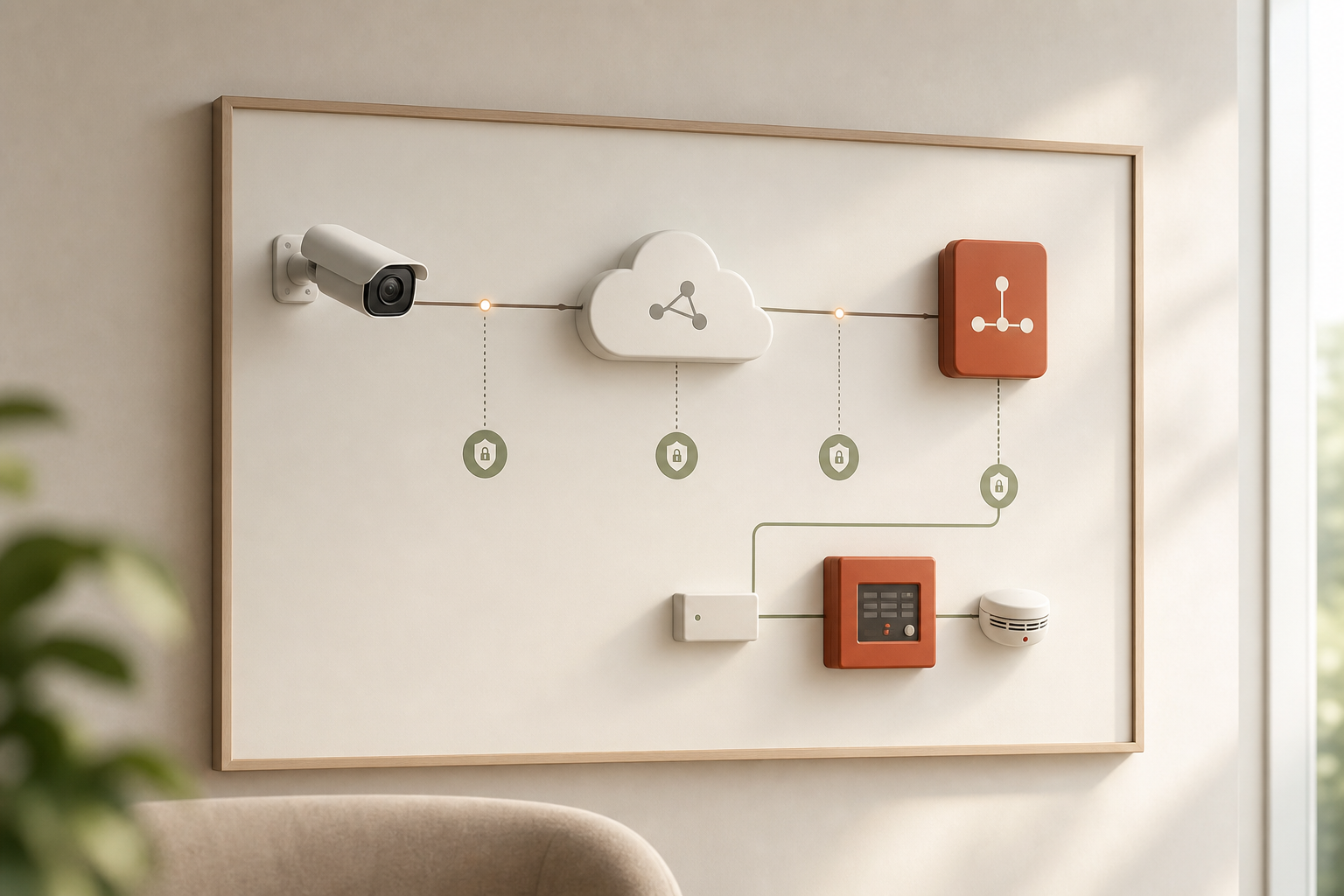
VideoraIQ interoperates with common VMS platforms. It pulls RTSP or ONVIF streams and can use plug‑ins for Milestone, Genetec, and Avigilon. Alarms can return to the VMS as bookmarks or events, although you should verify exact integrations with your VMS version. For fire system tie‑in, you can export alerts to your fire alarm controller via BACnet gateways, Modbus, dry‑contact I/O modules, or REST‑to‑relay bridges. Work with your fire engineer and AHJ to confirm cause‑and‑effect mappings.
Security posture matters in aviation. VideoraIQ supports TLS in transit, an optional on‑prem gateway for outbound‑only connections, IP allowlists, and SSO or OAuth for operator access. Ask for SOC 2 Type II or ISO 27001 reports if your policy demands them. Also confirm data residency options and regional processing if you operate in the EU or Middle East. Those choices can simplify approvals.
Operational details to verify:
- Time synchronization: NTP/PTP alignment so clip timestamps match VMS and FACP logs
- Identity and access: SSO with MFA, least‑privilege roles, and SCIM provisioning
- Event export: Webhooks, syslog/CEF for SIEM, and structured JSON payloads including confidence scores
- Network: Required outbound ports/protocols, proxy compatibility, and bandwidth shaping/QoS
- Resilience: Health checks on camera gateways, automatic reconnects, and alert queuing during transient link loss
Honest limits: VideoraIQ’s strongest story is a unified AI layer, not a single‑purpose fire appliance. If your RFP seeks deep fire certification stacks or on‑prem only, you may see gaps. Cloud dependency can be a hurdle for air‑gapped networks unless you create a controlled uplink or use segmented designs. For fully offline modes or sites requiring device‑listed initiating equipment, pair VideoraIQ with listed detection where mandated.
Current public case studies skew to corporate campuses and manufacturing rather than airport‑specific rollouts. At airport scale, hundreds of cameras, you should expect to be in the Enterprise tier for features and retention. That tier brings the necessary controls and capacity but should be budgeted early.
What to ask VideoraIQ during evaluation: request airport‑like scene videos that show steam rejection and reflection handling. Confirm data residency options for every region you operate in and the availability of local processing where policy restricts cloud use. Ask for tooling that supports commissioning and health monitoring for hundreds of streams at once. Also outline incident APIs and SIEM export formats so security operations can automate triage and reporting without custom scripts. Verify any published performance claims (accuracy, latency, false‑positive rate) with a signed test report or independent assessment, and ask how model updates are validated before release.
Araani Overview — Strengths and Honest Limitations for fire and smoke detection from CCTV
Araani is best known in the market as a specialist in video‑based fire and smoke detection, with a focus on single‑purpose models. Public materials and buyer feedback describe on‑prem and edge processing options. Those options appeal to air‑gapped or high‑security airport networks. European procurement teams also point to EN 54 alignment as a key reason to shortlist Araani in tenders for critical infrastructure.
Specialist focus can pay off in tough scenes. Purpose‑built fire and smoke models and edge inference can reduce bandwidth needs. Local processing can also keep detection running even if WAN links drop. In aviation, operators cite interest in camera‑level or local server processing near hangars, fuel farms, and maintenance bays. Those are zones where bandwidth is precious and IT change control is strict.
Edge analytics can also maintain performance when uplinks are saturated during peak hours. They help where privacy policies prevent cloud streaming from certain zones. That resilience is valuable during incidents when networks are busy. However, a single‑purpose product means you’ll layer other analytics if you also need intrusion, unattended baggage, face recognition, line‑crossing, or ANPR. Plan that architecture to avoid tool sprawl.
On‑prem architectures bring control but add server sizing, patching, and refresh cycles into your plan. Camera ecosystem breadth should be confirmed during a POC because airports carry long tails of legacy devices. Pricing is commonly described as per‑camera perpetual licenses plus annual support. Confirm the exact model and any upgrade paths with the vendor to avoid surprises.
You should also assess whether the solution distinguishes between open flame and warm lighting sources. Examples include decorative heaters in VIP lounges or backlit signage. Outdoor sun glint on aprons can also confuse detectors if not tuned. Ask for demos in those exact scenes to set expectations.
In addition to core detection, request details on how the product handles:
- Camera firmware diversity and ONVIF profiles present in your estate
- GPU/CPU sizing per server for your chosen resolution and frame rate
- Latency budgets under peak loads and during failover events
- Alarm verification workflows when connectivity to the VMS is intermittent
Questions to ask a specialist vendor for fire and smoke detection from CCTV
Ask for recent aviation or critical‑infrastructure case studies and references. Map their certifications and test reports to your AHJ and to EN and NFPA pathways so acceptance is clear. Confirm support for your current camera mix and note the validated firmware versions. That detail prevents integration churn during rollout.
Size your deployment carefully. How many feeds per server at your resolution and frame rate? Get a published end‑to‑end alert latency number measured in a realistic airport network.
Finally, push on false‑positive controls. Ask how the system handles steam, dust, glare, and HVAC turbulence in food courts and large halls. Those scenes will make or break real performance.
For fairness: we did not cite Araani numbers here unless they were verifiable at the time of writing. Use the checklist above to confirm claims in your POC. If your airport requires type‑approval or formal integration tests with the FACP and smoke control panels, include those as exit criteria for the pilot. Your acceptance plan should state pass/fail metrics before you start.
Drill‑down questions to add:
- Can the system apply different sensitivity profiles per zone and per schedule, and how are those changes audited? – What tools exist to bulk‑deploy configurations across 100+ cameras and validate that zones align with as‑built floor plans? – How are alarms routed if the VMS is down — local relays, SNMP traps, or direct I/O to the FACP?
- What’s the process to roll back model updates if a regression is detected after a maintenance window? – Provide a confusion matrix from a recent pilot showing steam vs. smoke separation in commercial kitchens and food courts.
Also Read!
How to Choose a Fire and Smoke Detection Security Camera for Manufacturing Plants and Warehouses
Feature-by-Feature Comparison: VideoraIQ vs Araani for Airport Fire and Smoke Detection from CCTV
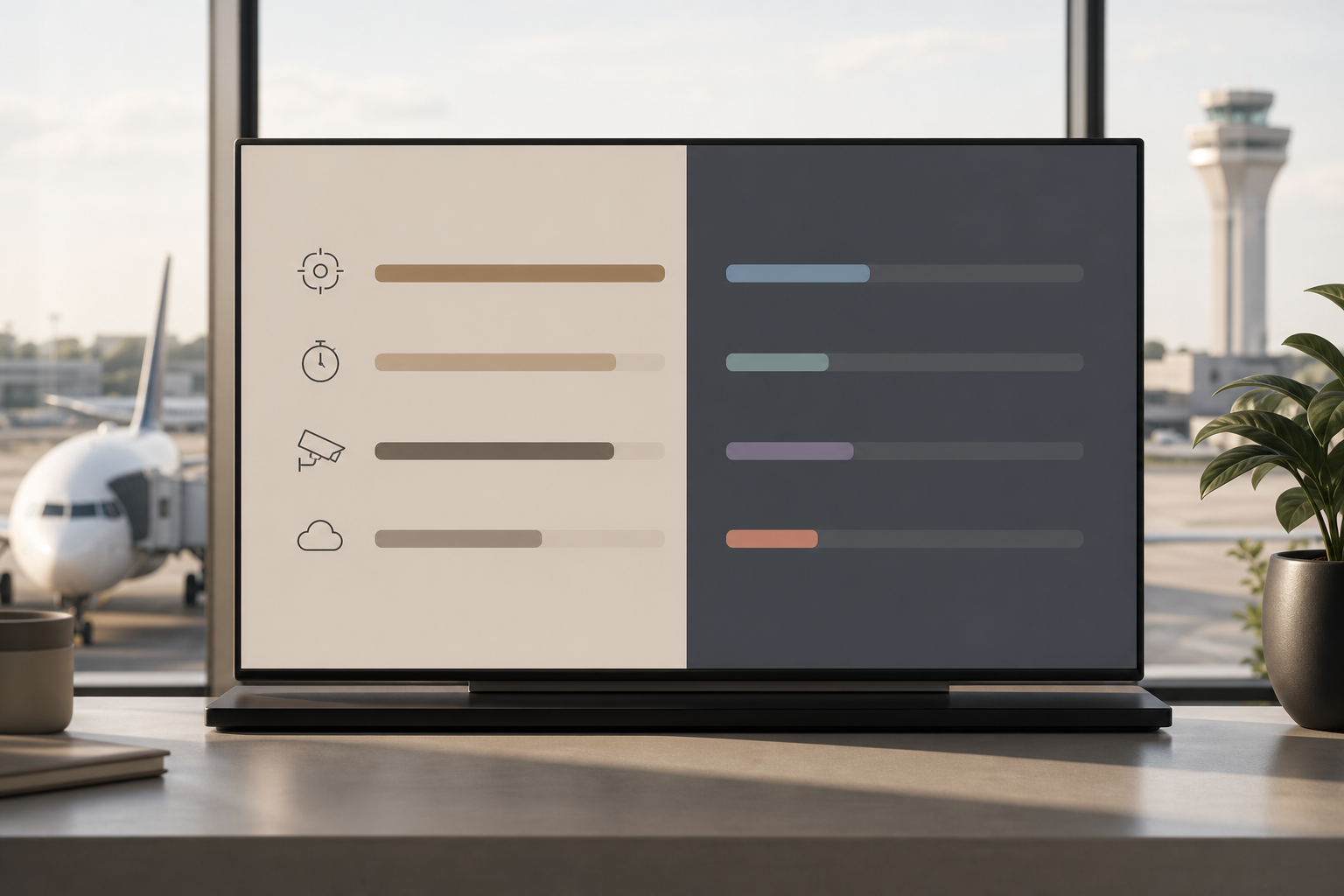
Below is a point‑by‑point view using airport‑grade criteria. “Tie” means your policy or site conditions decide the winner. Where only one vendor has a published, verifiable figure, we call that out.
| Dimension | VideoraIQ | Araani | Winner | Why It Matters |
|---|---|---|---|---|
| Detection accuracy | Publishes 99.4% detection accuracy | No verified public figure in our review window | VideoraIQ | Transparent, published accuracy helps risk sign‑off |
| Alert latency | <3 seconds alert latency (cloud) | No verified public figure in our review window | VideoraIQ | Sub‑10‑second alerts are required; faster is safer in crowds |
| False alarm rate | Low false alarm rate through pattern recognition (BKO; verify with vendor) | Specialist focus suggests strength; verify in pilot | Tie | Run side‑by‑side in steam/dust/reflection zones |
| Camera compatibility | Works with existing cameras across 200+ brands | Brand/ONVIF breadth not verified here | VideoraIQ | Airports run mixed fleets; broad support saves retrofit costs |
| Deployment model | Cloud‑based; no on‑prem servers; SaaS updates | On‑prem/edge options; air‑gapped friendly (verify) | Tie | IT policy decides: cloud scale vs local control |
| Multi‑threat coverage | 9 AI detection engines (intrusion, unattended baggage, ANPR, etc.) | Fire/smoke specialist; other analytics require add‑ons | VideoraIQ | One platform reduces tool sprawl in the SOC |
| Compliance/certifications | GDPR compliant, HIPAA compliant | Fire‑safety certifications referenced by buyers; verify EN 54 mapping | Tie | Privacy vs fire‑device standards serve different mandates |
| Scalability | 10,000+ cameras monitored; Enterprise tier supports unlimited cameras and custom AI models | Per‑server scaling; capacity depends on local hardware | VideoraIQ | Airport‑scale growth without server sprawl |
| Data residency | Regional processing options; verify multi-region storage | On‑prem by default supports strict residency | Tie | Residency rules impact international airport groups |
| Offline resilience | Requires network path to cloud; local buffering on gateways (verify) | Edge/on‑prem continues if WAN fails | Araani | Critical where uplinks are intermittent |
| VMS integration | APIs, webhooks, and common VMS plug-ins (verify versions) | Typically integrates at camera/server level; VMS plugins vary | Tie | Clean operator workflow reduces alarm handling time |
| FACP/BMS tie‑in | Supports BACnet/Modbus via gateways and relays (verify) | On‑prem makes relay/I/O tie‑ins straightforward | Tie | smooth cause‑and‑effect with fire systems is essential |
| Commissioning tools | Cloud dashboards for health, drift, and zone tuning at scale | Local tools for server/camera calibration | VideoraIQ | Fleet‑scale health checks matter at 500+ cameras |
| OpEx vs CapEx | Predictable SaaS OpEx | Heavier CapEx with annual support | Tie | Budget model alignment drives approval speed |
Moreover, VideoraIQ’s real‑time alerts include video proof, location tags, and timestamps. That information accelerates decision‑making in the SOC. Zone‑based monitoring lets you narrow detection to baggage belts or jet bridges to cut noise. For Araani, ask to see performance in high‑bay concourses and catering zones, then compare side‑by‑side against your acceptance thresholds. If you operate both landside and airside perimeters, test each vendor on outdoor aprons where wind can stretch and dilute plumes.
How to run a fair airport POC: start with at least four distinct scenes that reflect your real risks. Include a food court with steam, baggage conveyors with dust, a high‑bay concourse, and an outdoor apron or hangar door. Inject controlled stimuli where permitted.
Use smoke pellets, supervised test flames, or replayed test footage, and log detection times. Over a two‑week window, capture false positives during cleaning, maintenance, and retail peaks. Require export of alarm logs, clips, and system health metrics so you can validate uptime and latency distributions, not just averages that hide the tails.
Beyond the basics, define:
- Maximum acceptable false positives per scene per day (e. g.
- Minimum true‑positive rate for both smoke‑only and flame‑only scenarios
- Evidence packaging: clip length, pre/post buffers, and cryptographic hash options
- Operator handling time from alert to acknowledgment at the 95th percentile
Also Read!
Best Fire Smoke Detection Security Camera for Airports and Transit Stations in 2026
How to Choose an Intrusion Detection Security Camera System for Manufacturing Plants and Warehouses
Pricing Comparison: Total Cost of Ownership for Airport-Scale Deployments for fire and smoke detection from CCTV
For a 500‑camera airport, the pricing story starts with model fit. VideoraIQ is tiered SaaS: Starter (up to 20 cameras, 7‑day retention), Professional (up to 200 cameras, 30‑day retention), and Enterprise (unlimited cameras, 90‑day retention with custom AI models). For airports, Enterprise is the practical tier because of camera counts and retention needs. The SaaS path means no server hardware, predictable monthly or annual costs, and automatic updates. Include premium support SLAs in your model if your SOC operates 24/7/365 with strict response times.
Araani is commonly sold as a perpetual, per‑camera license with annual maintenance, plus dedicated server or edge hardware where needed. That can align well with CapEx‑first procurement or capital improvement funds. However, you must plan for server refresh cycles and hands‑on updates. Exact pricing should be confirmed with the vendor because public rate cards are rare. Incorporate spares, high‑availability pairs, and temperature‑controlled rack space in technical rooms near hangars and baggage halls.
Hidden costs matter. VideoraIQ’s cloud model removes on‑prem maintenance but needs reliable uplink bandwidth and sound network design for camera streams. Araani’s on‑prem approach eases bandwidth load across the WAN but shifts cost to local iron, rack space, and IT labor.
Airports with strict change windows should factor the real cost of patching and smoke‑control integration tests. Security reviews, firewall rule changes, and vendor access approvals can add weeks to the timeline. Budget both time and dollars for this governance so project milestones remain realistic.
To make board approvals faster, convert technical needs into clear line items: licensing (by camera), storage for alert clips, staff time for commissioning, network upgrades if required, and integration work with your fire engineer. Show the 3‑ to 5‑year net present cost of each option and the sensitivity to growth (e. g., adding 100 more cameras per year).
Cost drivers to model in your TCO
Model license costs carefully. SaaS platforms charge per camera on a subscription, while on‑prem tools often use a perpetual license with annual support. Infrastructure costs differ as well. Cloud may require zero new servers, whereas on‑prem or edge solutions add hardware, rack space, and power considerations. Operations also diverge, with automatic cloud updates replacing the planned maintenance windows required on local servers.
Do not forget network costs. Cloud models use WAN bandwidth and may create egress fees, while local processing concentrates traffic on East/West links in your data center. Growth curves differ too. Adding the 501st camera might be instant in SaaS but could require a new server build on‑prem. Work these scenarios into your board paper to avoid mid‑project funding gaps.
Illustrative TCO assumptions to sanity‑check (replace with your numbers):
- Camera mix: 60% 1080p@10–15 fps, 30% 4MP@10 fps, 10% 4K@8 fps
- Storage/retention: 30–90 days of alert clip retention; full stream storage handled by VMS
- Labor: 0.25–0.5 FTE for SaaS administration vs 0.75–1.
- Redundancy: N+1 edge nodes for on‑prem; multi‑region fallback for cloud (verify availability zones)
- Commissioning: 45–90 seconds per camera to draw zones and test alarms at scale using templates
- Security and compliance: annual pen tests, DPIAs, and audit efforts for privacy controls
- Training: initial and refresher operator training across all shifts; include turnover buffers
- Spares and lifecycle: hot spares for edge nodes and a 3–5 year refresh plan for servers
A simple comparison frame to present:
- Year 1: Licensing + commissioning + network adjustments + training
- Years 2–5: Subscription or support renewals + periodic model updates/testing + incremental camera adds
- One‑offs: Integration to FACP/BMS, custom API work, disaster recovery drills
Get an enterprise cost estimate today → to align with your procurement requirements. If your AHJ demands a certain certification path, that alone can decide the winner.
A hybrid approach is valid. Large hubs can use Araani in defined, code‑sensitive zones, say hangars or fuel farms, while deploying VideoraIQ across terminals for broader AI security coverage and unified alerting. That pairing gives you depth in compliance areas and breadth where multi‑threat coverage reduces tool sprawl. Ensure your SOC receives a unified feed of alarms regardless of origin. Document the ownership matrix for updates and patches across both stacks so responsibility is never unclear.
Deployment and integration considerations for airports for fire and smoke detection from CCTV
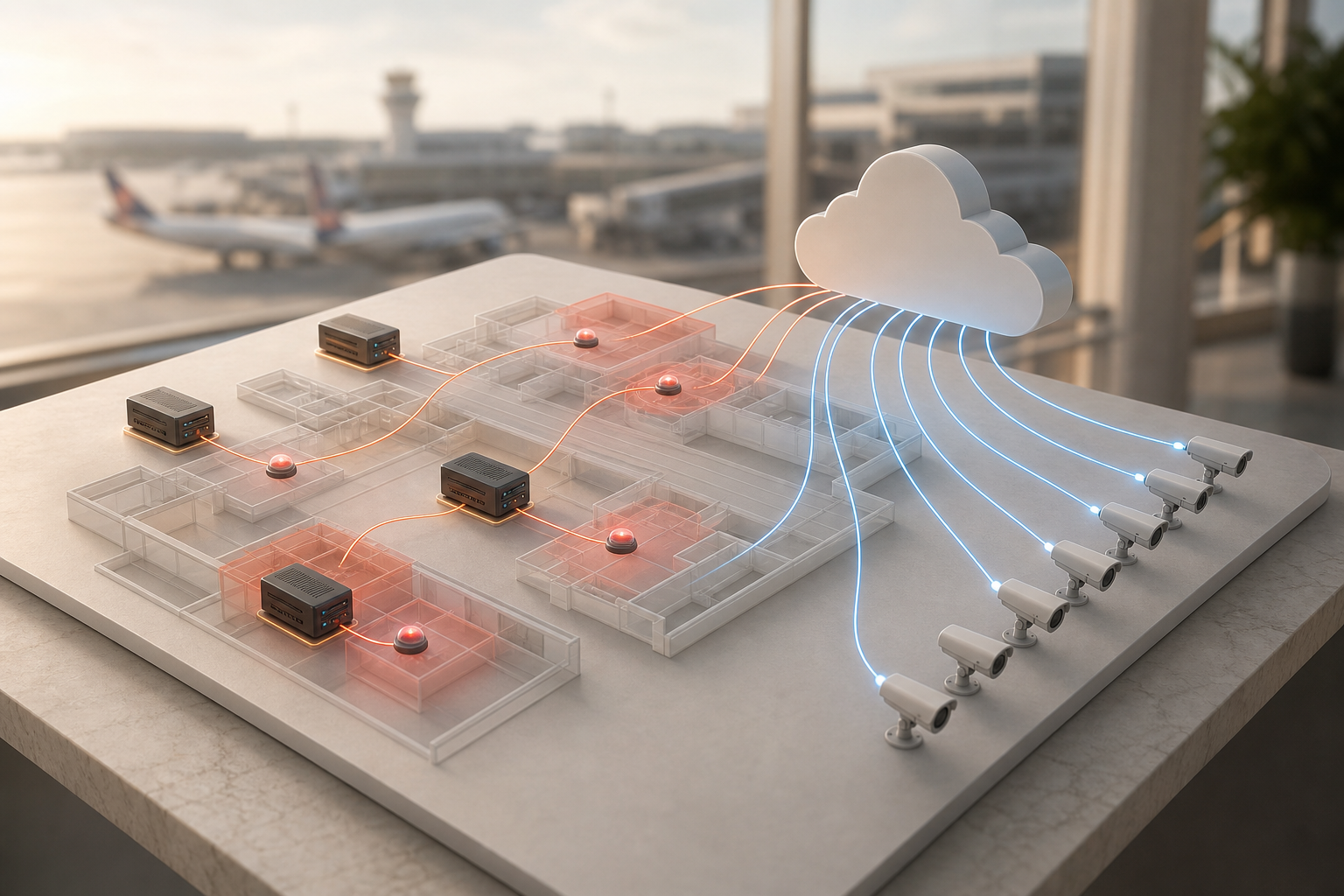
Design your network architecture so analytics sit close to camera VLANs. On‑prem analytics should avoid hairpinning traffic through distant cores. If you use cloud processing, favor encrypted outbound‑only tunnels and shape traffic with QoS so the uplink keeps headroom during peaks.
High availability is non‑negotiable. For local deployments, build N+1 servers or failover VMs. In cloud, request multi‑region processing with health checks for camera gateways.
FACP and BMS coordination is critical. Map each analytic alert to the proper priority and annunciation path. Avoid triggering a general alarm for low‑confidence smoke without human verification if your code or fire strategy requires that safeguard.
Change control should be disciplined. Pre‑stage firmware updates and analytics tuning in a lab that mirrors production camera models and lighting. After every change, run a short validation script and file the results for audit.
Keep documentation fresh. Maintain as‑built drawings that include zone overlays and a roster of excluded areas such as steam vents or welding booths. These records help new staff understand boundaries and reduce accidental changes. Good documents also accelerate external audits and insurance reviews.
Go deeper on resilience and performance:
- Segment camera networks (VLANs) and use ACLs to restrict lateral movement
- Prefer unicast RTSP where multicast is not supported end‑to‑end; if using multicast, validate IGMP snooping/querier behavior
- Ensure MTU consistency to avoid fragmentation on analytics paths
- Validate gateway and server CPU/GPU headroom under failure scenarios (e. g.
- Time‑sync everything — CCTV, gateways, VMS, FACP integrators — and monitor drift
- Build runbooks for degraded modes (loss of cloud, loss of VMS, or loss of a camera segment)
Tip: Treat analytics like any safety‑related system — version, test, and roll back with the same rigor you apply to fire alarm cause‑and‑effect.
Security and privacy notes for fire and smoke detection from CCTV
Practice data minimization from the outset. Prefer alert‑clip export over full‑stream backhaul, and apply retention policies per region to satisfy GDPR, PDPL, and similar rules. Enforce strong access control. Enable SSO with MFA for operators, and make sure audit logs capture every clip view and alert acknowledgment. Those logs should export cleanly to your SIEM.
Push for regular security testing. Ask vendors for recent third‑party penetration tests and verify certificate pinning and modern TLS versions on gateways and servers. During incident handling, define who can share clips externally with airline partners or investigators. Provide redaction tools when people are identifiable near incident scenes so privacy and evidence integrity both hold.
Where required, conduct a Data Protection Impact Assessment (DPIA) that documents data flows, storage locations, and retention. Classify data (public, internal, restricted) and align your controls accordingly. For international airport groups, confirm options for EU‑only processing and standard contractual clauses for any cross‑border transfers. Privacy‑by‑design features such as on‑camera masking or selective zone processing can reduce the volume of personal data processed while still meeting safety goals.
RFP language you can adapt for fire and smoke detection from CCTV
- The system shall provide fire and smoke detection from cctv with end‑to‑end alert latency under 10 seconds (target under 3 seconds) measured from camera frame time to operator receipt, including timestamp and camera location.
- The system shall integrate with our VMS to create event bookmarks and play the associated clip upon alert, and shall export alarms to our FACP/BMS via BACnet/Modbus/relay as specified by our fire engineer.
- The system shall demonstrate low false alarm rates in the following zones: food court (steam), baggage handling (dust), concourse (reflections), and apron (wind shear), during a two‑week POC with logged metrics.
- The vendor shall provide commissioning tools to configure zones for 500+ cameras with health monitoring, drift detection, and bulk update/rollback.
- The vendor shall support privacy and data residency requirements for all jurisdictions in which the airport group operates, with documented controls and audit logs.
- The system shall support role‑based access controls, SSO with MFA, and exportable audit logs compatible with our SIEM.
- The vendor shall supply a documented cause‑and‑effect matrix mapping analytic alerts to fire alarm priorities and annunciation paths, approved by our AHJ before production.
- The solution shall provide documented bandwidth requirements per stream and per gateway, including QoS recommendations and failover behavior.
- The vendor shall deliver a signed test report from the pilot showing detection times, false positives by category, and uptime/latency at the 95th and 99th percentiles.
Quick Decision Guide: choose VideoraIQ if you need a unified AI platform with sub‑3‑second alerts, broad camera support across 200+ brands, and rapid cloud deployment that avoids new hardware. Prefer Araani if you want a specialist fire tool with on‑prem or edge processing for air‑gapped networks, or if fire‑safety certification pathways are part of procurement. Consider a hybrid when you want specialist fire coverage in compliance zones and a multi‑engine AI layer across the full CCTV estate. In that model, both breadth and depth are covered.
Pilot and acceptance testing checklist for fire and smoke detection from CCTV
Define success thresholds at the start. Set the minimum detection confidence, the maximum acceptable false positives per day, and target latency including the 95th percentile. Include operator workflow in your test. One‑click video verification, clear escalation buttons, and links to your ticketing or incident platform should be demonstrated in every scene.
Involve the AHJ early so no one is surprised by the results or by the role of analytics in the fire sequence. Provide short SOP videos to train all shifts so night crews handle alarms the same way as day crews. Validate with quick tabletop exercises and record outcomes. After the pilot, run a structured review that compares cost, performance, and operational fit. Add network and security findings so you do not meet them for the first time during production cutover.
Acceptance checklist additions:
- Validate time sync across systems by comparing event timestamps with a known reference
- Capture at least 20 true‑positive and 50 normal‑operations hours per scene to characterize performance
- Classify all false positives by root cause (steam, glare, dust, motion artifacts) and retest after tuning
- Exercise failover by simulating a gateway outage and confirming alarm continuity or clear degradation modes
- Document final zone shapes, schedules, and exclusions, and store them with as‑built drawings for audit