

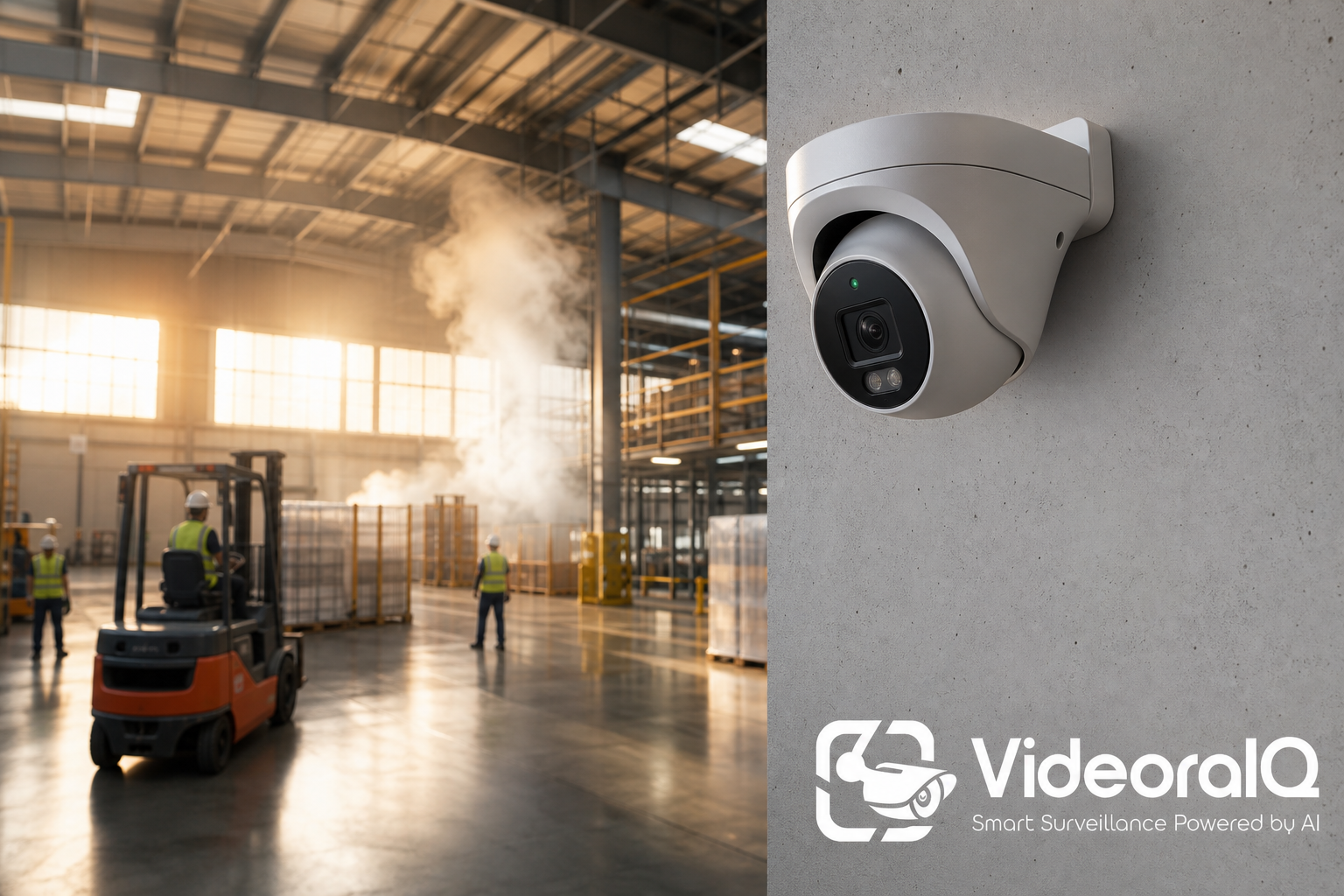
Eighty-five percent of CCTV footage is never reviewed (Source: VideoraIQ stats). That makes fire and smoke detection from cctv feel like a broken promise. Short answer first: In 2026, the best path is to turn the cameras you already have into active sensors with real-time, sub‑3‑second visual alerts and video evidence. This approach catches early smoke and flame in live feeds, not hours later in a morning recap.
Your cameras are on. But they are passive. You need software that watches every frame, flags smoke or flame the moment it appears, and documents it for OSHA and insurance. You also need accuracy at or above 99% and alerts in seconds, not minutes. Finally, you need zero rip‑and‑replace, it should work with your current IP cameras and your team’s workflow.
In the guide below, you’ll see what matters, how AI detection works on top of existing CCTV, and where it beats (and complements) code‑mandated detectors. You’ll get real numbers, 99.4% detection accuracy, alerts in under 3 seconds, and proof captured across 10,000+ cameras in 7+ countries, so you can defend the upgrade in your 2026 safety plan.
Why Manufacturing Plants and Warehouses Are Uniquely Vulnerable to Undetected Fires
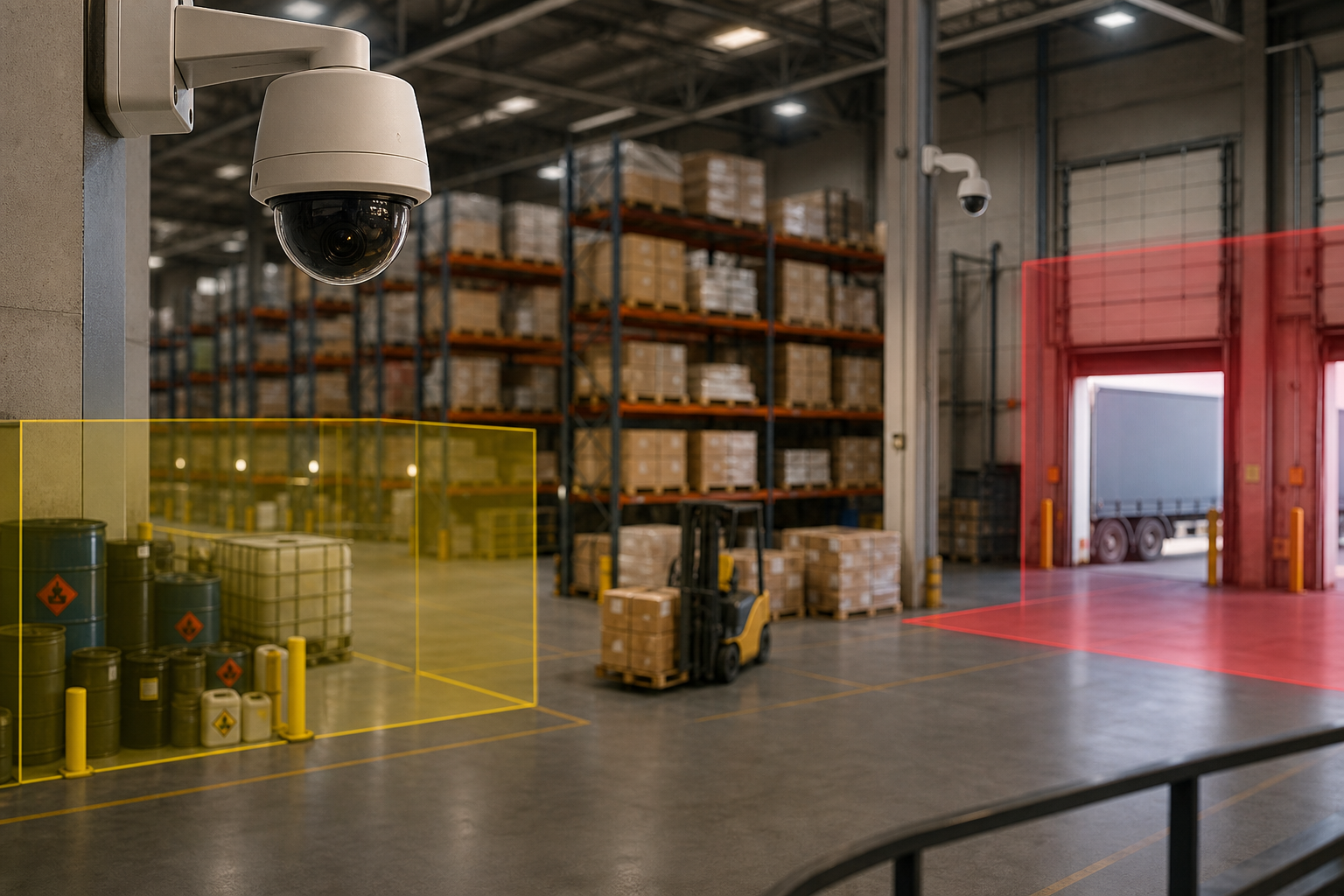
Large open floors and high ceilings slow traditional detection. In high‑bay storage, smoke takes time to reach ceiling‑mounted sensors. Meanwhile, fire spreads across cardboard, pallets, and packaging at ground level. By the time a ceiling detector trips, you may already face real loss on a single aisle.
Moreover, many plants run unmanned hours. Third shift runs skeleton crews. Weekends go quiet.
Without active monitoring, a small spark can become Monday’s crisis. And because 85% of CCTV footage is never reviewed (Source: VideoraIQ stats), your existing cameras watch but do not warn. They only help after the fact.
In addition, combustible stock changes the risk picture. Paper wrap, plastic films, wood pallets, and certain chemicals all add fuel and speed. Welding bays and hot work areas add ignition sources. Forklift charging stations and electrical panels add heat and load. Each of these zones deserves faster detection and clear video proof.
Furthermore, you face pressure from both OSHA compliance and insurance. Inspectors want documented drills and response times. Adjusters want timestamped footage to back claims.
Without proactive alerts and auto-captured clips, you rely on anecdote, not evidence. One incident, even if contained, can erase a quarter’s margin. You know the stakes.
Common high-risk realities in plants and warehouses
- High ceilings delay smoke reaching detectors.
- Hot work and charging areas add ignition points.
- Cardboard, plastic, and pallets add rapid fire load.
- Unmanned hours leave risks unseen.
- Cameras record, but no one is watching live.
“The cameras were on. We just needed them to act.” — A typical note from safety supervisors who add AI monitoring
For a deeper retail‑focused view that still maps to many back‑of‑house risks, see this practical read: retail buyer’s guide for 2026. The space is different, but the principles, speed, accuracy, and proof, remain the same.
What to Look For in a Fire and Smoke Detection Camera System for Industrial Facilities
You do not need to start over. You need software that meets plant realities and plugs into your current IP cameras. The criteria below reflect what works in dust, steam, glare, and high‑bay layouts. Use them as your RFP checklist.
1) AI detection accuracy in tough conditions
Dust, steam, welding flash, and glare cause most false alarms. Look for proven accuracy above 99% with a low false alarm rate backed by pattern recognition and real deployments. Anything less means your team will start to ignore alerts.
2) Alert latency that beats fire growth
Seconds matter when a spark becomes open flame. Aim for alerts in a few seconds (under five) from first visible smoke or flame to on‑screen notice. Faster notice buys response time, and square footage saved. Speed plus accuracy is the goal.
3) Works with your existing cameras
Avoid rip‑and‑replace. You likely have dozens or hundreds of IP cameras already installed. Choose a platform that works with 200+ camera brands and standard RTSP/ONVIF feeds. Your win is time to value, not a new hardware bill.
4) Cloud vs. on‑premise
Remote warehouses and lean IT teams struggle with server upkeep. Cloud delivery removes patching and hardware refresh cycles. It also scales across sites without a truck roll. If policy or bandwidth require it, ensure there’s a path that aligns with your controls.
5) Zone‑based monitoring tuned to your floor
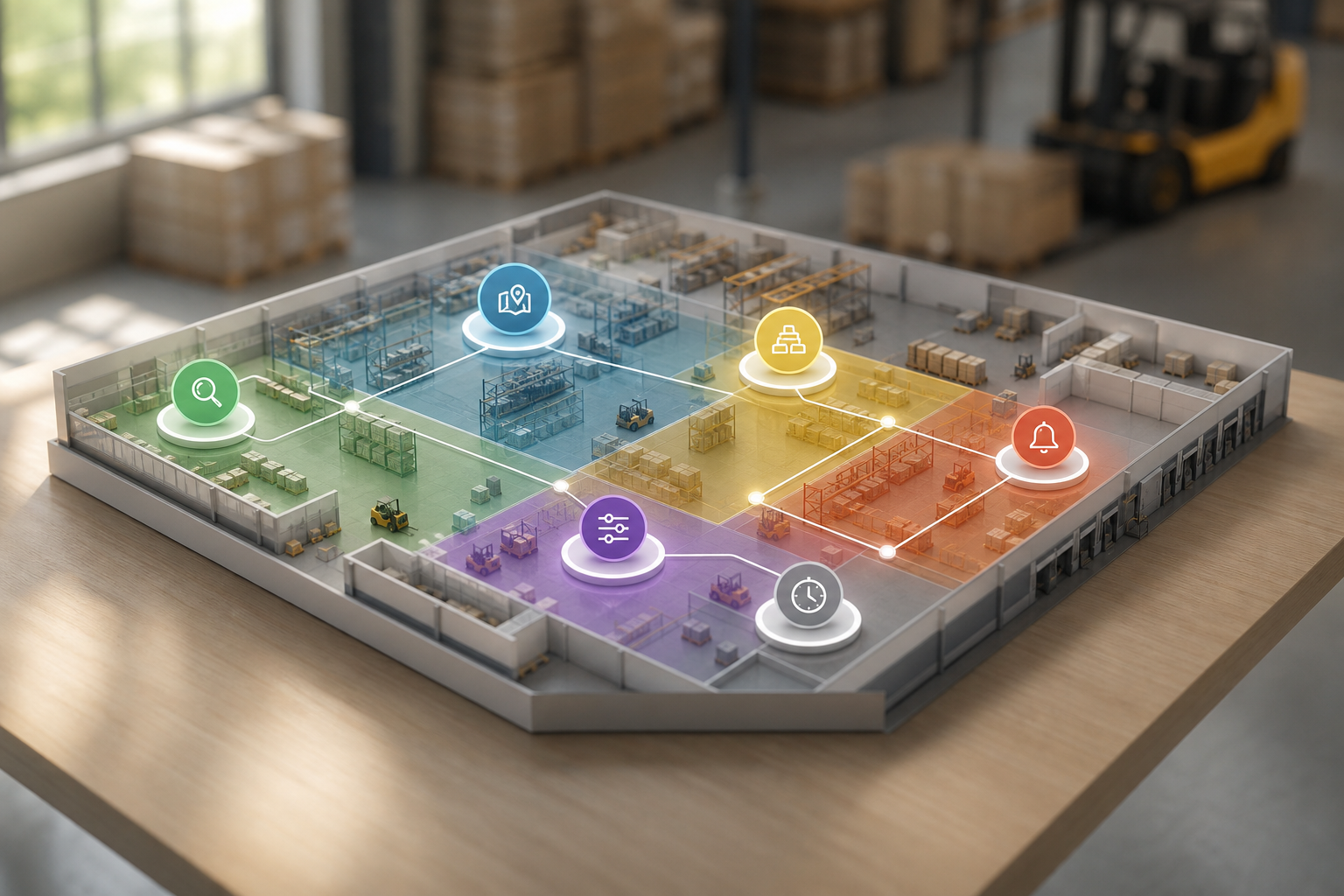
You should draw virtual zones over hot work, chemical storage, loading docks, forklift charging, and paper/plastic stock. Then set rules and time thresholds per zone. This focuses detection where risk is high and cuts noise elsewhere.
6) Video evidence that stands up in reviews
You will need timestamped clips with camera location tags. They support OSHA investigations, insurance claims, and internal root‑cause reviews. They also help train teams and refine hot work permits.
7) Scales to many cameras and many sites
Plants and DCs are big. Look for smooth scaling to 200+ cameras per site, and orchestration across all your facilities. Your dashboard should let you filter by site, zone, and alert type in a few clicks.
8) Compliance and privacy controls
If you record staff, GDPR matters in the EU. If you operate near health data, HIPAA matters in the US. Pick a platform that is GDPR compliant and HIPAA compliant so you can pass privacy and security reviews without drama.
For an apples‑to‑apples sense of how vendors differ on these points in another vertical, this write‑up helps frame the questions: VideoraIQ vs Verkada comparison.
Also Read!
How VideoraIQ’s AI Fire and Smoke Detection Works in Manufacturing and Warehouse Environments
VideoraIQ adds live, AI‑based fire and smoke detection to the cameras you already run. It watches each feed in real time and flags smoke or flame with alerts in under 3 seconds (Source: VideoraIQ stats: “<3 seconds alert latency”). That speed, paired with accuracy, is what turns passive cameras into active safety sensors.
Under the hood, nine AI engines run at once, including fire and smoke detection, intrusion detection, face recognition, object detection, number plate (ANPR), line‑cross detection, unauthorized access, unattended baggage, and cashier absence detection. As a result, you get more value per camera. Fire alerts do not block other detections; the engines work side by side.
Moreover, VideoraIQ reports 99.4% detection accuracy in the field. That performance matters in plants where steam, dust, and welding sparks can confuse basic detectors. Pattern recognition and customizable sensitivity reduce false alarms. You can further tune with zone‑based monitoring, draw a polygon around chemical storage, welding bays, loading docks, or forklift chargers, then set rules per zone.
In addition, you keep your cameras. VideoraIQ works with existing cameras across 200+ brands, so there’s no rip‑and‑replace. The platform is cloud‑based with no need for on‑premise servers, which is ideal for remote warehouses or multi‑site rollouts. It already monitors 10,000+ cameras deployed in 7+ countries, so scale and reliability are proven.
“The system handles surveillance 24/7. No more missed alerts or relying solely on camera operators.” — Jason Rodriguez, Security Manager
When an event fires, your team receives real‑time alerts with video proof, location tag, and timestamp. That evidence supports OSHA documentation, insurance claims, and after‑action reviews. Furthermore, Heatmaps & Analytics help you spot risk hotspots, like repeat alerts near chargers or welding areas, so you can plan prevention steps that actually stick.
VideoraIQ vs. Traditional Fire Detection Systems and Competing AI Platforms
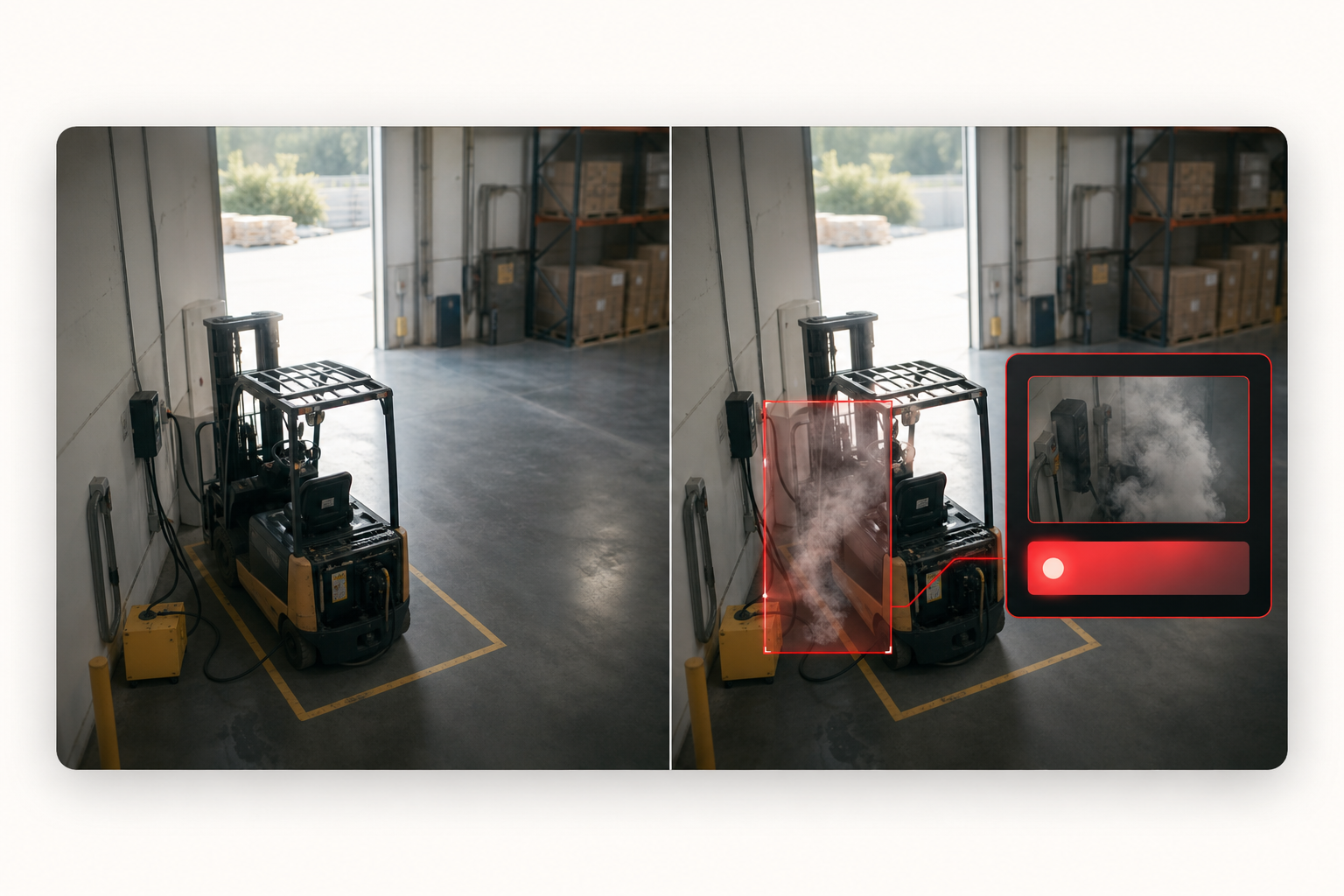
Traditional smoke and heat detectors remain code‑mandated. You still need them. In high‑bay warehouses, though, they can be slow because smoke must travel far to reach the sensor. VideoraIQ complements those systems by watching the scene directly and sending visual alerts in under 3 seconds. That early notice can start response while ceiling sensors lag.
Compared to single‑purpose analytics, multi‑engine AI adds value. VideoraIQ runs nine AI engines at once, so the same platform that flags smoke can also watch for line‑crossing at loading docks, unauthorized access after hours, and unattended objects. This reduces tool sprawl and multiplies ROI per camera.
Integration is another key gap. Some competitors lean on proprietary cameras or edge servers. VideoraIQ works with existing cameras across 200+ brands and is cloud‑based with no need for on‑premise servers.
That means you skip hardware spend and downtime. As Sana Ibrahim put it: “Installation was quick, and it worked with our current CCTV, no downtime, no extra investment.”.
Finally, speed and accuracy decide trust. VideoraIQ’s <3‑second alert latency and 99.4% detection accuracy set a high bar. In one real plant incident, the platform detected fire 52 seconds before a traditional smoke alarm, and the team responded sooner because they had the live camera link.
Side‑by‑side differences that matter
| Dimension | VideoraIQ | Traditional Smoke/Heat Detectors | Other AI Platforms |
|---|---|---|---|
| Detection View | Direct visual smoke/flame on camera | Ceiling air/heat at sensor | Visual or thermal, varies |
| Speed | <3‑second alert latency | Delayed by smoke travel distance in high bays | Varies; may depend on edge hardware |
| Accuracy | 99.4% detection accuracy | Prone to dust/steam false trips in warehouses | Often strong, but vendor claims vary |
| Camera Strategy | Works with 200+ brands | Not applicable | Sometimes proprietary lock‑in |
| Deployment | Cloud‑based, no on‑prem servers | Wired building systems | May require site servers |
| Value Stack | 9 AI engines in one platform | Single‑purpose | Often single‑purpose or add‑ons |
| Pricing | SaaS tiers from 20 to unlimited cameras | Hardware + annual testing | Mix of licenses, hardware fees |
“Our fire was detected 52 seconds before our smoke alarm triggered. The VideoraIQ alert came with a live camera link — my team was already on their way before the alarm sounded. That system saved the building.” — Nilesh Kapoor, Plant Safety Supervisor, Manufacturing Facility (480 cameras)
Remember, this is a complement, not a replacement. Building codes still require traditional detectors. The combined approach gives you the best of both, code compliance plus faster, visual confirmation for action.
Certifications, Compliance, and Operational Track Record
You cannot deploy new monitoring without clearing privacy and security reviews. VideoraIQ is GDPR compliant and HIPAA compliant, which helps you pass data protection checks, especially if you operate in the EU or near healthcare processes onsite. These guardrails matter when cameras can capture staff on shift.
Scale and uptime also matter. VideoraIQ monitors 10,000+ cameras and is deployed in 7+ countries. That reach shows the platform works across layouts, climates, and network setups. In the field, auto‑captured video evidence with timestamps and camera locations helps you close insurance claims faster and meet OSHA fire investigation needs with facts, not notes.
False alarms ruin trust. VideoraIQ’s low false alarm rate comes from pattern recognition and customizable thresholds that you can tune per zone. In plants with steam, welding flash, or airborne dust, this fine control keeps alerts high‑signal. It means your team acts on the right pings.
“We went from finding out about incidents in the morning briefing to being notified in real time. VideoraIQ caught an intruder at 2AM that our overnight guard missed. That one event alone justified the entire platform cost.” — Ananya Mehta, Head of Facilities, 200‑Camera Corporate Campus
For background on smoke detection technology and why code systems remain mandatory in parallel with video analytics, see this overview: Smoke detector (Wikipedia).
Also Read!
How to Choose a Fire and Smoke Detection Security Camera for Manufacturing Plants and Warehouses
Best Fire Smoke Detection Security Camera for Airports and Transit Stations in 2026
Getting Started: Deploying Fire and Smoke Detection Across Your Facility
Rolling this out is far simpler than a new camera install. You can go site by site or start with a pilot line and scale. Follow these steps to keep momentum and prove value in 2‑4 weeks.
Step 1: Audit your current CCTV
List each IP camera, its location, and stream details. VideoraIQ works with 200+ camera brands, so you keep your hardware and your wiring.
Step 2: Identify high‑risk zones
Mark chemical storage, loading docks, welding bays, electrical panels, forklift charging, and raw material storage. These zones will get focused monitoring and tighter thresholds.
Step 3: Choose your tier
- Starter: up to 20 cameras with real‑time alerts and 7‑day cloud retention.
- Professional: up to 200 cameras, all AI engines, and 30‑day retention.
- Enterprise: unlimited cameras, custom AI models, and 90‑day cloud retention.
Step 4: Define alert routing
Decide who gets what, and how. Send alerts to the safety supervisor, fire response team, and facility manager via dashboard notifications or email. Add redundancy for unmanned hours.
Step 5: Set zone rules and time thresholds
Use Zone‑Based Monitoring to draw your polygons and apply Customizable Time Thresholds per zone. Tune sensitivity for dust, steam, and lighting.
Step 6: Run a 2‑week calibration
Let the system learn your rhythms. Adjust thresholds and zones based on early alerts. Lock in the settings that cut noise and catch true risks.
**Schedule a no‑pressure consult →
Frequently Asked Questions
How much does an AI fire and smoke detection camera system cost for a warehouse?
VideoraIQ uses tiered SaaS pricing per camera, so there’s no large upfront hardware cost because it works with your existing IP CCTV. The Starter tier covers up to 20 cameras with 7‑day cloud retention. The Professional tier supports up to 200 cameras with all AI engines and 30‑day retention. The Enterprise tier supports unlimited cameras with 90‑day retention and custom AI models. As Ananya Mehta shared, a single detected incident justified the entire platform cost.
Can AI fire detection cameras replace traditional smoke detectors in a manufacturing plant?
No. AI video detection complements, but does not replace, code‑mandated smoke and heat detectors required by NFPA and local fire codes. The advantage is speed and visual proof. VideoraIQ alerts in under 3 seconds, often beating high‑bay ceiling sensors that must wait for smoke travel. In one facility, it detected a fire 52 seconds before the smoke alarm, giving the team a crucial head start.
How accurate is AI fire detection in dusty or steamy manufacturing environments?
VideoraIQ reports 99.4% detection accuracy and a low false alarm rate through pattern recognition. You can tune sensitivity by zone and use customizable thresholds to ignore brief steam or welding flash. A 2‑week calibration period is recommended to fit your dust, steam, and lighting profile. This process yields high signal with minimal noise.
Does it work with my existing CCTV cameras or do I need to buy new ones?
You do not need new cameras. VideoraIQ integrates with existing IP‑based systems across 200+ camera brands without extra hardware. It’s cloud‑based, so there are no on‑premise servers to maintain. As one user put it, “no downtime, no extra investment.”.
How fast are the fire detection alerts and how are they delivered?
Alerts arrive in under 3 seconds with video proof, a location tag, and a timestamp. You can receive them via the dashboard or email, and route them to the right on‑call team. This speed is designed to give you time to act before a small event grows. Fast, visual alerts drive fast, safe responses.
What other security threats can the system detect besides fire and smoke?
VideoraIQ includes nine AI engines running at once: fire & smoke, intrusion detection, face recognition, object detection, ANPR (license plate), line‑cross detection, unauthorized access, unattended baggage, and cashier absence detection. For plants and warehouses, intrusion detection, unauthorized access, and line‑cross detection pair well with fire detection to cover both safety and security.
Is the footage and data stored securely and in compliance with privacy regulations?
Yes. VideoraIQ is GDPR compliant and HIPAA compliant. Cloud retention ranges from 7 days on Starter to 90 days on Enterprise. The platform auto‑captures video evidence with timestamps and camera locations, which supports OSHA documentation and insurance reviews. These controls help you pass both legal and internal audits.
What alternatives to VideoraIQ exist for warehouse fire detection cameras?
You can consider traditional aspirating smoke detectors (VESDA), thermal imaging systems (for example, FLIR‑type cameras), and other AI video analytics platforms (for example, Araani or Ambient.ai). Each has strengths: VESDA can be strong in very clean, controlled rooms; thermal can help outdoors or in poor light. VideoraIQ’s edge is multi‑engine AI on the cameras you already own, sub‑3‑second visual alerts, and no added hardware.
Final Takeaways
- Use what you have, made smart. Turning current cameras into active sensors gives you <3‑second alerts, 99.4% accuracy, and video proof for OSHA and insurance.
- Complement, don’t replace, code systems. Keep smoke/heat detectors for compliance, and add visual AI to catch events at the source.
- Plan the rollout. Map high‑risk zones, pick a tier that fits your 2026 footprint, and run a two‑week calibration to cut false alarms.