

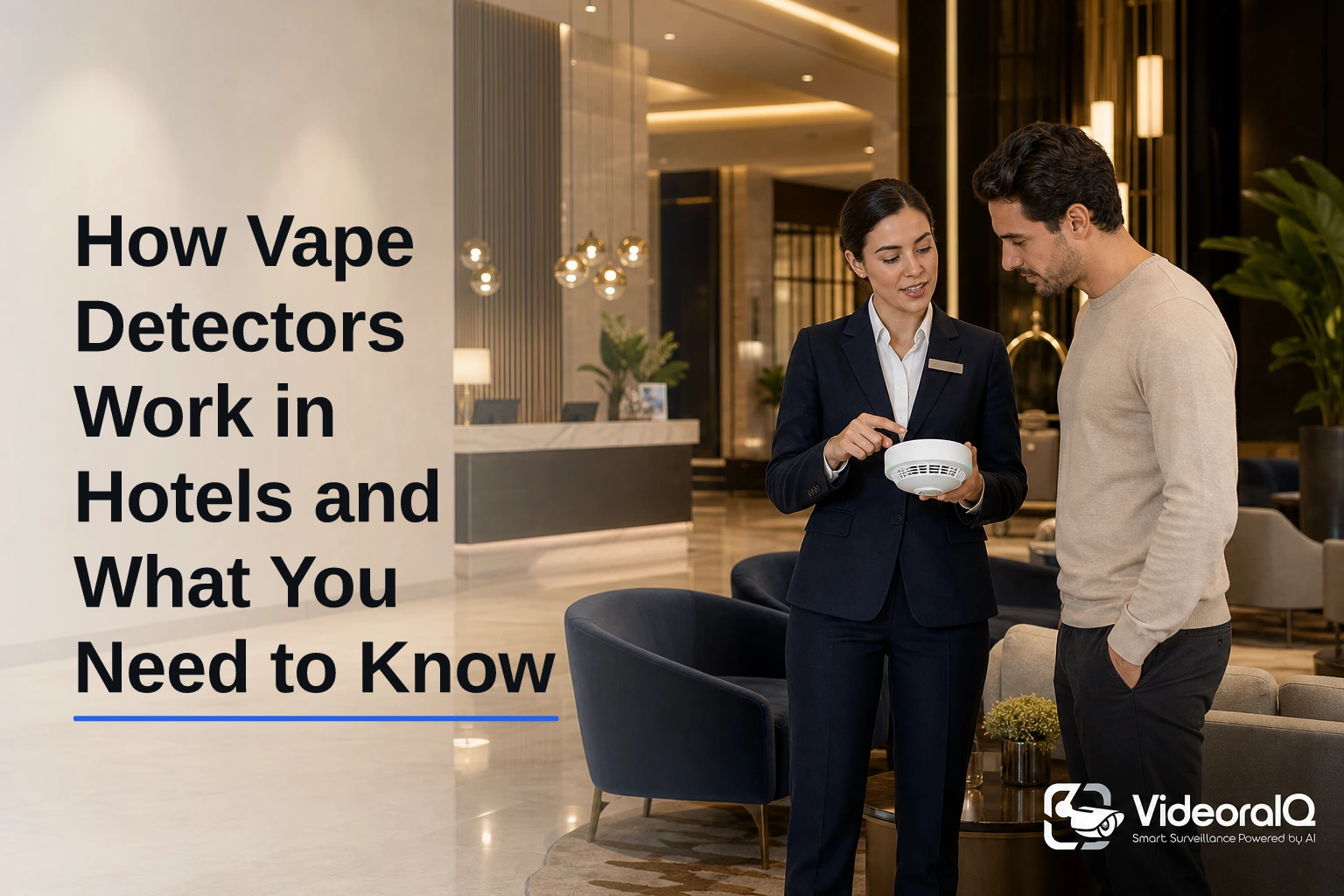
Across hotels, 85% of CCTV footage is never reviewed (VideoraIQ data), and yet vaping complaints and fines still land at the front desk. That’s why operators search for how vape detectors work hotels and what the real results look like in 2026. Here’s the short answer you need first: vape sensors read fine particles or chemical traces from e‑cig aerosol and push instant alerts to your team so you can respond before odors linger, detectors trip, or guests complain.
In practice, the best outcomes come from the blend of the right sensor, smart placement, and a clear staff playbook. You’ll also want clean integrations with your alert channels and a guest-facing policy that sets fair expectations. This guide lays out how the tech works, how to roll it out step by step, where hotels slip up, and which tools are worth a look.
As a result, you’ll leave with a plan you can start this week, plus the context to judge vendors without the hype. By the end, you’ll know what matters for accuracy, what drives false alerts, and how to make the system part of daily ops, not a gadget that gathers dust.
What Is a Vape Detector and How Does It Work in a Hotel Setting?
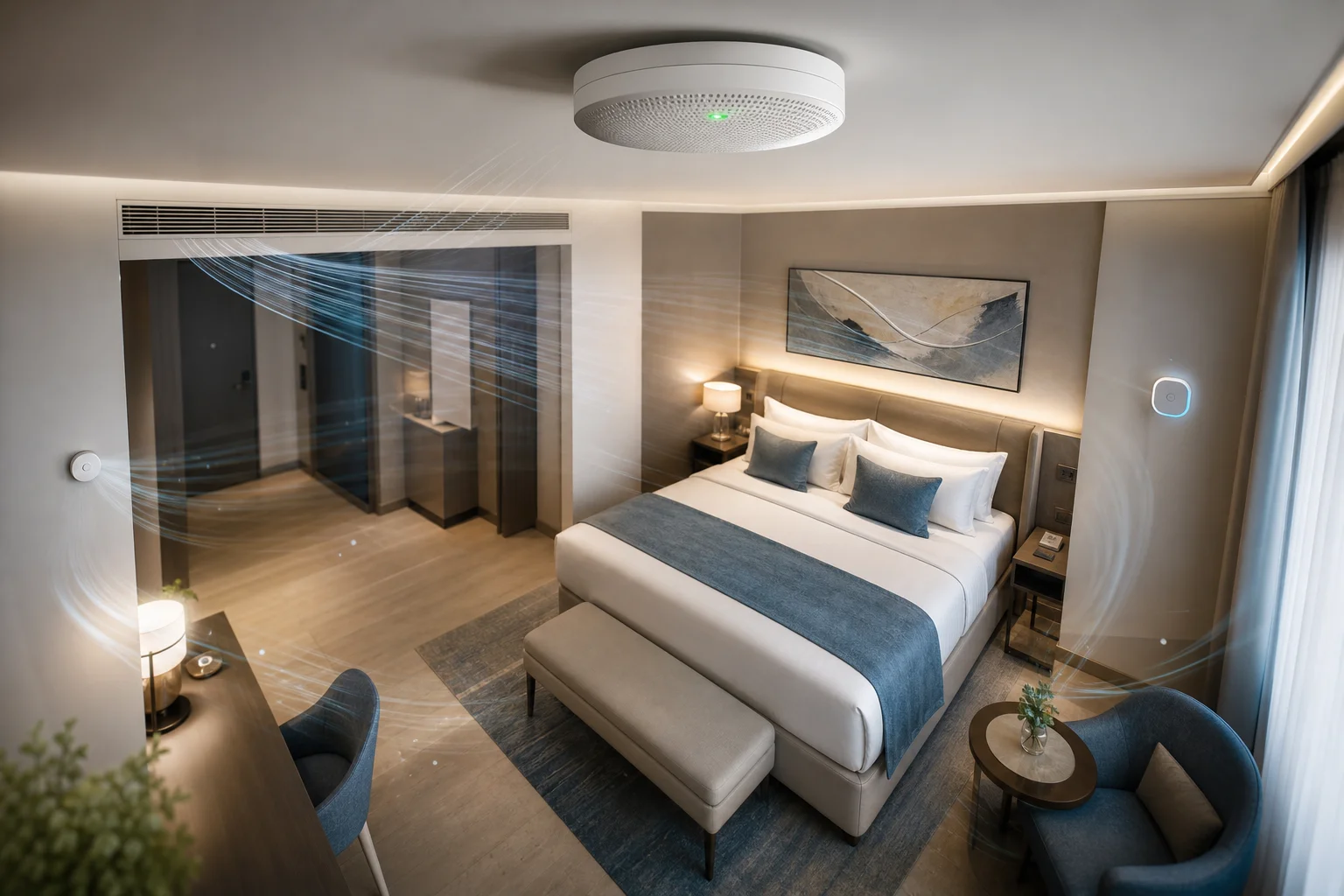
Vape detectors spot aerosol from e‑cigarettes by sensing particles or chemicals in the air, then sending an alert with the time and location. Most models track spikes in fine particulate (PM1–PM2.5) or total volatile organic compounds (TVOCs) that line up with e‑cig use. Some pair those readings with temperature, humidity, and even noise levels to reduce false alerts.
Moreover, this is not the same as a standard smoke detector. Classic smoke detectors are tuned for fire safety and use ionization or photoelectric methods to catch combustion particles fast. They are not designed to distinguish vape aerosol from steam or dust and will not provide staff-facing alerts with context. If you need a refresher on how traditional devices work, see the overview on smoke detectors.
Sensor types you’ll see in hotels
- Particulate sensors: Use optical scattering to count fine particles. They respond to aerosol density changes common in vaping.
- Chemical (TVOC) sensors: Read changes in volatile compounds present in e‑cig aerosol. These can complement particle data.
- IoT-connected sensors: Pair the sensor with Wi‑Fi or PoE so alerts reach the front desk, security, or mobile radios in seconds.
- Hybrid nodes: Combine particle, chemical, and environment readings to cut false positives from steam, hairspray, or cooking fumes.
For context, e‑cig aerosol contains tiny droplets and gases that can be measured by the sensors above. The CDC’s e‑cigarette pages describe what’s in the aerosol; that’s the mix your sensors “see,” even though it’s not smoke from combustion.
Where should you install them? In guest rooms, aim for ceilings or upper walls away from direct HVAC blasts and windows, which can scatter aerosol. Bathrooms need careful placement because steam can confuse some units; if you deploy there, pick sensors that correlate humidity and TVOC with particles. For public areas, focus on guest corridors, stairwells, meeting rooms, and near elevator lobbies where complaints start. Back-of-house spots like staff restrooms or locker rooms may warrant coverage if your policy applies there.
As a result, understanding how vape detectors work hotels operations helps you pick the right blend of particulate and chemical sensing. The more your device cross-checks signals, the fewer false alerts your team has to chase. And the faster the alert reaches the right person, the more likely you resolve the issue before it becomes a service recovery event.
Also Read!
What Is Loitering? Definition, Laws, and What You Need to Know
A Beginner’s Guide to 4K Resolution: What It Is, When You Need It, and How to Choose
Step-by-Step: How Hotels Implement Vape Detection Systems
You’ll get the best results by treating vape detection as a property program, not a gadget install. Follow these steps and track outcomes like alerts per 100 occupied room nights and response time to close the loop.
1.
Start with a 2–3 week audit. Pull complaint logs, brand standards, local fine structures, and any rooms out of order due to odor recovery. Map hotspots by floor and time of day. Decide where guest experience or cost hits hardest (e.g., chargebacks, deep cleans, negative reviews).
2.
Decide between particulate-first, chemical-first, or hybrid sensors. For rooms with frequent steam or aerosol products, a hybrid tends to reduce false alerts. If network reach is spotty, choose devices with local datalogging and buffered alerts so nothing is lost.
3.
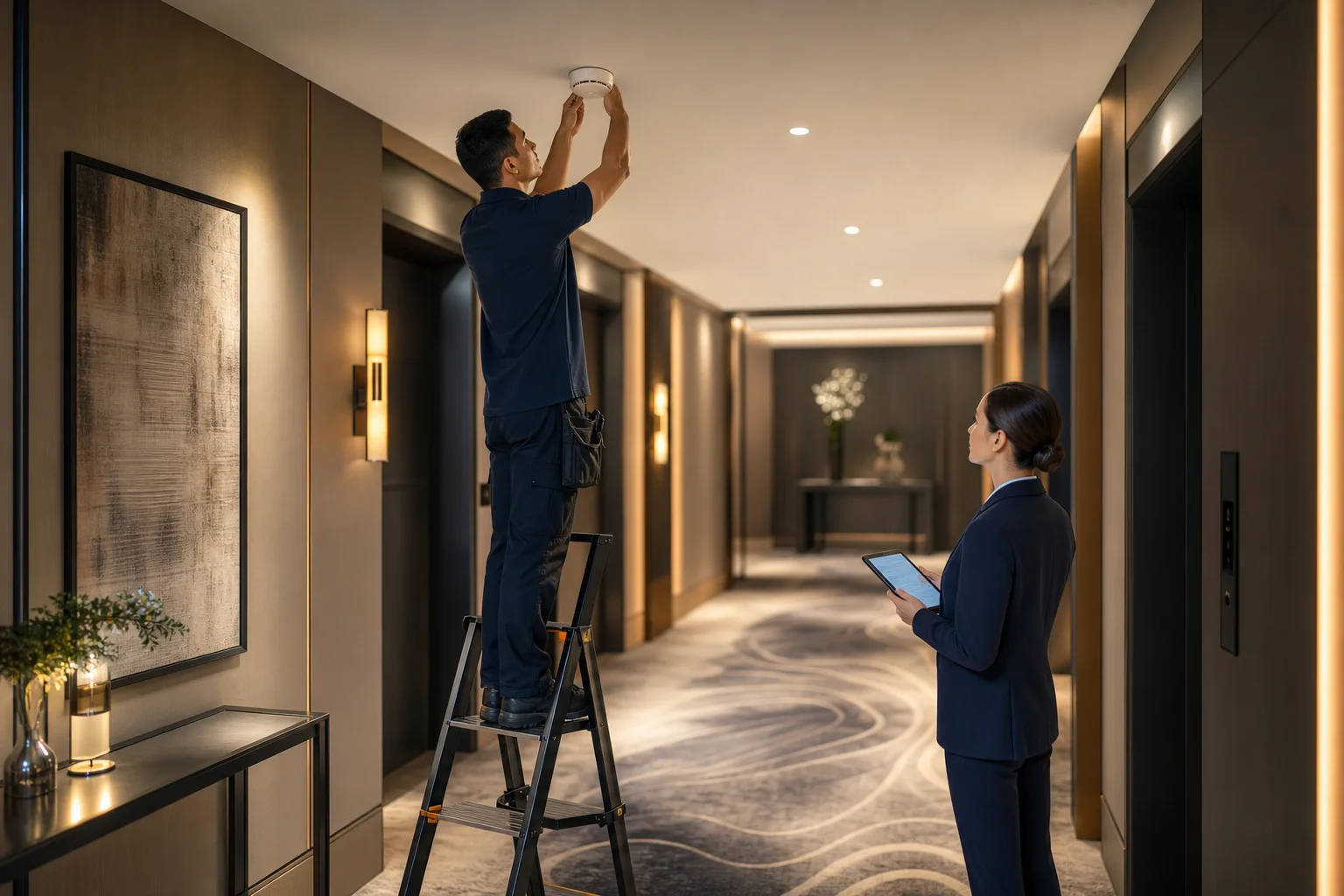
Pick 10–20 pilot rooms that reflect different HVAC layouts and guest profiles, plus 2–3 public zones like corridors or meeting rooms. Mount 6–8 inches from the ceiling, clear of supply vents by at least 3 feet. In bathrooms, avoid direct steam plumes; mount near the door header if you must cover that space.
4.
Tie alerts into what your team already carries: mobile radios, a security phone, or a service ops app. Route alerts by zone and shift. Include camera location tags or room numbers in the message so staff know where to go.
5.
Write a guest-facing policy that states where vaping is not allowed, the fee if it occurs, and how you determine violations. Keep language clear and fair. Post in-room and at booking. Internally, define when to knock, how to document, and who approves fees.
6.
Run 30-minute drills for front desk, housekeeping, and security. Teach them what an alert looks like, how to respond, and the script to de‑escalate. Role-play a live scenario and measure time-to-resolution.
Simple pilot checklist
- Pick 10–20 rooms that span layouts and floors.
- Run the pilot for 30 days with daily alert reviews.
- Log false positives and adjust thresholds weekly.
- Decide go/no‑go on scale-up with clear metrics.
To keep phrases spaced evenly, include the key query in your plan notes: your team is learning how vape detectors work hotels better when placement and thresholds evolve during the pilot. That reminder saves time and cuts noise.
Common Mistakes Hotels Make With Vape Detection
Relying on standard smoke detectors is the first misstep. Fire devices are not tuned for vaping and will not deliver room-level alerts to staff without extra hardware. You need sensors meant for aerosol from e‑cigs, not only combustion particles.
Second, poor placement drives false alerts. Sensors mounted right next to HVAC vents, windows, or steam-heavy bathrooms see erratic readings. Move detectors away from direct airflow and add humidity-aware thresholds in bath areas. You’ll see clearer signals and fewer midnight knock-and-no-one-home events.
Policy, Privacy, and Workflow Gaps
Third, no guest-facing policy invites disputes. If the rule, fee, and process aren’t in pre‑arrival emails, the compendium, and in-room cards, guests will claim surprise. Put your policy in plain language. Keep fees consistent and have photos or logs ready to back charges if you apply them.
Fourth, ignoring privacy laws creates risk. Some regions treat environmental sensors and any paired audio or video very differently. If you capture anything beyond environmental data, confirm consent rules and signage. For EU properties, use the principles in EU GDPR Article 5 to frame necessity, purpose, and data minimization. You can read the legal text here: EU GDPR (Regulation (EU) 2016/679).
Finally, alerts that don’t feed staff workflows fail. If your system emails a group inbox at 2 a.m., no one acts. Route alerts to the on-duty device with the shortest path to action. Add a simple form to log the response and the outcome for weekly reviews.
"Installation was quick, and it worked with our current CCTV—no downtime, no extra investment." — Sana Ibrahim, Hotel Security Lead
Because your goal is learning how vape detectors work hotels operations end to end, build feedback loops. Track alerts per occupied room, false alert rate, and fee disputes. Review weekly for 90 days, then lock the standard.
Also Read!
What Is a HALO Sensor and How Does It Work?
A Beginner’s Guide to Mobile Surveillance: How It Works, Types, and What to Consider
Tools and Technologies for Hotel Vape Detection
You’ll find three broad categories. Each solves a different job, so compare apples to apples.
Standalone vape sensors (e.g.
These units mount in rooms or corridors and read particulate and/or chemical changes. Good ones send real-time alerts to your team and store logs for disputes. They shine in private areas where cameras don’t belong. Ask vendors for pilot thresholds they use in hotels, not schools or offices, because aerosol patterns differ by space and HVAC.
IoT platforms
Here you connect multiple sensors to a cloud dashboard. You gain building-wide trends, multi-property views, and centralized alert rules. If you run 300+ rooms or a portfolio, this view helps you spot problem floors or times of day. Make sure the platform supports your network standards (Wi‑Fi or PoE), has API hooks for your service app, and offers per-room device health checks.
AI-powered surveillance tools with smoke/vapor visual cues
In public spaces, AI video analytics can spot visible vapor or smoke-like plumes and send an instant clip. Tools like VideoraIQ pair a fire and smoke detection AI engine with real-time alerts that include video proof, a location tag, and a timestamp. The platform works with existing cameras across 200+ brands and supports Zone-Based Monitoring so you can define virtual zones and focus detection on critical areas like meeting room doors or corridor segments. VideoraIQ reports 99.4% detection accuracy, <3 seconds alert latency, and monitoring across 10,000+ cameras, and it is GDPR compliant and HIPAA compliant. Use these tools to cover lobbies, ballrooms, and corridors where you need visual context, while keeping standalone sensors in private rooms.
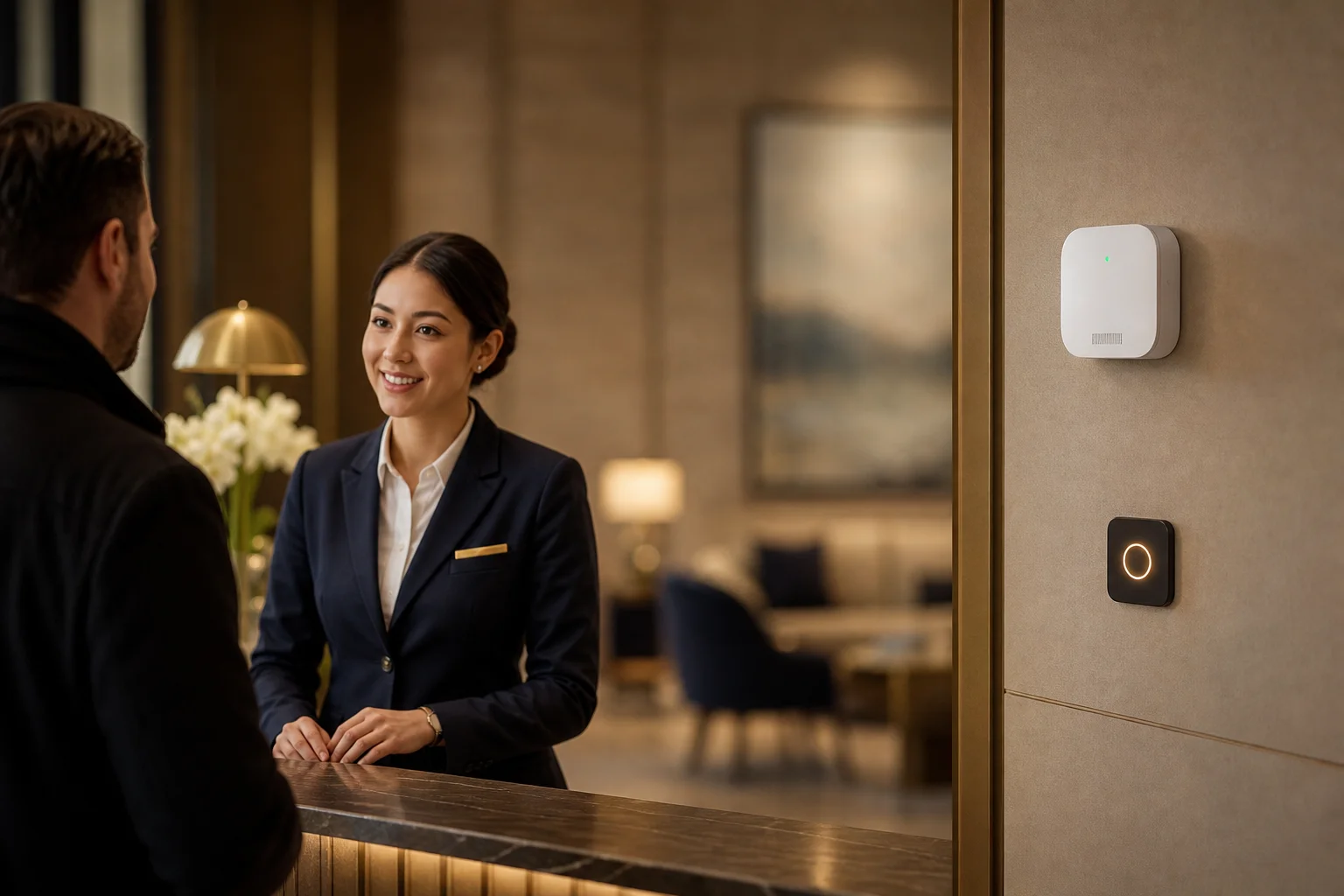
For clarity, classic smoke alarms remain a life-safety system and should stay per code. Your vape program is an operations layer. It helps staff act fast, document issues, and protect room inventory without tripping fire panels or entering rooms unnecessarily.
Therefore, as you weigh vendors, map each tool to the job: room coverage, public-area cues, or portfolio-scale insight. That framing keeps the RFP clean and prevents you from asking one device to do every task.
To keep balance and avoid stuffing, place one note in your evaluation matrix: write “how vape detectors work hotels corridors and rooms differs by tech” so your team scores each tool by space type and outcome.
Key Takeaways
Before you lock a purchase order, ground your team in the core lessons from above. These points save time, keep guests informed, and align your tech with daily work in 2026.
- Vape detection is not fire detection. You need sensors tuned to e‑cig aerosol or AI tools that flag visible vapor in public spaces, then route alerts to the right person fast.
- Placement matters more than you think. Keep sensors clear of vents and windows, and use humidity-aware thresholds in bathrooms to reduce false alerts and guest knocks that lead nowhere.
- The workflow is the product. Alerts must land on devices your team uses at 2 a.m., include room or camera location, and offer a one-tap way to log outcomes for weekly reviews.
- Policy beats disputes. Post clear, fair rules and fees at booking and in-room. Back charges with logs or evidence to avoid chargebacks and save staff time on long calls.
- Use the right mix of tools. Standalone room sensors handle private spaces; AI video analytics add proof and context in lobbies and halls; an IoT platform ties it all together at scale.
As you document how vape detectors work hotels upgrades, add a simple scorecard: alerts per 100 occupied room nights, false alert rate under 10%, and time-to-resolution under 5 minutes. With that, your team will know what good looks like.
What to Do This Week: Your Next Steps
-
Audit your current detection posture
Pull 90 days of complaints, deep cleans, and fee disputes. Identify three hotspots by floor and time. Note HVAC patterns that could affect readings. -
Review local privacy rules
Check signage and consent needs for environmental sensors and any video in public areas. For EU properties, align with EU GDPR (Regulation (EU) 2016/679) principles on purpose and minimization. For other regions, use your brand legal counsel’s guidance. -
Request demos from 2–3 vendors
Ask each for a 30‑day pilot plan, sample alerts, and a report template. For AI video options, ask for clips showing smoke/vapor cues in corridors with timestamps and location tags. -
Draft your guest-facing policy
Write simple, consistent language for booking, pre‑arrival, and in-room materials. Include fee amounts, how you determine violations, and how to appeal. -
Train your front desk and security
Run a 30‑minute drill with live test alerts. Practice the script, the knock, and the close-out log so everyone knows the flow before launch.
Because your goal is proving results fast, stage a pilot in 10–20 rooms and 2–3 corridors for 30 days. Track false alerts weekly and tune thresholds once, not daily. By week four, you should see steadier alerts and faster resolution, the hallmarks of a program that sticks.