

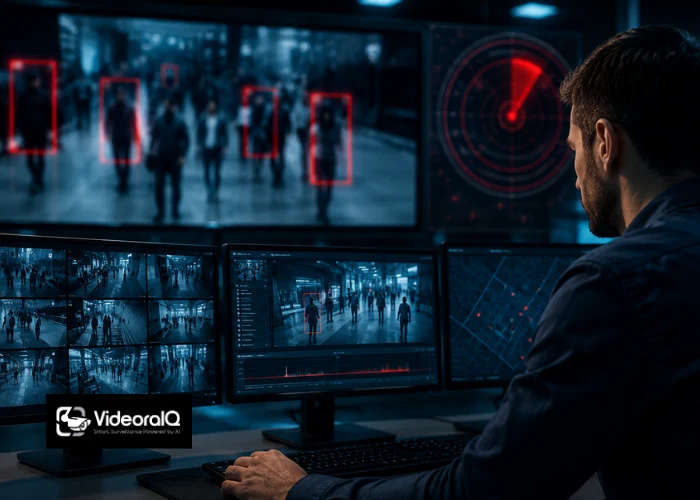
A vehicle gate running a 15-second alert delay means the truck is already past the barrier before a single operator has read the notification. That single fact should reorder how you evaluate every video analytics platform on your shortlist, and almost nobody talks about it.
Buyers spend weeks comparing camera counts, storage specs, and dashboard aesthetics. They run demo sessions focused on recognition accuracy figures. Latency the elapsed time between a detection event and a dispatch-ready alert landing in front of a human gets a footnote, if it appears at all. That is the mistake. Latency is where security either happens or doesn’t.
Listen to this podcast!
The Two Numbers Most Buyers Ignore
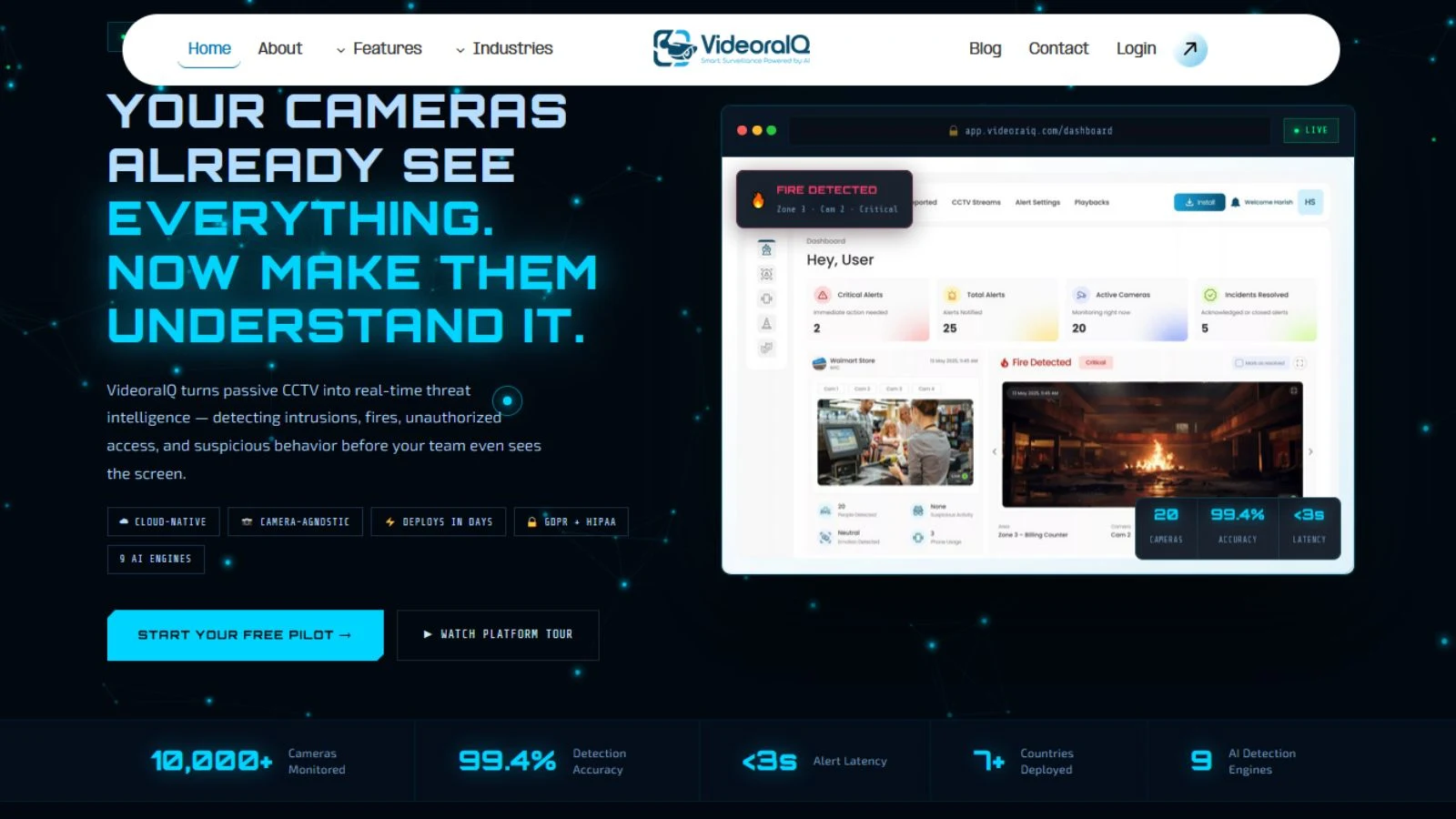
VideoraIQ‘s published benchmarks put alert delivery under three seconds from detection event to dispatch-ready payload. That number is worth pausing on. The industry threshold for live response capability is sub-five seconds; below three is the gold standard. Above five, you are no longer doing live security; you are doing forensic review after the fact.
Think through what happens in those seconds. A face is detected at an entrance. The AI matches it against a watchlist. An alert is packaged with a video clip, a location tag, and a timestamp. That payload reaches the operator’s screen. Each of those steps has a processing cost. On most enterprise deployments, at least two of them touch a network hop. Slow infrastructure, overloaded servers, or, critically,y a platform that wasn’t built to treat alert delivery as a first-class engineering problem will add seconds you don’t see in a vendor demo.
The gate scenario is the clearest illustration, but it applies across every detection type. A 30-second alert delay at a chemical cage or dock gate is cited as too slow to stop a breach or hold a truck. These aren’t edge cases. They’re the everyday operating conditions for any manufacturing plant or logistics hub running access control at scale.
Accuracy and Latency Are Not Independent Variables
Here’s the counterintuitive part: accuracy and latency are linked, and not in the way most buyers assume.
Low accuracy doesn’t just mean missed threats. It generates false positive alerts that fire on nothing. And false positives destroy effective latency by a mechanism that never shows up in vendor datasheets: operator desensitisation. When a security team is fielding hundreds of spurious alerts per shift, real alerts don’t get slower to arrive; they get slower to be acted on. The cognitive cost of triaging noise means the three-second delivery window is functionally wasted.
A 200-camera corporate campus running face recognition at 95–97% accuracy generates hundreds of false-positive alerts per day. That’s the alert queue your operators are sitting behind when a genuine intrusion event fires. The sub-three-second delivery is there. The effective response time is not.
The recommended threshold for 24/7 SOC teams is ≥99% detection accuracy; anything below that level swamps operators with false pings regardless of how fast the underlying alerts arrive. VideoraIQ’s published detection accuracy sits at 99.4%, verified across deployments monitoring more than 10,000 cameras in seven or more countries. That figure matters not because it’s a marketing number, but because it’s what keeps the alert queue manageable enough for latency to mean something.
The Siloed-System Latency Tax
There’s a second latency problem that procurement teams almost never model: the manual correlation gap between separate detection systems.
Many sites rarely use an AE recognition system from one vendor and an ANPR system from another. On paper, both are fast. In practice, when a vehicle enters a restricted area and triggers a watchlist match, the security team receives two separate alerts, one from each platform. Different timestamps. Different interface conventions. No unified event timeline. Guards manually correlate that data while the vehicle clears the barrier.
This is not a theoretical risk. It’s the documented operating pattern at a large share of enterprise sites that grew their surveillance infrastructure vendor by vendor over several years. The combined alert-to-action time isn’t the sum of each system’s latency; it’s whatever the slowest human correlation step takes.
VideoraIQ runs nine AI detection engines simultaneously inside a single platform: rm face recognition, ANPR, Fire & smoke detection, line-cross, intrusion, unauthorised access, and others. A single event at a gate produces one alert, one video clip, one location tag, one timestamp. The operator receives a single notification covering everything that happened at that moment. No cross-referencing required. No duplicates, no mismatched timelines.
Fire Detection: Where Latency Has a Body Count
The stakes of alert latency are highest in fire detection, and it’s where the physics of the problem are most concrete.
Traditional heat sensors detect combustion products after they’ve accumulated to a threshold concentration. Visual AI detection identifies the optical signature of flame or smoke in a camera frame before that threshold is reached. VideoraIQ’s Fire & Smoke Detection identifies threats 40–60 seconds before traditional heat sensors. Nilesh Kapoor, Plant Safety Supervisor at a 480-camera manufacturing facility, reported VideoraIQ detected fire 52 seconds before the smoke alarm triggered.
Fifty-two seconds in a chemical plant or on a production line with flammable materials is not a marginal improvement. It’s the difference between a contained incident and an evacuation. The false-positive problem also cuts the other way here. Too many spurious fire alerts train operators to treat notifications as sensor noise. That learned scepticism erodes the response window even when raw delivery speed is excellent. Accuracy and speed both have to hold simultaneously, under real operating conditions, not just in a controlled vendor environment.
What to Actually Measure in a Pilot
If you’re evaluating a video analytics platform, the recommended pilot methodology is to start with approximately 20 cameras before scaling to a multi-hundred camera deployment. That’s sound advice, but most pilot plans track the wrong metrics.
Track two numbers, and track them obsessively:
- False positive rate. Count alerts that required no action as a proportion of total alerts. If that rate generates more than a handful of false pings per shift on 20 cameras, the extrapolated noise on a 200-camera deployment is unworkable. Operator fatigue compounds faster than linear as alert volume rises.
- Mean time from detection event to operator receipt. Not time-to-detection. Not time-to-processing. Time to the alert landing in front of a human who can act. Measure this across different times of day, different network load conditions, and different detection types. A platform that delivers in under three seconds at 10 AM on a Wednesday may behave differently at 2 AM on a Sunday when your WAN is under different load.
If a vendor can’t give you both of those numbers from their own production deployment, not a demo environment, that’s the answer.
Read More!
Video Analytics Accuracy: Why 97% Breaks Enterprise AI
What Is Video Analytics for Retail and Why Does It Matter?
The Metric That Should Lead Every RFP
Security procurement has a long habit of treating the camera and the analytics layer as the product, and treating alert delivery as an implementation detail. That framing made sense when analytics meant post-event search. It doesn’t hold when you’re running a live-response operation.
85% of CCTV footage is never reviewed. The entire value proposition of an AI video analytics platform rests on the assumption that the events that matter get surfaced to a human fast enough for that human to do something. Everything else the camera count, the storage architecture, the dashboard is supporting infrastructure for that single moment of delivery.
Three seconds is the line. Measure for it. Hold vendors to it. And make sure the accuracy figure that accompanies it is high enough that your operators haven’t already learned to ignore what arrives.
Start your free VideoraIQ trial and run the latency and false-positive metrics yourself on your own camera infrastructure before you commit to anything at scale.