

In 2026, airport and transit security teams are turning to fire and smoke detection from cctv to close the critical first-minute gap between ignition and intervention. This guide explains how to evaluate accuracy, integrate alerts into your SOC/BMS/PA stack, and roll out in phases without replacing your existing camera fleet.
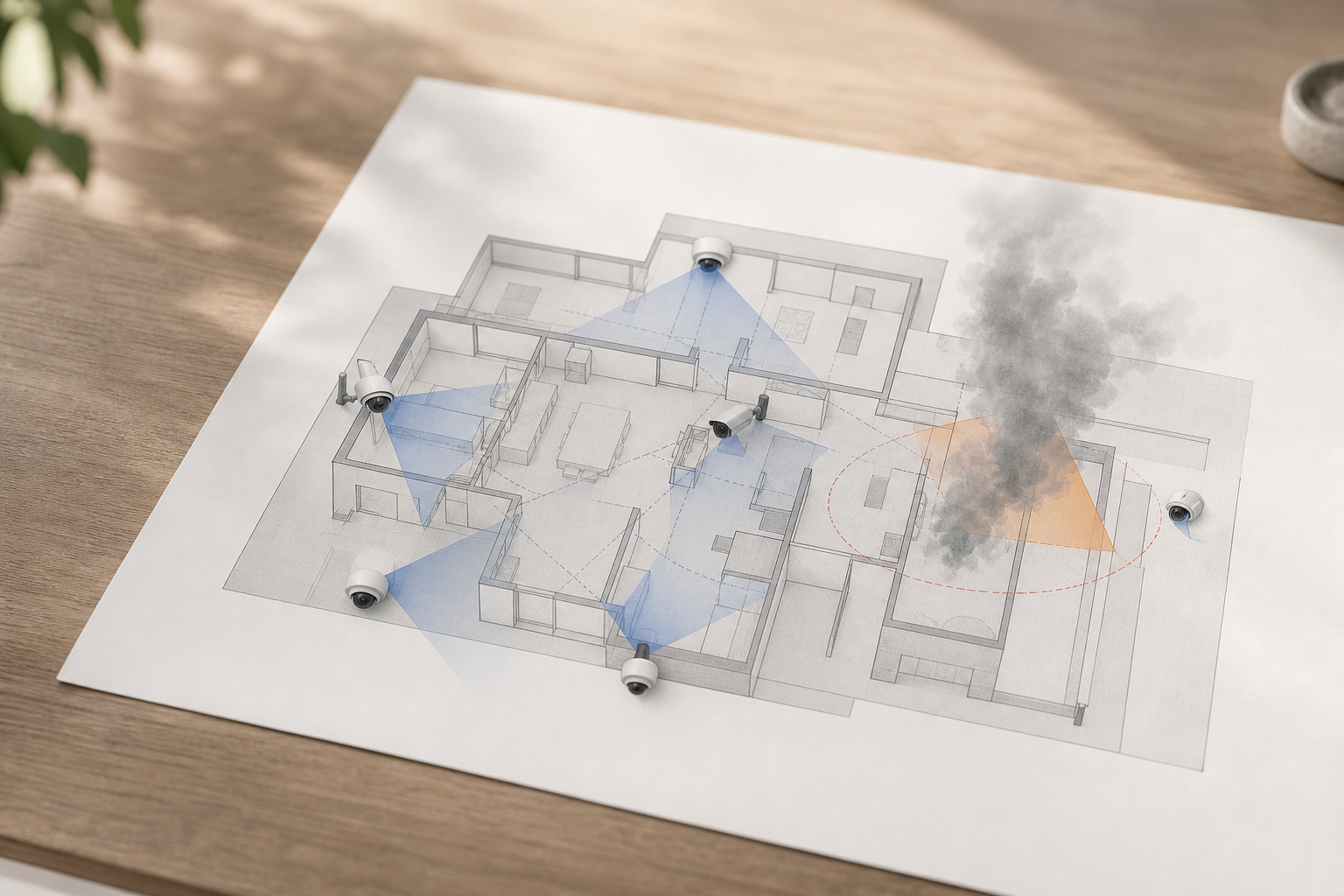
Schedule a free safety consult → Audit your existing cameras for CCTV-based fire/smoke analytics. Map every camera to a floor plan and log make/model, resolution, codec, and IP so you can see what you’re working with at a glance. Most AI analytics layers work with existing IP cameras across 200+ brands.
That means a full rip-and-replace is rare and usually unnecessary for a pilot. As you inventory, note field of view, elevation, and lighting. Low or heavily backlit views may need tweaks or simple configuration changes such as WDR or exposure adjustments.
Include lens type, frame rate, and any motion settings that could throttle image quality during smoke onset. Confirm RTSP/ONVIF compatibility before you begin. A thorough audit up front prevents surprise dead zones and accelerates your time to first verified alert.
- Audit checklist for CCTV fire/smoke detection:
- Record camera model, firmware version, codec (H.264/H.265), resolution, and frame rate.
- Capture mounting height, angle, and obstructions that may hide smoke morphology.
- Test WDR, exposure, and low-light settings. Avoid aggressive noise reduction that blurs smoke wisps.
- Verify RTSP/ONVIF streams and that your VMS does not throttle keyframes during motion.
- Note likely false-alarm sources in view. Plan exclusion zones accordingly.
Early gains come from configuration, not new hardware. Tune what you have first, then decide if any views demand a different lens or placement.
Common camera-tuning pitfalls to avoid
- Overly aggressive denoising that erases faint, wispy smoke.
- Variable bitrate caps that force heavy compression during motion spikes.
- Auto-exposure drifting with bright signage, causing banding and blur.
- Low frame rates that miss small, fast flame flicker near ignition points.
2) High-risk zones for fire and smoke detection from CCTV
- Identify high-risk zones
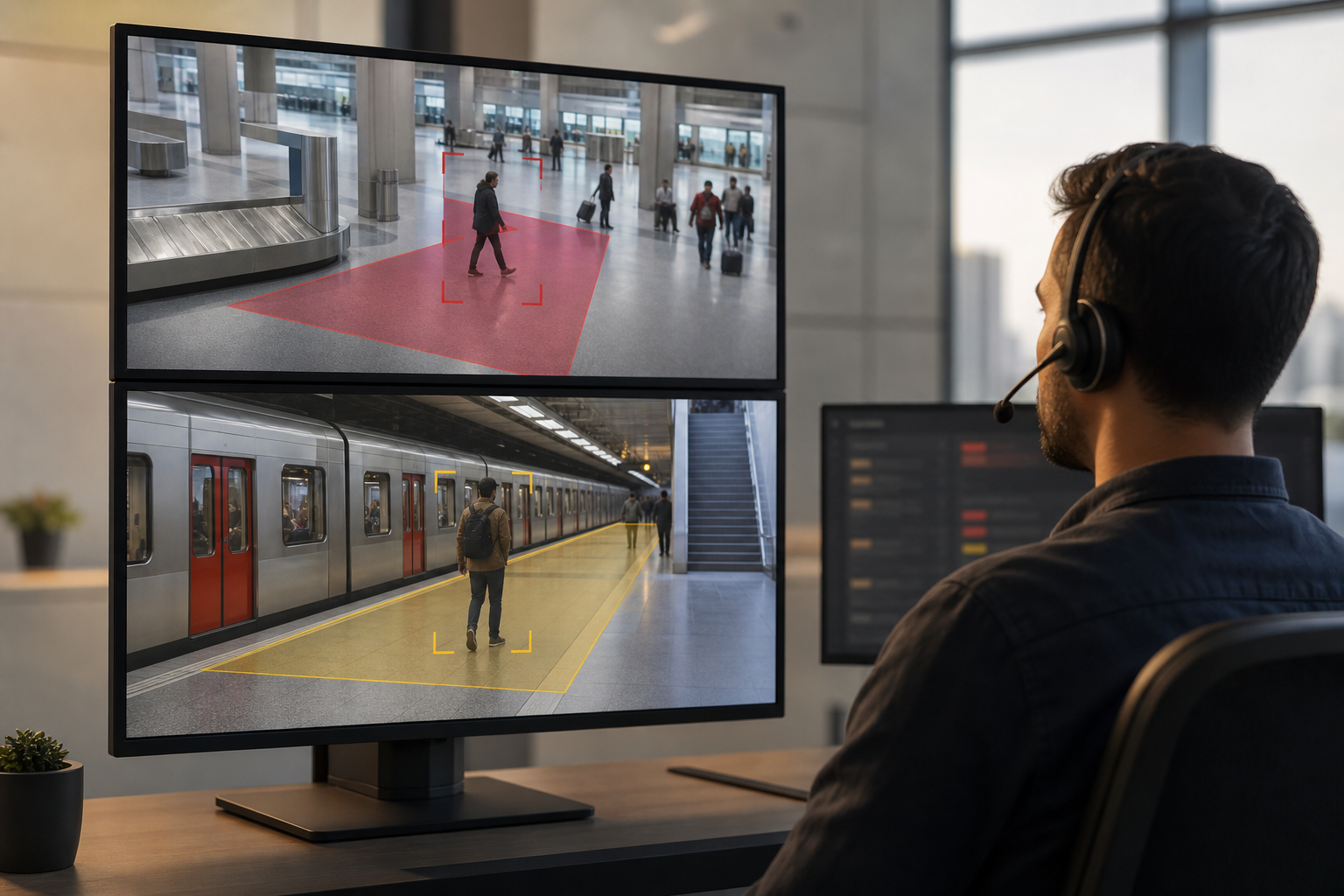
Prioritize jet bridges, baggage halls, underground platforms, food courts, electrical rooms, and fuel adjacencies because minutes lost there are most costly. Use Zone-Based Monitoring to draw virtual areas per camera (e. g., separate the fryer line from seating or a platform edge from the mezzanine) and tailor sensitivity to each.
Start where an evacuation or standstill costs the most per minute and where visual confirmation can trigger the fastest, safest response. In each zone, document likely false-alarm sources such as steam vents, HVAC fog, or diesel exhaust. Do this early so you can dial in exclusions. Making risk-based choices ensures camera-based fire/smoke analytics produce immediate operational value, not just a tech demo.
- Examples of high-risk CCTV zones:
- Jet bridges with limited egress and variable airflow.
- Food prep areas with fryers, grills, and ovens.
- Underground platforms where smoke accumulates and ceiling detectors lag.
- Baggage halls with conveyors, motors, and dense mechanical equipment.
- Electrical rooms, UPS closets, and charging bays for ground vehicles.
Pro tip: When mapping zones, capture airflows and thermal stratification notes. Rising hot gases may bypass ceiling detectors but remain visible to oblique cameras at mid-height.
3) Alert requirements for CCTV fire and smoke detection
- Define alert requirements
Set sub-3-second alert latency as the benchmark for transit because delays compound across radios, PA, and operator workflows. Require real-time alerts that include a video clip for verification, a precise location tag (camera and zone), and a timestamp to anchor incident command. Decide who sees what. SOC for triage. Fire officers for incident command. Duty managers for operations continuity, each with role-based access.
Also define acknowledgement rules, escalation paths, and the language to use in PA announcements so your team executes consistently under pressure. Clear, measurable requirements make vendor evaluations objective and keep your pilot aligned with life-safety outcomes.
- Minimum alert payload for CCTV-based fire/smoke analytics:
- 5–10 second video clip (pre/post-event), with a still thumbnail.
- Camera ID, zone label, GPS or floor map link, and precise timestamp.
- Confidence score and alert type (smoke, flame, both).
- Operator actions logged: acknowledged, verified, escalated, dismissed.
Who gets what, when
- SOC: Immediate pop-up with clip, map pin, and acknowledge button.
- Fire officers: Verified alerts only, with incident channel auto-created in radio/dispatch.
- Duty managers: Summary alerts with operational impact guidance (e. g., hold doors closed, suspend boarding).
- Public address: Scripted, multilingual messages triggered only after human verification unless SOP specifies automatic paging for specific zones.
4) Validate AI accuracy for fire and smoke detection from CCTV
- Validate AI accuracy
Ask vendors for documented false-positive rates in transit settings and insist on real-world clips, not just lab scenes, covering food service, platforms, tunnels, and tarmac-adjacent areas. In airports, a false evacuation is catastrophic. Target at least 99.4% detection accuracy paired with reliably low false positives. Verify confusion matrices for steam, HVAC fog, exhaust, and cooking smoke versus true flame events.
Request ROC curves and threshold guidance for different zones so you can tune sensitivity without sacrificing speed. If possible, include side-by-side tests across representative cameras to see how compression, bitrate, and lighting influence outcomes. Treat accuracy as end-to-end performance. Measure detection, verification, and operator action in your live environment.

Dataset coverage you should ask for
- Mixed lighting: daylight glare, flicker from LED signage, platform sodium lamps.
- Obstructions: partial occlusion by crowds, columns, luggage carts.
- Environmental lookalikes: steam bursts, HVAC fog, diesel exhaust, welding arcs.
- Motion and compression: high passenger flow, moving trains, macroblocking at low bitrates.
- Rare but critical: small ignition sources (lithium battery fires), reflections near glass façades.
5) Integrations that make CCTV fire detection actionable
- Test integrations early
Feed alerts into your SOC, BMS, and public address/evacuation systems during the pilot so you check all plumbing before scale. Confirm role-based access, audit logs, and identity management tie-ins (e. g., SSO) for compliance reviews and post-incident analysis.
Validate that Auto-Captured Video Evidence includes timestamps, camera location, and zone labels, and that clips are packaged for chain of custody. If you use SIEM or ITSM tools, send syslog or webhook events. Ensure tickets and incident timelines auto-populate. Early integration tests surface bottlenecks in network paths, permissions, or message formats while the blast radius is small.
- Integration checklist:
- SOC alert pop-ups with clip and map pin in under 3 seconds.
- BMS event mapping to smoke/fire scenarios for HVAC and egress control.
- PA integration with pre-approved scripts for verified events.
- SIEM/ITSM hooks for ticket creation and response SLAs.
If your SOC runs a single-pane wall, test multi-screen and mobile handoff paths too. The best alert is the one an on-shift human can actually see and act on immediately.
6) Plan a phased rollout of fire and smoke detection from CCTV
- Plan a phased rollout
Begin with 10–20 cameras in top-risk zones across one terminal or two stations so your team can learn quickly and iterate without overwhelm. Run for 30–60 days. Log every alert, response time, and outcome. Then tune thresholds and zones based on weekly reviews with operations and fire safety.
Define objective success metrics. Track mean alert latency, verified detection rate, and false-positive rate by source. Agree on expansion gates before you start. When the pilot hits targets, expand to the next tranche and replicate the proven playbook, including standardized naming conventions and deployment checklists. Phasing this way builds trust and prevents alert fatigue as you scale.
Commit to weekly reviews during the pilot. Small threshold tweaks often cut false positives by half without sacrificing speed.
7) Lock SOPs for CCTV fire/smoke alerts before scale
- Lock SOPs before scale
Define who acknowledges alerts within seconds, who escalates, and when to evacuate, converting these into shift-ready runbooks posted in the SOC. Store video evidence to meet your record-keeping rules and verify retention and deletion schedules satisfy GDPR or local privacy law. Run table-top and live drills so radio and PA messages match what the camera sees and to confirm signage and egress plans work under load. Capture lessons learned into a change log so threshold tweaks and zone edits are auditable across terminals or stations. When SOPs are codified, CCTV-based fire/smoke alerts become a disciplined capability rather than an ad-hoc tool.
SOP essentials to document
- Roles and timers: who acknowledges within 10 seconds, who escalates by 30 seconds.
- Verification criteria: visible flame vs. smoke only; corroboration from second camera or sensor.
- Evacuation triggers: zone-specific thresholds and pre-cleared PA scripts.
- Evidence handling: clip export, chain-of-custody, and retention windows by risk category.
Performance Benchmarks to Demand for Fire and Smoke Detection From CCTV
Your platform should work with existing IP cameras across 200+ brands so you can use your current fleet, not replace it. Demand end-to-end alert latency under three seconds, measured on your network from event to operator screen, not in a vendor lab. Target at least 99.4% detection accuracy paired with demonstrably low false positives in transit-like environments. Require evidence that similar lighting, weather, and crowd conditions have been validated.
For multi-terminal or multi-station scale, choose a cloud-based architecture that avoids on-premises server sprawl while supporting centralized oversight. Require Zone-Based Monitoring so each area (e. g., fryer line, platform edge, baggage belt) can have tuned thresholds and sensitivity.
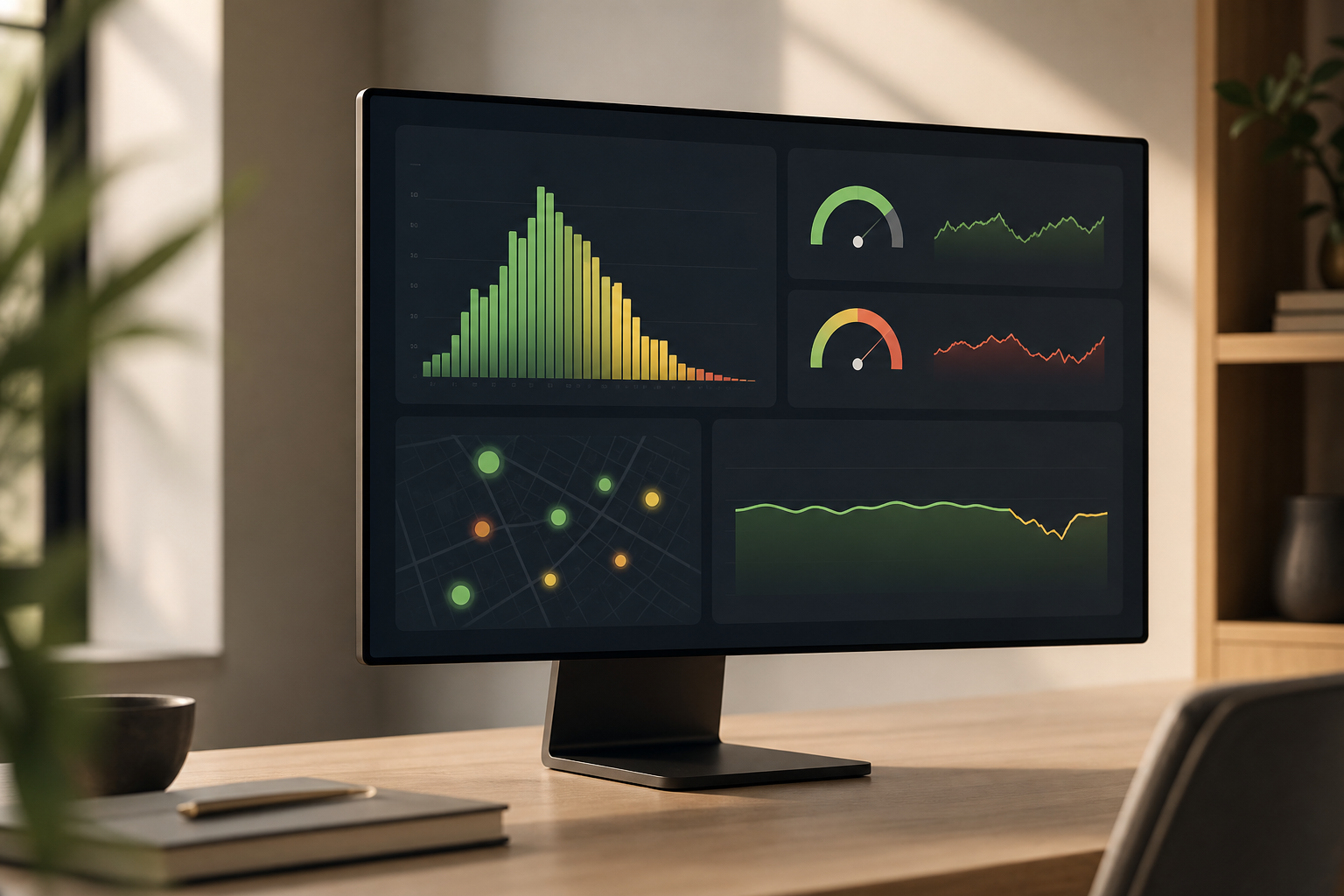
Make sure those zone configurations can be deployed and versioned at scale. Ask for operational metrics dashboards: latency distribution, alert volumes by zone, and verification times. Leaders should manage the program with data rather than anecdotes.
Measurable RFP language and SLAs
When you codify expectations in an RFP, write them as measurable outcomes rather than vague features. Specify that latency must stay under three seconds end-to-end on your production network during peak load. Target 99.4%+ detection accuracy with published false-positive rates for steam, HVAC fog, and exhaust scenarios.
Require that every alert must include a verifiable clip, timestamp, and precise location tag. Demand 99.9% service availability, along with privacy requirements including GDPR-compliant processing, role-based access, and configurable data retention windows. The more explicit the benchmarks, the easier it is to run a fair pilot, compare vendors, and scale confidently.
Put numbers in writing: “Under 3s E2E latency on our network, 99.4%+ detection accuracy, defined FP rates for lookalikes, and 99.9% availability with audited change control.”
As you brief vendors, state plainly that your aim is early evacuation time. Phrase it like this: “We need fire and smoke detection from cctv to deliver a verified alert with a clip, in under 3 seconds, into our SOC and BMS.” This keeps the demo honest and the pilot measurable.
- RFP must-haves for CCTV fire/smoke analytics:
- End-to-end latency under 3 seconds on your network at peak.
- 99.4%+ detection accuracy with documented confusion between steam/HVAC fog/exhaust versus true fire.
- Alert payload with clip, timestamp, camera ID, zone tag, and audit trail.
- 99.9% service availability with change management and rollback plans.
- GDPR-compliant processing, least-privilege access, and retention controls.
Get an instant demo today → and make sure you tune each zone and threshold during the pilot. Failing to do so is the fastest way to drown in false positives and lose stakeholder confidence.
Integration, Architecture, and Compliance for Fire and Smoke Detection From CCTV
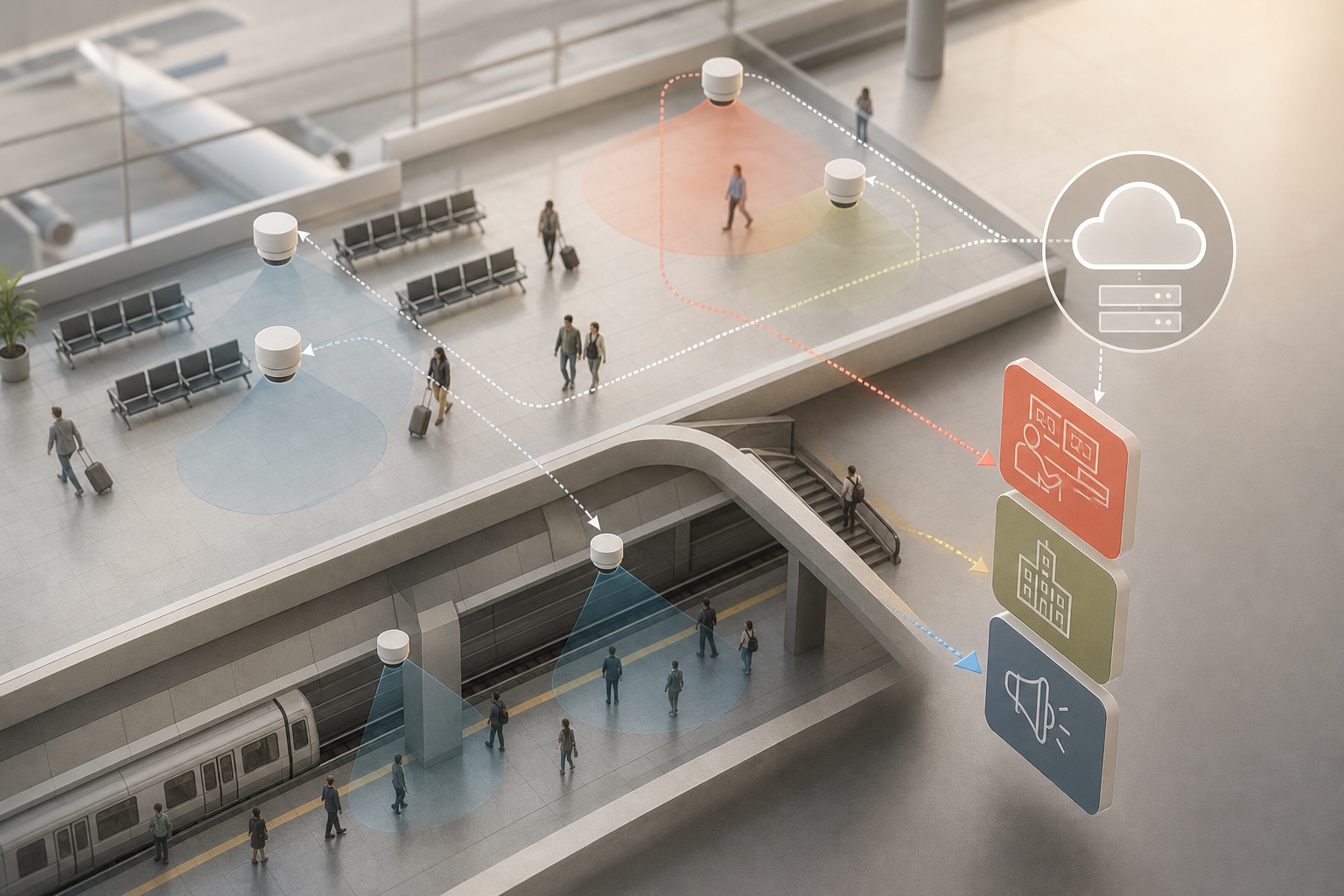
Fourth, beware on-premises-only designs in multi-terminal or multi-station networks. A cloud-based architecture with no need for on-premises servers simplifies rollouts, upgrades, and centralized oversight. It also avoids the slow spiral of server-by-server maintenance that derails scale projects. If you must keep some compute at the edge, favor lightweight gateways managed from a central console.
Cloud-first architecture for CCTV fire detection
- Prefer stateless edge gateways that forward video securely to the cloud.
- Centralize policy, zone templates, and threshold versions. Apply them across terminals with one action.
- Use autoscaling analytics services to absorb peak passenger loads and seasonal events.
- Track latency SLOs by site and by zone. Investigate outliers within hours, not weeks.
Fifth, align with compliance early. Airports look to NFPA guidance and ICAO practices. Transit agencies must meet FTA safety rules and local fire codes. Your system’s alert logs and Auto-Captured Video Evidence with timestamps and camera locations must stand up to audits. If you operate in the EU or handle EU travelers’ data, require GDPR-compliant processing and data retention controls.
Compliance and data protection for CCTV fire/smoke alerts
- Map data flows for video, metadata, and alerts. Document processors and sub-processors.
- Enforce role-based access with SSO and MFA. Log every view, export, and deletion.
- Configure retention by zone risk: shorter for public concourses, longer for fuel-adjacent areas where investigations are common.
- Validate chain-of-custody packaging of clips for legal proceedings.
For broader background on aviation standards bodies, see the International Civil Aviation Organization.
Sixth, involve your fire safety officer before procurement. Security and IT may fund the project, but the fire team owns incident command. Bring them into the pilot to validate alert routing, radio calls, and PA scripts. Their sign-off now prevents rework later and accelerates approvals for wider rollout.
Involve incident command early
- Invite fire officers to weekly pilot reviews and scenario testing.
- Co-write PA scripts for different severities and locations.
- Define handoff points from SOC to incident command with timers and backups.

A Short Pre-Mortem Checklist for Fire and Smoke Detection From CCTV
Treat camera-based fire analytics as a complement to code-required detection and suppression, never a replacement. Before you tune thresholds, walk each zone to list likely false-alarm sources such as steam, HVAC fog, and exhaust, then set sensitivity and exclusion areas accordingly. Use Zone-Based Monitoring aggressively so fryer lines, baggage belts, and platform edges behave differently from seating or back-of-house corridors. If you manage multiple terminals or stations, prefer cloud orchestration to avoid racks of servers that become maintenance bottlenecks. Throughout, ensure evidentiary alert logs and GDPR-compliant retention policies meet audit needs and privacy expectations.
Bring your local fire marshal or safety officer into standard operating procedure design from day one. Define who acknowledges an alert immediately, who escalates to incident command, and what precise PA language goes out under different conditions. Run table-top and live drills to confirm radio traffic, evacuation routes, and signage match what operators see on camera. Document these flows so any shift can execute the playbook without guesswork, and use pilot findings to refine thresholds before scaling network-wide.
Finally, state in your playbook that CCTV-based fire/smoke alerts are verified by a human within seconds when feasible. That one line protects your team from over-automation and keeps trust high with operations.
- Pre-mortem actions to complete before go-live:
- Zone walks with a false-alarm inventory and planned exclusion masks.
- SOP draft with roles, timers, PA phrases, and escalation trees.
- Integration dry-runs for SOC, BMS, SIEM, and PA with logs validated.
- Operator training on verification steps and evidence handling.
Also Read!
Best Fire Smoke Detection Security Camera for Manufacturing Plants and Warehouses in 2026
Tools and Platforms for AI-Powered Fire and Smoke Detection From CCTV in Transit Environments
You have three real routes. None is “the best” in all cases. The right pick depends on your footprint, timeline, and whether you want other AI detections (like unattended baggage) on the same stack.
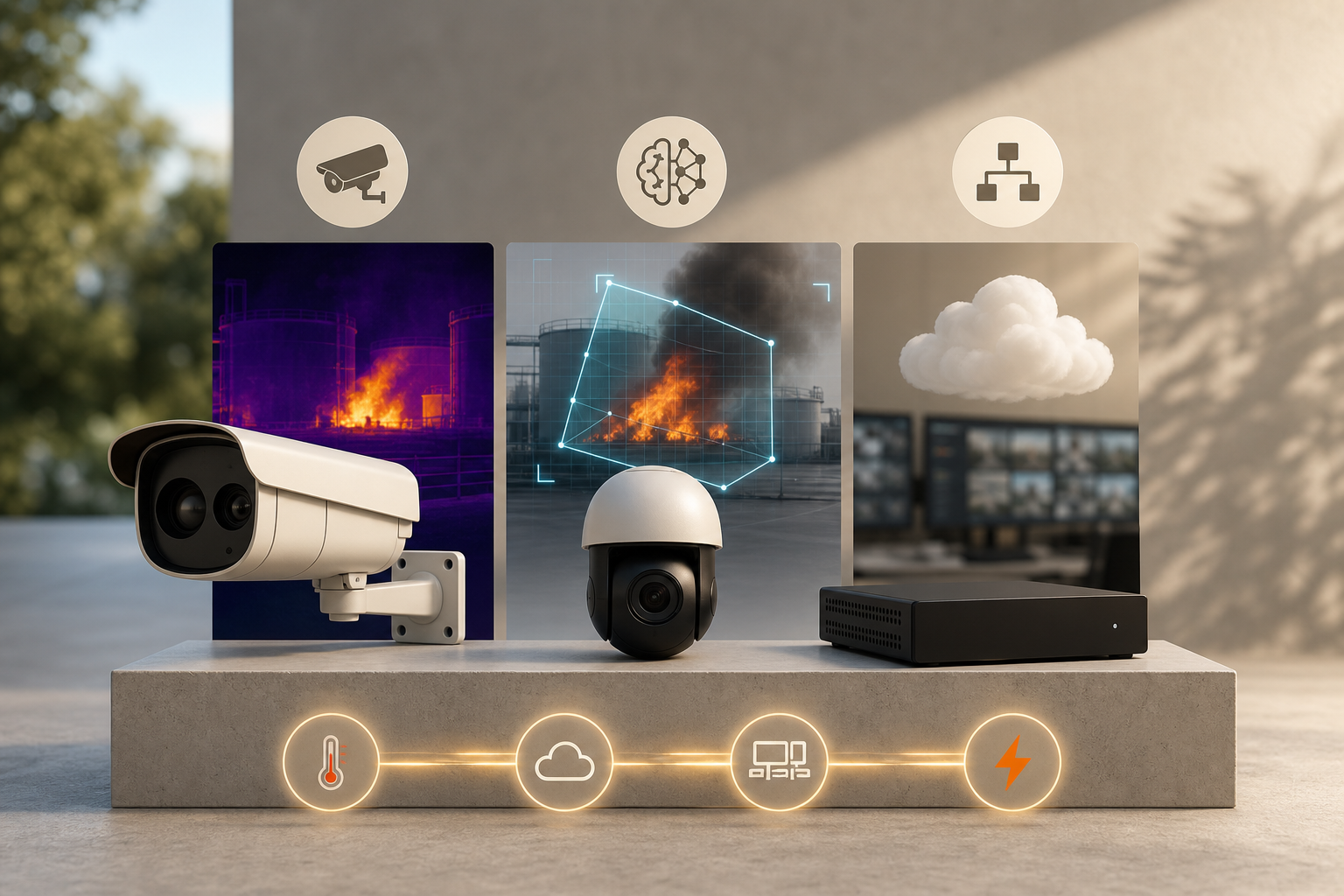
1) Dedicated fire-detection cameras (thermal + visual)
- Dedicated fire-detection cameras
Purpose-built thermal and visual flame units from names like Bosch, Honeywell, or Hikvision require new hardware and precise placement. They shine in new-build terminals where you can spec them into the design and mount for line-of-sight. However, retrofits across hundreds of cameras get pricey and slow. Use this path if you’re already in a construction phase or need thermal validation in fuel zones. In those environments, dual-sensor units (thermal plus visible) can strengthen verification and reduce false positives caused by glare or reflections.
- When to choose dedicated units:
- New-builds where cabling and mounts are easy to plan.
- Fuel farms, de-icing pads, and hangars that benefit from thermal corroboration.
- Places with strict environmental conditions or poor lighting for visible-only analytics.
2) AI video analytics overlays for fire and smoke detection from CCTV
- AI video analytics overlays
Software overlays add fire and smoke detection to your existing IP-based CCTV without new hardware. This is ideal if you already have hundreds or thousands of cameras and want coverage fast. Tools like VideoraIQ offer sub-3-second alert delivery, work with existing cameras across 200+ brands, and include nine AI detection engines (fire & smoke detection, unattended baggage, intrusion detection, and more). Reported field scale includes 10,000+ cameras monitored and deployments in 7+ countries. Because overlays are camera-agnostic, they help unify mixed estates, common in airports and metros, without disrupting your current VMS.
- Overlay advantages:
- Fast time-to-value with minimal on-site changes.
- Broad camera compatibility and codec support (H.264/H.265).
- Centralized policy control and analytics updates without truck rolls.
- Ability to add new detections over time without new hardware.
Buyer tip: Ask overlay vendors to show how they maintain low latency when streams drop to low bitrate or when GOP sizes change under motion. Real-world networks are messy.
3) Integrated VMS with analytics modules for CCTV fire detection
- Integrated VMS with analytics modules
If you live inside Milestone or Genetec, consider their analytics modules for fire detection. You’ll gain tight workflow integration, single-pane monitoring, and vendor accountability under one SLA. The trade-off can be model agility and the pace of feature updates compared to pure-play analytics vendors. If your team values consolidated support and minimal context switching, this option can be the lowest-friction path. Just confirm that your specific camera models and codecs are fully supported and that alert objects include clips, timestamps, and zone tags.
- VMS module checkpoints:
- Verify your camera models on the supported list with required firmware.
- Confirm alert object structure: clip, timestamp, camera ID, and zone metadata.
- Understand update cadence. Ask how new model versions are qualified and rolled out.
Quick Comparison
| Category | Works With Existing Cameras | New Hardware | Best Fit | Pros | Cons |
|---|---|---|---|---|---|
| Dedicated fire cameras | Limited | Yes | New-build terminals, fuel adjacencies | Purpose-built sensing, thermal options | Costly scale, slower retrofit |
| AI analytics overlays | Yes | No | Retrofits across hubs and stations | Fast rollout, <3s alerts, 200+ brand support | Depends on camera FOV/placement |
| VMS modules with add-on analytics | Yes (within ecosystem) | No | Teams standardized on a single VMS | Native workflows, unified support | Feature pace tied to VMS release cycles |
As you evaluate, write down what else you want beyond fire alerts. In transit, unattended baggage and intrusion on restricted tracks are common add-ons. Choosing a platform that can do all three prevents tool sprawl. Also, insist on end-to-end alert timing tests in your own network, not a vendor lab. Include at least one jet bridge view, one food court, and one underground platform so you capture the variability of lighting, airflow, and crowd density.
For completeness, ensure you reference camera-based fire/smoke analytics as a capability that should work across your existing fleet, not just a lab demo. In 2026, you can expect proof in days, not months. Ask vendors to document how they handle mixed codecs (H.264/H.265), varying frame rates, and bandwidth limits without degrading alert speed or evidence quality. Require visibility into buffering or retry logic during network hiccups.
Proof-of-concept tests for fire and smoke detection from CCTV
Pilot in real-world complexity. Do not rely on showcase clips.
- A food court scene with steam and light cooking smoke.
- A platform with diesel exhaust and crowd density peaks.
- A jet bridge with changing daylight and reflections.
- A baggage hall with dust, motion blur, and variable lighting.
Score each vendor on detection speed, verification clarity, and operator workload. Record both success and near-miss cases. Use the same script across vendors for a fair comparison.
Scoring rubric (example)
- Detection latency: 40%
- Verification clarity (clip usefulness, context): 25%
- False positives/negatives in lookalike scenarios: 20%
- Operator workload (clicks to resolve, escalation handling): 10%
- Integration completeness (ticketing, BMS, PA): 5%
Mini-FAQ for Transit Teams Using Fire and Smoke Detection From CCTV
How does camera placement influence detection quality?
Elevation between 3–6 meters with oblique angles often captures more smoke morphology than extreme top-down views. Avoid heavy backlighting.
Position to minimize occlusions from columns, banners, or digital signage that can hide early wisps of smoke. For long platforms, overlapping views at staggered heights can maintain continuity during peak traffic. When you plan CCTV-based fire/smoke analytics in food courts or baggage halls, prioritize lines of sight to potential ignition points and ensure consistent illumination.
Can analytics run on mixed camera models and codecs?
Yes. H.265 streams across 200+ camera brands are common, which is why overlays fit complex airports and metros so well. Validate this in a pilot with at least three representative models per site, including any legacy units you can’t replace soon.
Confirm that your VMS or NVR doesn’t throttle keyframes or reduce bitrate so much that smoke plumes blur into compression artifacts. When in doubt, run side-by-side streams. Keep one at current settings and one optimized to see the impact on detection quality and latency.
What happens if the network is degraded?
Choose systems with resilient buffering and retry logic so short-term packet loss doesn’t drop alerts or corrupt evidence clips. Edge gateways can locally package clips and metadata, then forward when connectivity returns, helping maintain your sub-3-second target in all but the worst scenarios. Ask vendors to demonstrate behavior during simulated jitter, high latency, and limited upstream bandwidth so you know what to expect in tunnels or older terminals. You should also monitor network health and set thresholds for degradations that trigger a follow-up inspection or temporary local paging.
How do we prevent alert fatigue?
Use Zone-Based Monitoring with tailored sensitivities and exclusion masks so known steam or exhaust sources don’t repeatedly fire. Set quiet hours where appropriate (e. g., maintenance windows) and require human verification before mass notifications or public PA messages.
Track false-positive sources and iterate thresholds weekly during the pilot. Move to a monthly optimization cadence once you scale. Provide brief refresher training so operators can quickly tag alerts as verified or dismissed. This improves the model’s tuning over time.
How do we balance privacy with safety when using CCTV fire/smoke analytics?
Limit who can view live and recorded footage using role-based access and least privilege. Mask or blur areas not needed for detection when possible. Apply retention policies that fit risk and local law. Communicate program goals to staff and the public to maintain trust while meeting compliance obligations.
What metrics should we track to prove value?
Track end-to-end latency, verified detection rate, false-positive rate by source, operator verification time, and mean time to action. Add near-miss captures where smoke was faint or partially occluded. These data points show trend improvements and help justify expansion to new terminals or lines.
Also Read!
Key Takeaways for Fire and Smoke Detection From CCTV and What to Do This Week
Traditional ceiling detectors can struggle in high-volume, high-ceiling, and underground spaces. Visual AI adds early warning with video proof that accelerates decision-making. Your benchmark is clear: under three seconds end-to-end alerting and 99.4%+ detection accuracy.
Low false alarms through pattern recognition that can separate steam, HVAC fog, and exhaust from true fire events. Plan integrations on day one so SOC, BMS, and PA receive alerts with location tags and timestamps. Run a 30–60 day pilot in high-risk zones using Zone-Based Monitoring to tune thresholds per zone. With cloud-based architectures, multi-terminal and multi-station teams can scale without on-prem servers while still meeting GDPR-compliant data rules and audit needs.
This week, make camera-based fire/smoke analytics a concrete project, not an idea. Audit your camera inventory and map FOVs so you know which views can deliver early smoke morphology. Pick your three highest-risk zones (one jet bridge, one food court, one underground platform) and define the success metrics that matter: latency, verified detection rate, and false-positive sources. Book a 30-minute meeting with your fire safety officer and your SOC lead to align on escalation, PA language, and retention rules so your pilot stands up to both operational and compliance scrutiny.
Then request demos from two to three vendors: one dedicated camera vendor, one AI overlay (e. g., tools like VideoraIQ), and one VMS module. Ask each to deliver verified alerts with clips, location tags, and timestamps in under three seconds on your network, not in a lab. Capture results in a shared scorecard, including operator verification time and any integration issues, so you can make an evidence-based decision about scale-up.
- Immediate action plan:
- Inventory cameras and document risk zones by Friday.
- Draft SOPs and alert payload requirements with the fire officer by next week.
- Schedule vendor pilots and define a common test script with timing instrumentation.
- Set weekly pilot reviews with clear thresholds for expansion.