

Most plants with existing IP cameras will get faster ROI from a platform that layers AI on top of what they already own; greenfield builds may prefer a single-vendor stack with strong edge processing. In this 2026 guide, we compare VideoraIQ and Verkada for face recognition and license plate reading in real industrial sites where dust, PPE, and low light are the norm.
For most brownfield deployments, VideoraIQ’s camera-agnostic cloud analytics deliver quick value without rip-and-replace costs. For sites that prize offline resilience and one-vendor simplicity, Verkada’s vertically integrated system is a strong fit. The rest of this review explains the trade-offs with concrete plant scenarios, alert speed, and 3-year total cost.
- For related office deployments, see our campus comparison of these platforms.
- If you secure transit hubs, our airport and station guide adds camera placement tips and ANPR angles that also help at truck gates.
What Manufacturing Plants and Warehouses Actually Need from Face Recognition and License Plate Software
Security at a plant floor or yard is not a lobby camera problem. Forklifts, diesel soot, helmet visors, reflective vests, and night shifts all degrade standard analytics. As a result, general-purpose cameras that “detect motion” flood you with noise and miss the real risks. Purpose-built AI that can handle bad lighting, fast motion, PPE, and mixed camera makes matters more than the badge on the box.
Specifically, six requirements decide success:
- Vehicle tracking at docks and gates that reads plates through grime, rain, and glare, and supports mixed plate formats across states or countries.
- Face recognition at restricted zones that still matches under hard hats, masks, goggles, and oblique angles near line entrances.
- Integration with existing IP camera networks so you don’t scrap 50–200+ cameras and cabling already amortized on your books.
- Low alert latency; a 30-second delay at a chemical cage or dock gate is too slow to stop a breach or hold a truck.
- Analytics that keep working in vibration, temperature swings, and low light, not just in a quiet hallway.
- Compliance with workplace privacy rules so biometric alerts don’t create legal risk. For Europe, see the GDPR Regulation (EU) 2016/679 guidance on special-category data.
Why “good enough” cameras fail on the floor
- They rely on motion or vague “person detected,” which breaks with forklifts, reflective PPE, and multi-path shadows.
- They assume clear frontal faces and clean plates. On catwalks and yard gates, you get side profiles, masks, glare, and mud.
- They lack zone logic. A person inside a painted safety box is risk; the same person two feet away is not.
Why purpose-built AI matters for face recognition and license plate reading
Manufacturing needs AI that fuses face matching, ANPR, and zone rules to send fewer but better alerts. Moreover, the system must package proof fast: a short clip, a timestamp, and a camera label so your guard can act in under three seconds. Therefore, the most useful platforms let you keep cameras, define virtual perimeters, and meet privacy duties without adding servers.
“We went from finding out about incidents in the morning briefing to being notified in real time.” — Ananya Mehta, Head of Facilities, 200-Camera Corporate Campus
Also Read!
How to Choose Face Recognition and License Plate Camera Software for Corporate Campuses
VideoraIQ Overview: Strengths and Weaknesses for Face Recognition and License Plate Reading in Industrial Facilities
VideoraIQ is a cloud-based AI platform designed to sit on top of your current surveillance stack. It connects to existing streams across 200+ camera brands, so you avoid forklift upgrades. In practice, that matters for plants with 80, 150, or 480 cameras where recabling and shutdowns are non-starters during peak season.
Strength-wise, the platform brings 9 AI detection engines in one place: face recognition, number plate (ANPR), intrusion, line-cross detection, fire and smoke, object detection, unauthorized access, unattended baggage, and cashier absence. In addition, VideoraIQ reports <3 seconds alert latency and 99.4% detection accuracy, backed by video proof, a location tag, and a timestamp. For industrial risk, fire and smoke detection is built-in and does not require extra sensors.
“Our fire was detected 52 seconds before our smoke alarm triggered. The VideoraIQ alert came with a live camera link — my team was already on their way before the alarm sounded. That system saved the building.” — Nilesh Kapoor, Plant Safety Supervisor, Manufacturing Facility (480 cameras)
For floor control, zone-based monitoring lets you draw virtual perimeters around loading docks, chemical storage, and restricted cells. Furthermore, the platform includes Heatmaps & Analytics to show hotspots and inform guard routes. From a trust and compliance angle, VideoraIQ is GDPR compliant and HIPAA compliant. Social proof includes 10,000+ cameras monitored and deployments in 7+ countries.
Where face recognition and license plate reading help most in plants
- Restricted-zone entry with PPE: Pair face recognition with a zone rule so access attempts in a safety aisle trigger sub-3-second alerts.
- Gate and yard ops: Use ANPR to link trucks to dock doors and flag repeat offenders who idle where they shouldn’t.
- Early fire risk: Detect smoke plumes or flame signatures near ovens or paint booths before alarms trip.
However, there are clear limits. VideoraIQ depends on cloud connectivity. So, facilities with unreliable internet or air-gapped policies will face gaps or may be unable to deploy. In addition, the company’s heritage is in unattended baggage and high-security zone monitoring, not line-of-business workflows for plants.
You won’t see advertised ERP or WMS integrations today. There is also no evidence of an on-premise option for air-gapped networks. Finally, VideoraIQ is a younger brand compared with entrenched enterprise incumbents, which may matter for procurement comfort even if features match or exceed.
Verkada Overview: Strengths and Weaknesses for Face Recognition and License Plate Reading in Industrial Facilities
Verkada is a well-known enterprise security platform with a large U.S. footprint. Because it sells both cameras and software, the hardware-software integration is tight. The Command dashboard is polished, and the company carries SOC 2 Type II certification, which helps with audits. On-camera edge processing is a real plus: analytics keep working even if the cloud link drops, an edge many plants value during WAN outages.
On features, higher-tier cameras include built-in ANPR and face recognition, and the ecosystem extends to environmental sensors and air quality add-ons relevant to manufacturing spaces. Moreover, Verkada’s partner and integrator network eases large rollouts, and support resources are mature. For greenfield sites that want a single-vendor stack and predictable hardware SKUs, the approach is simple to plan and maintain.
Deployment watch-outs in brownfield
- You must buy proprietary cameras. Existing third-party cameras cannot be reused, which raises cost for sites with 100+ devices already installed.
- Pricing reflects hardware plus licenses. As a result, TCO runs higher than software-only overlays when cameras are sunk cost.
- Face recognition features sit in higher-tier models, so not every camera qualifies.
- The platform had a publicized security incident in 2021. The company responded, but some teams will factor it into risk reviews.
In short, Verkada fits teams that want offline resilience, a single-vendor relationship, and are comfortable replacing hardware to gain those benefits. It is less flexible for multi-brand camera fleets common in warehouses that grew site by site.
Feature-by-Feature Comparison: VideoraIQ vs Verkada for Face Recognition and License Plate Reading in Manufacturing and Warehouse Security
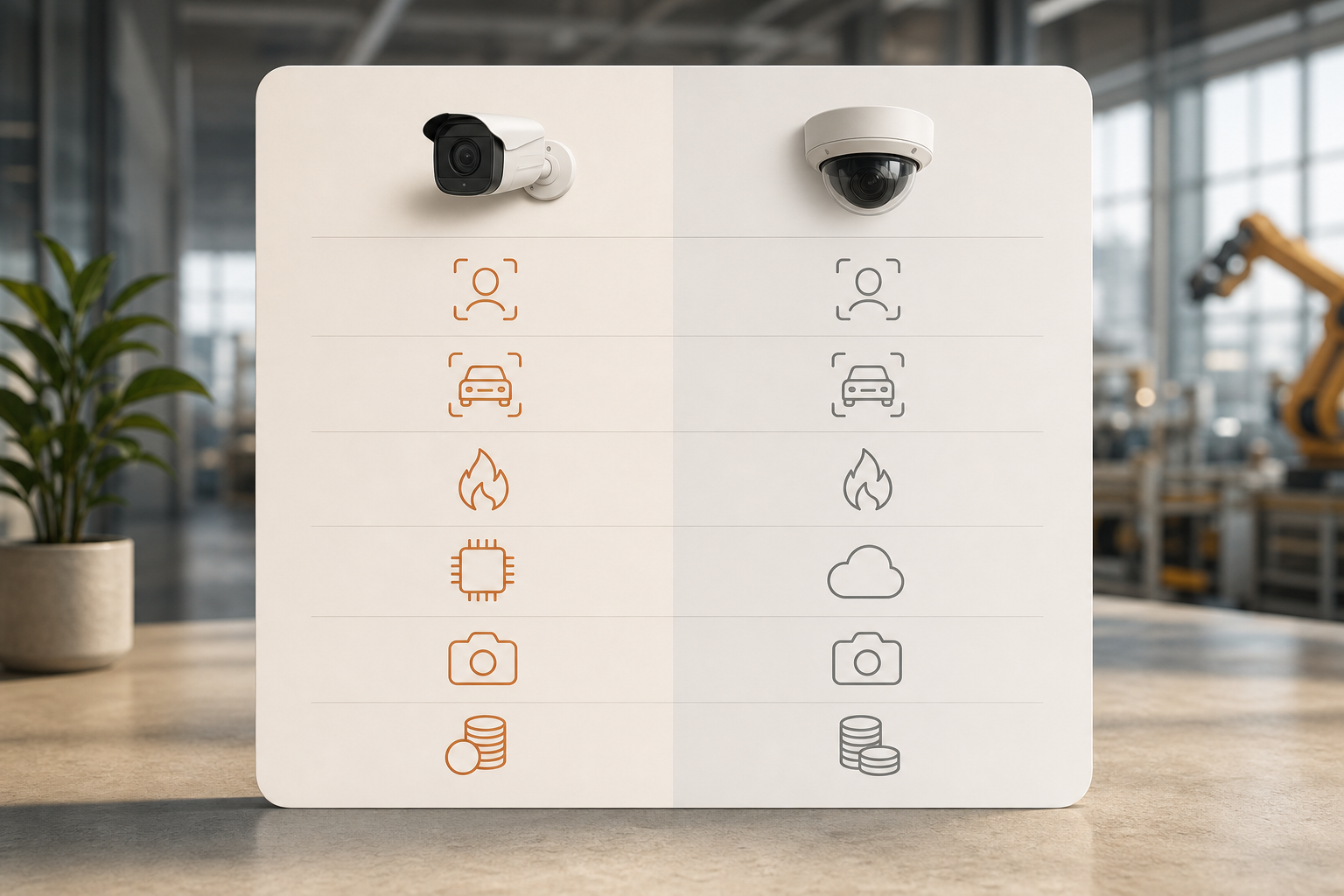
Below is a dimension-by-dimension comparison tied to real plant scenarios, from dock gates to restricted lines.
1) Face Recognition Accuracy and Speed
VideoraIQ cites 99.4% detection accuracy with <3 seconds alert latency. That matters at a paint booth door when a contractor tries to tailgate with a mask and helmet. Verkada’s edge processing cuts round-trip delay because recognition runs on-camera even if the uplink is flaky. Verdict: draw. VideoraIQ has published accuracy and rapid alerts; Verkada brings offline resilience with on-device inference.
2) License Plate / ANPR Reading
Both platforms support ANPR. VideoraIQ’s cloud engines help with multi-format plates across regions and push alerts that include video, time, and camera name. Verkada’s edge ANPR reduces WAN dependence at remote gates. Verdict: draw for accuracy, with a slight situational edge to Verkada at sites with poor internet, and to VideoraIQ where cross-region plate formats and evidence packaging are priorities. For background on ANPR concepts, see Automatic number-plate recognition.
3) Existing Camera Compatibility
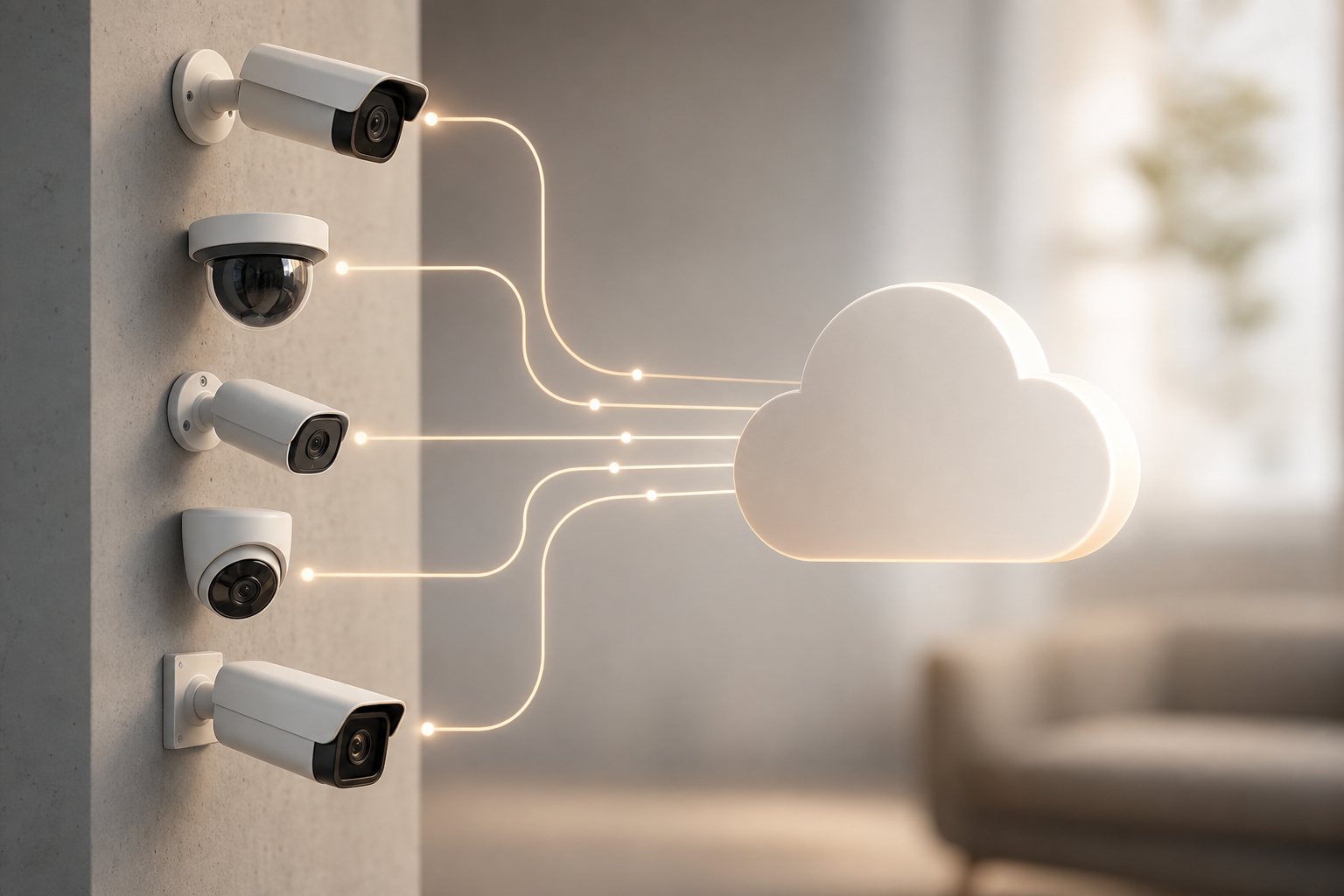
VideoraIQ works with existing cameras across 200+ brands and needs no on-premise servers. That avoids shutdowns and keeps capex near zero when cameras are already in place. Verkada requires proprietary cameras only. Verdict: VideoraIQ wins.
4) Fire and Smoke Detection
VideoraIQ includes fire and smoke detection as one of its 9 AI engines. The manufacturing testimonial cites a fire caught 52 seconds before the smoke alarm. Verkada can add environmental sensors, but those are separate devices and costs. Verdict: VideoraIQ wins for plant fire risk.
5) Intrusion and Perimeter Detection
VideoraIQ offers zone-based monitoring and line-cross detection suited to virtual cages around chemical stores and dock edges. Verkada supports perimeter alerts as well, managed in its Command UI. Verdict: slight edge to VideoraIQ due to flexible zone logic bundled with other engines.
6) Alert Delivery and Evidence Package
VideoraIQ delivers real-time alerts with video proof, a location tag, and a timestamp; latency is <3 seconds. Verkada sends notifications through its app and email, with clips tied to events. Verdict: VideoraIQ by a nose for packaging and speed where seconds matter on the floor.
7) Deployment Complexity
VideoraIQ is cloud-based with no need for on-premise servers and plugs into current NVR/RTSP feeds. Verkada rollouts mean camera replacement and license provisioning per device. Verdict: VideoraIQ wins for brownfield speed.
8) Scalability
VideoraIQ’s Enterprise tier supports unlimited cameras and custom AI models with 90-day cloud retention. Verkada grows per camera, with hardware and license per device. Verdict: VideoraIQ wins at multi-site scale with existing fleets; Verkada is fine for growth tied to new hardware.
9) Compliance
VideoraIQ is GDPR compliant and HIPAA compliant, which helps for plants with clinics or health data overlap. Verkada brings SOC 2 Type II certification and is designed for enterprise security reviews. Verdict: draw; different badges, both credible.
10) Offline Resilience
Verkada’s on-camera processing means analytics keep working during WAN loss. VideoraIQ’s cloud dependency means degraded service without stable internet. Verdict: Verkada wins.

- Quick tally: VideoraIQ wins 5 categories, Verkada wins 1, and 4 are draws. Your plant’s WAN reliability and camera fleet age will swing the decision.
Also Read!
Best Face Recognition & License Plate Camera Software for Corporate Offices and Campuses in 2026
Pricing Comparison for Face Recognition and License Plate Reading: Total Cost of Ownership for Manufacturing Deployments
Manufacturing teams budget across three years. The key driver is whether you must replace cameras.
VideoraIQ offers three tiers: Starter (up to 20 cameras, real-time alerts, 7-day cloud retention), Professional (up to 200 cameras, all AI engines, 30-day retention), and Enterprise (unlimited cameras, custom AI models, 90-day retention). Because it works with existing cameras, upfront hardware cost is $0 if your cameras are already in place. You pay the software subscription and use current infrastructure.
Verkada pricing blends hardware and licenses. You purchase proprietary cameras (about $1,000–$3,000+ per device depending on model) plus annual software per camera. For a 100-camera warehouse, hardware alone can land between $100,000 and $300,000 before software. To be fair, that spend includes hardware warranty and a clear support path.
3-year TCO example for an 80-camera warehouse
Assumptions:
- Cameras already installed and serviceable.
- VideoraIQ: software-only subscription at the Professional or Enterprise tier; storage per tier is included as listed.
- Verkada: replace 80 cameras at $1,000–$3,000 each; add per-camera licenses annually.
Therefore, for brownfield sites, VideoraIQ avoids six-figure capex and shifts spend to opex. For greenfield builds where cameras are not sunk cost, the price gap narrows because you would buy cameras anyway. Neither company posts public per-camera software prices, so treat the hardware figures as estimates and request exact quotes.
**Get pricing guidance today →
Verdict: Which Platform Should Your Manufacturing Plant or Warehouse Choose for Face Recognition and License Plate Reading?
For plants and warehouses with an existing camera network, VideoraIQ is the stronger choice to add face recognition and license plate reading without new hardware or on-premise servers. Its 9 AI engines in one platform, sub-3-second alert delivery with video evidence, and zone logic match fast-paced floor needs where seconds and proof matter. The platform is GDPR and HIPAA compliant, monitors 10,000+ cameras across 7+ countries, and includes fire and smoke detection that is useful on day one.
For greenfield sites or teams who want a vertically integrated stack with analytics that keep running offline, Verkada is a solid fit. You trade higher TCO and camera lock-in for edge resilience, brand recognition, and a single-vendor experience. For very large enterprises with deep manufacturing systems needs, consider Avigilon (Motorola Solutions) as a third option in 2026 evaluations.
- Choose VideoraIQ if you need AI on top of 50–200+ existing cameras, rapid alerts, and fire/smoke detection bundled.
- Choose Verkada if you need edge analytics that survive WAN loss and prefer one vendor, and you accept premium hardware cost.
- Consider Avigilon if you need extensive manufacturing integrations and a broader hardware line.
If you want to trial on your current cameras with real dock and line scenarios, we can help you run a short pilot.
**Book a plant-floor pilot today →
 vs proprietary cameras with edge processing (Verkada); include loading dock, gate, restricted zone icons; clean technical schematic)