

**Schedule a facility assessment today →
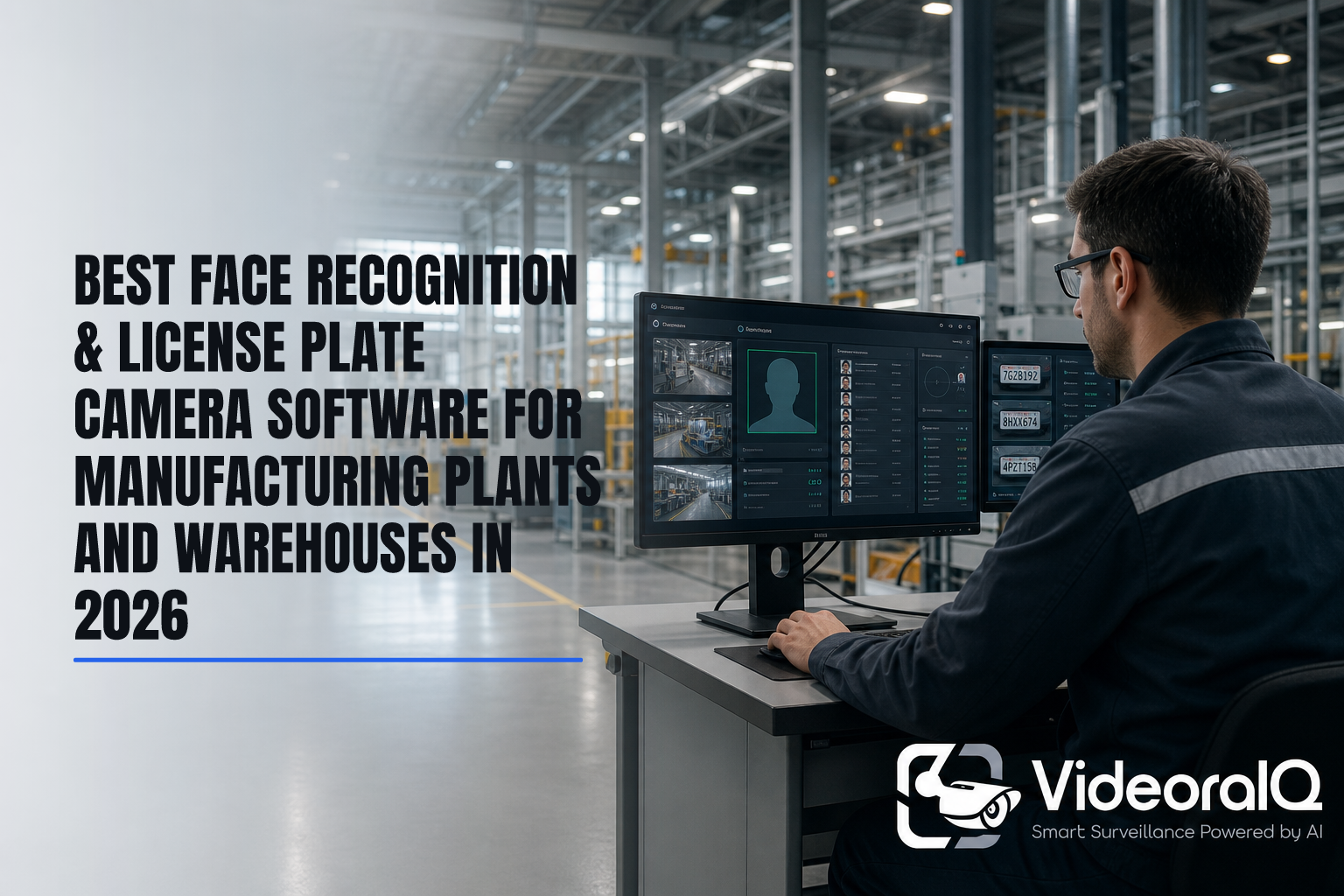
The best choice in 2026 for large plants and warehouses is a multi-engine, cloud video AI that runs on your existing cameras, pairs face recognition with ANPR, and delivers sub-3‑second alerts for real-time decisions. This guide shows how face recognition and license plate reading reduce gate delays, close security gaps, and lower total cost without replacing your CCTV.
According to approved industry data, 85% of CCTV footage is never reviewed. That means issues slip by until the morning briefing or, worse, after a loss. For plants with multi-gate perimeters and 24/7 logistics, you don’t have minutes to scroll through video; you need alerts that arrive before a truck clears the boom barrier or a person steps into a restricted bay.
Moreover, trucks, vendors, and contractors change daily. Badges get lost. Night shifts see less staff on the ground. As a result, the right software must not only spot a known face or plate fast; it must also flag the wrong ones, even in rain, dust, and low light.
Why Manufacturing Plants and Warehouses Struggle with Access Control and Vehicle Tracking
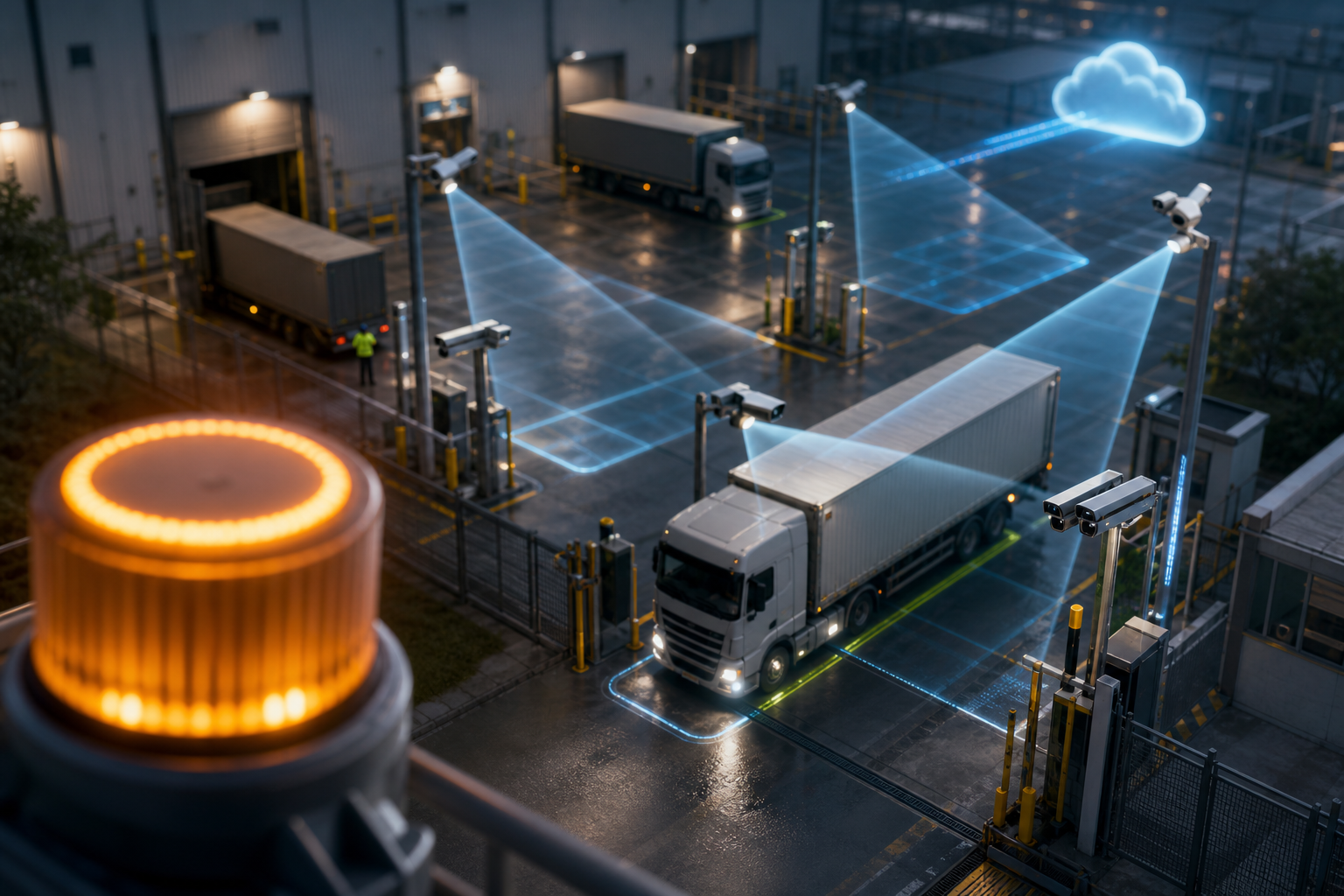
Peak shift changes clog gates and guard shacks. Your guards juggle IDs, visitor logs, and vendor trucks while forklifts queue behind them. Meanwhile, the line must keep moving or you lose throughput. Manual checks add seconds to each entry, and those seconds add up across 300+ vehicles or 1,000+ staff moves per day.
Approved data shows 85% of CCTV footage is never reviewed. That is not a dig at your team; it’s a sign that legacy cameras record far more than people can watch. So incidents live buried in NVRs.
Overnight, a tailgater slips through a gate. On weekends, a truck parks by a diesel tank. On paper, the site was “covered.” In practice, no one saw it in time.
In addition, turnover makes badge lists stale. Contractors swap vehicles. Vendor plates get handwritten in a logbook that only one person can read later.
Without automatic plate capture and face matches, you rely on memory and paper. In a storm, it gets worse. Loading docks see low light, backlit faces under canopies, and hard hats with masks and glasses.
Furthermore, plants add gates over time. You start with two, end up with six. Each uses a different camera brand from past projects. Rip-and-replace is a non-starter because production cannot pause. You need software that sits on top, not a forklift upgrade of your entire stack.
- Common choke points you may recognize:
- Two-lane truck gates with one guard and peak check-ins at shift change
- Visitor trailers that overstay near flammable stores without a record
- Dock doors where pallets block cameras and faces are side-on
- After-hours yard access with minimal patrol coverage
For 24/7 warehouses, after-hours is the soft spot. Fewer people on-site means slower response to an entry that looked “normal” on a tiny screen at 2:13 AM. Automatic number-plate recognition (ANPR) and real-time face matches help here, but only if alerts land fast enough to stop a truck before it clears the gate. Anything slower than five seconds drifts into forensics, not prevention.
What to Look for in Face Recognition and License Plate Software for Industrial Facilities
Buying for a live plant is different than buying for an office. You balance security with flow, and you cannot bring production down for an install. The right system should meet the following criteria.
Accuracy in tough conditions: dust, low light, PPE
At docks and yards, conditions change by the hour. Dust, rain, and poor angles can hide a face or smear a plate. You need high detection accuracy on partial faces and dirty plates without pushing false alarms. For example, workers in hard hats, masks, and glasses should still match based on exposed features. IR-capable cameras and smart placement at eye level near controlled entry points raise match rates without new wiring runs.
Latency that supports real-time decisions
Anything over five seconds is too slow at a gate. Therefore, look for sub-3-second alert delivery from detection to your dashboard or phone. That speed means a boom barrier can stay down or a supervisor can intervene before a truck pulls through.
Works with the cameras you already have
Most plants have mixed CCTV across years of projects. Rip-and-replace is a dealbreaker. As a result, shortlisting should start with “does it work with 200+ brands?” and “does it require new NVRs or on-prem servers?” Cloud delivery that rides on your current IP cameras cuts risk and avoids IT buildouts.
Scale from one dock to many sites
You may start at one gate and grow to hundreds of cameras across multiple factories. So check for multi-site management, per-zone rules, and simple license expansion. A platform that supports unlimited cameras on an Enterprise tier avoids migration later.
Compliance and biometric consent
If you handle regulated goods, you must meet GDPR and HIPAA. Read how the General Data Protection Regulation defines lawful processing and data minimization. Your vendor should support consent workflows, retention controls, and audit trails that your legal team can sign off on.
Cloud, on-prem, or hybrid
Some facilities are air-gapped. Others allow outbound to the cloud. You may need a hybrid model: keep streams local while sending alerts and metadata to the cloud. Flexibility here means you don’t have to choose security over speed.
One platform, many engines
Face recognition and plates are key, but not the whole story. In addition, you should get intrusion detection, fire and smoke, line-cross, and unauthorized access alerts in the same dashboard. That way a dock fire, a yard breach, and a visitor face match all flow into one queue with one audit trail.
For a deeper pre-purchase checklist shaped by plant realities, see the manufacturing buyer’s guide. If you support campuses as well, this campus evaluation guide shows how gate and lobby needs differ, yet share core selection rules.
**Get a tailored deployment plan today →
Also Read!
Best Face Recognition & License Plate Camera Software for Retail Stores and Chains in 2026
How to Add AI to Existing Security Cameras for Corporate Offices and Campuses
How VideoraIQ Solves Face Recognition and License Plate Challenges in Manufacturing and Warehouses
VideoraIQ was built for live industrial sites where accuracy, speed, and no-downtime installs matter. It combines 9 AI detection engines, face recognition, intrusion detection, fire & smoke detection, object detection, number plate (ANPR), line-cross detection, unauthorized access, unattended baggage, and cashier absence detection, into one cloud platform. You get <3 seconds alert latency, so dock and gate staff can act in time.
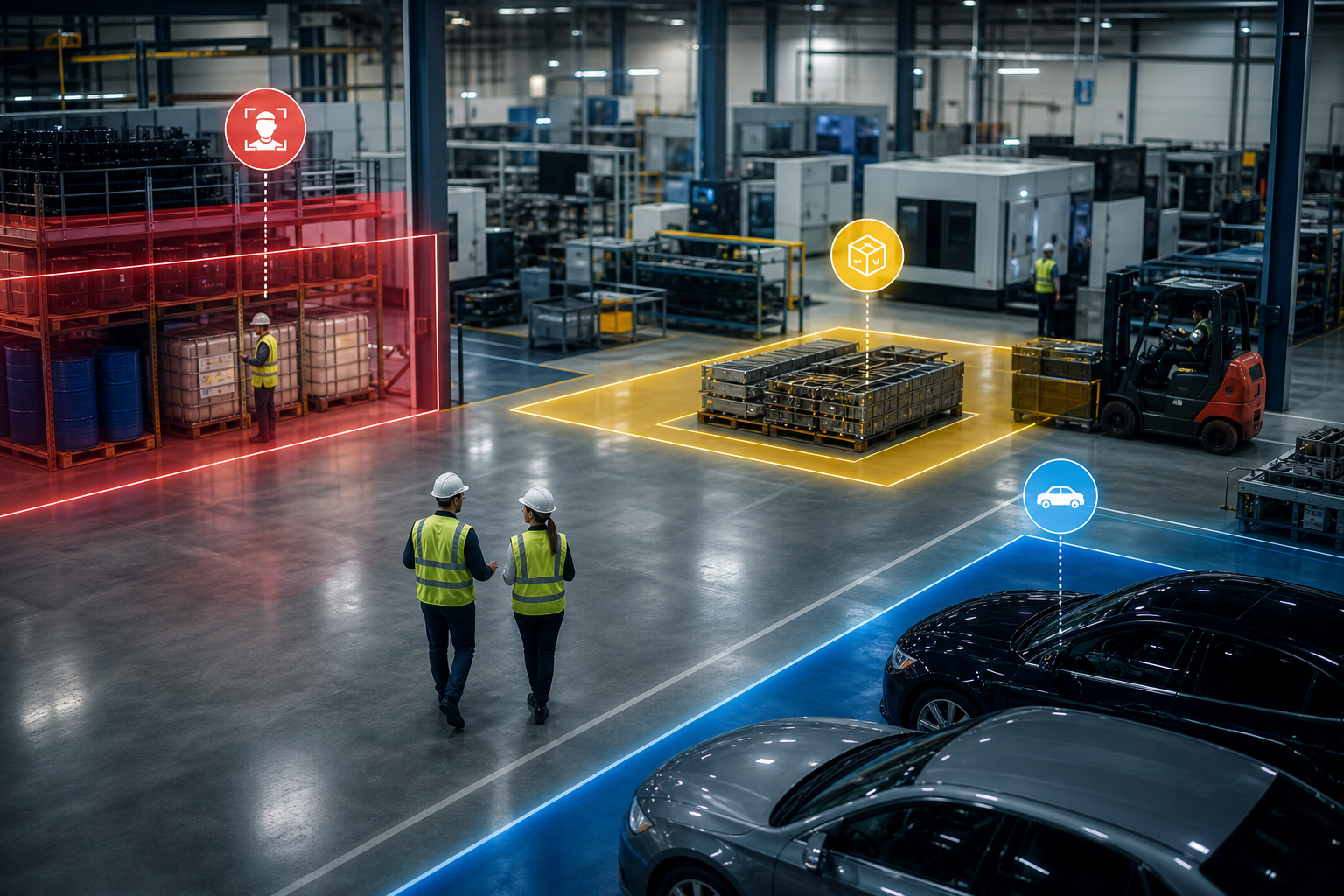
Unlike tools that force a rip-and-replace, VideoraIQ works with existing cameras across 200+ brands. There’s no need for on-premise servers, which means no IT overhaul and no weekend cutovers. Moreover, the system supports Zone-Based Monitoring, so you can draw virtual perimeters around chemical storage, high-value inventory, or executive parking and apply stricter rules there.
Real-time alerts arrive with video proof, a location tag, and a timestamp. As a result, every event doubles as evidence for compliance audits and incident reports. Heatmaps & Analytics show traffic patterns at loading docks, which helps you plan guard posts and shift coverage based on real data, not hunches.
"Our fire was detected 52 seconds before our smoke alarm triggered. The VideoraIQ alert came with a live camera link — my team was already on their way before the alarm sounded. That system saved the building." — Nilesh Kapoor, Plant Safety Supervisor, Manufacturing Facility (480 cameras)
Across 10,000+ cameras monitored in 7+ countries, VideoraIQ achieves 99.4% detection accuracy while keeping false alerts low through pattern recognition. That accuracy holds up under PPE, glare, and dust, so you can trust an allowlist match or a denied face at a turnstile. Compared to alternatives that bolt ANPR on the side, you get face recognition and license plate reading in the same rule set, which is key for multi-gate perimeters.
"We went from finding out about incidents in the morning briefing to being notified in real time. VideoraIQ caught an intruder at 2AM that our overnight guard missed. That one event alone justified the entire platform cost." — Ananya Mehta, Head of Facilities, 200-Camera Corporate Campus
Specifically, at a truck gate you can set: allowlisted plates auto-open, unknown plates trigger a face match step, and denied faces lock the barrier. At docks, line-cross plus unauthorized access flags a person walking into a forklift lane. In yards, fire & smoke detection gives you precious early minutes before a smoke alarm trips.
For full buyer context on plant deployments, see this comparison with Verkada for manufacturing.
VideoraIQ vs. Traditional VMS and Standalone ANPR Solutions: An Honest Comparison
Traditional VMS platforms like Milestone or Genetec run on on-premise servers and usually require separate ANPR add-ons. They can offer deep, custom integrations at very large scale, but the trade-off is higher total cost of ownership and multi-vendor complexity. Standalone ANPR tools read plates well, yet lack face recognition, intrusion, or fire alerts, so you end up with silos and blind handoffs.
VideoraIQ takes a different approach. It integrates with your existing IP-based CCTV without additional hardware, bundles 9 AI engines, and delivers sub-3-second alerts from the cloud. Therefore, you don’t need to maintain racks of servers or stitch plate data to face matches by hand. In fact, pattern recognition keeps the false alarm rate low, so your team acts on fewer, higher-confidence alerts.
| Criterion | VideoraIQ | Traditional VMS (e.g., Milestone/Genetec) | Standalone ANPR |
|---|---|---|---|
| AI Engines | 9 engines in one platform | Core VMS + separate AI add-ons | ANPR/LPR only |
| Alert Latency | <3 seconds | Varies by on-prem design; often higher | Varies; usually not real-time face |
| Camera Support | Works with 200+ brands | Broad, but ANPR/FR via add-ons | Works with many; plates only |
| Deployment | Cloud-based; no on-prem servers | On-prem servers + IT staff | Mixed; often edge devices |
| Compliance | GDPR and HIPAA compliant | Compliance varies by add-ons | Compliance varies; plates only |
| Total Cost | Lower TCO; no server spend | Higher TCO; multi-vendor stack | Lower software, but gaps force extra tools |
"Installation was quick, and it worked with our current CCTV—no downtime, no extra investment." — Sana Ibrahim, Hotel Security Lead
"The system handles surveillance 24/7. No more missed alerts or relying solely on camera operators." — Jason Rodriguez, Security Manager
Compared to alternatives that handle only vehicles, VideoraIQ unifies face recognition and license plate reading with safety detections you already need, fire & smoke, intrusion, and line-cross, in one place. If you do need deep bespoke integrations, a large enterprise VMS may still suit; just plan for the cost and timelines that come with it.
Trust, Compliance, and Proven Scale for Industrial Deployments
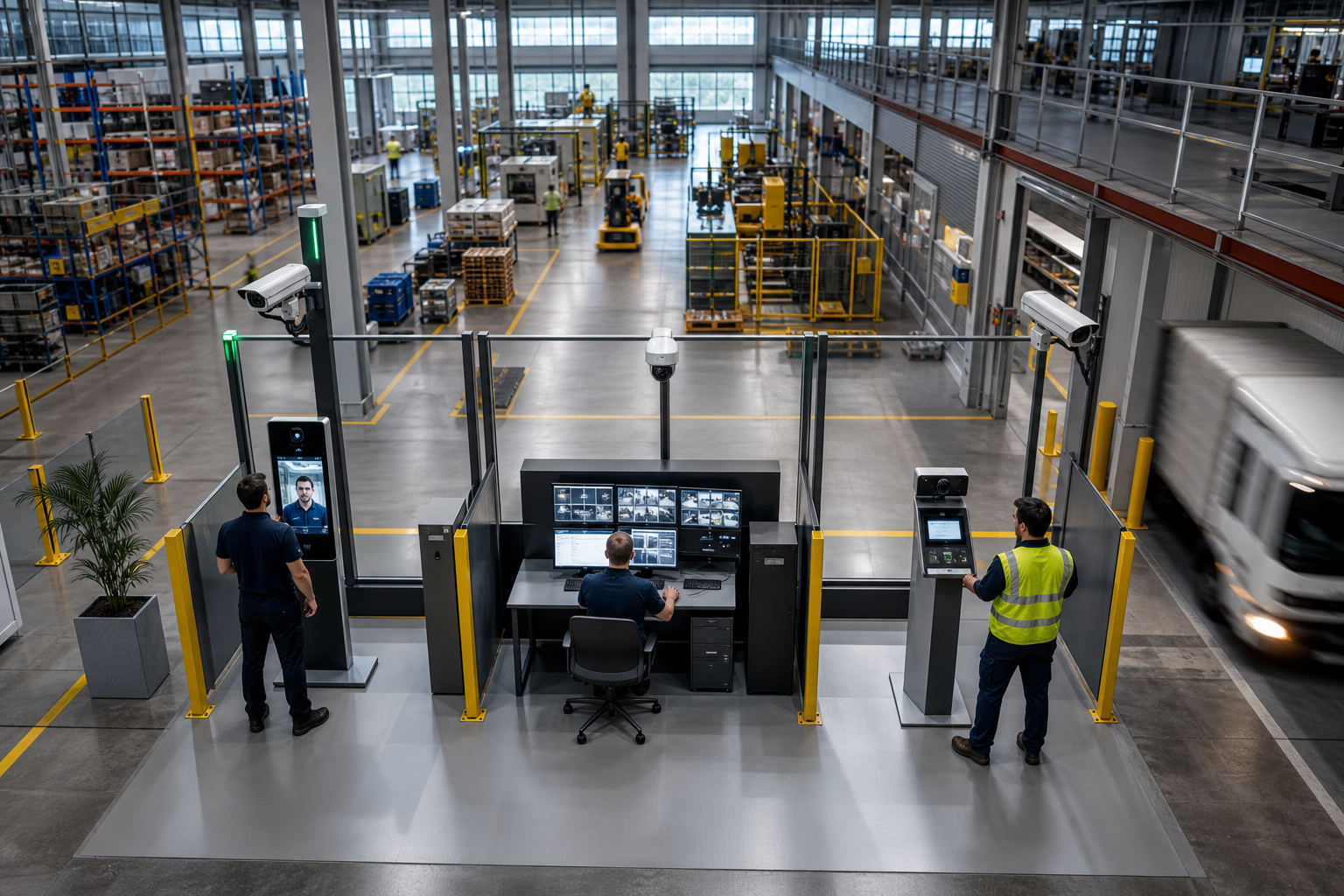
Security leaders must trust both the alerts and the data handling behind them. VideoraIQ is GDPR compliant and HIPAA compliant, which matters for plants handling pharmaceuticals, food, or defense materials. The platform supports biometric consent frameworks, strict retention, and audit-ready logs, so your legal and HR teams have the controls they need.
Scale also signals reliability. VideoraIQ monitors 10,000+ cameras and is deployed in 7+ countries. As a result, it has been hardened across plant floors, campuses, and retail chains with different lighting, layouts, and policies. Those lessons surface as better defaults and fewer surprises during rollout.
Transparent pricing helps you self-qualify before a demo.
- Starter: up to 20 cameras with real-time alerts and 7-day cloud retention.
- Professional: up to 200 cameras with all AI engines and 30-day retention.
- Enterprise: unlimited cameras, custom AI models, and 90-day cloud retention.
Custom AI models matter in plants. For example, you can tailor PPE compliance checks by zone, or add forklift lane safety rules for a site with tight aisles. That way, your safety metrics live next to security events in one dashboard.
"Within 3 weeks VideoraIQ identified a recurring pattern of after-hours cashier zone access. We discovered internal theft we had no idea was happening. It paid for 6 months of subscription in the first incident." — Sujata Rao, Regional Operations Manager, 14-Location Retail Chain
In short, you get security-grade detection accuracy at 99.4%, <3 seconds alert latency, and compliance you can defend. For a step-by-step view of selection for other venues, see this airport and transit comparison.
Also Read!
How to Add AI to Existing Security Cameras for Retail Stores and Chains
Best AI Add-On for Existing Security Cameras for Retail Stores and Chains in 2026
Getting Started: Deploying Face Recognition and ANPR in Your Facility
Rolling out to a live plant should take days, not months. Here’s a 5-step roadmap you can run with your team.
-
Audit your cameras
List each make, model, and location. VideoraIQ works with existing cameras across 200+ brands, so document what you have rather than planning new buys. -
Map your critical zones
Mark gate entries, loading docks, restricted stores, and parking. Decide which need faces, plates, or both. For example, pair both at gates, and faces only at turnstiles. -
Define alert workflows
Assign who gets what, when, and how: security desk, shift leads, and facility managers via dashboard or email. Keep it simple at first, then expand. -
Tune time thresholds and sensitivity
Industrial sites are busier than offices. Use Customizable Time Thresholds and zone-specific sensitivity so pallets don’t spam alerts, but a line-cross into a forklift lane does. -
Pilot one site, then scale
Because it’s cloud-based with no need for on-premise servers, you can go live fast. Start with one facility for two weeks, iron out rules, then add more cameras and sites.
If you want help scoping zones and workflows, our team can review your layout and propose settings that match your hours and risk profile.
**Get pricing and a rollout timeline →
Frequently Asked Questions
How accurate is face recognition software in manufacturing environments with PPE and low lighting?
PPE and low light are real hurdles. VideoraIQ achieves 99.4% detection accuracy by using pattern recognition that works with partial face visibility, such as eyes and brow lines under hard hats and glasses. In addition, IR-capable cameras at eye level near entries raise match rates without new poles. As a result, you get strong matches even at docks with glare or night shifts with masks.
Can face recognition and license plate software integrate with our existing CCTV cameras?
Yes. VideoraIQ integrates with existing IP-based CCTV systems across 200+ camera brands without additional hardware or on-prem servers. That reduces install risk and avoids forklift upgrades of NVRs. Furthermore, you can roll out site by site while keeping your current network intact.
How much does face recognition and ANPR software cost for a warehouse or manufacturing plant?
Pricing is tiered. Starter supports up to 20 cameras with 7-day retention for smaller sites. Professional supports up to 200 cameras with all AI engines and 30-day retention for mid-size plants. Enterprise supports unlimited cameras with custom AI models and 90-day retention for multi-site operations. Because it’s cloud-based, you avoid server hardware costs, which lowers total cost of ownership compared to traditional VMS.
Is AI-based face recognition software compliant with privacy regulations in manufacturing?
VideoraIQ is GDPR and HIPAA compliant. If you handle pharma, food, or defense materials, those certifications help pass audits. In addition, you can roll out employee consent frameworks and clear data retention policies aligned with local biometric data laws. Your legal and HR teams can review logs and settings at any time.
How fast are alerts delivered when an unauthorized person or vehicle is detected?
VideoraIQ delivers alerts in under 3 seconds with video proof, a location tag, and a timestamp. In a manufacturing yard, a 30-second delay can let an unauthorized truck clear a gate. Therefore, sub-3-second speed is key for real-time action. You can send those alerts to a dashboard, email, or both.
What's the difference between standalone ANPR and a multi-engine platform like VideoraIQ?
Standalone ANPR tools read license plates only. You still need separate systems for faces, intrusion, or fire/smoke, which adds handoffs and oversights. VideoraIQ bundles 9 AI engines in one place, so face recognition and license plate reading work together with safety detections. For plants, having fire and unauthorized access alerts next to ANPR hits in one dashboard is a big operational win.
Can the software scale from one warehouse to multiple manufacturing sites?
Yes. The cloud architecture scales from one facility to unlimited cameras across sites. The Enterprise tier supports custom AI models, so you can tailor logic per plant, forklift zone safety at one, chemical storage intrusion at another. VideoraIQ currently monitors 10,000+ cameras in 7+ countries, so multi-site control is proven at scale.
How long does it take to deploy face recognition and license plate software in an industrial facility?
Because it is cloud-based and works with existing cameras, deployments avoid hardware procurement and server installs. A typical pilot can be live in days. One customer noted a quick install with no downtime, which mirrors what we see in plants that start with one gate and expand.
Final Takeaways
- Choose a multi-engine, cloud platform that delivers <3 seconds alerts, runs on your existing cameras, and unifies faces and plates with safety detections.
- VideoraIQ meets those needs with 9 AI engines, 99.4% accuracy, and proven scale across 10,000+ cameras in 7+ countries.
- Start small with a single gate pilot, tune thresholds for your zones, then scale across sites without buying servers.
**Request a facility assessment and rollout plan →
For more background and use-case detail, review the manufacturing buyer’s guide.