

The best setup for retail in 2026 for face recognition and license plate reading is a unified, cloud platform that sends sub-3-second alerts, hits 99%+ accuracy, and works with your current IP cameras. Your team needs speed, signal, and scale, not more feeds to watch.
Face recognition and license plate reading can cut shrink when it’s fast, accurate, and tied to clear actions. However, LP leaders know the hard truth: 85% of CCTV footage goes unreviewed (Source: VideoraIQ platform stats). That means most events hide in plain sight. Meanwhile, known shoplifters re-enter stores, and ORC crews use the lot as a staging area, then exit with carts before anyone gets a clear plate.
If you also oversee offices or warehouses, you might find value in this campus guide and this warehouse article. For broader context, see the analysis in Best tools for corporate offices and campuses in 2026 and the guide for manufacturing plants and warehouses.
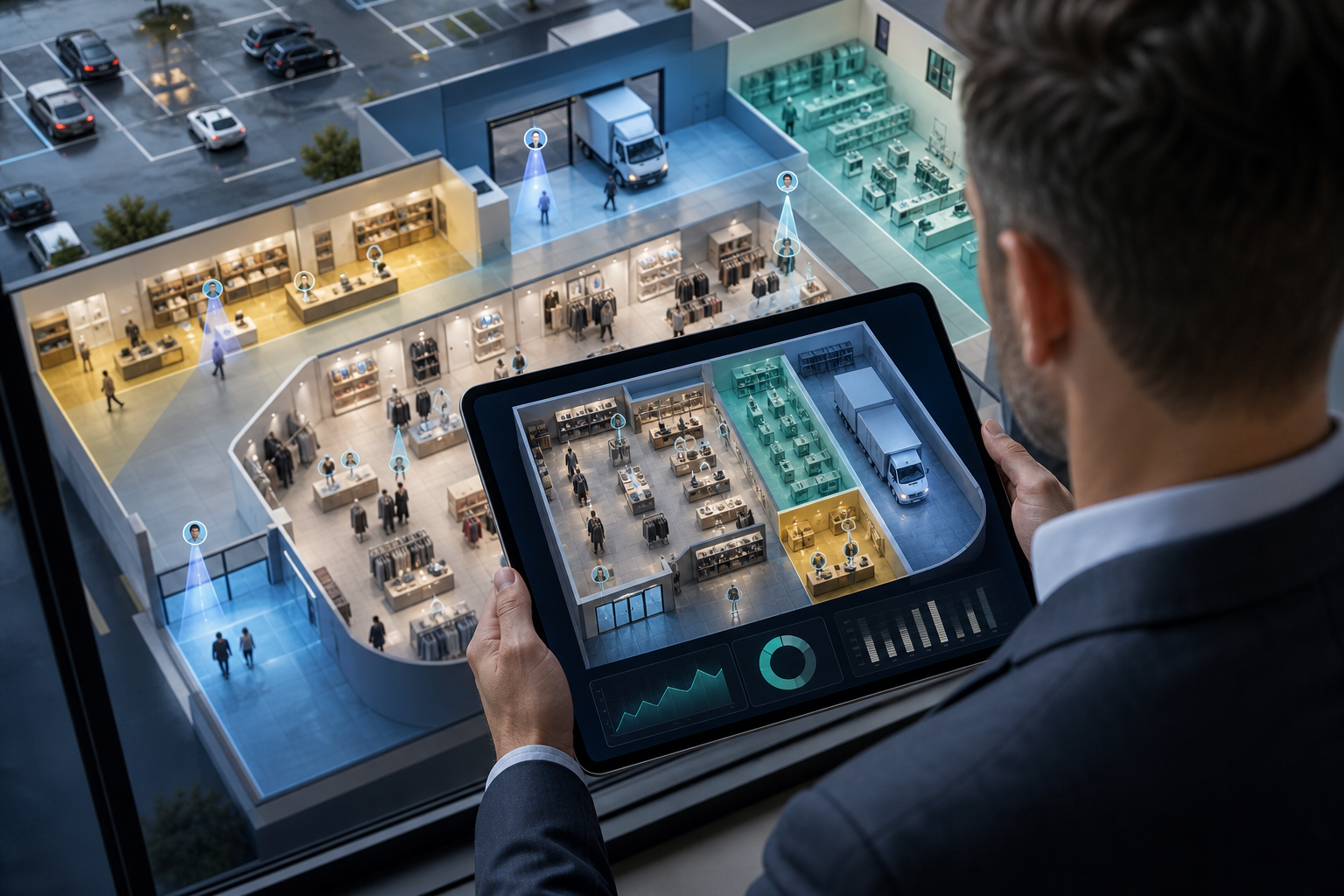
Why Retail Stores and Chains Still Struggle with Face Recognition and License Plate Monitoring
Retail security has a data problem, not a camera problem. Stores record everything, but teams have minutes, not hours, to act. In fact, 85% of CCTV footage is never reviewed (Source: VideoraIQ platform stats). So the real loss driver is not lack of video; it’s the lack of fast, high-signal alerts tied to where your LP team can intervene.
However, most chains still rely on legacy setups that don’t talk to each other. One tool runs face matching at the door. Another logs plates in the lot. A third stores footage in a VMS.
As a result, you lose the link between a suspect face at Entry A and a plate that left five minutes later at Exit C. Evidence fragments. Response windows close.
Staffing makes this gap worse. A five-person LP team cannot watch 300 feeds across a region and still write reports, run audits, and support store managers. Even with a SOC, manual eyes on glass miss short events at odd hours. Moreover, alert fatigue nudges teams to mute channels. The cost is real: stray items past the POS, grab-and-run at side doors, and after-hours stockroom entries that leave no trackable pattern.
Where Disconnected Systems Create Risk
- Separate face and plate tools make it hard to confirm a match across areas and time.
- VMS-only archives generate hours of video with no live signal for staff on the floor.
- No central dashboard means regional LP leaders fly blind between sites.
- Slow alerts (>10 seconds) turn every detection into a post-event note, not an action.
For a multi-location brand, the root cause is clear. Systems built for single sites don’t scale to 10, 50, or 500 stores. Without a chain-wide view, you can’t spot repeat faces moving store to store. Without joined data, you can’t tie a face inside to a plate outside. And without fast, clear alerts, your team arrives after the cart is already in the trunk.
Finally, face recognition and license plate reading only pay off if they blend into your daily flow. That means alerts that route to the right person, at the right time, with video proof and a location tag, so store leaders can act now, not tomorrow.
Also Read!
How to Add AI to Existing Security Cameras for Corporate Offices and Campuses
How to Add AI to Existing Security Cameras for Retail Stores and Chains
What to Look for in Face Recognition and License Plate Software for Retail
Picking the right platform is less about brand names and more about a few non-negotiable checks. Below is a practical, vendor-agnostic framework you can use with your LP team and CFO. It will help you weigh risk reduction against cost, and avoid tools that look smart in a demo but stall in the field.
1) Detection Accuracy
Accuracy drives trust. Below 99%, alerts pile up and staff tune them out. That sub-1% gap sounds small, but in a chain sending hundreds of alerts per day, it can flood radios. Ask vendors for measured accuracy on your camera samples, not a lab brochure. Then, test on hard scenes: hats, masks, glare, and crowded entrances.
2) Alert Latency
Speed matters most at the door and at POS. Anything above five seconds is too slow for in-store intervention. Your goal is to give floor staff a heads-up before a suspect reaches high-value aisles or an exit. Confirm end-to-end latency under load, door camera to phone or dashboard, not only model inference time.
3) Camera Support Without Rip-and-Replace
Ripping out cameras kills ROI. You want software that overlays on your current IP-based CCTV fleet. Check support for 200+ camera brands and common RTSP/ONVIF feeds. Ask for a pilot that proves it works on your worst camera angles, not just your newest domes.
4) Centralized, Multi-Site Dashboard
If you run 10+ stores, a central view is essential. Regional LP managers should see all alerts with video, location, and timestamps in one feed. The team should filter by store, zone, event type, and time. Cross-store search for faces and plates saves days of manual review.
5) Combined AI Engines Beat Point Tools
Platforms that bundle face recognition, ANPR, intrusion, object detection, and POS-focused tools catch more real events. For retail, features like cashier absence detection and unauthorized access in stockrooms plug internal shrink. A single engine stack reduces setup time, training, and vendor sprawl.
6) Privacy and Compliance Readiness
Biometrics touch policy and law. You need GDPR and BIPA-aware workflows, clear consent flows, retention rules, and audit logs. For reference, see the EU GDPR Regulation text. Make sure the platform supports configurable retention, blocklists/allowlists, and export for legal holds.
7) Cloud vs. On-Prem: Total Cost of Ownership
On-prem servers at each store add cost, power, and maintenance. Cloud shifts compute and updates off-site, which helps lean IT teams. However, verify bandwidth needs and offline behavior. A strong cloud design should still alert on local events with tight buffering and retries.
8) Real Scalability
Growth should be linear, not a re-architecture. Your vendor should scale from 20 cameras to 2,000 with the same core design. Confirm how they shard workloads, handle spikes (e.g., storm days), and manage cross-store data. Ask for proof: number of cameras under management and countries served.
Buying tip: Run a four-week pilot in your hardest three stores. Measure true-positive alerts, false alerts per shift, and time-to-respond. Have the CFO sign off on the metrics before you expand.
How VideoraIQ Solves Face Recognition and ANPR for Retail Chains
VideoraIQ aligns to the checklist above with a single, cloud-based platform built for retail. It runs nine AI detection engines, face recognition, number plate (ANPR), intrusion detection, object detection, line-cross detection, unauthorized access, unattended baggage, fire and smoke detection, and cashier absence detection, so you don’t have to stitch point tools together.
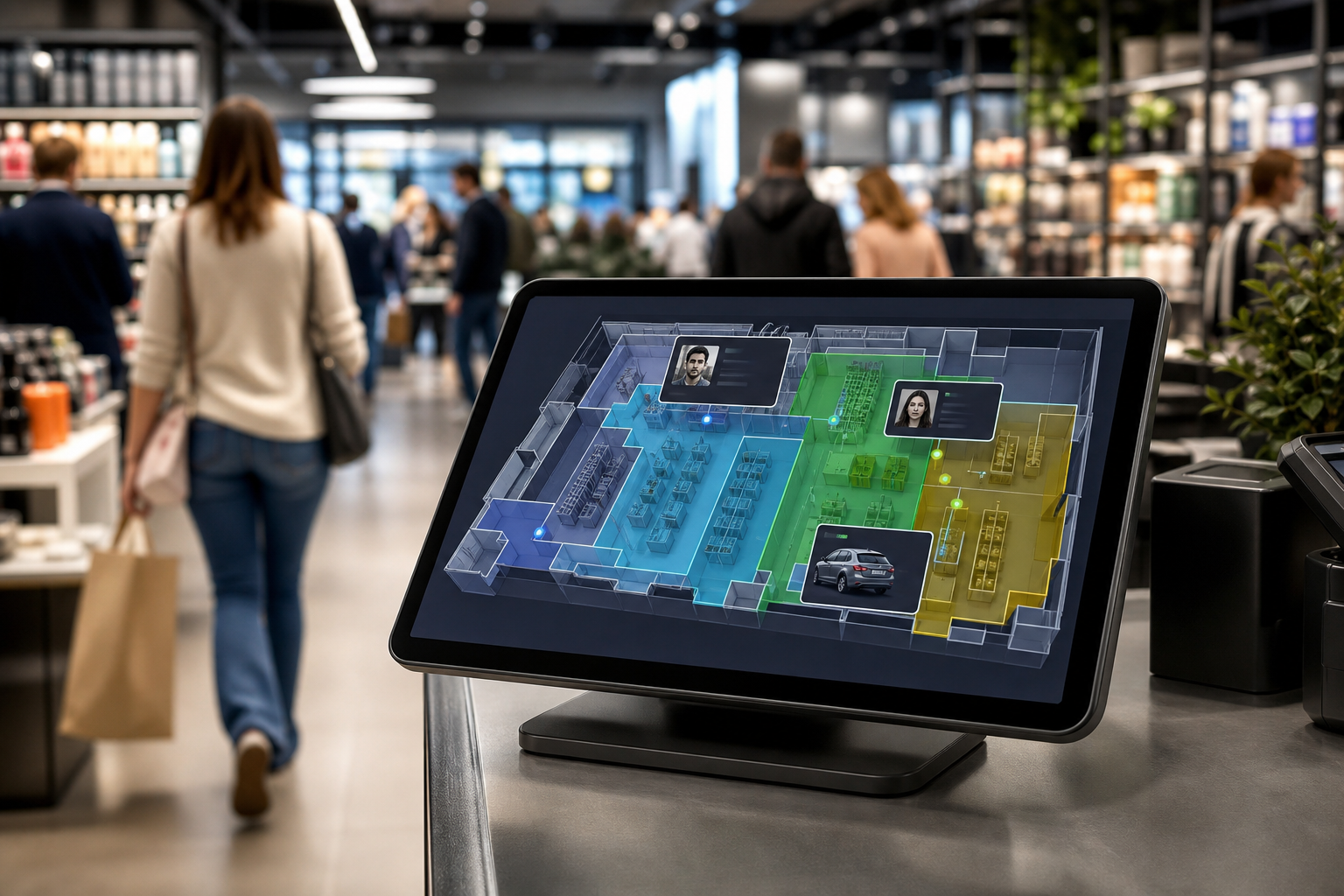
In stores, face matching flags known offenders or VIPs at the entrance. In the lot, ANPR watches for flagged vehicles and logs loading dock arrivals. At POS, cashier absence detection alerts if a till is left unattended past your set threshold. In stockrooms, unauthorized access alerts on badge tailgates or late-night entries. Each alert arrives in under three seconds with video proof, camera location, and a timestamp.
VideoraIQ works with existing cameras across 200+ brands, so you keep your hardware. There are no on-premise servers to buy or maintain, everything runs in the cloud. Zone-Based Monitoring lets you draw virtual areas around doors, registers, stockrooms, and receiving. You focus alerts on what matters and mute the rest.
Heatmaps and Analytics add a retail twist. You can see foot traffic hotspots to adjust staff placement and reduce exposure in blind aisles. Over time, the dashboard shows which entrances need better angles and where line-cross rules catch the most loss events.
"Within 3 weeks VideoraIQ identified a recurring pattern of after-hours cashier zone access. We discovered internal theft we had no idea was happening. It paid for 6 months of subscription in the first incident." — Sujata Rao, Regional Operations Manager, 14-Location Retail Chain
For LP teams under pressure to prove results, this matters: 99.4% detection accuracy reduces false alarms per shift, and <3 seconds alert latency gives staff time to act. The platform is already monitoring 10,000+ cameras across 7+ countries (Source: VideoraIQ deployment data), which speaks to production-grade reliability at retail scale.
Also Read!
Best AI Add-On for Existing Security Cameras for Retail Stores and Chains in 2026
How to Add AI to Existing Security Cameras in Manufacturing Plants and Warehouses
VideoraIQ vs. Standalone Face Recognition and ANPR Tools: An Honest Comparison
Retail leaders usually compare three paths: a unified platform like VideoraIQ, a standalone facial recognition tool, or a standalone ANPR/LPR system. Each option has trade-offs. A dedicated LPR vendor might support obscure plate formats or specialty cameras, while a facial-only SaaS might offer niche tuning for faces in tight frames. The question is how that benefit stacks against integration time, alert speed, and cross-signal links during a live incident.
Here’s a side-by-side view to ground the decision:
| Dimension | VideoraIQ (Unified) | Face-Only Tool | ANPR-Only Tool |
|---|---|---|---|
| AI Engines | 9 engines in one stack | 1 (faces) | 1 (plates) |
| Camera Support | Works with 200+ brands | Varies by vendor | Varies by vendor |
| Alert Speed | <3 seconds end-to-end | Varies (often >5s) | Varies (2–10s) |
| Deployment | Cloud-based; no on-prem servers | Mixed | Mixed |
| Multi-Site Dashboard | Yes, chain-wide | Sometimes add-on | Sometimes add-on |
| Compliance | GDPR and HIPAA compliant | Varies | Varies |
| Incident Correlation | Links face-at-door to plate-in-lot | Limited | Limited |
| Pricing Model | Tiered by camera count and retention | Per-feature or per-camera | Per-lane or per-camera |
With a unified platform, you get correlated intelligence. The system can link a face at the entrance with a flagged plate in the lot within the same time window. That cuts case build time for ORC events. You also reduce vendor count, updates, and security reviews.
To be fair, a specialty ANPR vendor may edge out others on rare plate patterns or specific international formats. If that’s your use case, ask them to show it on your lot cameras. But weigh that against the loss of cross-signal links and the extra work of stitching tools into a single dashboard.
"Installation was quick, and it worked with our current CCTV—no downtime, no extra investment." — Sana Ibrahim, Hotel Security Lead
VideoraIQ already monitors 10,000+ cameras and is deployed in 7+ countries (Source: VideoraIQ deployment data). For retail chains that need to roll out fast across regions, the ability to integrate with existing IP-based CCTV systems without additional hardware is a practical win.
Trust, Compliance, and Performance Credentials
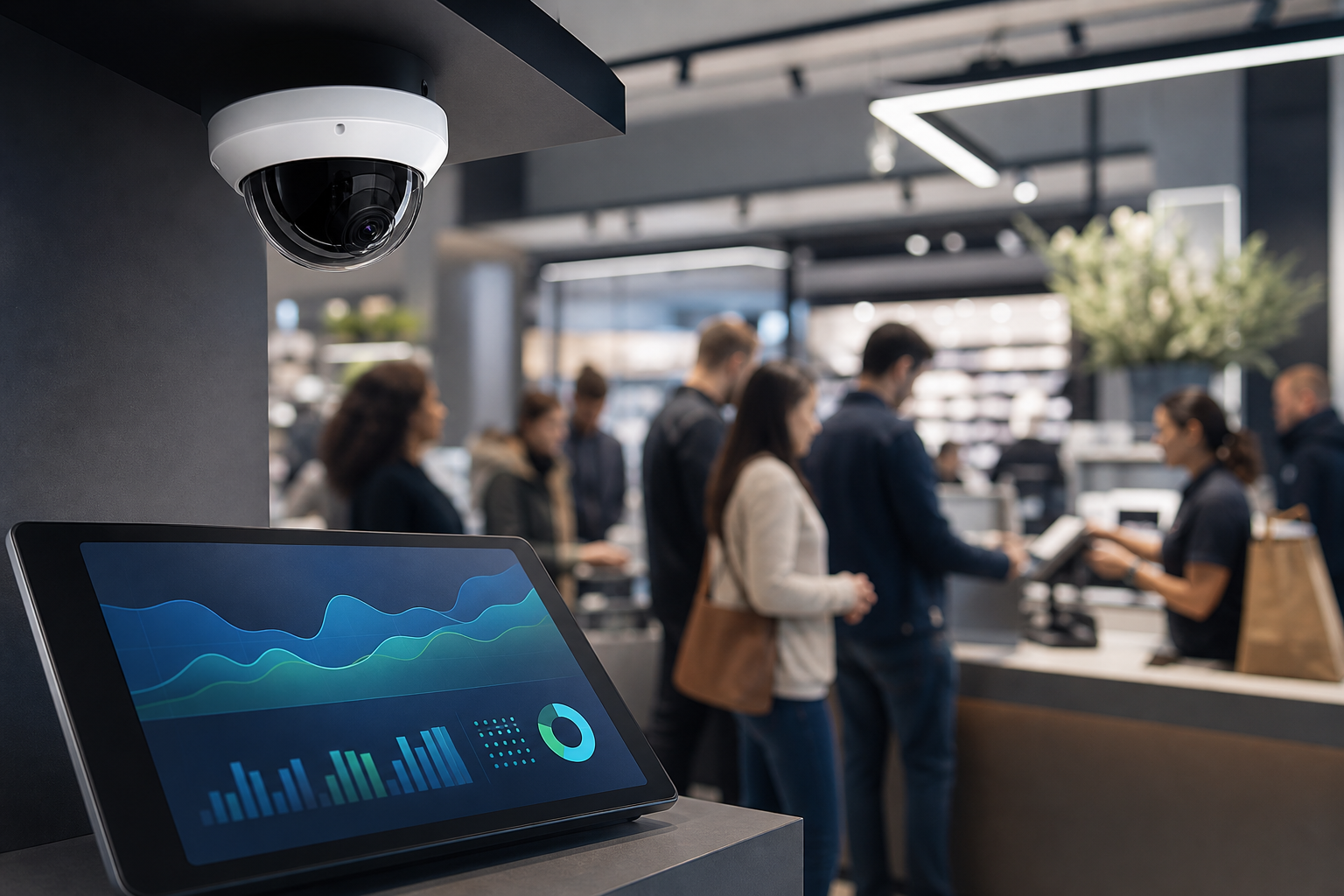
CFOs and CISOs want proof, not promises. VideoraIQ is GDPR compliant and HIPAA compliant, which matters for retailers with in-store clinics or pharmacies. Legal teams get clear retention settings, audit logs, and export options. Security teams see encryption and cloud isolation that cut store-level IT overhead.
Accuracy and speed drive field results. VideoraIQ’s 99.4% detection accuracy means fewer false pings per shift, so staff trust the feed. Sub-3-second alerts turn a match into a real intercept, not a next-day report. Together, those two numbers shift your LP team from review to response.
Scale shows durability. With 10,000+ cameras monitored and deployments in 7+ countries (Source: VideoraIQ deployment data), the platform has been proven across different store formats and networks. That level of production use reduces rollout risk for national chains.
Which tier fits your profile? – Starter: Up to 20 cameras with real-time alerts and 7-day cloud retention. Good for a single flagship or a small local chain testing live alerts. – Professional: Up to 200 cameras, all AI engines, and 30-day retention.
Ideal for regional groups or banners with 10–50 stores. – Enterprise: Unlimited cameras, custom AI models, and 90-day retention. Suited for national chains and mixed-format portfolios.
"The system handles surveillance 24/7. No more missed alerts or relying solely on camera operators." — Jason Rodriguez, Security Manager
For procurement, that combination, compliance, accuracy, speed, scale, and tiered pricing, makes it easier to build an internal business case and forecast ROI at 6, 12, and 24 months.
Getting Started: Deploying Face Recognition and ANPR Across Your Retail Locations
Rolling out chain-wide works best as a staged plan. Because the platform is cloud-based, there’s no server install at each store. You can move from pilot to region in weeks, not quarters. Here’s a step-by-step path used by retail LP teams.
Step 1: Audit Your Camera Infrastructure
List your IP cameras, models, and angles. With support for 200+ brands, most will work as-is. Flag dark, backlit, or low-resolution angles for later fixes. Keep RTSP/ONVIF details handy.
Step 2: Define Priority Zones
Map entrances, checkout lanes, high-shrink aisles, stockrooms, loading docks, and lot entries. Draw virtual zones so alerts focus on risk, not noise. Set different rules for day vs. night to match store hours.
Step 3: Build Your Watchlists (With Legal Review)
Create face watchlists for known offenders and VIPs, and license plate lists for flagged vehicles. Have legal review local biometric and privacy laws and approve signage and consent flows. Set clear retention windows by list type.
Step 4: Configure Alert Rules
Decide who gets which alerts and how, dashboard, email, or both. Turn on Real-Time Alerts & Notifications with video proof, location, and timestamp. Use Customizable Time Thresholds for unattended objects and cashier absence near POS.
Step 5: Pilot 2–3 Locations
Run a four-week test in your hardest stores. Track true positives, false alerts per shift, and time-to-intercept. Adjust camera angles and zone shapes weekly.
Step 6: Review Heatmaps and Analytics Weekly
Move zones, tweak thresholds, and plan staff posts based on hotspots. Lock in the playbook, then scale to the next 10 locations.
**Book a free rollout consult →
Also Read!
Best Unattended Baggage Detection for Airports and Transit Stations in 2026
How to Choose Face Recognition and License Plate Camera Software for Retail Stores and Chains
Frequently Asked Questions
How much does face recognition and license plate camera software cost for a retail chain?
VideoraIQ offers three tiers based on scale and retention. Starter supports up to 20 cameras with real-time alerts and 7-day cloud retention, which suits single stores proving value. Professional covers up to 200 cameras with all AI engines and 30-day retention, ideal for regional chains. Enterprise supports unlimited cameras, 90-day retention, and custom AI models for national rollouts. Because it’s cloud-based and works with existing cameras, you don’t need new on-prem hardware.
How accurate is AI-based face recognition in busy retail environments?
VideoraIQ measures 99.4% detection accuracy. In crowded scenes, results depend on camera placement, lens, and light. Place cameras at chokepoints, entrances and checkout lanes, near eye level to reduce hats and glare. Use even light and avoid strong backlight from windows. Pattern-recognition models and watchlist tuning help keep false alerts low.
Do I need to replace my existing security cameras to use face recognition and ANPR software?
No. VideoraIQ integrates with existing IP-based CCTV systems across 200+ camera brands. Most retailers deploy on the current fleet with zero downtime, since the platform uses standard RTSP/ONVIF streams. During the pilot, you can fix only the few angles that hinder clear faces or plates.
Is face recognition software legal for retail stores?
Legality varies by state and country. Illinois BIPA, Texas CUBI, Washington state law, and the EU’s GDPR set rules for biometric use and consent. VideoraIQ is GDPR compliant, but you should consult legal counsel on local consent and signage. Set clear data retention and watchlist policies before go-live.
Can I manage face recognition and license plate alerts across multiple store locations from one dashboard?
Yes. The cloud-based dashboard centralizes alerts from all sites. Each alert includes video proof, location tags, and timestamps, so regional LP managers can review and act without travel. Filters by store, zone, event type, and time help teams find what matters fast.
How fast are the alerts when a known shoplifter or flagged vehicle is detected?
VideoraIQ delivers alerts in under 3 seconds. Each alert arrives with attached video, camera location, and a timestamp. That speed lets floor staff intercept at the door or secure POS before a suspect leaves the premises. Quick signals also help managers lock doors or call law enforcement when needed.
What other AI detection features come with face recognition and ANPR software?
VideoraIQ bundles nine engines in one platform: face recognition, ANPR, intrusion detection, fire and smoke detection, object detection, line-cross detection, unauthorized access, unattended baggage, and cashier absence detection. For retail, cashier absence near POS and unauthorized after-hours access in stockrooms cut internal shrink. Line-cross rules help watch side exits where grab-and-run events occur.
How does face recognition camera software compare to hiring more loss prevention staff?
Software watches every feed 24/7. Even large LP teams can’t keep up, and 85% of CCTV footage goes unreviewed (Source: VideoraIQ platform stats). AI doesn’t replace staff; it boosts them by surfacing only the incidents that need action. As Sujata Rao’s 14-store chain saw, the system exposed after-hours cashier zone access patterns that manual review missed.
Final Takeaways
- Unified beats siloed. One platform that joins faces at the door with plates in the lot delivers faster, clearer signals for LP teams.
- Speed and accuracy matter. Sub-3-second alerts and 99%+ accuracy reduce noise and give staff time to act, which drives measurable shrink reduction.
- Scale the smart way. Cloud deployment on your current cameras, with heatmaps and zone controls, makes a 2026 rollout fast and manageable.
If you want a clear plan to test in your top-risk stores, we’re happy to help design a pilot and forecast impact for finance.
For more cross-sector context beyond retail, see this campus-focused comparison and this warehouse-focused guide.